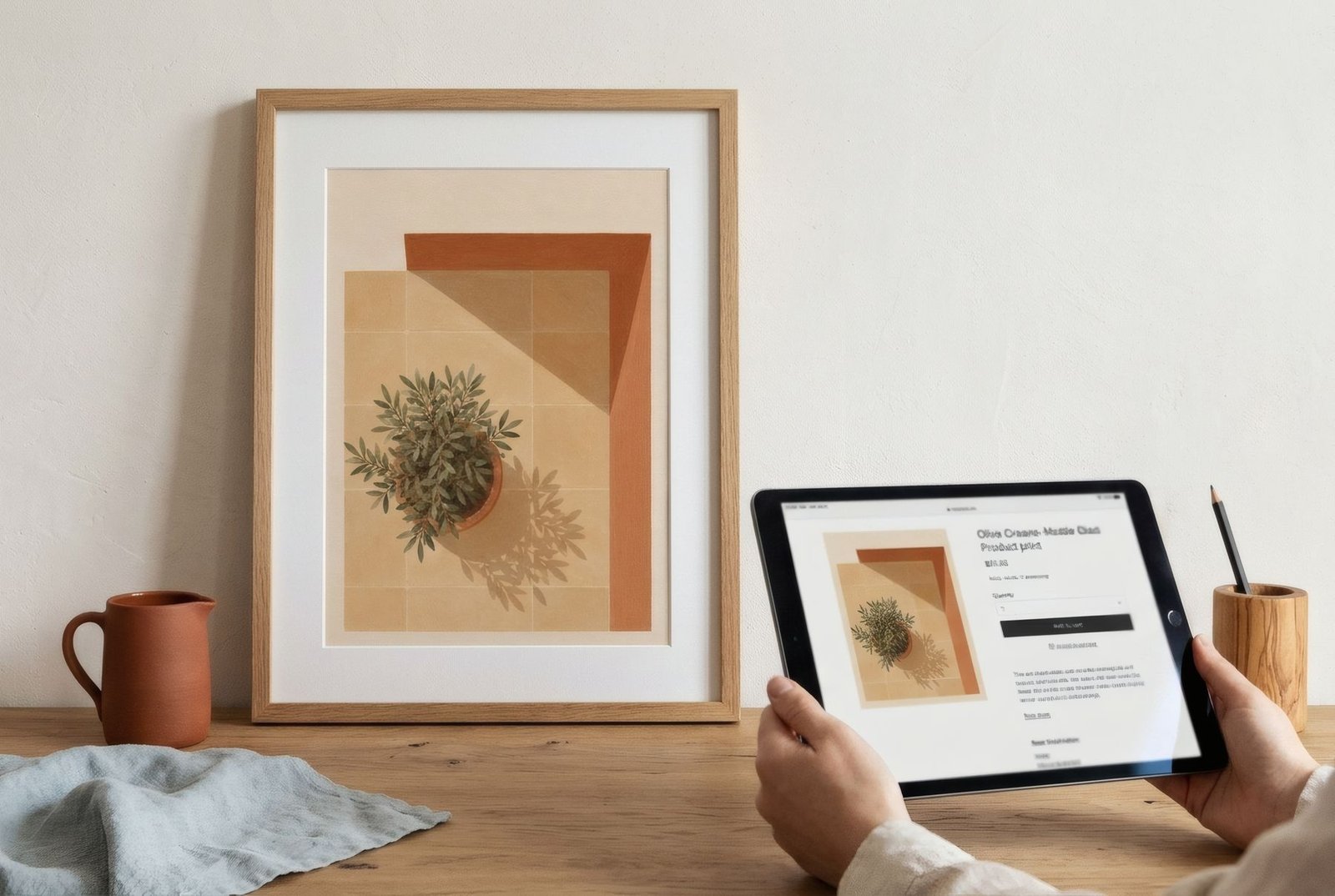
When we buy a print online, we cannot touch the paper, look closely at the detail or check how it looks in our own light. Beyond the photographs, everything we know about it is in its description. And print descriptions vary enormously. Some set out paper, inks and process precisely; others offer only adjectives such as «premium quality» or «museum quality», which sound good but say little. Learning to read art print specifications, and to tell useful facts from empty words, helps you compare prints with judgement and know exactly what you will receive.
Size: paper, image and border
The first thing to look for is size, paying attention to what exactly is measured. A clear description gives the paper size, for example A3 or 30 × 40 cm, and, if different, the image size. If there is a white border, its width, or at least its existence, should be stated.
This is essential when choosing a frame. A 30 × 40 cm print with a 2 cm border has an image of 26 × 36 cm, which changes the mount you need. We explain this in how to measure an art print before buying a frame.
Look too at orientation, portrait or landscape, and proportion, especially if you plan to use a standard frame.
Paper
This may be the most important information for knowing how a print will look and age. A good description gives some of these details.
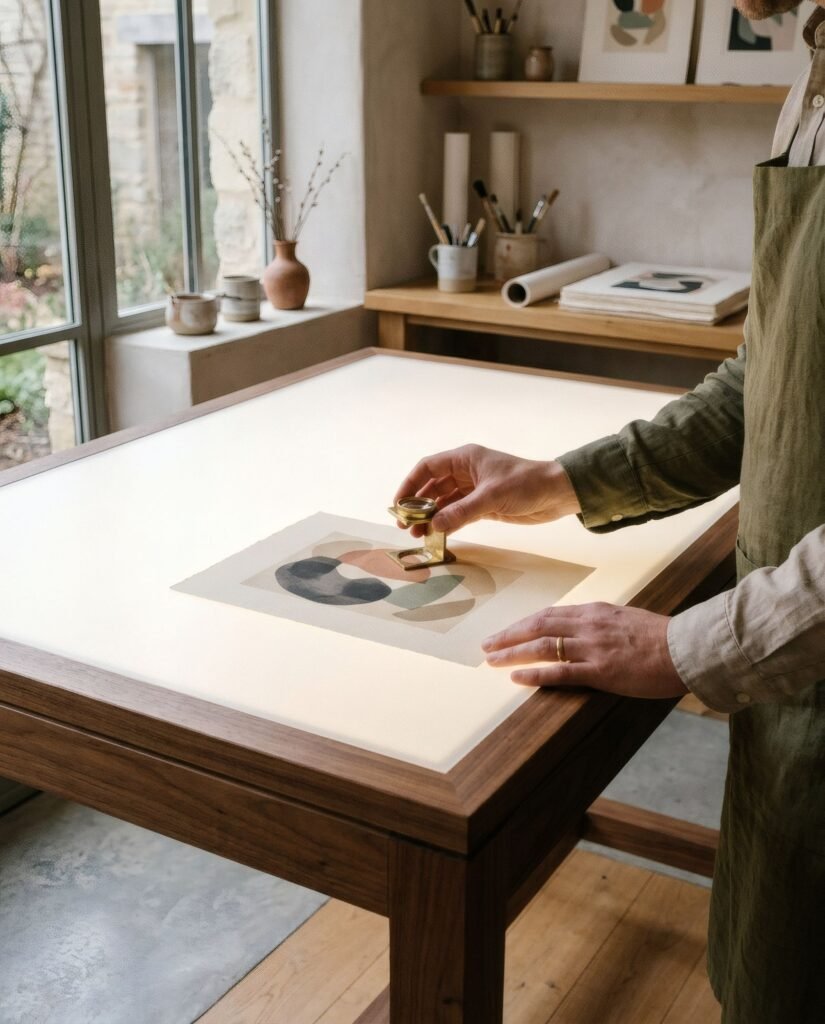
The type of paper: photographic, fine art, cotton or alpha-cellulose. The finish: matt, satin or gloss; textured or smooth. The weight, in gsm. Whether it is acid-free or archival. Sometimes the shade of white, natural or bright.
Not every description includes all of these, but the more there are, the easier it is to know what to expect. We discuss what each means in how paper changes the look of an art print and paper weight explained for art prints.
Inks and process
Another valuable detail is the printing method and ink. A description may say whether it is inkjet, screenprint, offset or another technique; whether the inks are pigment or dye-based; and how many inks the printer uses.
Terms such as giclée and fine art appear often but are not regulated, so on their own they guarantee nothing. What informs you is what lies behind them: which inks, which paper, which process. We explain this in what is giclée printing and is it worth it?.
Edition
The description should make clear whether the work is a reproduction or an original print, and whether it is an open or a limited edition. For a limited edition, it should give the number of copies, whether they are numbered and signed, and whether a certificate is included. A «limited edition» with no edition size is a warning sign.
What is included
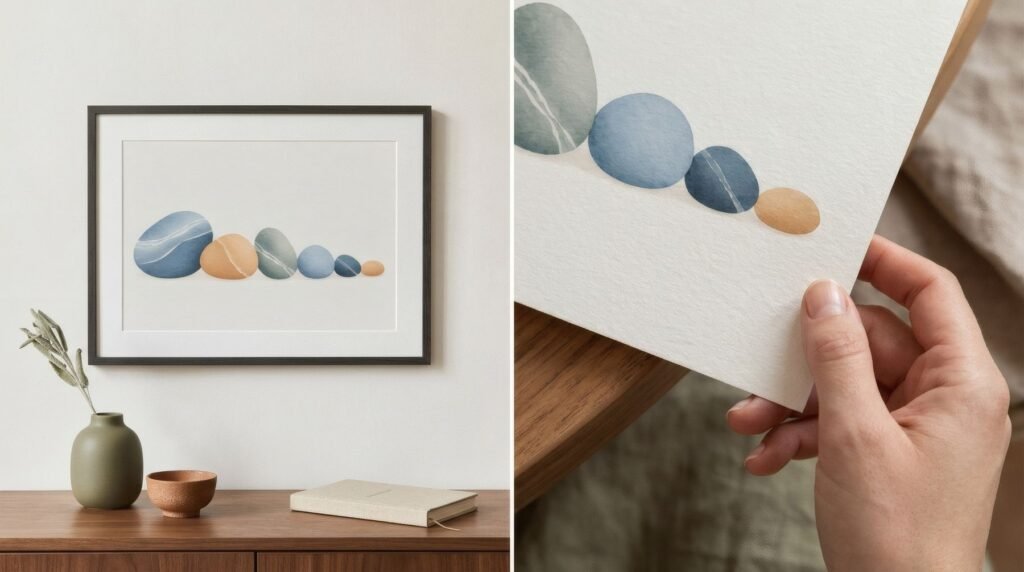
Practical details are often overlooked: whether the print comes with a frame, mount or glazing, or on its own; whether it arrives rolled in a tube or flat in a rigid envelope; and, if a frame is offered, what it is made of and what glazing it has.
Product photographs may show the print framed in a styled room even when it is sold unframed. A good description makes this clear.
Colour
Many descriptions note that colours may vary slightly from what you see on screen. It is an honest and reasonable note: everyone’s screen shows colour differently, and paper depends on the light in the room. More in from screen to paper: why images feel different.
Warning signs
Some descriptions deserve a little caution. Superlatives without data, such as «museum quality», «premium paper» or «the finest inks», with nothing specific. Absolute promises of longevity, such as «never fades» or «lasts for ever», without conditions or a source. Limited editions with no number. And no information at all about paper or process.
None of these necessarily means a print is poor, but they are good reasons to ask before buying.
A short comparison checklist
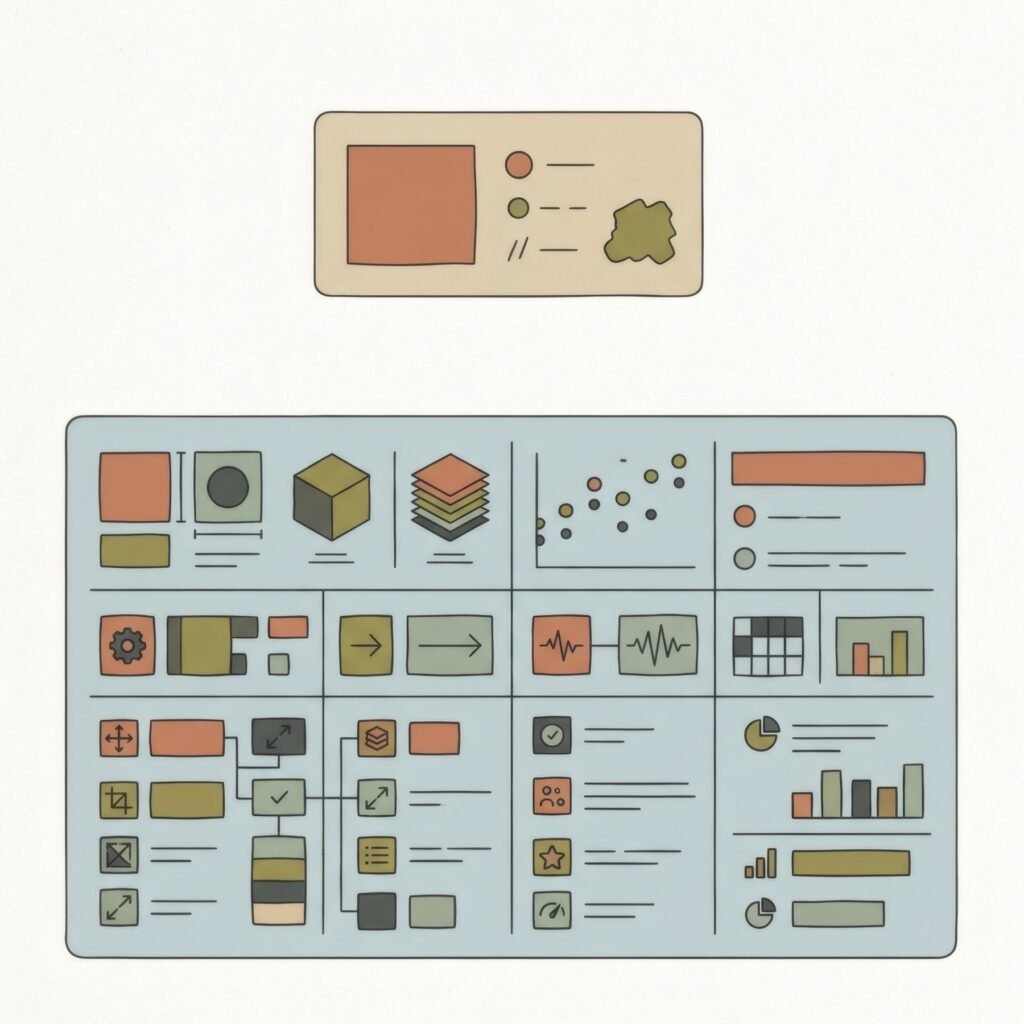
| What to look for | Key question |
|---|---|
| Size | Paper and image size? Border? |
| Paper | Type, finish, weight, acid-free? |
| Inks and process | Which technique and which inks? |
| Edition | Reproduction or original? Open or limited? |
| What is included | Frame, mount, glazing? |
| Delivery | Flat or rolled? |
Reading to choose better
A well-written product description is a form of respect for the buyer: it gives them what they need to decide with knowledge. Learning to read one lets you compare prints beyond the photograph and choose the one that truly fits what you are looking for.
At Bendíra we try to bring the same clarity to our product pages, setting out the size, the paper, whether the print comes framed or unframed and how it is printed, and we keep adding detail as the catalogue grows.
Keep reading: Print on Demand vs Curated Art Prints, A Short History of Botanical Illustration in Europe and What Is an Art Print? Art Prints vs Posters.