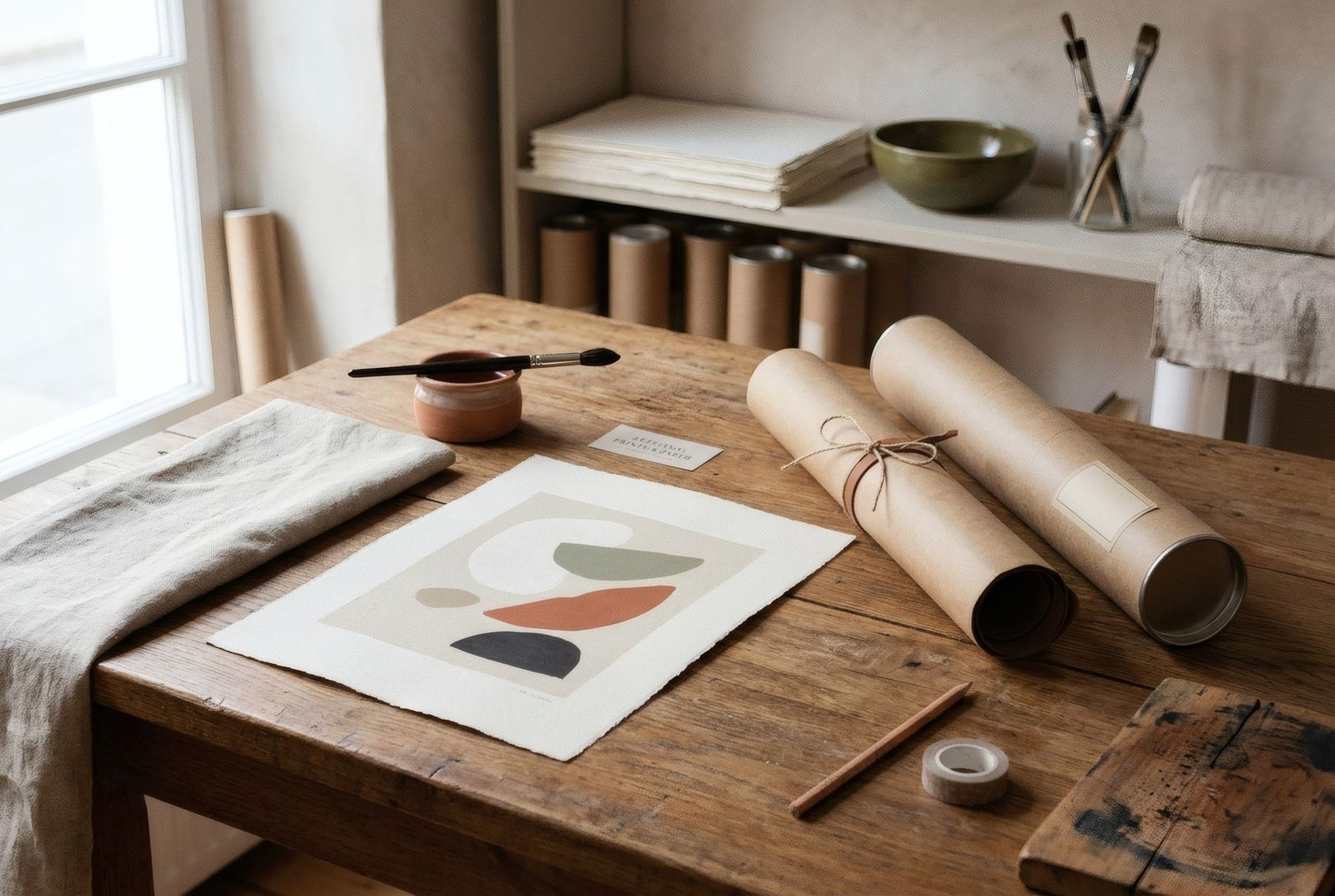
If you have ever shopped for art for your home, you will have met a small alphabet soup: print, poster, art print, fine art print, reproduction, original print, limited edition. Sometimes they seem interchangeable; sometimes every shop uses them differently. The confusion is understandable, because most of these terms have no universal legal definition. Still, some uses are fairly settled. Generally, an art print is a reproduction of an artwork printed with particular care for the paper and the fidelity of the image, intended to be hung as a work. A poster is usually a simpler print, often on thinner paper and in large runs, frequently tied to information or promotion. And an original print is something else entirely: a work created by the artist directly through a printmaking technique.
Why there is so much confusion
Part of the muddle is language. In English, «print» can mean almost anything printed, and «art print» is used very broadly. People also say «print» for an etching or lithograph, «poster» for something popular or graphic, and «reproduction» for a copy of a painting. But the boundaries shift, and marketing tends to choose whichever word sounds best.
So rather than memorising definitions, it helps to understand what lies behind each word and, above all, what to ask.
The poster: clarity and volume
The poster, in its classic sense, was born to communicate: to announce a concert, a film, an exhibition, a product. It was printed in large quantities to be pasted on walls or handed out, using methods designed for speed and economy, such as offset printing. Its paper was usually thin and light, and its life short.
Today, in interiors, «poster» also describes affordable decorative prints, often large, reproducing photographs, illustrations or graphic designs. They can be lovely. What usually sets them apart is a more economical approach to paper and print run.
The art print: care for paper and image
When people speak of an art print, they usually mean the intention to reproduce a work as faithfully as possible on a surface that does it justice. That typically means heavier papers, often matt or textured; particular attention to colour and detail; and shorter runs or printing to order.
There is also the phrase fine art print, which in many contexts is associated with archival-quality papers and pigment inks intended to last. But again, it is not a regulated term, and each producer may use it more or less rigorously. What really matters is what the seller specifies about paper, inks and process, not the label. We look at techniques in what is giclée printing and is it worth it? and papers in how paper changes the look of an art print.
The original print: a different category
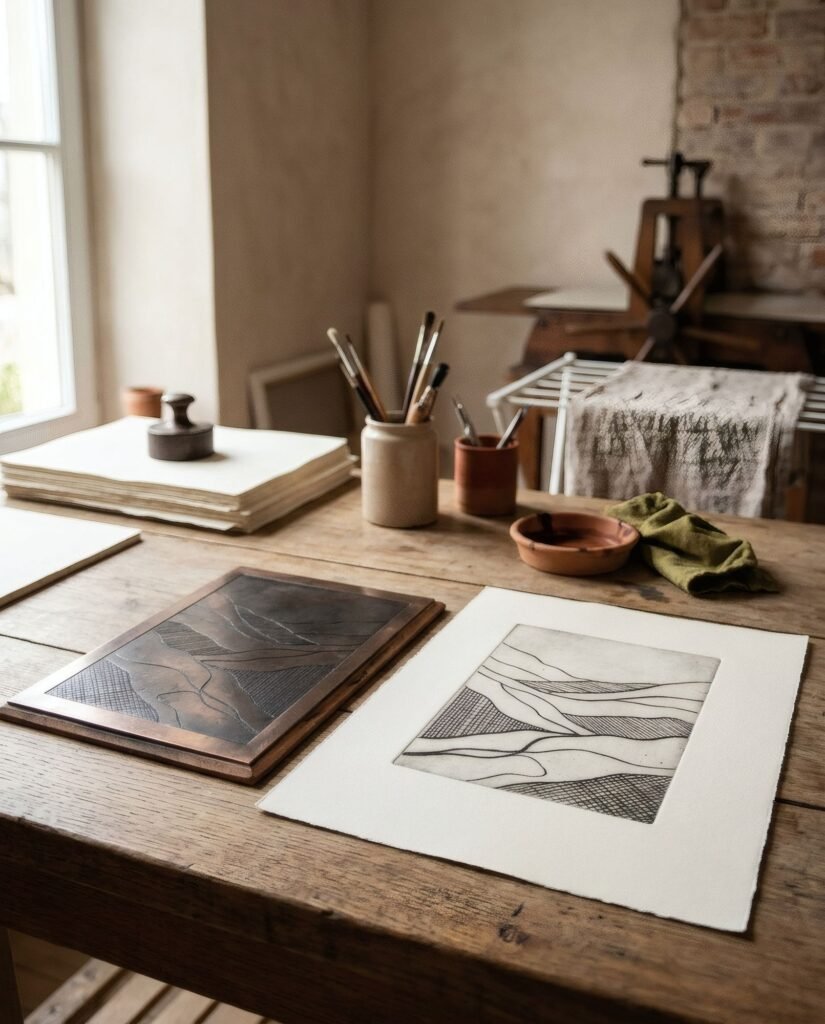
This is the most important distinction and the one most open to misunderstanding. An original print, whether an etching, lithograph, screenprint or woodcut, is not a reproduction of another work. It is a work in its own right, conceived by the artist to be made through printmaking. The artist works the matrix directly, be it a metal plate, a stone, a screen or a woodblock, and several impressions are pulled from it, usually numbered and signed.
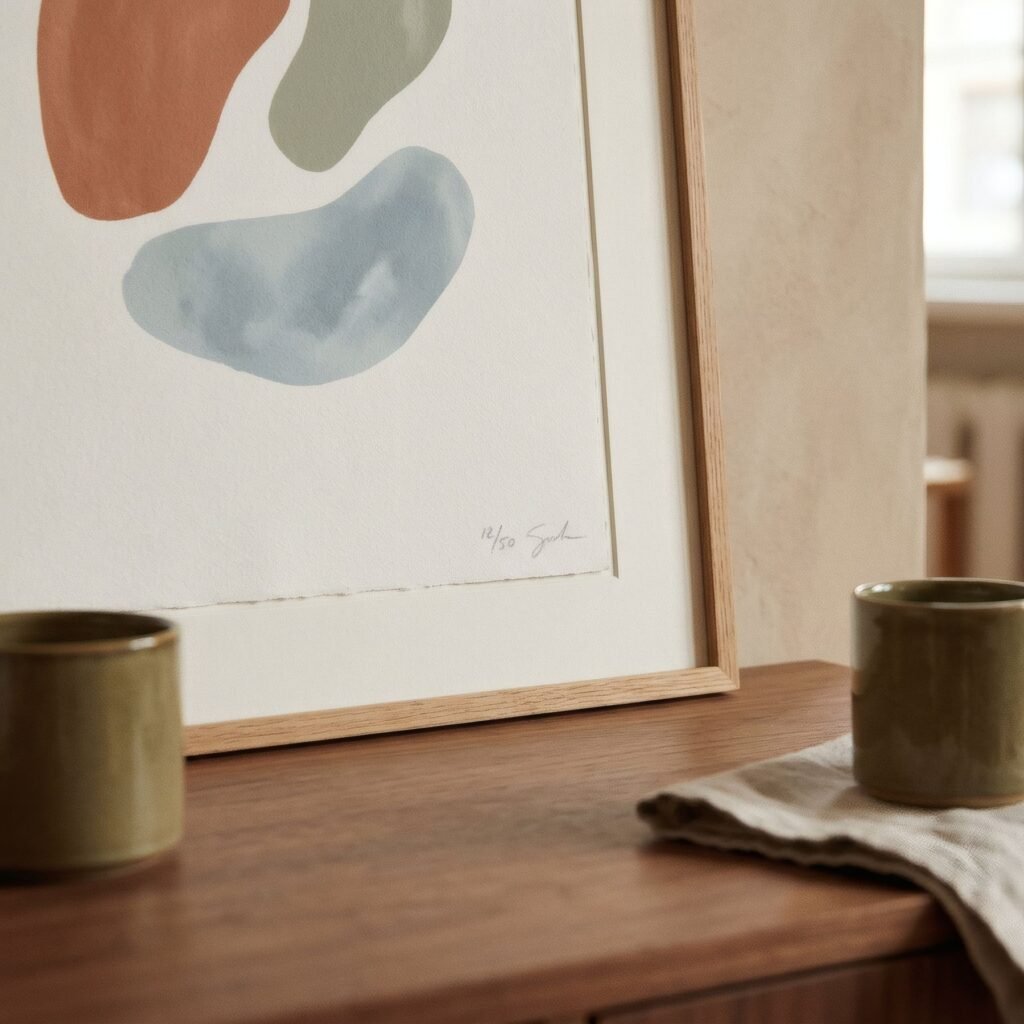
A reproduction, by contrast, copies a work that exists in another medium, such as a painting, a drawing or a digital design, through a printing process. It can be of extraordinary quality and wholly worth hanging, but it is not an original print and should not be presented as one.
The difference matters for price and for honesty. An original lithograph signed by an artist is a collector’s object; a printed reproduction of the same image is a decorative print.
Limited editions
Sometimes a reproduction is sold as a «limited edition», with a maximum number of copies, which may be numbered and occasionally signed. This can add collectable value, but only if the limit is real and kept to. If that matters to you, ask how many copies there are, whether the numbering is reliable and whether a certificate exists.
What to ask before you buy
Beyond the names, a few questions clarify almost everything. Is it a reproduction or an original print? What paper is it printed on, in terms of weight, finish and archival quality? What kind of inks were used? Is it an open or limited edition? Does it come framed or with a mount? What is the exact size of the paper and of the image, with or without a white border? A reputable seller will answer clearly. We help you read these details in how to read an art print product description.
What really matters
In the end, whether a work is called a print, an art print or a poster says less than what it actually is: how it was made, on what, and with what intention. And, above all, whether you love it enough to see it every day.
At Bendíra we make art prints: printed reproductions of works conceived for the format, and described as such. If you would like to see them, you will find them in our collections, with the sizes available listed on each product page.
Keep reading: How to Discover Your Personal Taste in Art, Matte vs Satin Paper for Art Prints and What Makes a High-Quality Art Print?.