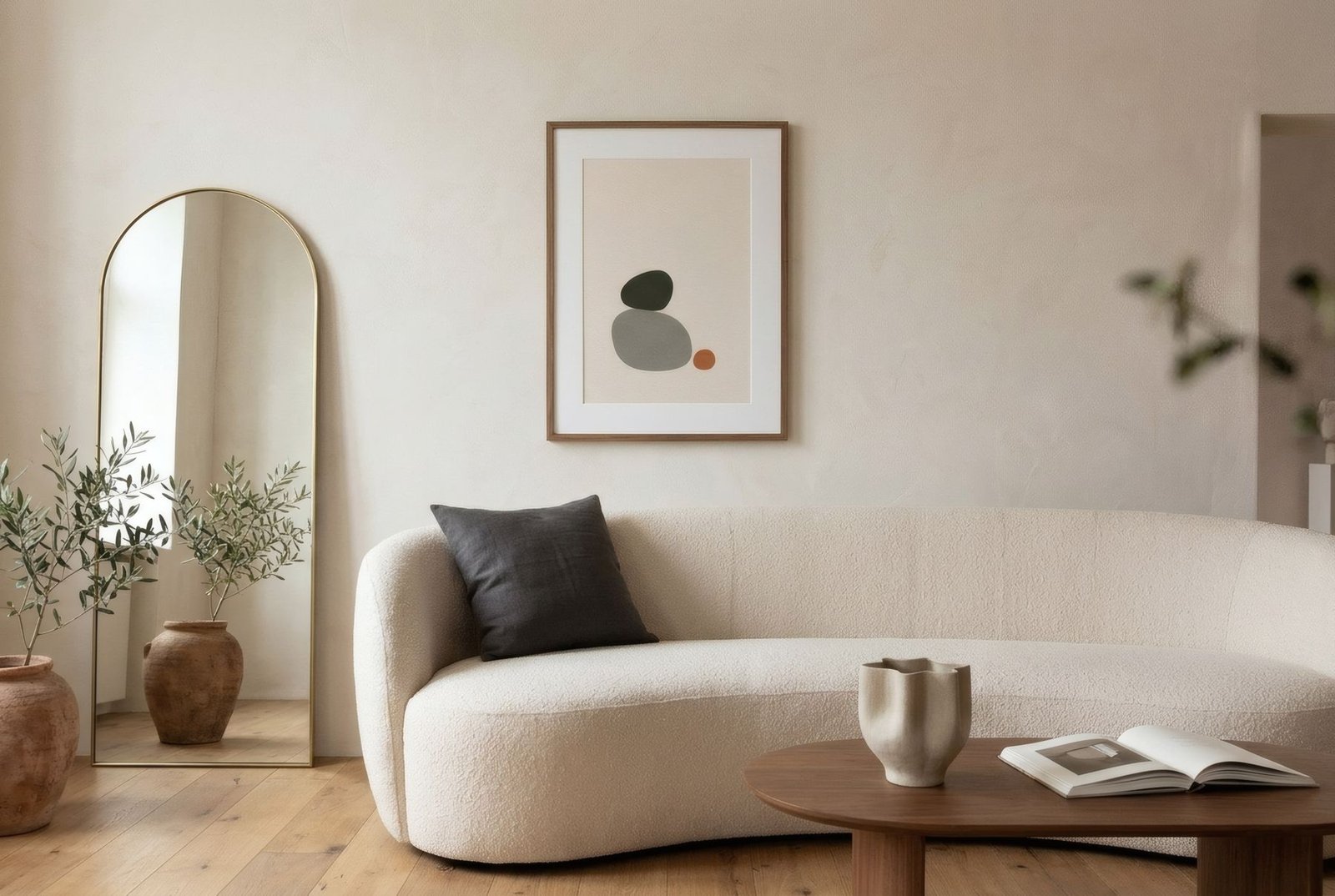
Look at interiors from the past few years and you will notice something: the corners have softened. Curved sofas, oval tables, arched mirrors, globe lamps, irregular vases, prints of soft shapes resembling pebbles or clouds. Organic shapes, those that recall nature more than the ruler and compass, have returned to design in force. It is not a whim. Curves can soften a space, make it more welcoming, and balance the rigidity of the straight lines that dominate architecture. Understanding how they work in a composition helps you use them with intention, whether in furniture, an object or the art on your wall.
What an organic shape is
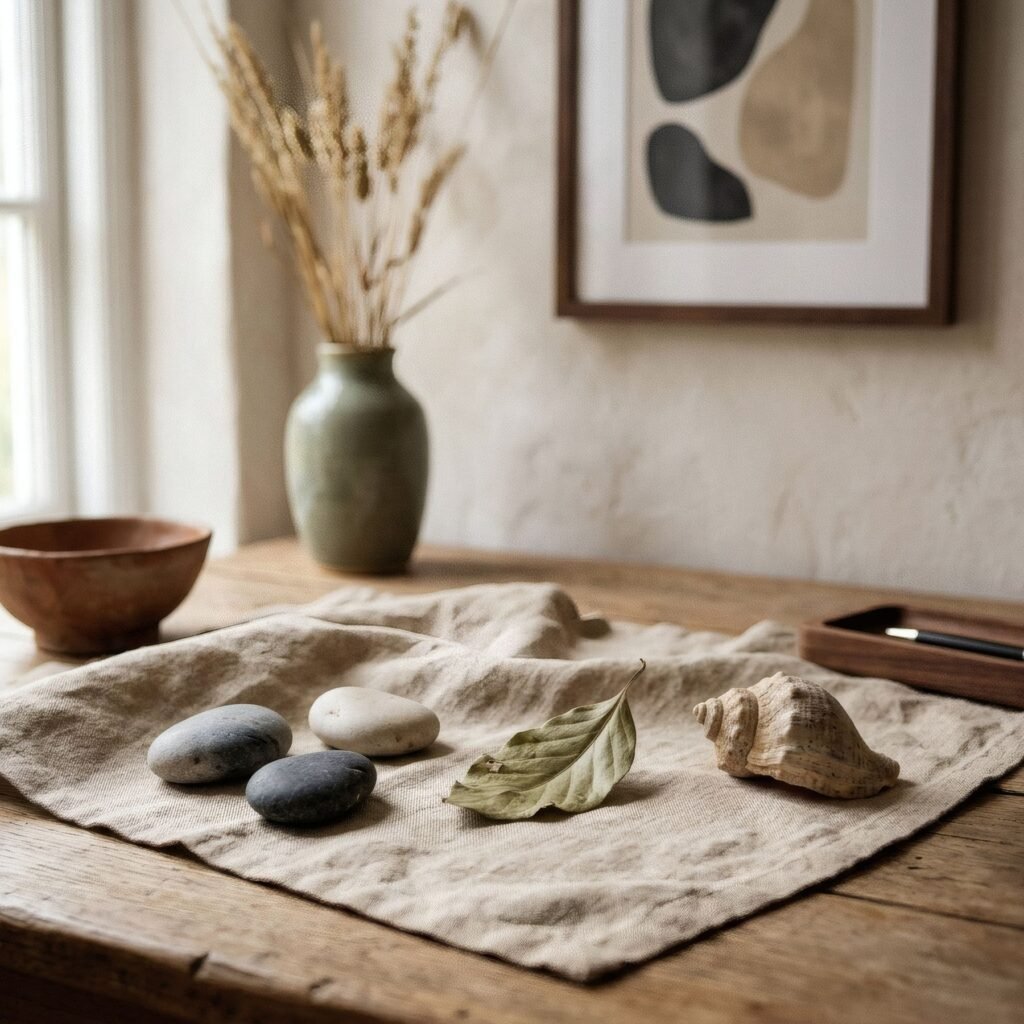
Organic shapes are those that evoke nature: irregular curves, soft contours, asymmetric silhouettes, surfaces that seem to have grown rather than been built. Think of a river-smoothed stone, a leaf, the line of a hill, the cross-section of a shell. They are not perfectly regular like a compass-drawn circle, nor are they chaotic: they have an inner logic, a balance we recognise intuitively.
Opposite them stand geometric shapes, the square, triangle and straight line, which we associate with order, human construction and precision. Both families coexist in every space, and much of the art of decorating lies in balancing them.
Why curves appeal
There is something about curves we find pleasant, and research has tried to explain it. In a 2006 study in Psychological Science, Moshe Bar and Maital Neta showed participants pairs of almost identical objects and patterns that differed only in contour, curved or angular. Participants tended to prefer the curved versions. The authors suggested that sharp contours might convey a sense of threat.
It is wise not to overstate studies like this, carried out in laboratory conditions with small samples. But they chime with an intuition many designers have held for decades: curves tend to be perceived as kinder, softer and more welcoming than sharp angles.
What curves do in a room
Most homes are made of straight lines: walls, doors, windows, floors, shelves. That geometry gives structure and order, but too much of it can feel rigid or cold. Organic shapes act as a counterweight.
A sofa with rounded arms softens a sharply defined living room. An oval table eases movement and conversation. An arched mirror introduces a curve that breaks a run of rectangles. And a print of soft forms on a plain wall brings movement without aggression.
Curves also guide the eye. Where a straight line takes it directly from one point to another, a curve leads it around a space more slowly, almost keeping it company.
Balancing curve and line
As with almost everything in design, proportion is key. A room made only of curves can feel soft, vague, even a little childlike; one made only of straight lines can feel severe. The most successful interiors usually combine both, with a structure of straight lines in the architecture and large furniture, softened by a few well-chosen organic shapes in objects, textiles or art.
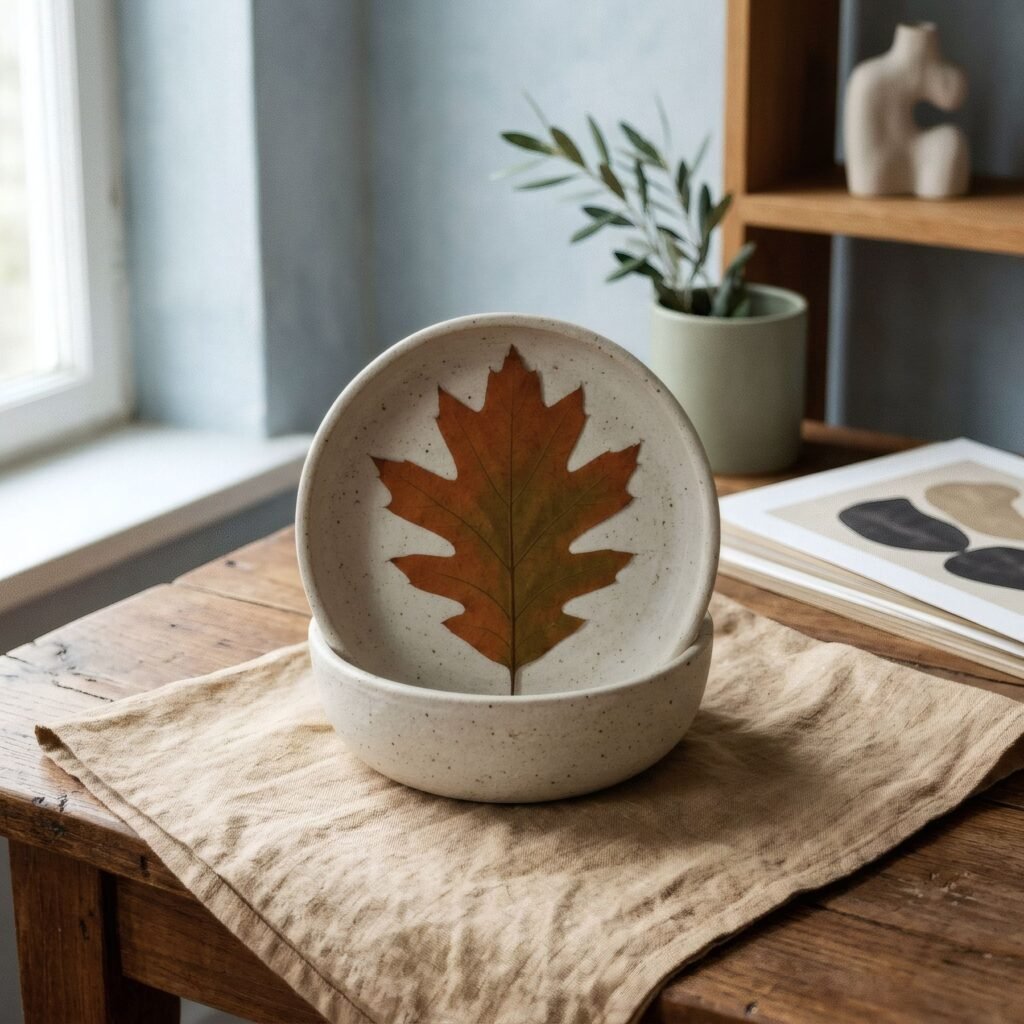
On a wall, that might mean a print of curving forms above a straight-lined sideboard, or an organic abstract beside a geometric shelving unit. The contrast lets each kind of shape be appreciated more.
Organic shapes in art for the home
In art, organic shapes have a long history, from mid-twentieth-century sculpture to biomorphic abstraction, which we explore in organic abstract art: forms and influences. In contemporary prints they appear as silhouettes recalling stones, seeds, leaves or waves, in spacious compositions with natural palettes.
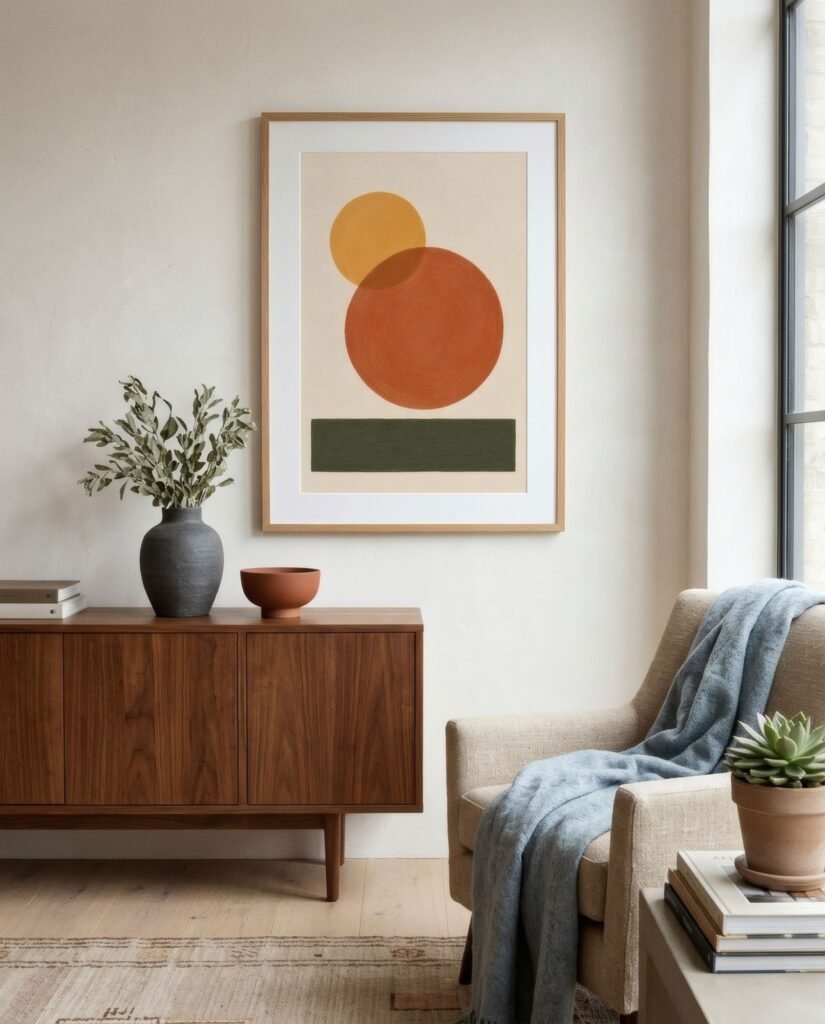
These works suit interiors of natural materials especially well, such as wood, linen, ceramics and limewash, because they share the same sensibility. They are also a good way to bring softness into very geometric or minimal spaces without changing the furniture.
Bringing them home
If you want to introduce organic shapes, start with one piece that has presence. It might be furniture, a curved sofa or round table, or, more simply, an object or artwork. A print with one soft form on a feature wall can change the feel of the whole room.
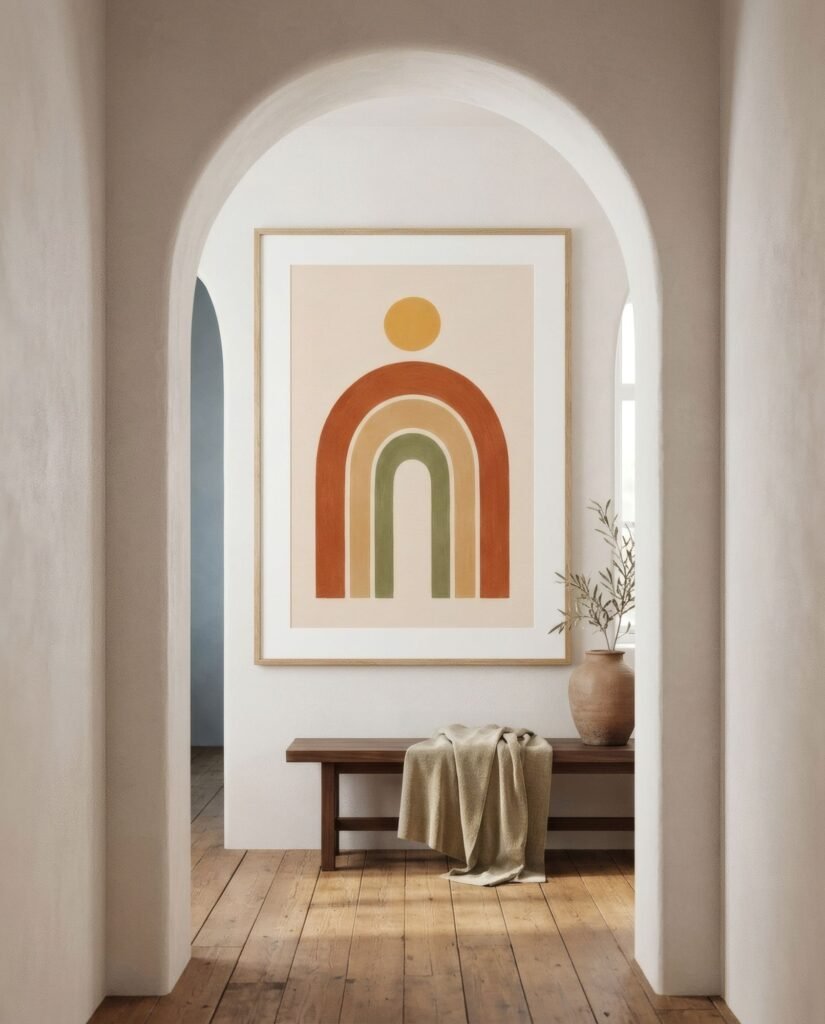
Then repeat the curve in another detail or two: a vase, a mirror, a lamp. That quiet repetition draws a thread through the space. And make sure straight lines remain to give structure, so the whole does not lose its firmness.
Softness as a choice
Choosing organic shapes is, at heart, choosing a certain softness: a gentler, less rigid way of inhabiting a space, closer to nature. It is not about rounding every corner of the house, but about knowing where one curve can help everything else breathe.
Among Bendíra’s collections you will find prints of organic forms, arches, soft circles and leaves in earth, sage and blue, made to bring that softness to walls of straight lines.
Keep reading: Photography as Wall Art, The Power of Negative Space in Art and Warm Minimalism: How to Decorate with Art.