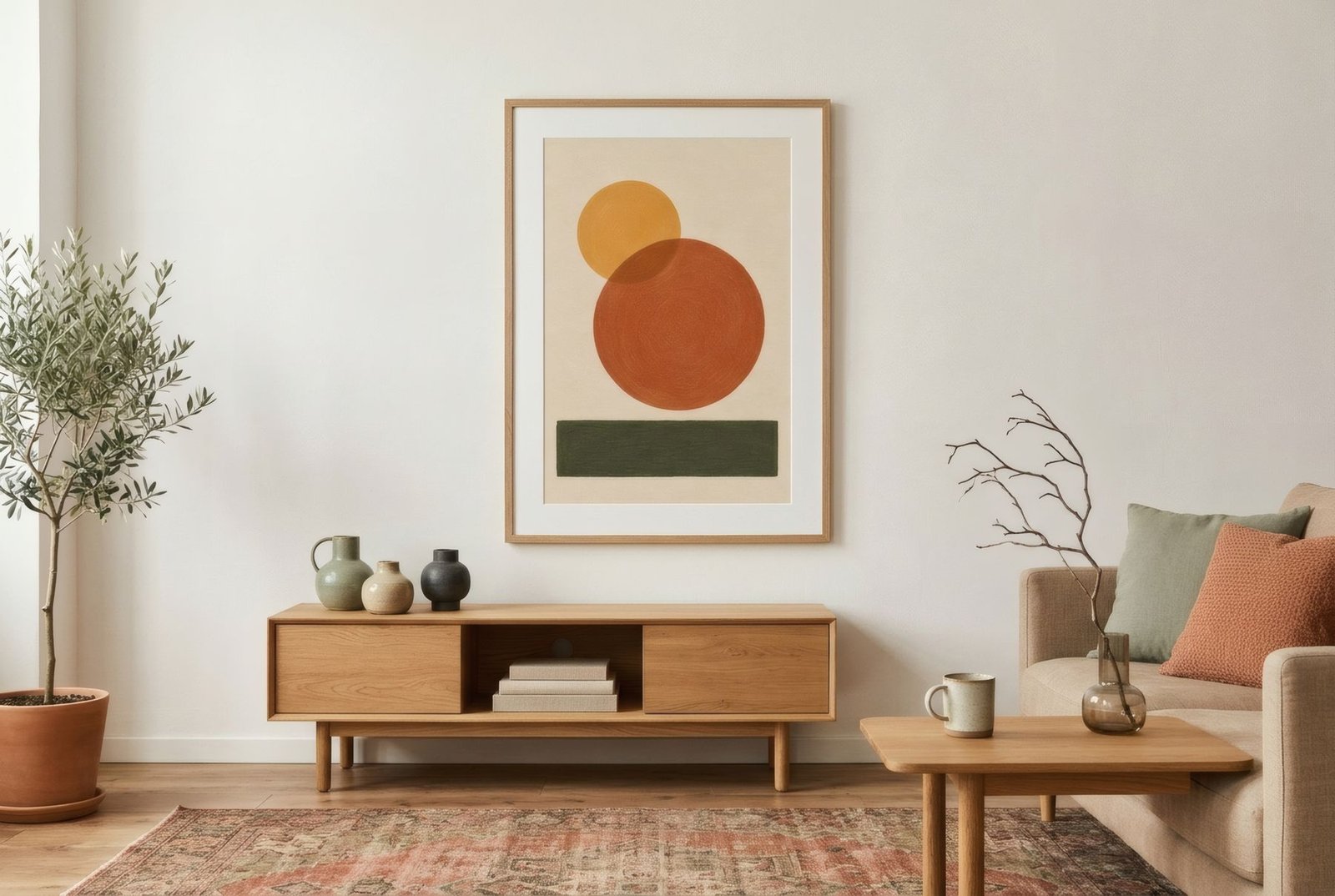
Homes of every kind now display prints of soft, rounded, almost liquid shapes: silhouettes that recall pebbles, seeds, clouds or cells, floating on gently coloured grounds. It is a very recognisable aesthetic, associated with calm and the natural world. But those shapes have a longer and richer history than it might seem. In the early twentieth century, several European artists developed a way of abstracting that started not from geometry but from life: from organisms, growth and the soft forms of nature. This current came to be called biomorphic abstraction. Knowing it helps us appreciate the organic shapes we see on walls today, and distinguish a deep artistic tradition from a decorative trend.
Two paths of abstraction
In 1936, Alfred H. Barr Jr., the founding director of the Museum of Modern Art in New York, organised an exhibition called Cubism and Abstract Art. In it he proposed a distinction that has become classic: abstract art of his time, he argued, followed two paths. One was geometric, descending from Cubism and continued by Constructivism and Mondrian. The other was non-geometric or biomorphic, more intuitive, with curving, irregular forms evoking the organic.
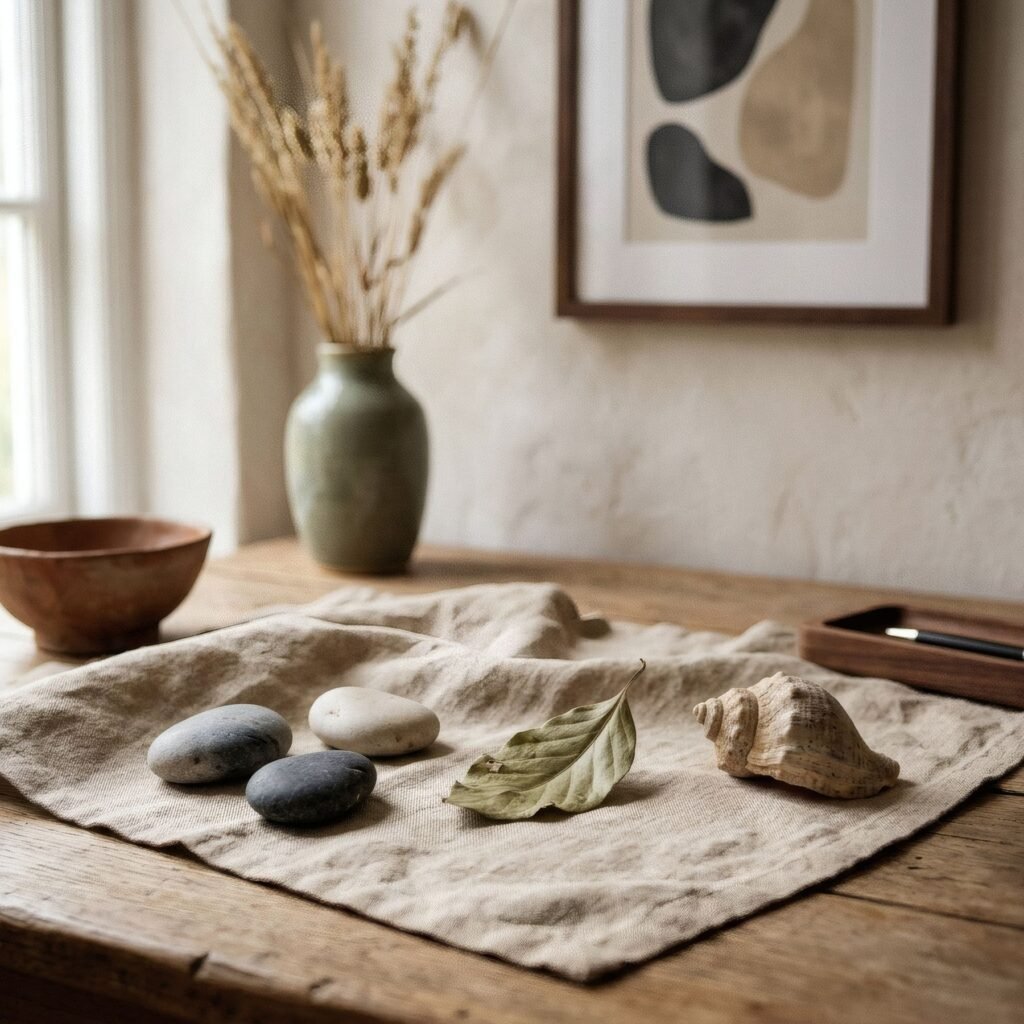
Barr even suggested that, at that moment, the geometric tradition was in decline and biomorphic forms were in the ascendant. Later history showed both paths continuing side by side, but his distinction remains a very useful way to understand abstract art. We discuss the geometric path in geometric art: shapes, colour and composition.
The artists of organic form
Several artists are especially associated with this way of abstracting.
Jean Arp, also known as Hans Arp, was one of its great explorers. His reliefs and sculptures of soft, rounded forms seem shaped by water or natural growth, conveying both calm and life.
Joan Miró, the great Catalan painter, built a universe of his own: soft shapes, blots, stars, lines and figures like floating organisms, with an unmistakable poetry and humour.
In Britain, the sculptors Henry Moore and Barbara Hepworth worked with organic, hollowed, curving forms, often inspired by the human body, stones or landscape.
Each has a distinct language, but they share an idea: form is not built with ruler and compass, but seems to grow, as in nature.
The language of organic form
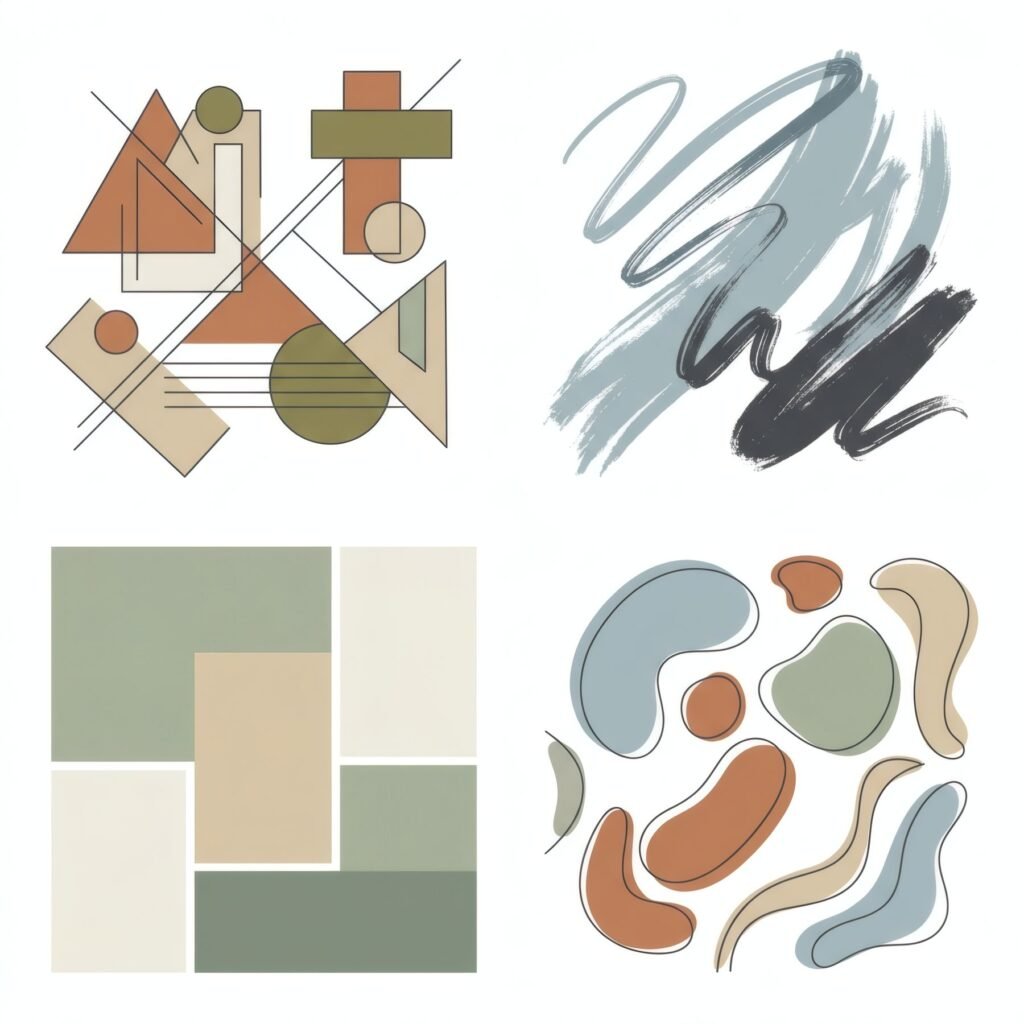
What characterises organic abstract art visually? Above all, irregular curves, contours that are neither perfect circles nor regular ovals, but silhouettes that recall living things. Also a sense of growth or movement, as if forms were expanding, floating or transforming. Relationships between forms, which touch, overlap, approach and drift apart as though in conversation. And often generous space around them, letting the forms breathe.
Artistic tradition and decorative style
An honest distinction is needed here. The works of Arp, Miró, Moore and Hepworth grew out of deep artistic enquiry tied to their time, to poetry, to Surrealism, and to reflection on nature and life. They are artworks with a context, a history and an intention.
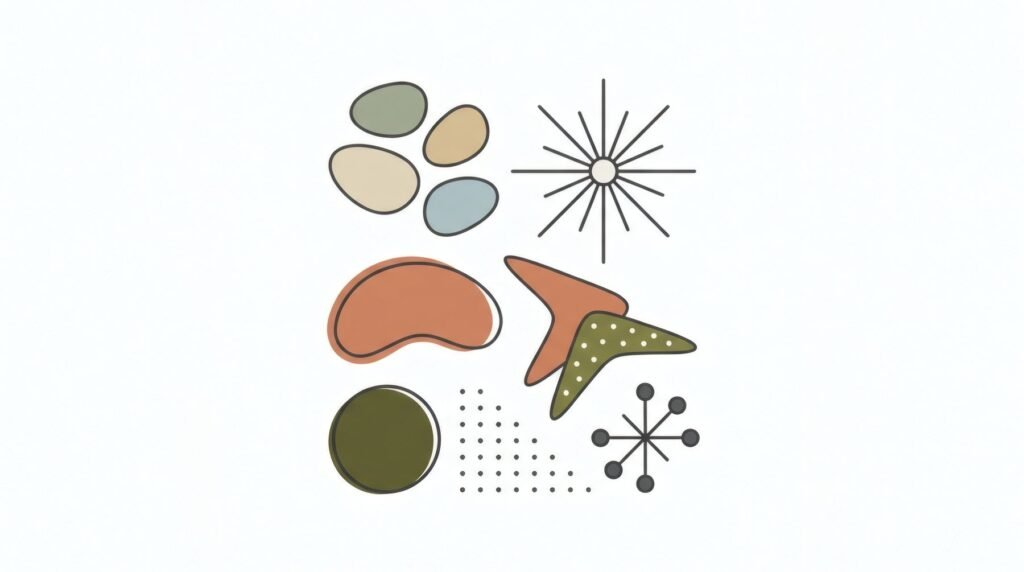
Many of the organic-form prints seen in interiors today, including those from studios like ours, share a visual language with that tradition but do not claim to be the same thing. They are contemporary works that borrow its curves, its calm and its link with nature, and translate them into a decorative, domestic register. There is nothing wrong with that. It is simply best not to confuse the two, or to present a current aesthetic as the direct heir of a historic movement.
Why they appeal
Organic forms feel familiar. They recall what we see in nature, a smoothed stone, a leaf, a cloud, and perhaps that is why we find them kind. Some studies even suggest we tend to prefer curved contours to angular ones, with the usual caveats about laboratory research. We discuss this in organic shapes in art and design.
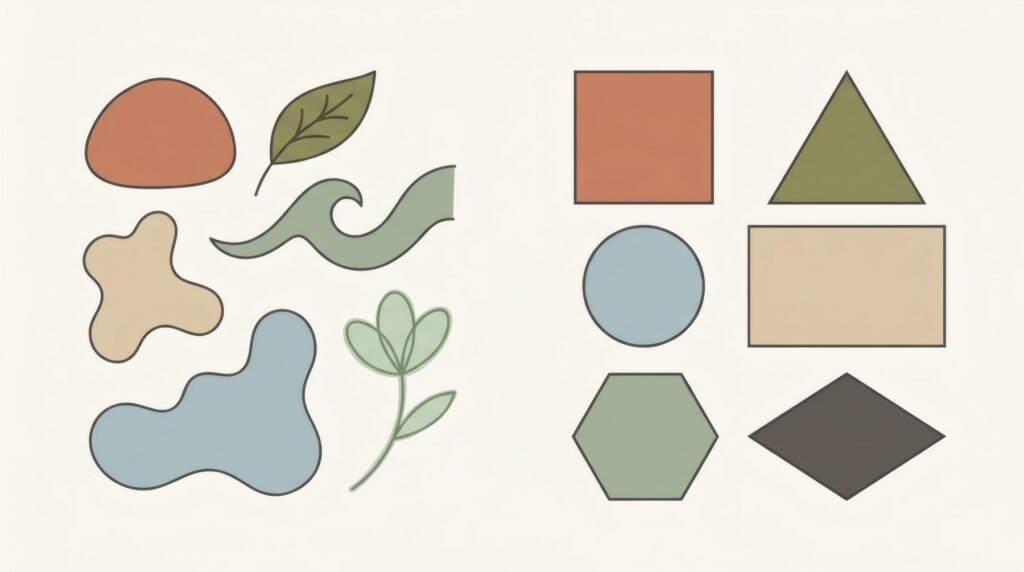
At home, these forms bring softness, movement without aggression and a connection with nature that sits beautifully with wood, linen and ceramics.
Forms that breathe
Organic abstract art has deep roots in modern art history and a lively presence in homes today. Knowing where it comes from lets you enjoy it more consciously, whether in a gallery before an Arp or at home before a print of soft forms.
Bendíra’s collections include prints of organic forms, floating circles, arches and leaves, which, without claiming to belong to that tradition, share its love of curves and calm.
Keep reading: Collage Art: Layers, Materials and Composition, Art Deco Posters: Visual Features and History and What Is Abstract Art? A Beginner’s Guide.