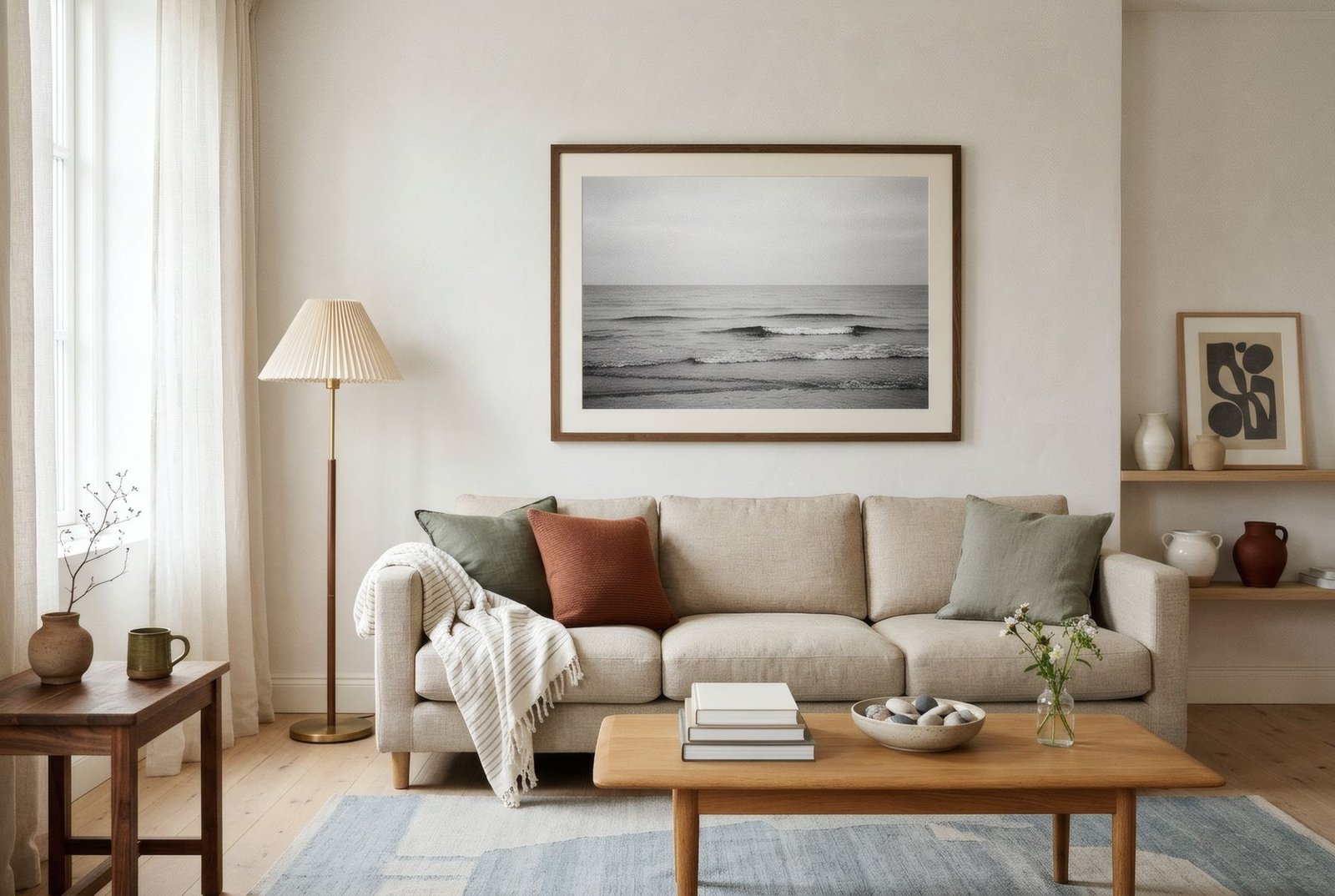
A photograph has a very particular power: it reminds us that what we see once existed. That horizon, that sunlit façade, that gesture on a street were real for a fraction of a second, and someone was there to capture them. Perhaps that is why photography on a wall at home relates to its viewer differently from a painting or an illustration. It can open a window onto somewhere else, hold a memory or offer a new way of seeing something ordinary. Choosing it well means thinking about style, about how to look after it, and about something often forgotten: where the image comes from and what story lies behind it.
An art form with its own history
For much of the nineteenth and twentieth centuries, photography had to fight to be recognised as art. It was seen as a mechanical technique, useful for documenting but lacking the artist’s hand. That debate now seems distant. Photography fills galleries in major museums, has its own festivals and collectors, and in Britain has a rich tradition stretching from early pioneers to documentary and contemporary practice. Bringing photography home is, in that sense, bringing home art in the fullest sense.

The main genres
Photography for the walls spans very different styles, each relating to a space in its own way.
Landscape is perhaps the most popular: a calm sea, a forest in mist, a desert at dusk. It works like a window, visually widening the wall and drawing the eye into the distance. It suits living rooms and bedrooms especially, where it invites calm.
Architecture offers lines, shadows and geometry: a staircase seen from above, a white façade with crisp shadows, a detail of concrete. It brings order and structure and pairs well with contemporary interiors.
Detail or abstract photography moves so close to its subject that the subject almost vanishes: the texture of stone, the surface of water, the grain of wood. These images work almost like abstract art and are extremely versatile.
Street and documentary photography tells stories of people and places. It has great power and character, and needs a space where it can be looked at properly.
Black and white runs through every genre. It removes colour and leaves light, form and contrast. It is an elegant choice and easy to combine, because it lives alongside almost any palette. We explore it in black and white wall art: styling ideas.
Choosing a photograph for home
When choosing, think first about what you want the image to do in the room. For calm, a broad landscape with few elements and soft light. For character, an architectural photograph with strong contrast or a documentary image with presence. To blend in, an abstract detail in tones that pick up those of the room.
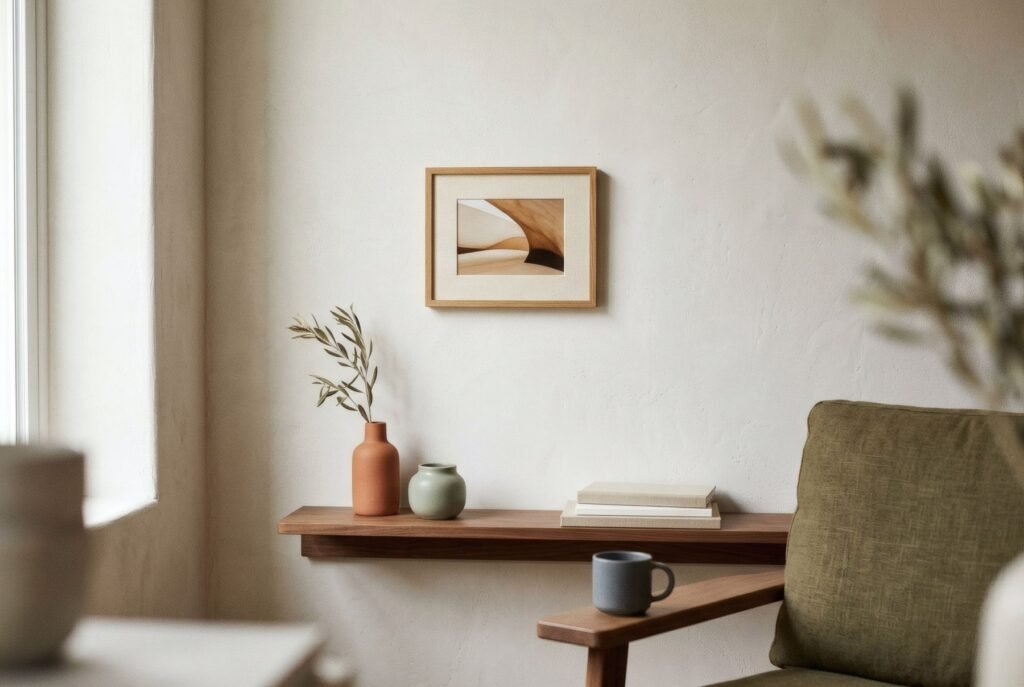
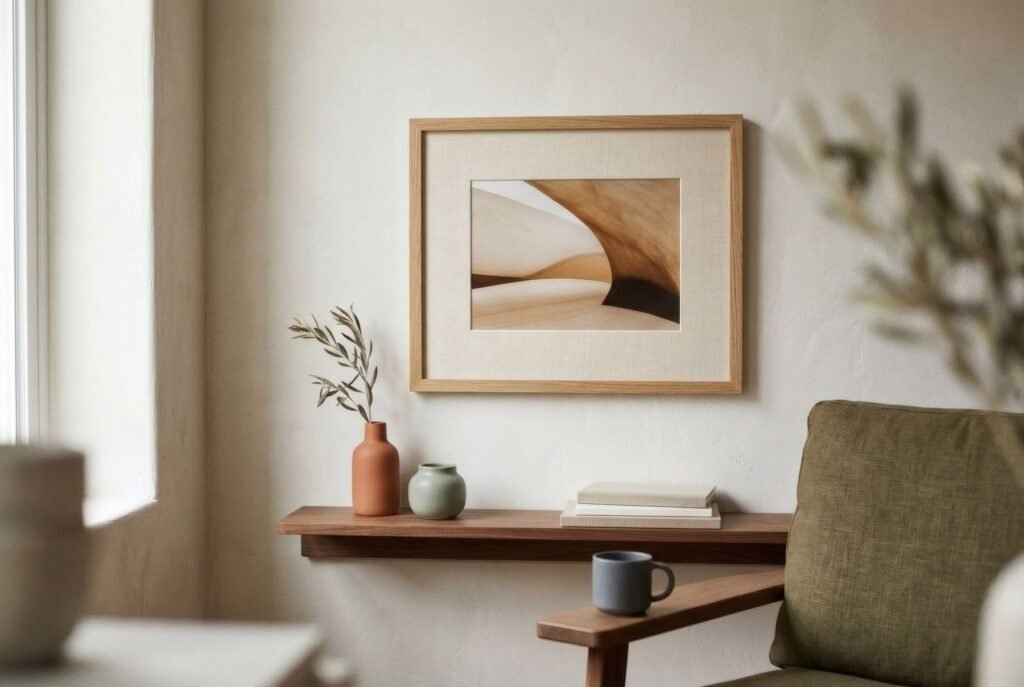
Size matters a great deal in photography. Many images gain from scale: a small landscape may look like a postcard, while the same landscape at large size becomes a window. But a photograph enlarged too far without enough source resolution loses sharpness, as explained in image resolution for art prints: what you need to know.
An ethical eye on the image
This deserves some attention. Every photograph has an author, and often people or places depicted. Choosing photography thoughtfully means asking a few questions.
The first is authorship. Do we know who took the photograph? Is their work credited and respected? Buying copies of doubtful origin, or unauthorised reproductions of well-known photographs, harms the people who made them.
The second concerns the people pictured. A street photograph or portrait shows someone who may never have imagined ending up on a stranger’s wall. Laws on image rights vary from country to country, but beyond the legal question there is the respectful one: preferring images where people consented or cannot be identified, especially where children or vulnerable situations are involved.
The third is how other places and cultures are seen. Some travel photography reduces local people to exotic scenery. Choosing images that show people and places with dignity rather than as decoration is a form of respect.
And a fourth, increasingly relevant: knowing whether an image is a photograph at all. Computer-generated images can now imitate the look of photography perfectly. There is nothing wrong with them if they are presented as what they are, but they should not be sold as real photographs of a real place or moment.
Looking after it
Printed photographs are sensitive to light, like any image on paper. Hang them away from direct sun and damp, and handle them with clean hands or gloves, as fingerprints mark many photographic papers easily. A frame with a mount, so the image does not touch the glass, and glazing that filters some ultraviolet light help protect them. More in how to protect art prints from sunlight and moisture.
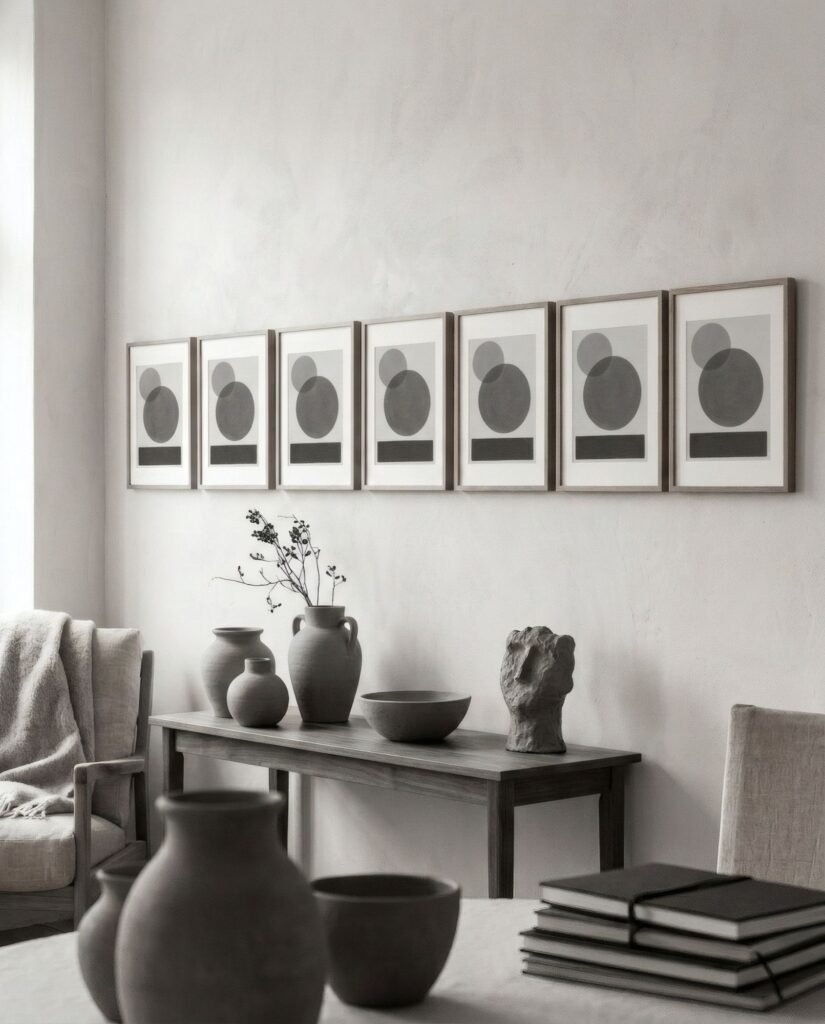
Windows on the wall
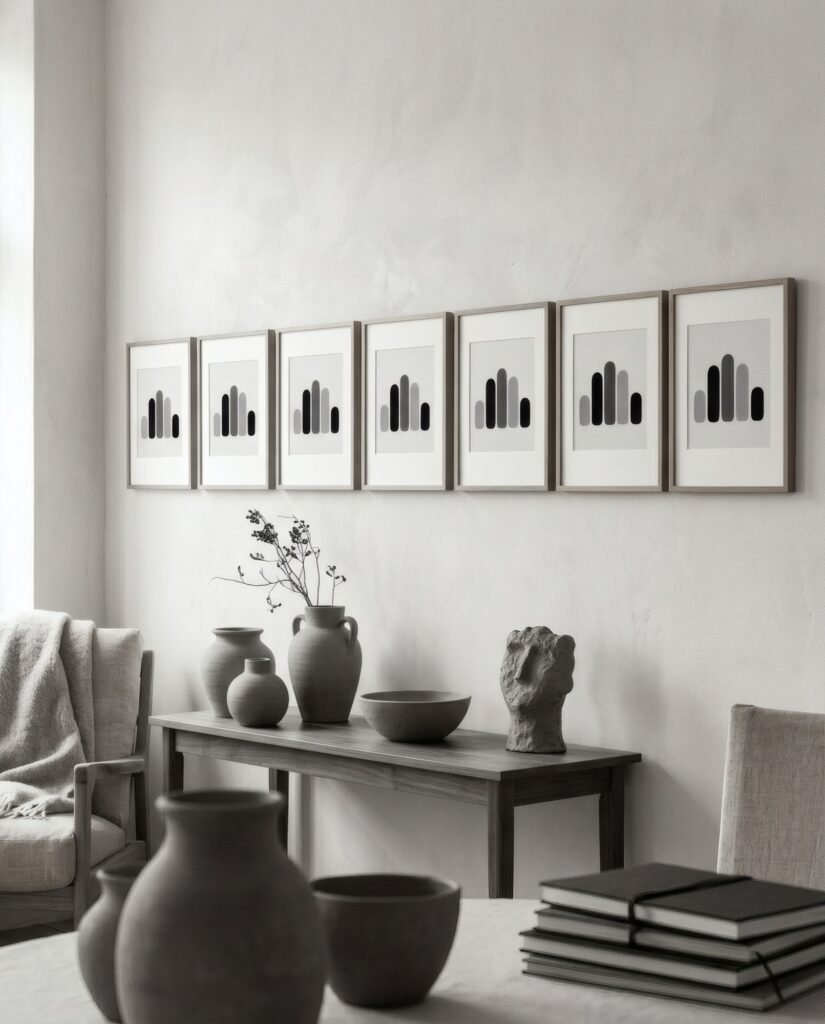
A good photograph at home can be many things: a place to return to, a memory, a lesson in light, a small story. Choosing it with attention to style, scale and origin makes it not only beautiful but an image you can live with easily.
Keep reading: How to Look at Abstract Art, Organic Shapes in Art and Design and What Makes a High-Quality Art Print?.