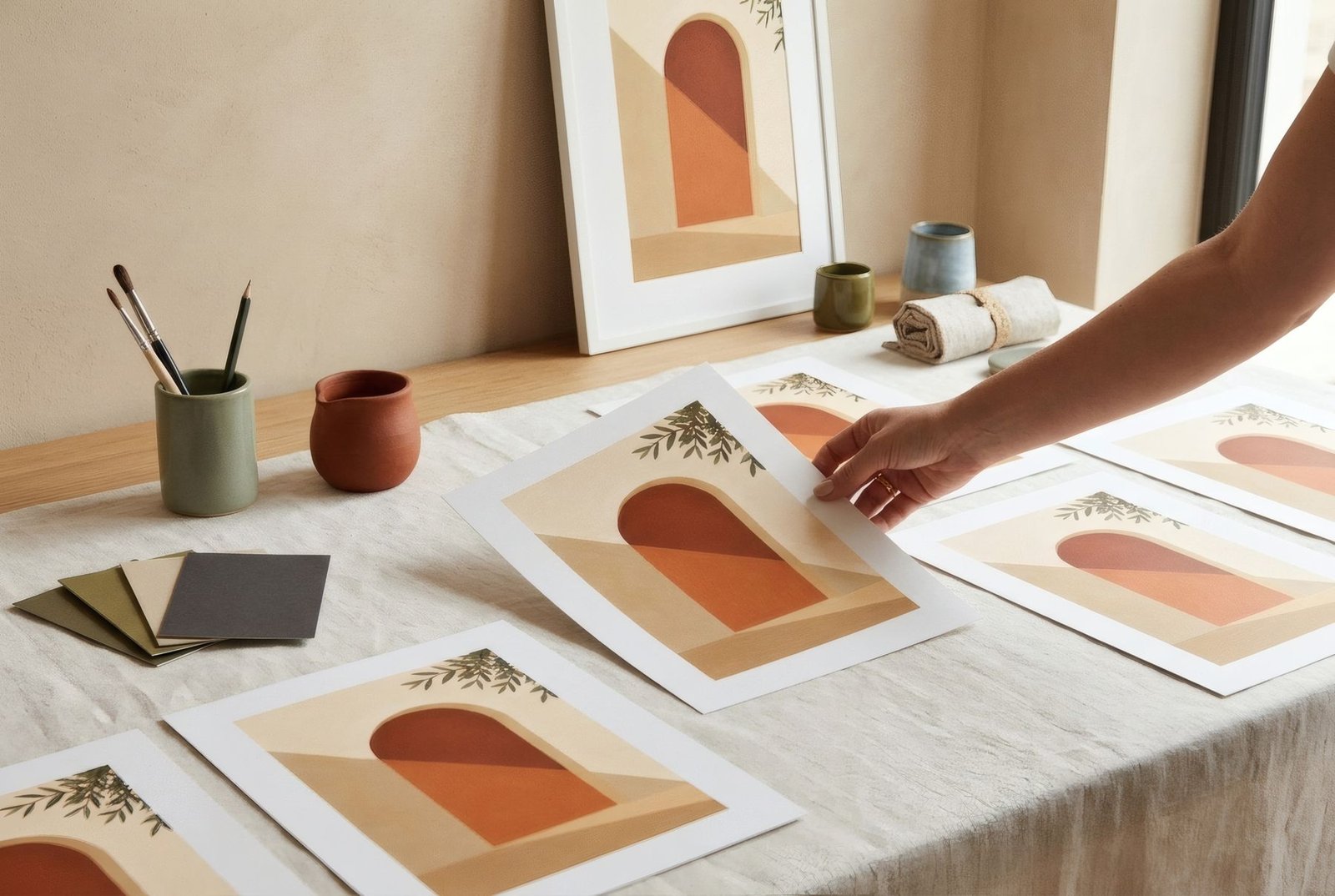
Museums have a role that is rarely talked about but decides much of what we see: the curator. Curators choose which works are shown, in what order, beside which others, under what light and in what space. Their job, above all, is to choose with intention: not to hang everything beautiful, but what makes sense together. At home, each of us is, knowingly or not, the curator of our own walls. There is no need for museum solemnity, but thinking a little before hanging an image changes the result enormously. Choosing with intention does not mean choosing rigidly. It means choosing with a reason.
Filling versus choosing
Filling a wall is easy. You hang whatever is to hand: a souvenir, a gift, something on sale. The result can be charming, but it often reads as accumulation rather than choice, with images that do not speak to one another or to the house.
Choosing with intention is different. It means asking, before you hang something, what it brings to that place and why. It is not about having few works, or expensive or important ones, but about each one being there for a reason.
First question: why this image?
The simplest question and the most important. What does this image have that makes me want to see it every day? It might be a colour that calms me, a form that draws me, a memory it returns, an idea that keeps me company. If you cannot find an answer, it may not be the right image, or not yet the right moment.
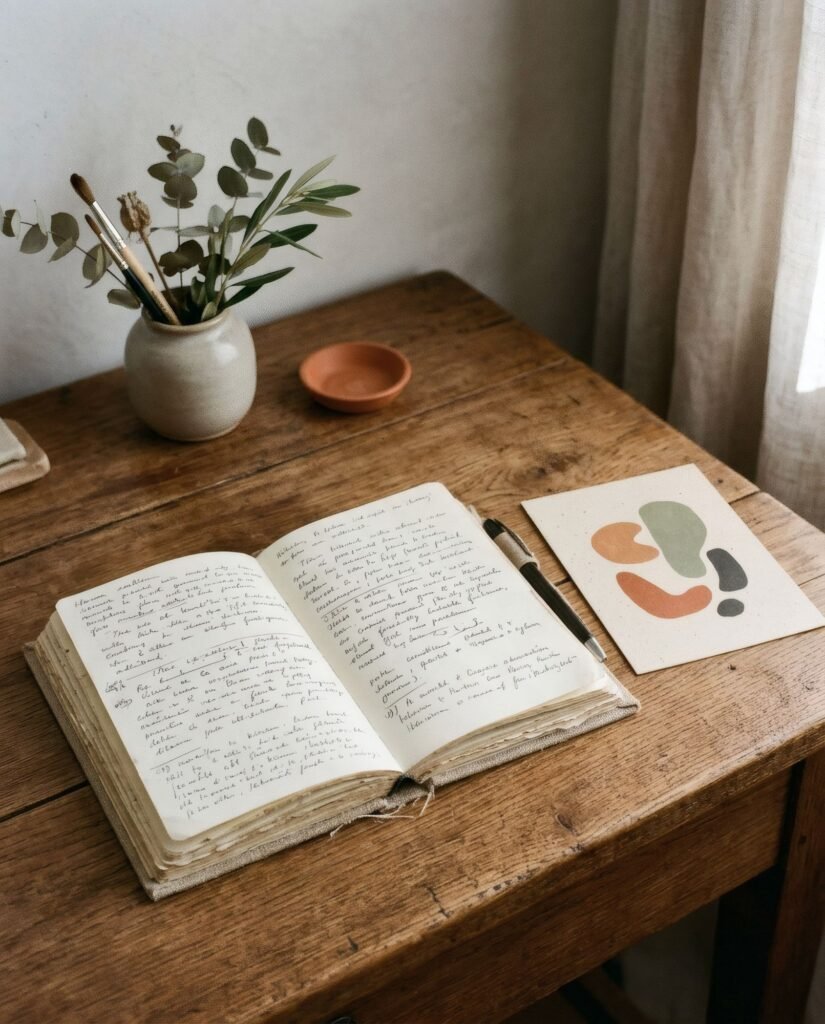
Impulse or trend-led choices are not wrong in themselves, but they tend not to last. An image chosen because it was fashionable may tire us within months; one chosen because it speaks to us usually stays with us far longer.
Second question: where?
The same image does not work everywhere. An intense, vibrant work might be perfect in an entrance hall, seen for a moment on arrival, and too much in a bedroom. A very serene one might glow in a reading corner and get lost on the large wall of a busy living room.
Thinking about where the image will go, how far away it will be seen, in what light and at what times of day, makes the choice not only aesthetic but part of daily life. We go into this in how to choose wall art for your living room and other articles in this Journal.
Third question: alongside what?
No image stands alone. It lives with furniture, with the colours of the room, with the other works in the home. Choosing with intention means looking at that whole. Does this image converse with what is already there? Does it complement, contrast with or balance it? Or does it compete?
Not everything needs to match. Sometimes contrast is exactly what a room needs. But it should be a contrast you chose, not an accident.
Fourth question: will it keep speaking to me?
Perhaps the hardest question, since no one can predict how their taste will change. But it is worth imagining: will this image still say something to me in a few years? Works with layers, which reveal something different depending on light or mood and are not exhausted at first glance, tend to age better in our lives than those that say everything at once.
Choosing fewer, looking better
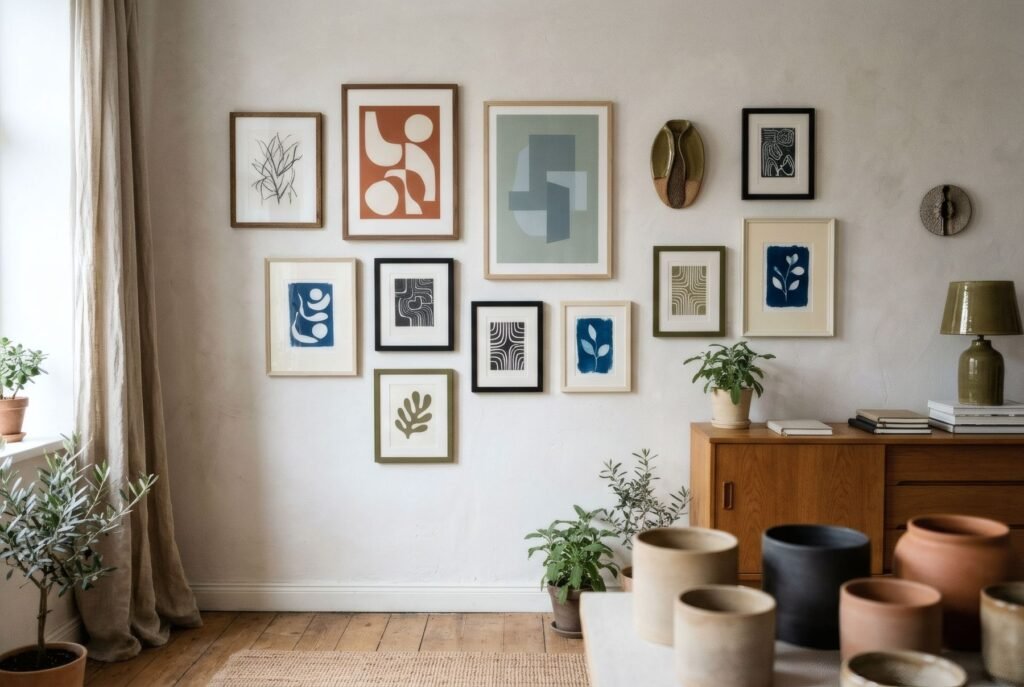
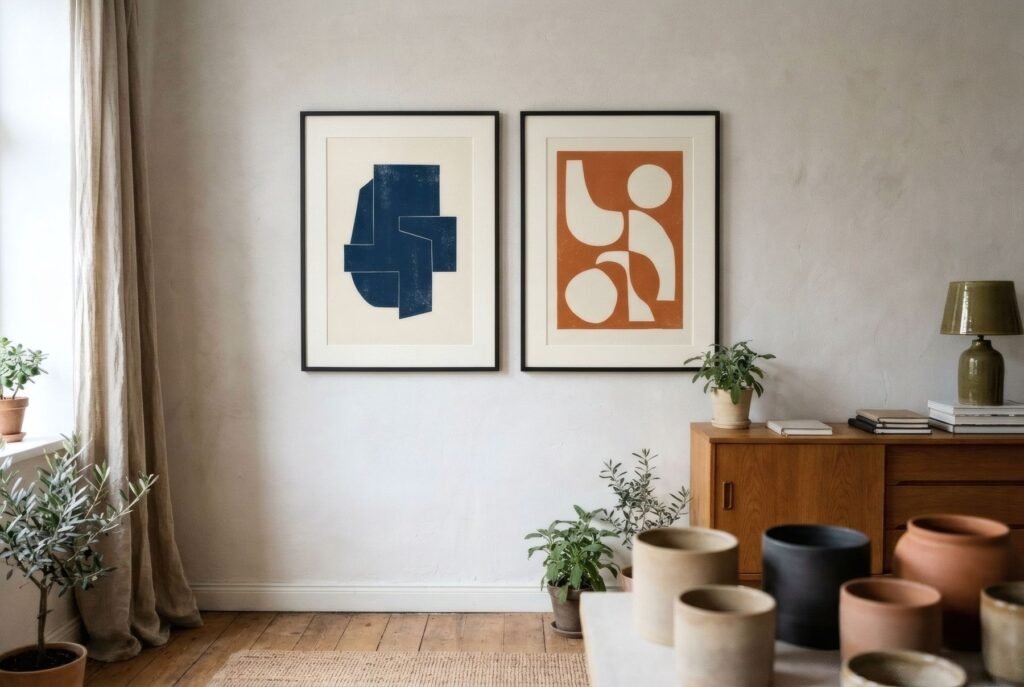
A natural consequence of choosing with intention is that you usually choose fewer images. Not out of austerity, but because each one takes up more of your attention. A wall with one well-chosen work often says more than one covered with unrelated pieces. We explore this in on choosing fewer images and looking more closely.
Choosing with intention does not mean never changing, either. Quite the reverse: someone who chooses with care also knows when an image has run its course and deserves a rest, a new wall or a replacement.
Our own exercise
At Bendíra we try to apply these same questions to our own work. Each print is made with a real home in mind, a light, a way of living. We prefer fewer works that converse well with one another to many without connection, which is why we group them into collections that share an atmosphere.
If you would like to put your own curator’s eye to work, we invite you to browse our collections with these four questions in mind.
Keep reading: Living with Art: The Beauty of Small Details, The Value of Objects Made to Last and How to Discover Your Personal Taste in Art.