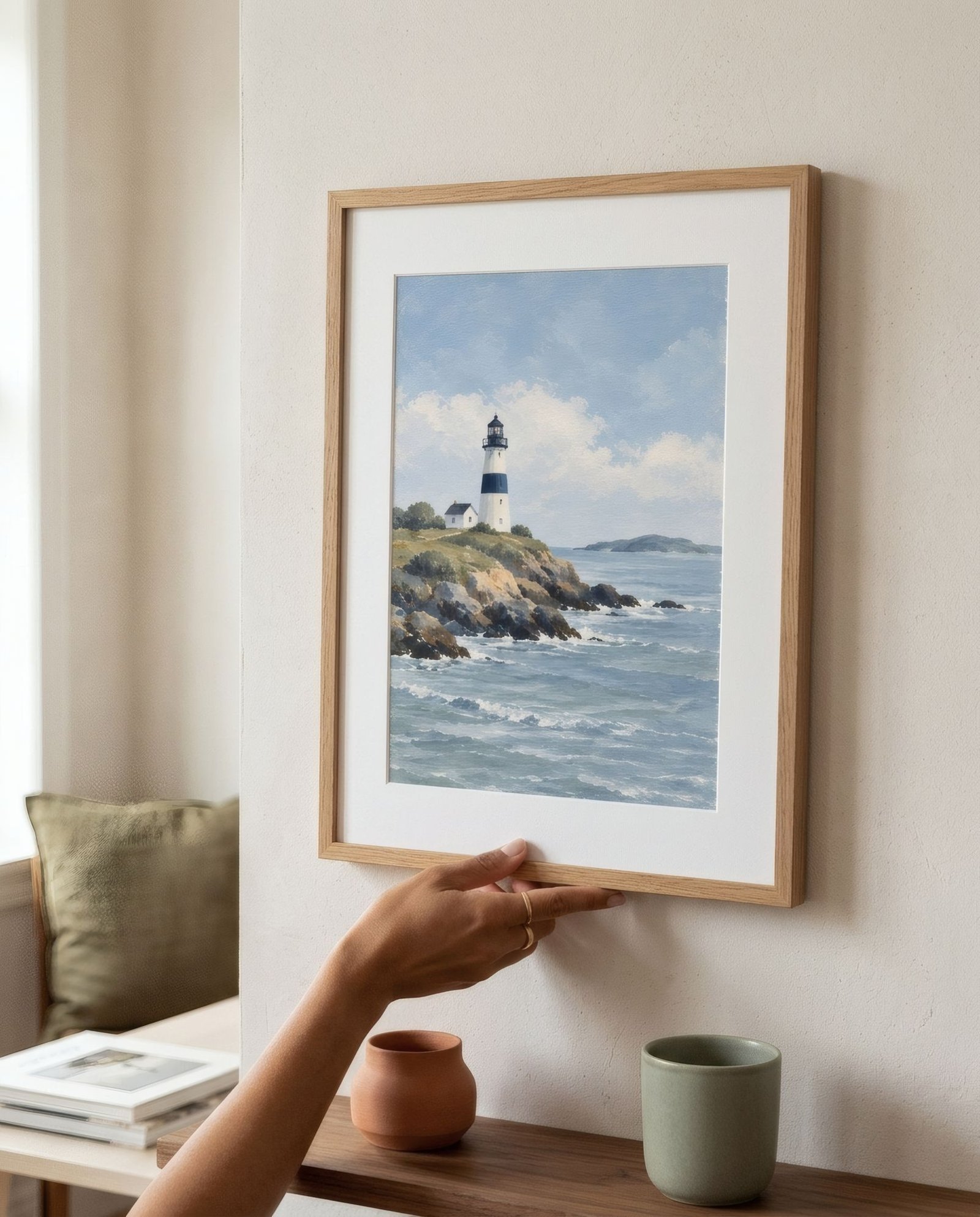
In the morning, before anyone else is up, light slants through the living room window and falls across the print on the wall. For a few minutes the terracotta of the arch seems to glow, almost brighter than at any other time of day. Then the sun climbs, the light turns white, and the work settles back into its usual tone. No one is looking at it just then. But anyone who did would see something that only exists at that hour. Living with art is a lot like that: small moments you do not go looking for, details you discover by chance, a relationship built not in a day but over many.
A work that changes with the light
One of the loveliest things about having a work at home is discovering it is never quite the same. In cool morning light, blues deepen. At dusk, warm tones seem to warm further. At night, under a lamp, the work draws into itself and shadows appear on its surface that are invisible by day.
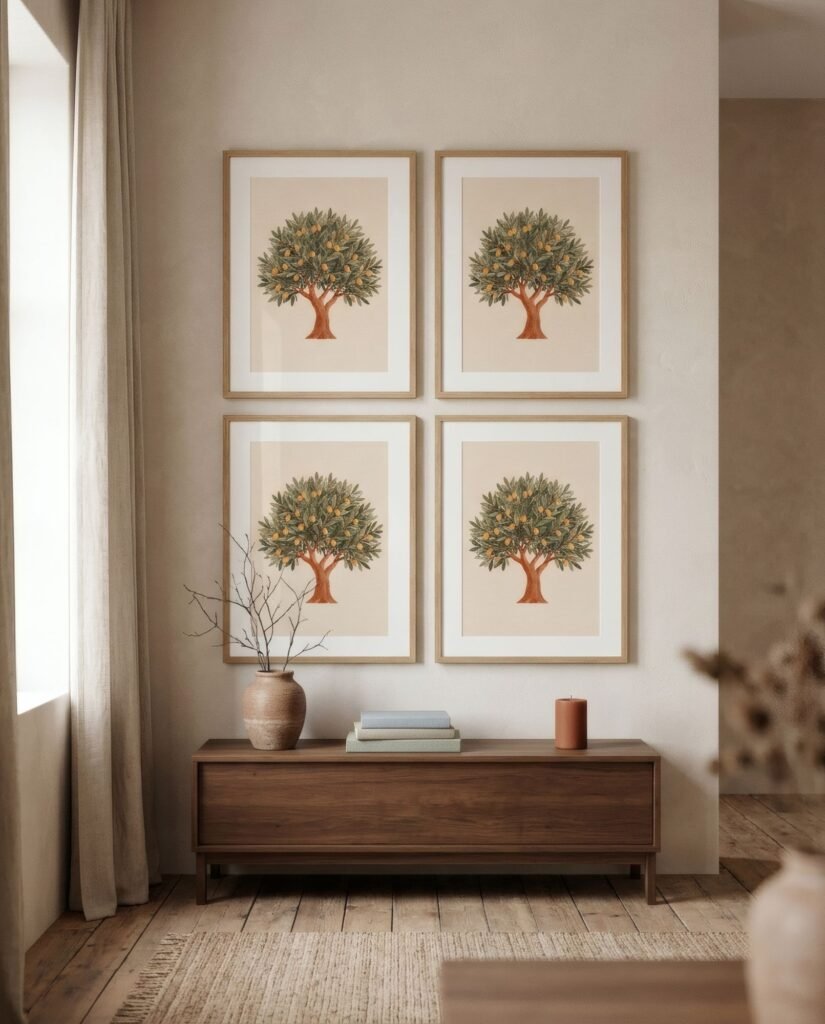
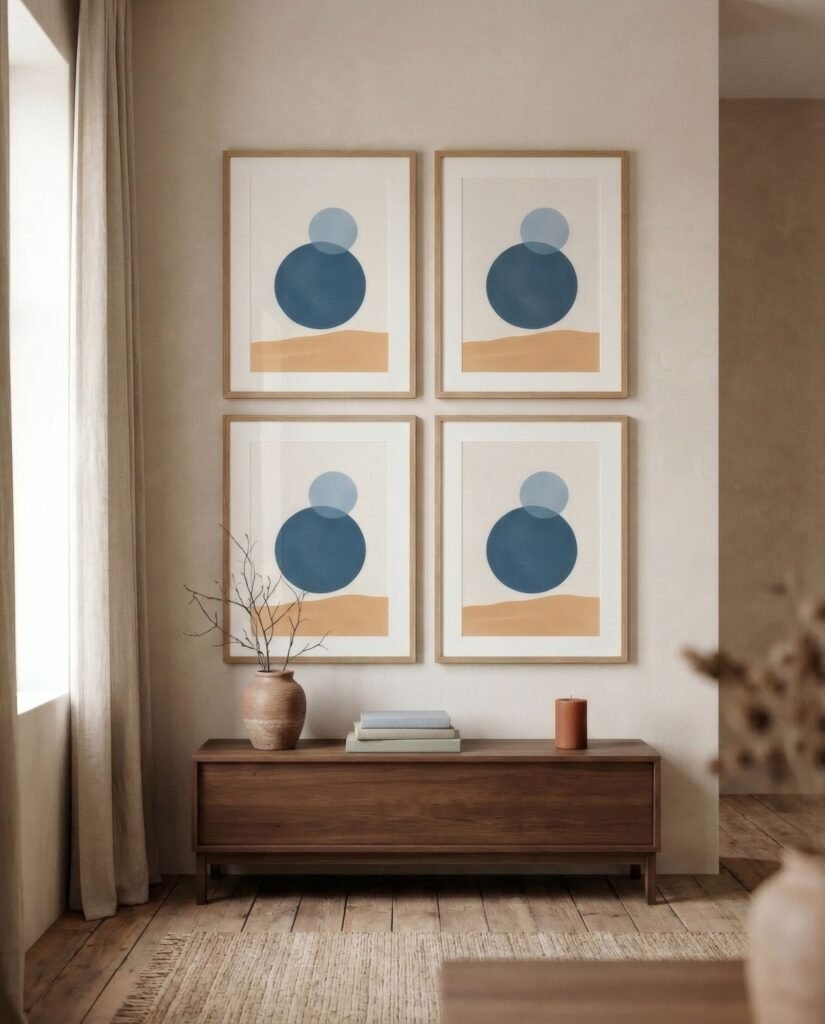
In a museum we see works under controlled, unchanging light. At home we see them in the light of our own lives: slow Sundays, grey days, winter evenings. That changing light means a work keeps us company differently from one moment to the next.
Small gestures
Living with art has its gestures too. Straightening a frame someone brushed in passing. Dusting it with a soft cloth on a Saturday morning. Stepping closer to look at a detail while the kettle boils. They are tiny, almost automatic, but they create a physical relationship with the work that has nothing to do with looking at a screen.
Some people also move their prints now and then. A work that hung in the hallway for years moves to the bedroom and suddenly seems new. Another that sat above the sofa goes to the entrance and changes the whole feeling of coming home. Moving a work to a different wall is a way of seeing it again.
The seasons
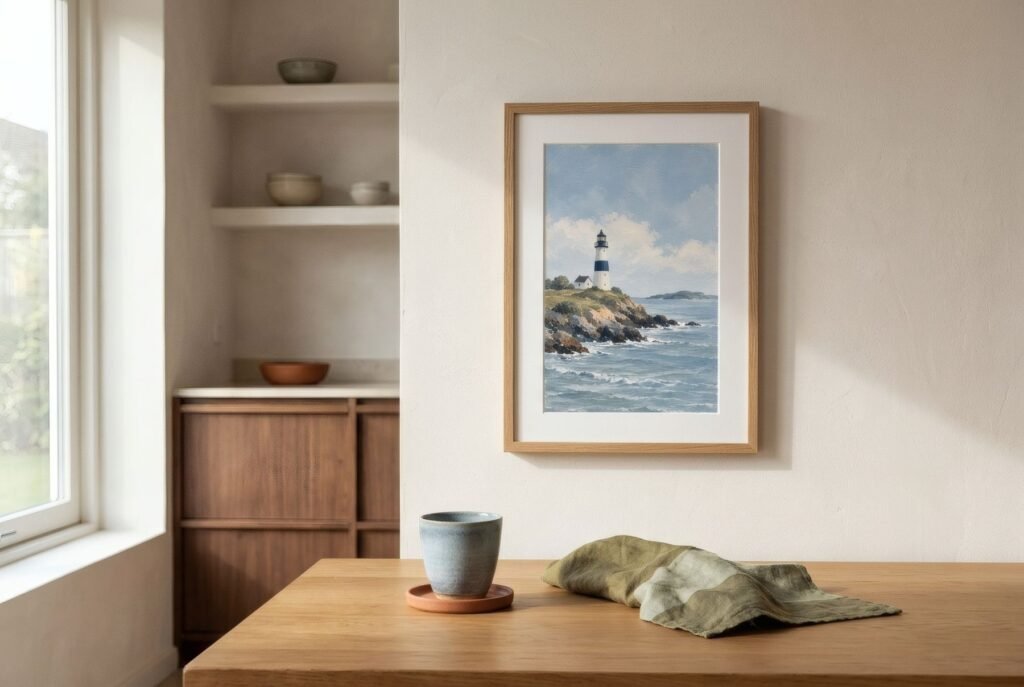
Some people like to rotate their art with the seasons. In winter, warm-toned prints, terracottas, ochres and low suns, that seem to warm the house. In summer, blues, sea horizons, cool forms. You do not need many works to do it, just two or three that take turns, stored carefully when they are not on the wall.
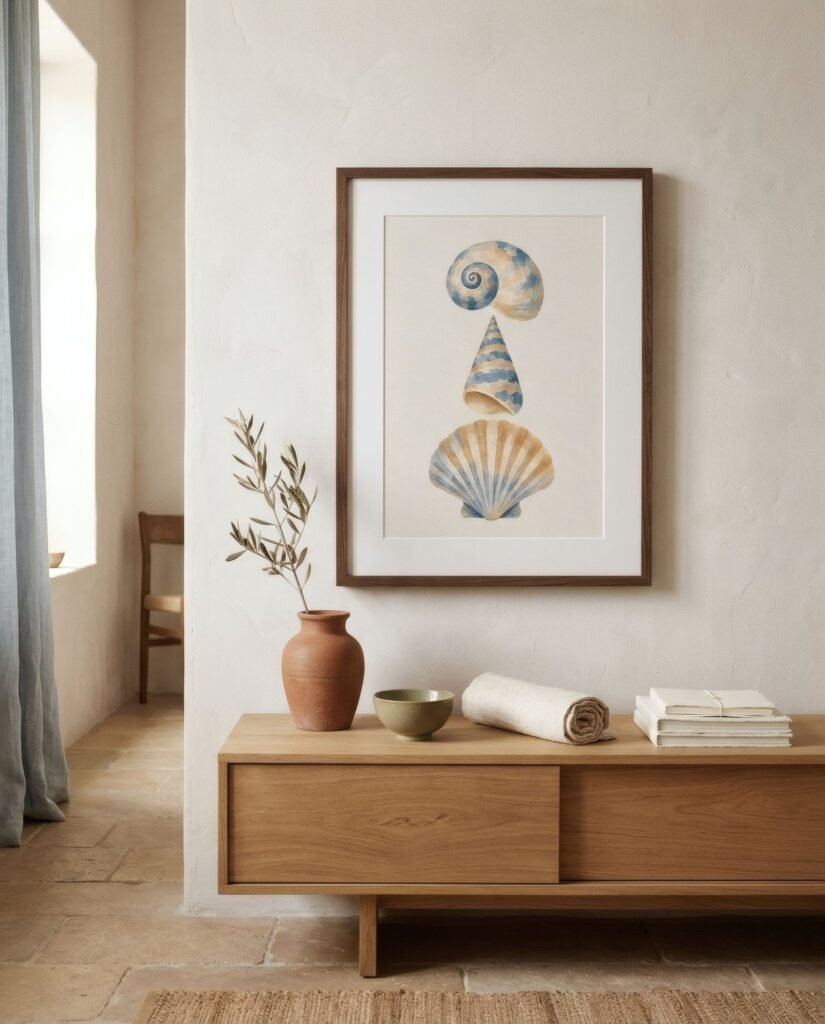
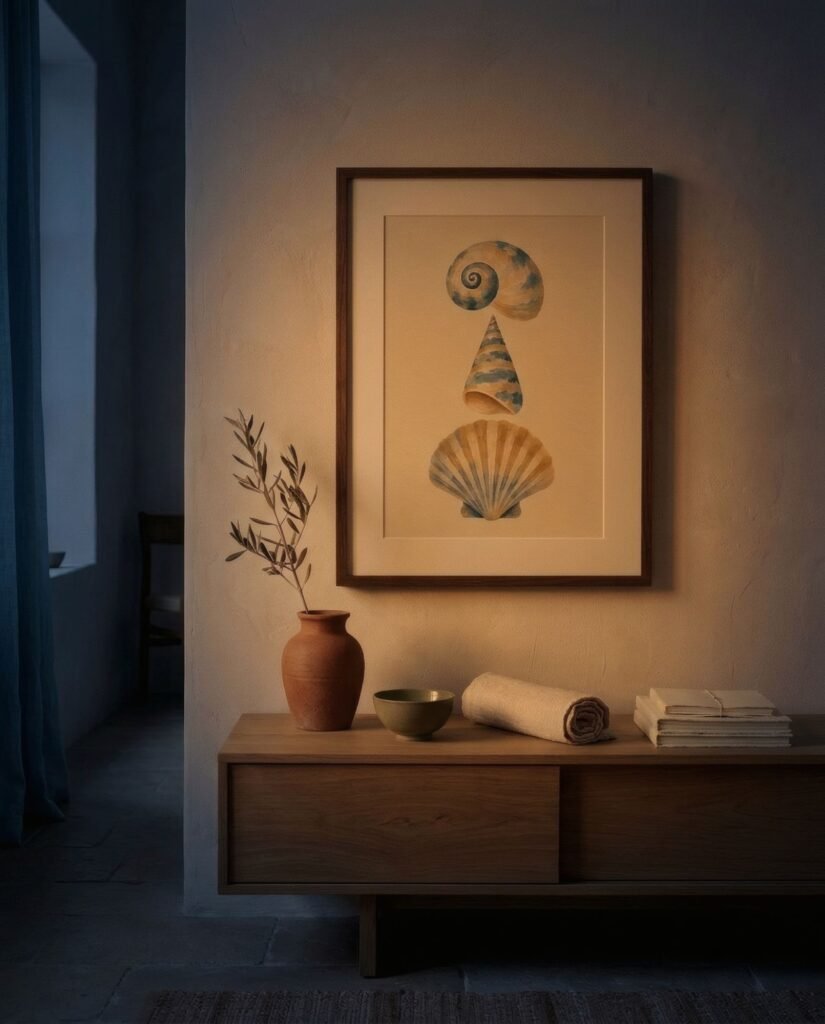
It is a simple ritual with something celebratory about it, like taking jumpers out in autumn or flinging the windows open in spring. It is also a way of caring for the works, since it spreads their exposure to light.
The work that disappears, and returns
Something happens to almost everyone who lives with art: over time, a work becomes part of the landscape of the house and stops being seen. Weeks pass without really looking at it. It may seem like a loss, but perhaps it is the opposite. The work has become so much a part of life that it belongs there as surely as the window or the table.
Then, one ordinary day, something draws us back: a friend who mentions it, a different light, a change of mood. We look again and see it anew, sometimes with fresh eyes. That rhythm of presence and forgetting is one of the most intimate ways of living with an image.
What it says about us
In the end, the works we live with say something about us. Not only through what they show, but through how we care for them, where we hang them, when we move them. A slightly crooked print no one straightens says one thing; one that moves with every season says another. Small details, but in them you can read a way of living.
One more detail
At Bendíra we make our prints for exactly that everyday life: for morning light, small gestures, walls that change over the years. If you would like to begin, or continue, that kind of companionship, our collections are made to keep a home company through all its seasons.
Keep reading: Why We Believe in Printed Art, Choosing Art with Intention and Why Art Matters in Everyday Spaces.