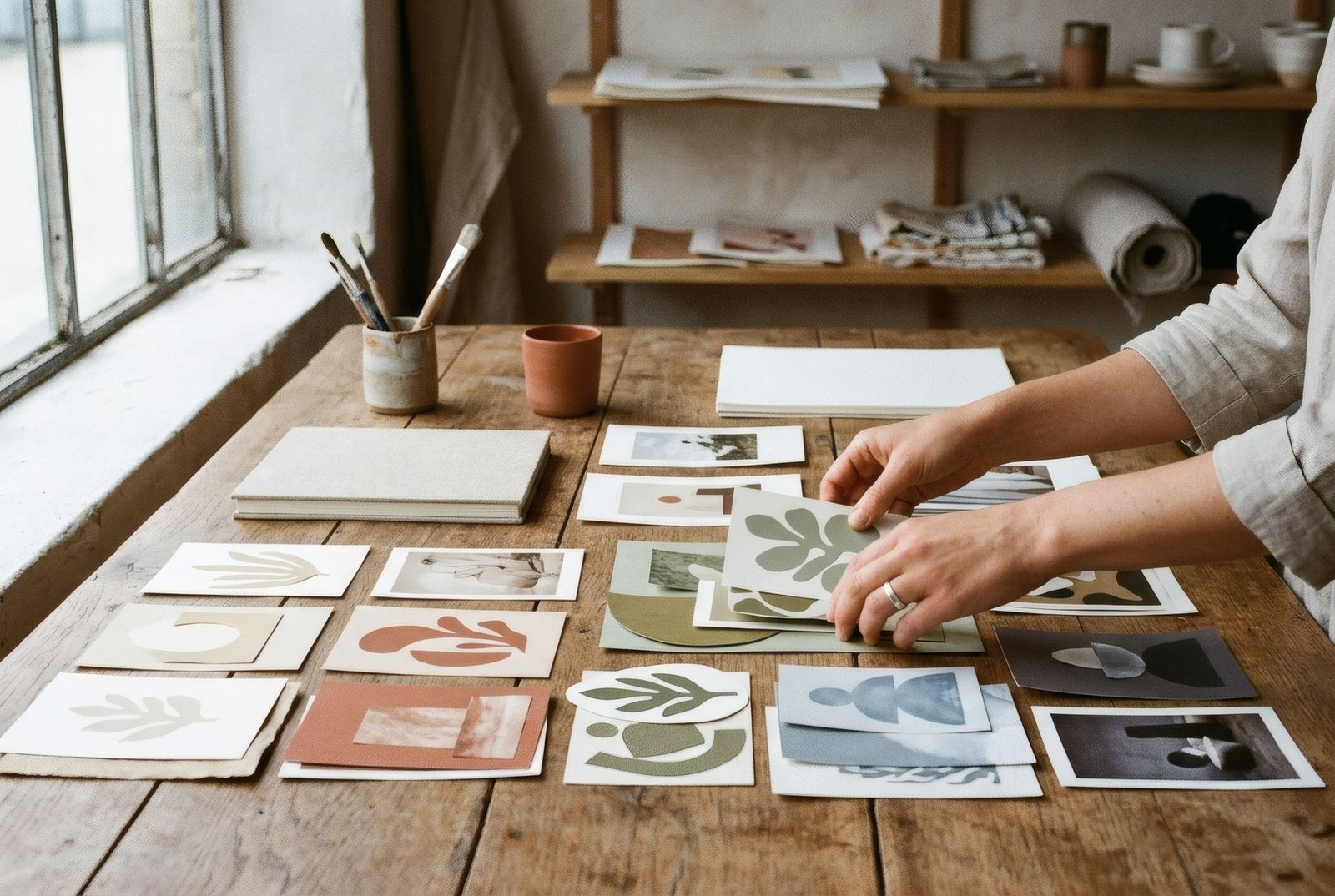
«I don’t know much about art, but I know what I like.» The line is often said as an apology, almost shyly, yet it holds something true: to choose a work to live with, you do not need art history. You need something simpler and, at the same time, harder: to know your own eye. Many people discover, once they try, that their preferences are clearer than they thought, they had just never stopped to notice them. Discovering your taste in art is really an exercise in attention. Look a great deal, notice what makes you pause, and ask yourself why.
Taste is discovered, not owned
We talk about taste as if it were fixed, something some people have and others lack. It is more like a conversation that shifts over the years. What thrilled you at twenty may seem too loud today; a work you did not understand may begin to interest you after a journey or a conversation. So the aim is not to find «your style» once and for all, but to start listening to yourself.
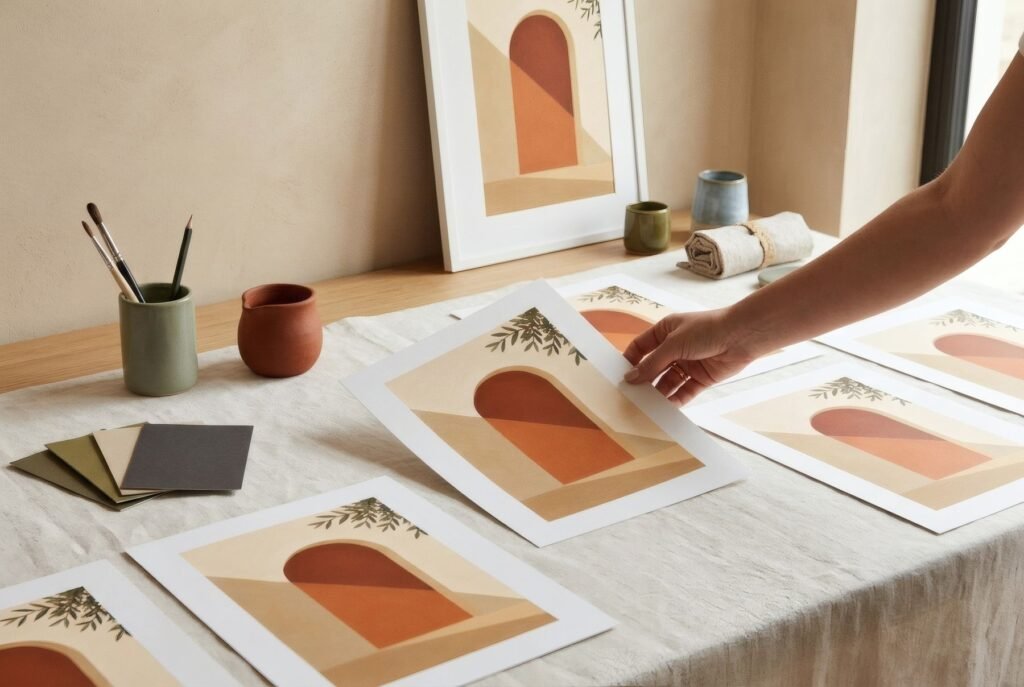
It also helps to let go of an idea that paralyses many people: that there is a correct good taste, and any personal choice might be a mistake. In your own home, the only criterion that truly matters is that the work says something to you.
Exercise one: look a lot, without pressure
Taste is formed by looking. The more images you see, the sharper your eye becomes, much as someone who tastes many wines begins to notice nuance.
Visit museums and galleries without any obligation to understand everything. Wander the rooms and stop only where something calls to you. Leaf through art books, interiors magazines and exhibition catalogues. Look at the walls of cafés, friends’ homes and the hotels you stay in. Do not judge yet; simply look, and notice what draws you.
Exercise two: keep what stops you
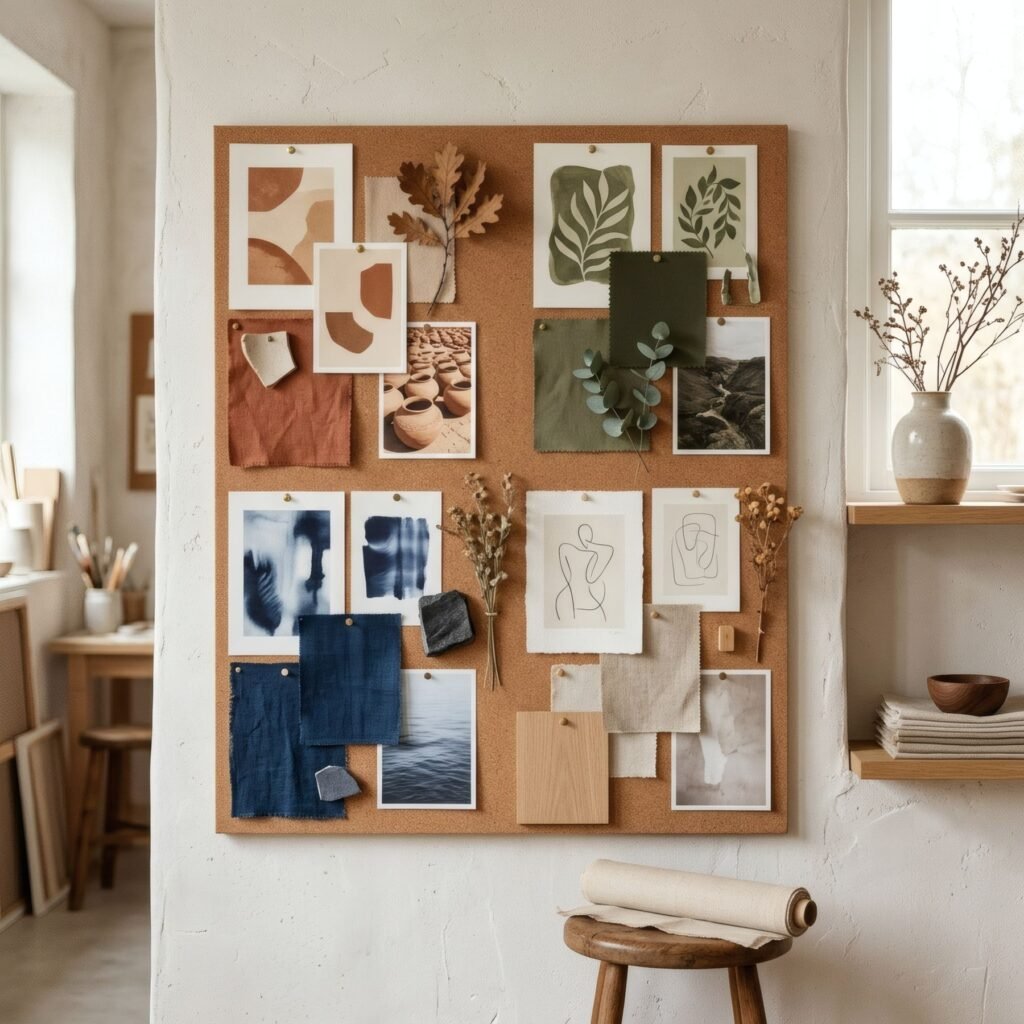
For a few weeks, save every image that holds you a second longer than usual. It might be a folder on your phone, a board in an image app, or a box of postcards and cuttings. It does not matter whether they are paintings, photographs, fabrics, posters, or even a wall with a lovely shadow. What matters is gathering.
The trick is not to filter too much at first. Do not ask whether it would «go» in your living room or whether it counts as «good art». If it stopped you, it goes in.
Exercise three: look for patterns
Once you have thirty or forty images, lay them out or look at them all together. Then ask a few questions.
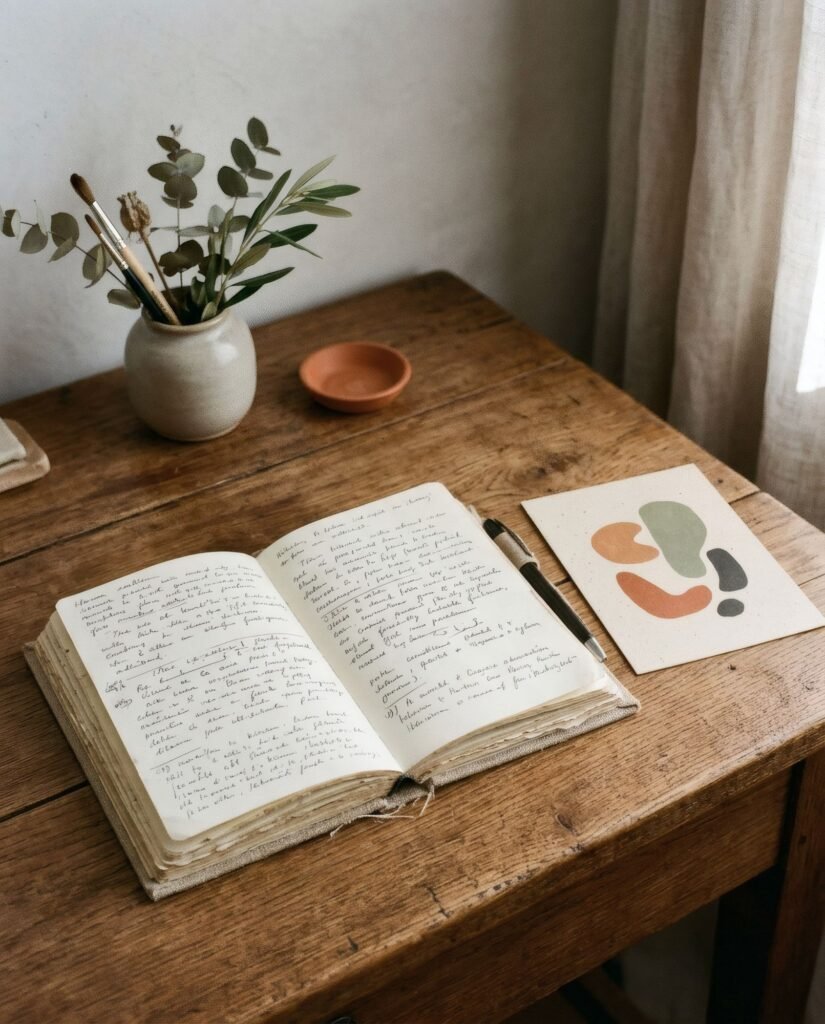
Which colours recur? You may find almost everything you saved is in earth tones, or blues, or full of white. Are there more figurative images or abstract ones? Geometric forms or organic ones? Busy compositions or ones with lots of empty space? Precise lines or loose gestures? Landscapes, figures, objects, nothing recognisable at all?
Patterns you had never noticed almost always emerge. That is the first real clue to your taste: not what you think you like, but what your eye chooses again and again when nobody is telling it anything.
Exercise four: ask yourself why
Choose three or four images you especially love and, for each, try to explain why. You do not need technical vocabulary. Phrases such as «it feels calm», «it reminds me of the sea when I was little», «I like the way those two lines cross» or «the colour puts me in a good mood» are enough.
Putting what you feel into words helps you distinguish between what draws you by its appearance and what draws you by what it evokes. Both are valid, but knowing which is which helps you choose better. A work you love for its colour can live in many places; one that moves you through memory deserves a special spot.
Exercise five: notice the opposite
You also learn a great deal from what you do not like. Notice the works that leave you cold or put you off, and ask why. Too dark? Too busy? Too chilly? Defining what you do not want sharpens what you do.
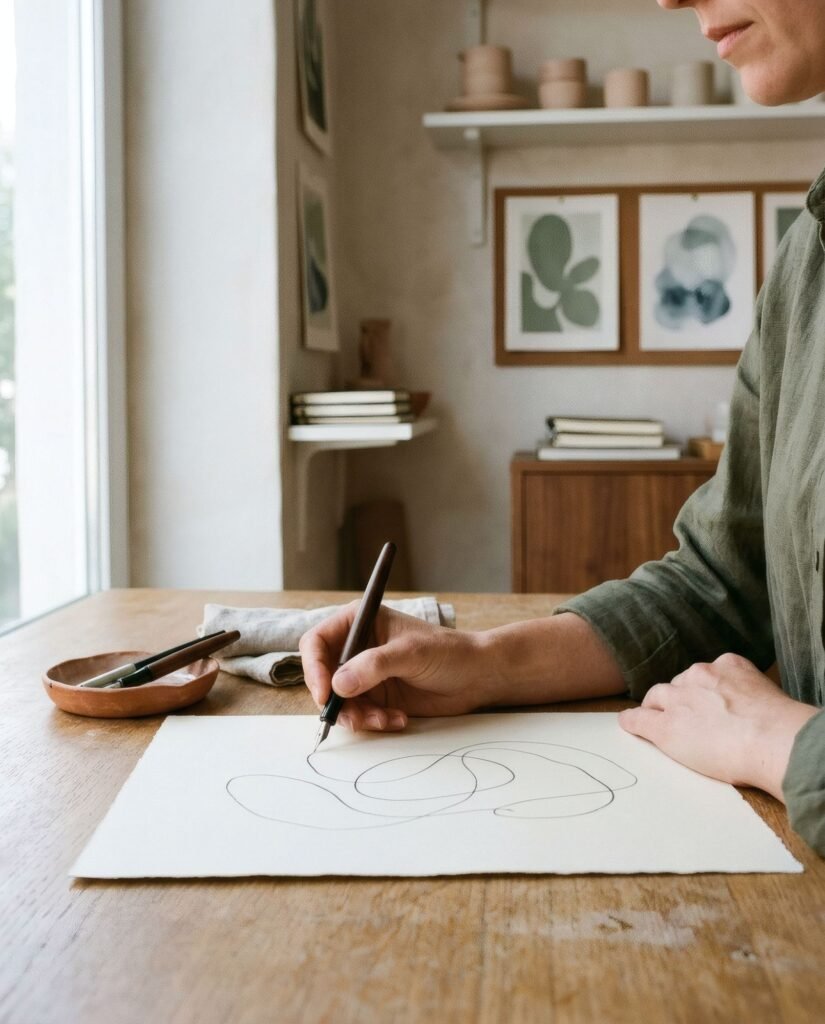
Your taste and your home
Once you begin to recognise your preferences, another question appears: how they fit your home. Sometimes they match naturally; other times you discover you adore vivid colour and live in a flat of neutral tones. That is not a problem but an opportunity. A work that feels like you may be precisely what gives a space its personality. We look at how in how to add personality to neutral interiors.
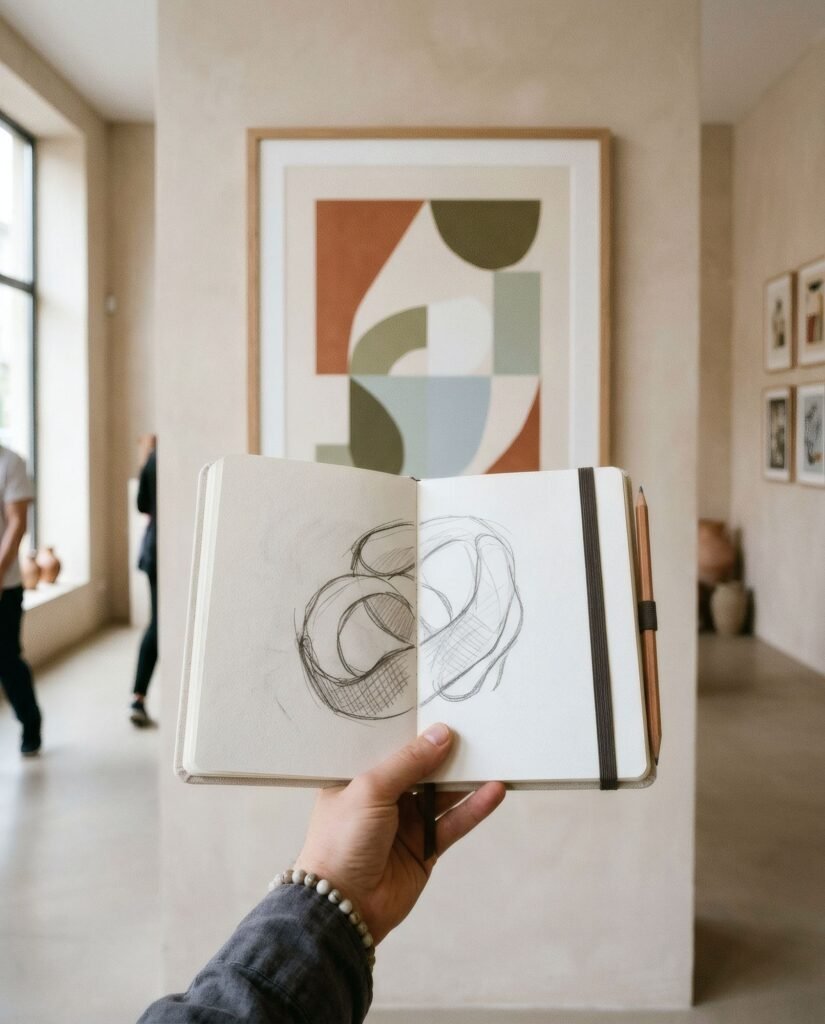
If you find it hard to decide, start small. One work you truly love says more about you than a whole wall chosen by compromise.
Trusting your own eye
Discovering your personal taste in art is not about learning rules but about losing the fear of looking with your own eyes. Look a lot, keep what stops you, find the patterns and ask why. With those few habits, the next time you choose a work you will do so with far more confidence.
And when you feel you recognise what draws you, you might explore Bendíra’s collections, arranged by palette and form, as one more way to keep training your eye.
Keep reading: Typography as Art: When Letters Become Decor, What Is an Art Print? Art Prints vs Posters and Choosing Art with Intention.