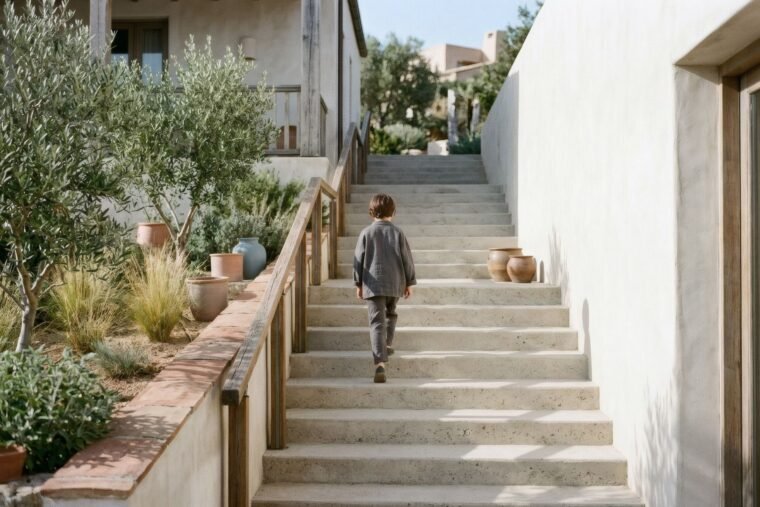
Human Scale in Architectural Images
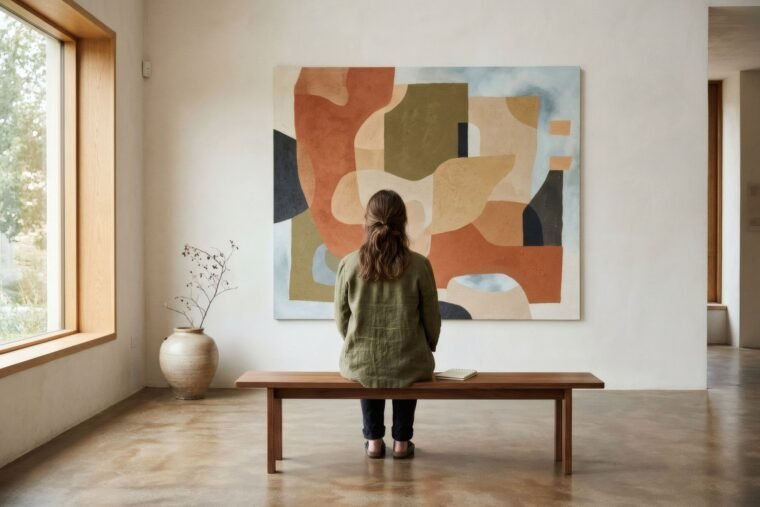
Without a person, a drawn building could be three metres tall or three hundred. How architects and illustrators use figures to give us the…
Read articleEssays on how we look: colour, form, space and the presence of art at home.
Without a person, a drawn building could be three metres tall or three hundred. How architects and illustrators use figures to give us the…
Read articleLook at fewer works for longer, read the label afterwards, notice the light: what museums teach us about looking at art, and how to…
Read articleA print can show a brushstroke's texture without having it, while its paper adds a texture of its own. Implied versus actual texture, and…
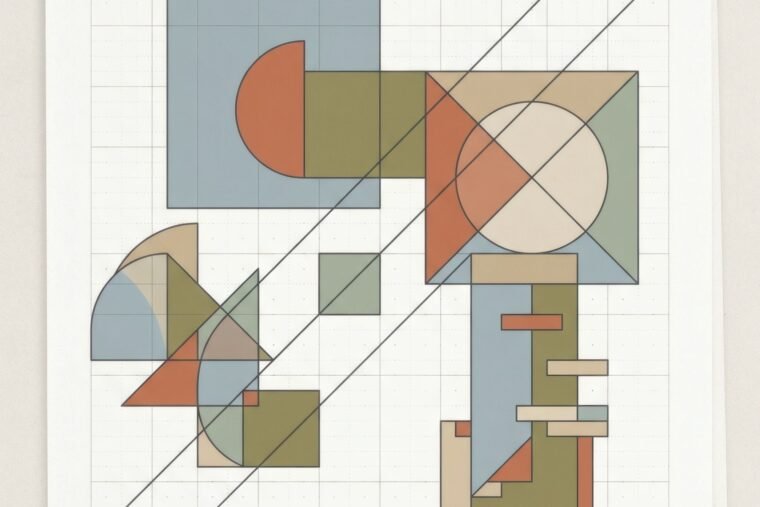
Read articleVisual weight, counterweights, the rule of thirds and empty space: how asymmetrical composition works, from Japanese prints to Mondrian.
Read articleOld photographs, scientific plates, postcards and archive illustrations: why they appeal in modern interiors, and what to know about provenance and rights.
Read articleFrom Art Nouveau lettering to Swiss sans-serifs and painted Polish film posters: how typography gave European cultural posters their voice.
Read articleFrom medieval herbals to Fuchs, Merian, Redouté and Curtis's Botanical Magazine at Kew: the milestones of European botanical illustration, with sources.
Read articleFrom the family album to thousands of phone photos we never revisit: a reflection on photography, memory and printing a few images to keep…
Read articleFrom butterfly wings to palace façades, symmetry gives us order and calm. Why symmetry in art appeals, where it appears, and when breaking it…
Read articleSpirals, branching, waves and horizons: how nature's forms have inspired art, from Haeckel and Blossfeldt to today, and how to bring them into your…
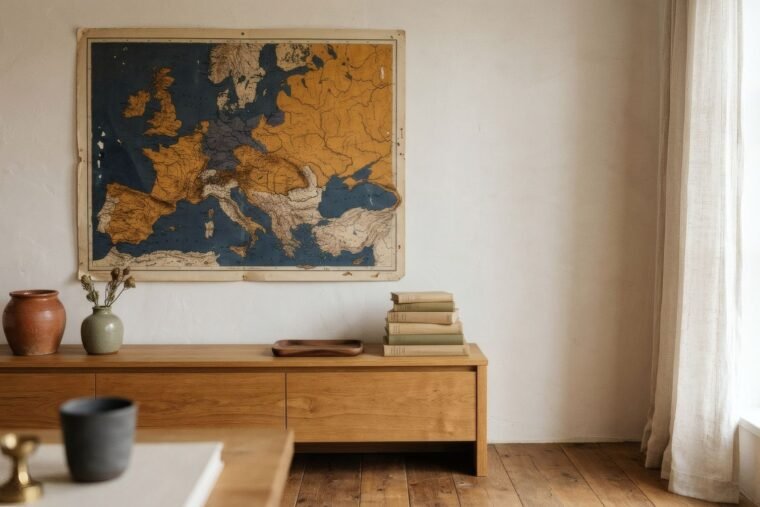
Read articleFrom Ptolemy to Ortelius and Mercator, antique maps were science and art at once. Their history, their appeal, and what to know about originals…
Read article