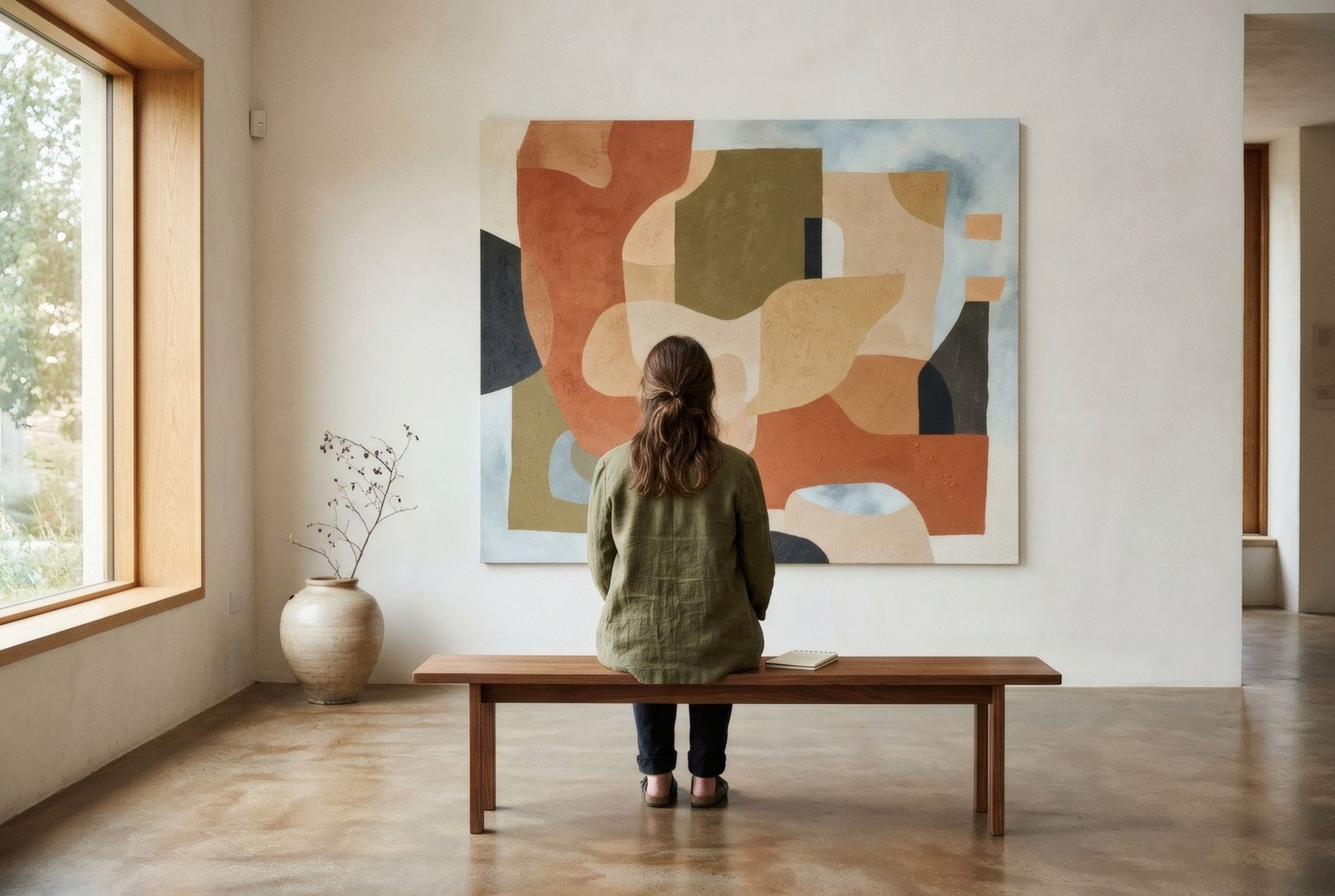
There is a way of visiting a museum that most of us know well: arrive full of energy, march through room after room, pause a few seconds before each work, read a few labels, take a photo or two, and leave a couple of hours later with sore feet and the sense of having seen a great deal and remembered little. And there is another, slower way that many museums have encouraged for years: choose a few works, stay with them, really look. Museums do not only hold art; through the way they show it and through their education programmes, they also teach us to look at it better. Many of those lessons can then be applied at home, in front of the works we live with.
Fewer works, more time
The first lesson is perhaps the simplest and the hardest to practise: look at fewer works for longer. Faced with the abundance of a great museum, it is tempting to try to see everything. But many people’s experience, and that of museum educators, suggests a visit spent with a few works is enjoyed and remembered far more than one rushing past hundreds.
In recent years the idea of slow looking has spread: spending several minutes, sometimes ten or more, with a single work. It feels difficult at first; after the first minute, the eye begins to find things it had missed: a detail in a corner, a relationship between colours, a secondary figure, a texture.
Look before you read
Another lesson is order: look first, read afterwards. Wall labels offer valuable information about the artist, date, technique and context. But read first, they shape the looking: we search for what we have been told to find.
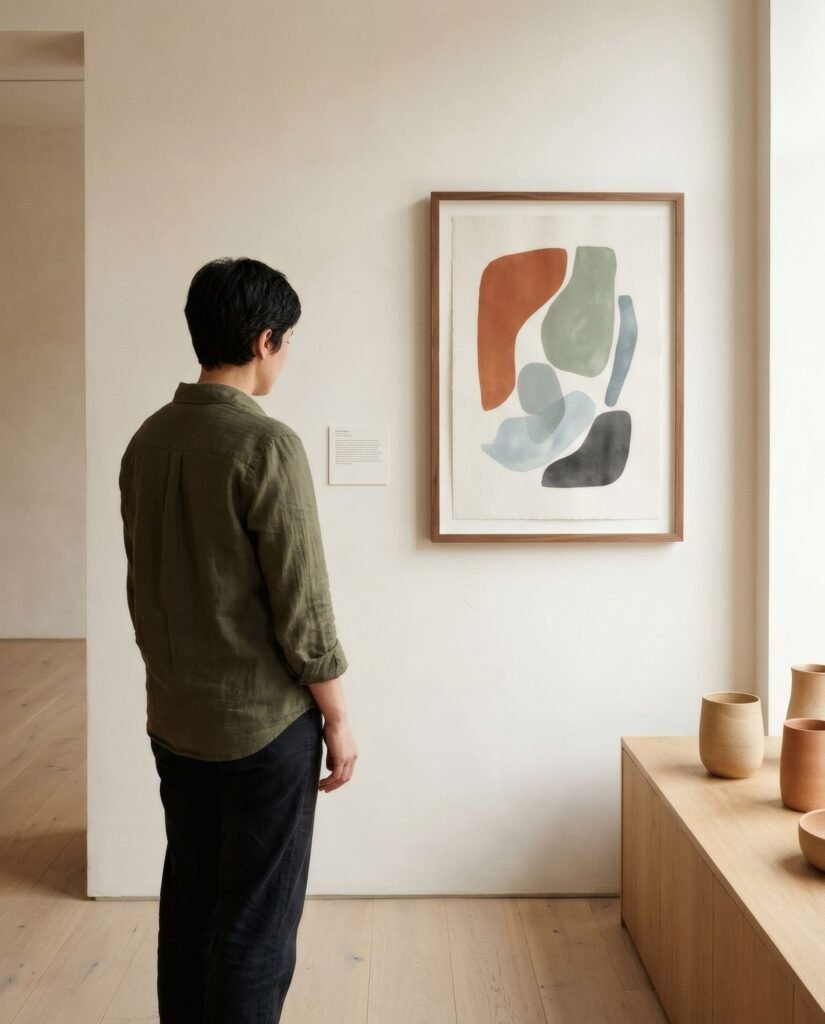
Many educators suggest starting with the work, observing it without information, forming a first impression and only then reading the label. That way the text becomes a conversation with what you have already seen, not a substitute for seeing.
Open questions
Some museum education programmes use open questions to help people look, especially in groups. A well-known approach in this field, Visual Thinking Strategies, is built on simple questions such as what is going on in the picture, what we see that makes us say so, and what more we can find. The idea is that observation and conversation, more than expert information, build understanding.
You do not need to follow any particular method to use this idea. Simply ask yourself open questions in front of a work: what do I see, what catches my attention, how does it make me feel, what changes as I move closer or further away? We suggest a fuller approach in how to look at abstract art.
Light and how works are hung
Museums also teach without words, through how they display works. Lighting is designed so each piece is seen well, without glare or awkward shadows. Works are hung at a consistent height within a room, so the eye travels the walls naturally. The space between works lets each breathe. And the sequence of rooms tells a story.
All of these are deliberate decisions, and noticing them on a visit is a way to learn to hang better at home. We cover heights in how high should you hang pictures? and space in the beauty of giving art room to breathe.
Sit down
A seemingly small detail: benches. Many galleries place benches in front of particular works, and not by chance. Looking while seated, without the urge to keep walking, transforms the experience. If a museum offers you a bench before a work that interests you, use it.
Draw, note, remember
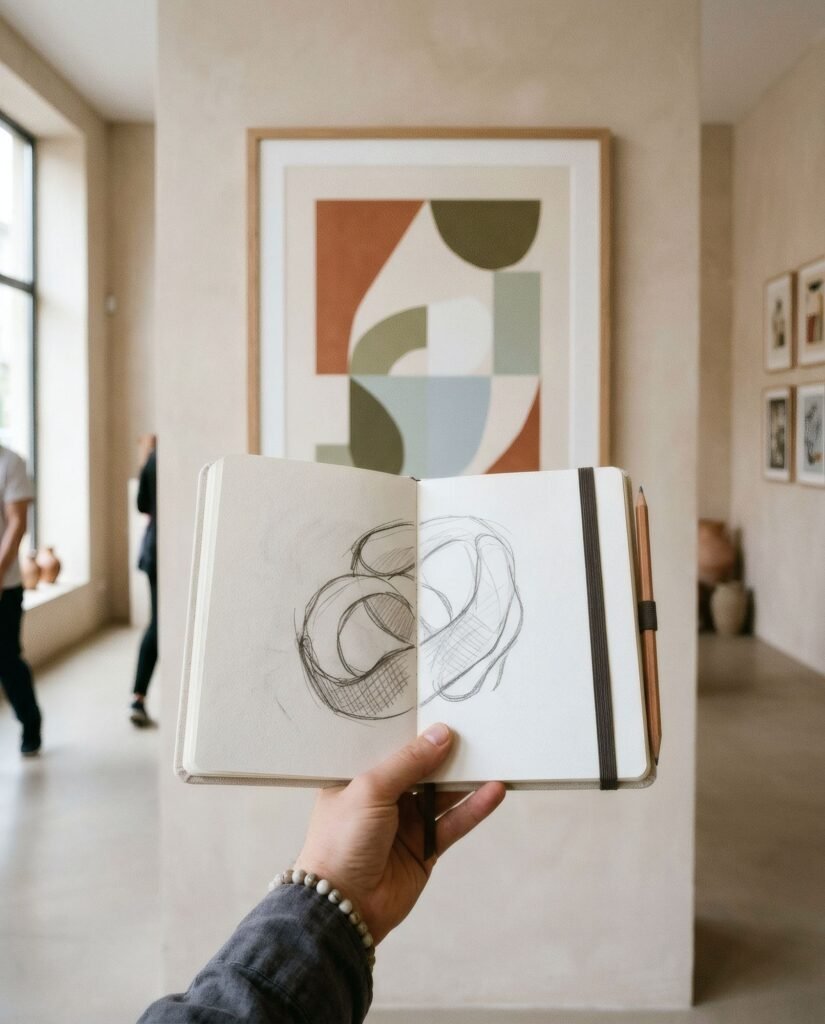
Another practice many museums encourage is drawing or writing in front of works. You need no drawing skill: just trying to copy a composition forces an attention that photographing never does. And writing a few words about what you saw helps you remember it far better.
Bringing the museum home
All of these lessons apply to the works we live with. At home, the temptation is the opposite of the museum’s: not looking at too many works too fast, but no longer looking at the ones we have. The same practice of slow looking can bring them back to life: sitting for a while in front of a print, noticing its details, seeing it in different light, asking what it says to you today.
And, like museums, we can take care with how we hang: height, light, the space around, the relationships between works. Small gestures that make the art at home look, and feel, better.
Learning to look
Museums teach us that looking at art is neither quick nor passive, but a practice that is learned and improves with time. Look less and better, observe before reading, ask questions, notice the light: lessons that serve as well in front of a masterpiece as before a print in the living room.
At Bendíra we make our prints for that slow, everyday looking, where an image has time to reveal itself little by little.
Keep reading: Typography in European Cultural Posters, Texture in Visual Art: From Image to Paper and How to Discover Your Personal Taste in Art.