The right size for an art print depends on three things: the furniture beneath it, the free wall space around it, and how far away you will usually stand or sit. Above furniture, art generally looks right at half to two-thirds of the furniture’s width. On an open wall, aim for the artwork, or group, to cover roughly half to three-quarters of the usable width. The further away the viewer, the larger the piece needs to be.
Each of these is a separate method for a separate situation.
Method 1: there is furniture below
Sofas, sideboards, beds, chests of drawers and hallway benches all set the scale.
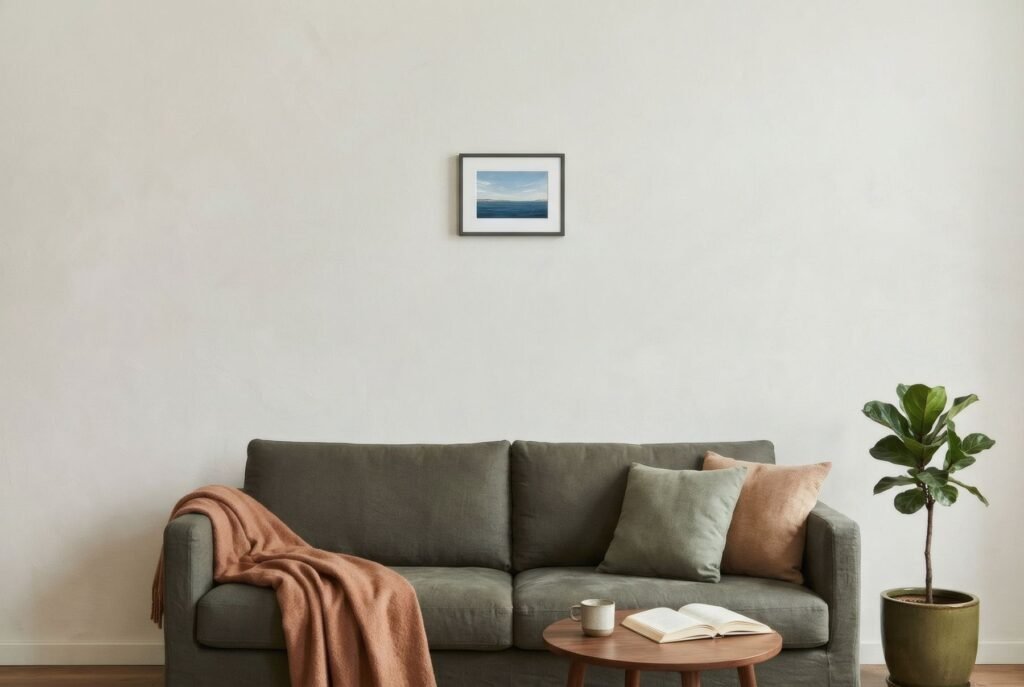
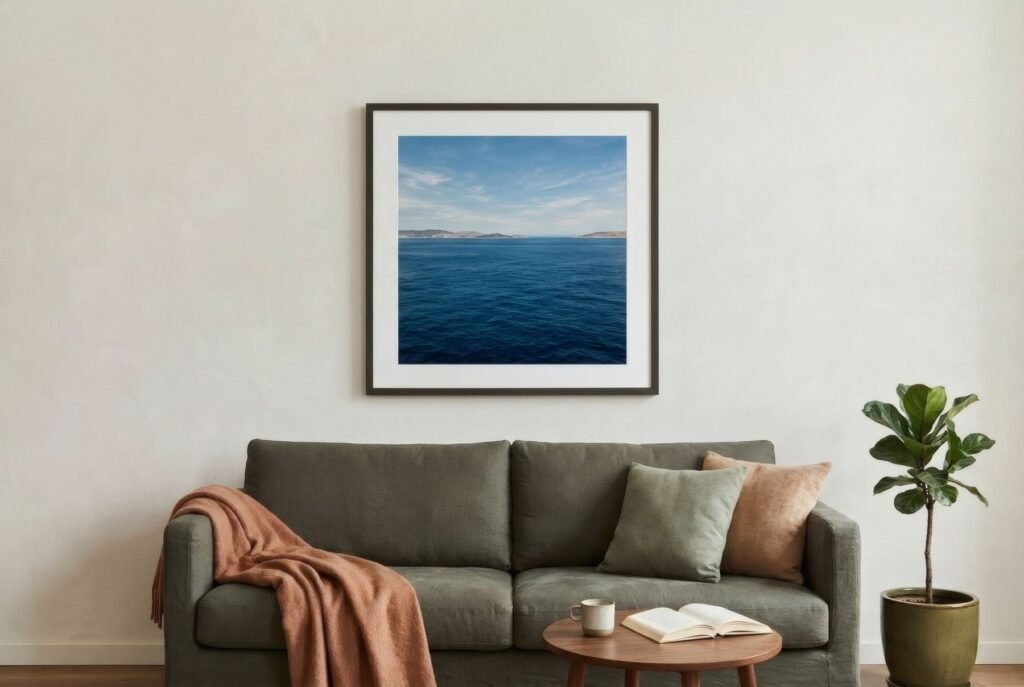
Rule of thumb: the width of the art, frame included, should be 50–66% of the width of the furniture.
| Furniture | Width | Suggested art width |
|---|---|---|
| Three-seater sofa | 220 cm (87 in) | 110–145 cm (43–57 in) |
| Two-seater sofa | 160 cm (63 in) | 80–105 cm (31–41 in) |
| Double bed headboard | 150 cm (59 in) | 75–100 cm (30–39 in) |
| Single bed | 100 cm (39 in) | 50–65 cm (20–26 in) |
| Sideboard | 140 cm (55 in) | 70–92 cm (28–36 in) |
| Chest of drawers | 90 cm (35 in) | 45–60 cm (18–24 in) |
Art wider than the furniture loses its connection to it and starts to float. Art much narrower than half the width looks undersized. If no single piece is large enough, two or three prints with 5–8 cm (2–3 in) gaps can add up to the right width.
Method 2: the wall is empty
Without furniture to anchor it, the wall itself becomes the reference. Measure the space you can really use, leaving out skirting, mouldings, switches and the sweep of any door.
Rule of thumb: the art, or group, covers about half to three-quarters of that available width, with breathing room on each side.
Examples:
- A 180 cm (71 in) stretch between a door and a corner: 90–135 cm (35–53 in) wide. A single 70 × 100 cm portrait piece is on the small side; turn it landscape or add a companion.
- A 100 cm (39 in) section beside a window: 50–75 cm (20–30 in). A 50 × 70 cm portrait print fits naturally.
- A 50 cm (20 in) strip between two doors: 25–38 cm (10–15 in). A framed A3 (29.7 × 42 cm paper) or a 30 × 40 cm print.
On very tall walls, the instinct is to hang higher to fill the space. It usually works better to keep the art at eye level and choose a larger or more vertical format.
Method 3: viewing distance
A piece seen from two metres reads very differently from one seen from six. A rough guide, especially useful in long corridors and large living rooms, is that comfortable viewing distance is often between 1.5 and 3 times the diagonal of the artwork.
In practice:
- Narrow hallway, viewed from 1–1.5 m (3–5 ft): small or medium pieces with detail that rewards close looking, with a diagonal of roughly 40–60 cm (16–24 in).
- Living room, viewed from the sofa at 3–4 m (10–13 ft): a diagonal of at least 100–150 cm (39–59 in), as one piece or a group, for real presence.
- The far wall of an open-plan space, at 6 m (20 ft) or more: a large-format piece or a compact group that reads as one block.
The rule works in reverse, too. A print with fine linework or small lettering needs to be seen up close, so it will be lost at the far end of a large room.
Portrait, landscape or square
Orientation changes perceived size:
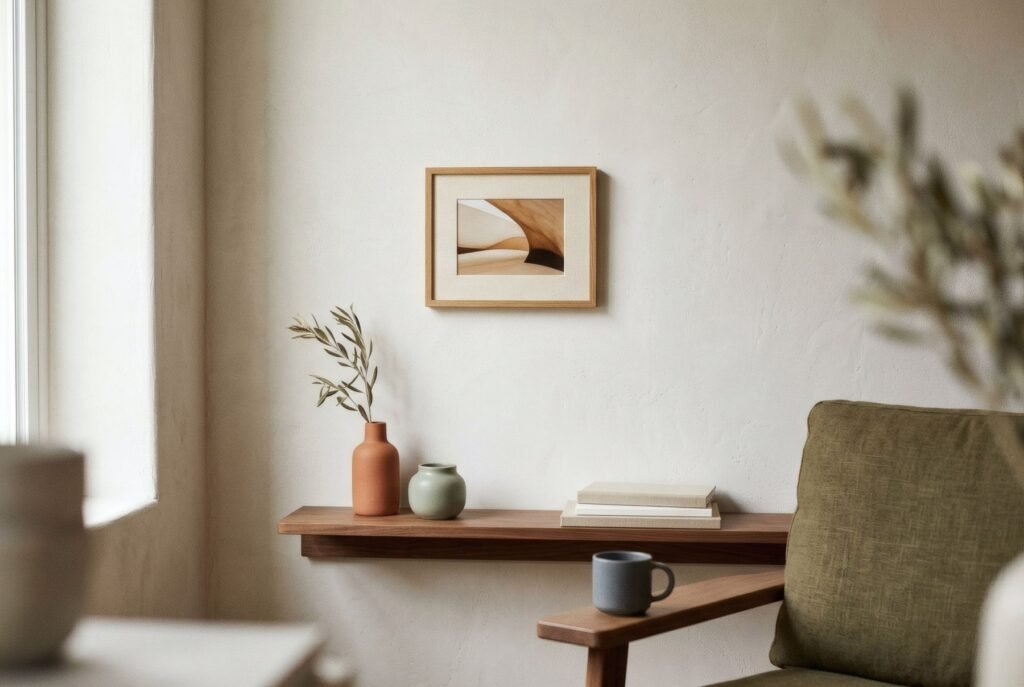
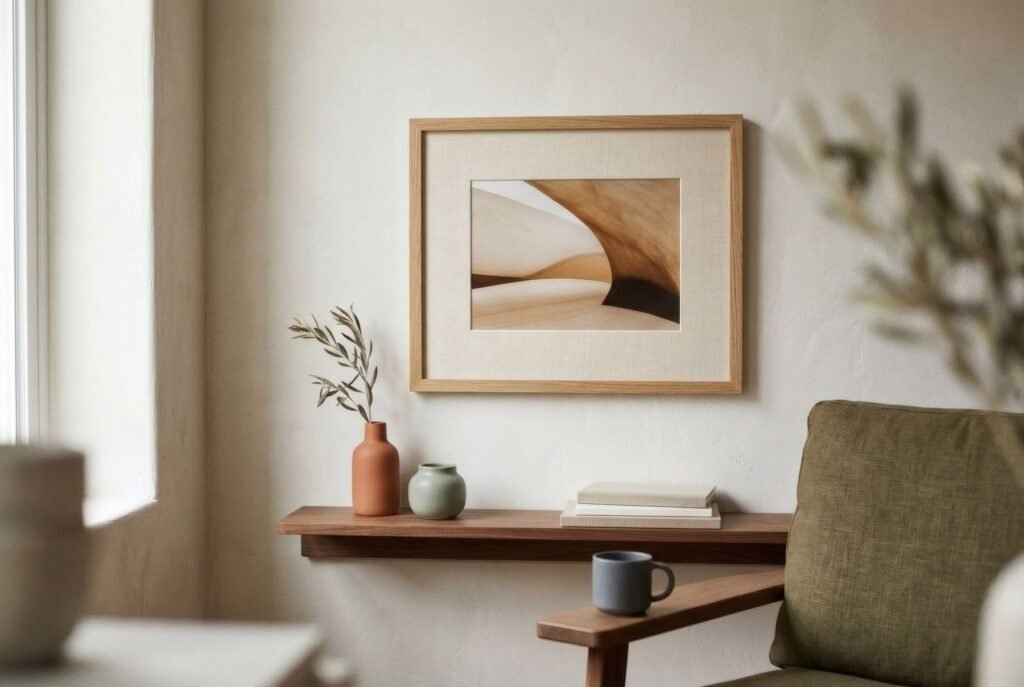
- Landscape suits long, low furniture such as sofas, beds and sideboards, and widens a wall visually.
- Portrait lengthens a wall, and works in narrow spaces, beside doors and under high ceilings.
- Square is neutral and stable, and is ideal for near-square walls and grid arrangements.
If you are torn between two sizes in the same orientation, the larger one usually holds up better on the wall over time.
Frames and mounts change the numbers
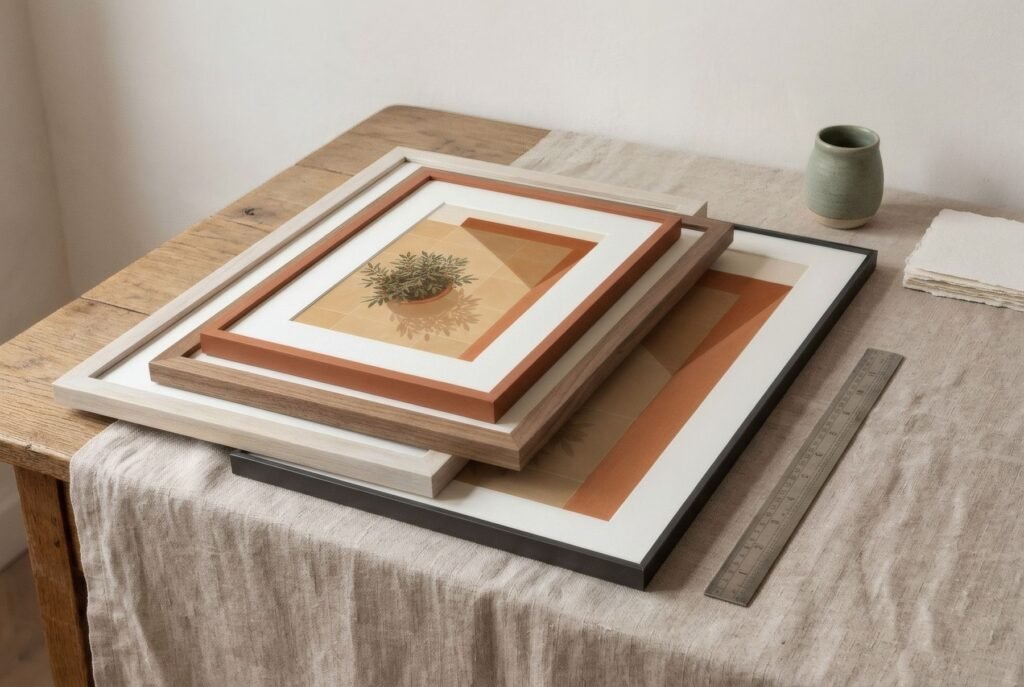
All the measurements above describe the finished, framed piece, not the paper. A 2 cm frame profile and a 5 cm mount turn a 30 × 40 cm print into an object of roughly 44 × 54 cm (17 × 21 in). A generous mount is one of the simplest ways to give a modest print more presence.
The reverse applies when you are buying a print for a frame you already own. Check the mount aperture or the inner rebate size, not the outer dimensions of the frame.
Quick guide by room
- Living room: let the sofa decide, which usually means 100–145 cm (39–57 in) of art above a standard three-seater.
- Bedroom: the headboard is the reference. A landscape piece or a portrait pair work well. More in bedroom wall art ideas.
- Dining room: if the table sits against the wall, keep the art narrower than the table.
- Hallway and entrance: short viewing distances call for medium pieces, portrait or in a row.
- Kitchen: small to medium formats, away from heat and steam.
Test it before you buy
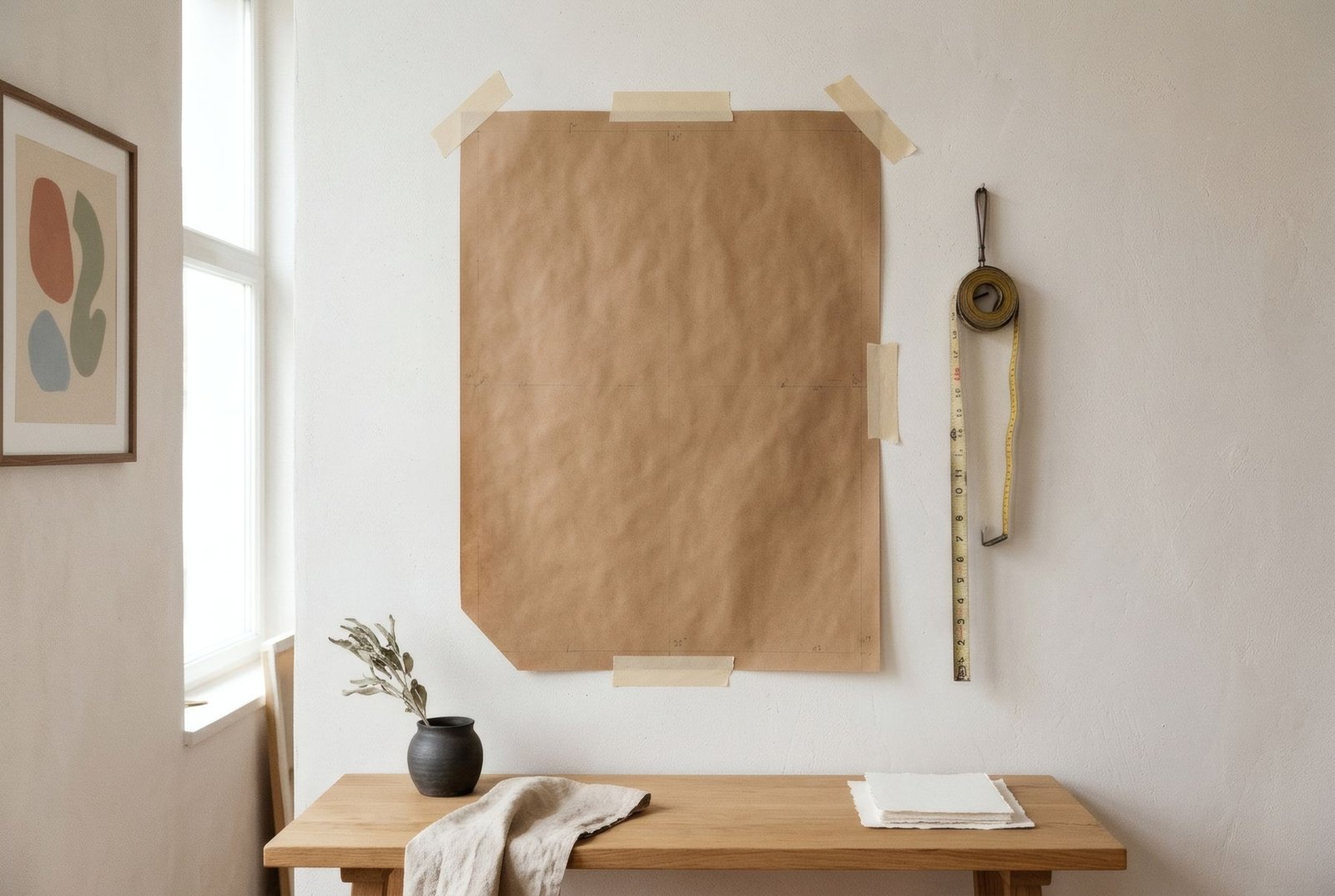
The most reliable test costs almost nothing. Cut a piece of kraft paper or cardboard to the exact framed size and tape it to the wall with masking tape. Look at it from the sofa, from the doorway, in daylight and in lamplight. If it still feels small after a day, it is small.
In short
- Above furniture: 50–66% of its width.
- On an open wall: half to three-quarters of the usable width.
- By distance: the further away, the larger; fine detail needs closeness.
- Always measure the framed size, mount included.
With these references, choosing a size becomes a measured decision rather than a gamble. Once you know your numbers, Bendíra’s prints are offered in several sizes, so the same work can be matched to the wall you actually have.
Keep reading: How to Create a Gallery Wall at Home, Art Print Sizes: A Complete Guide and How to Style Large Wall Art in a Living Room.