A large artwork in a living room is something of a statement. It organises the room, gives it a centre, conveys confidence. But it carries risks too. If it is too big for the furniture beside it, too intense for the rest of the space, or hung without thought for its visual weight, it can flatten everything around it. The key to getting it right is the relationship with the furniture. Large living room wall art is not chosen for the wall alone. It is chosen for the sofa beneath it, the pieces around it and how much presence everything else in the room already has.
Large, but in relation to something
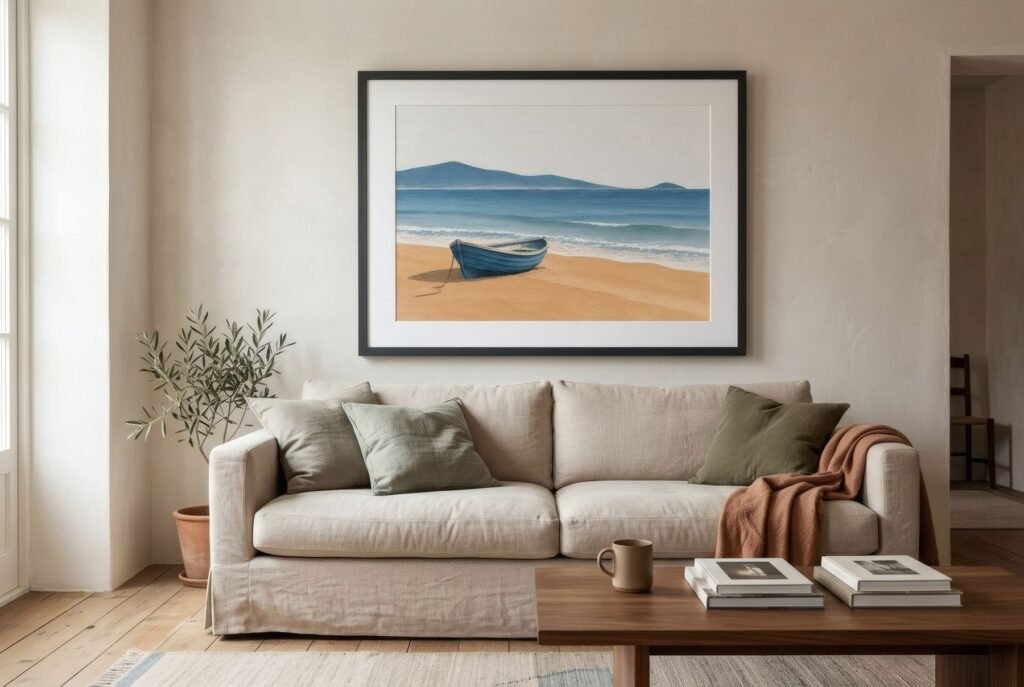
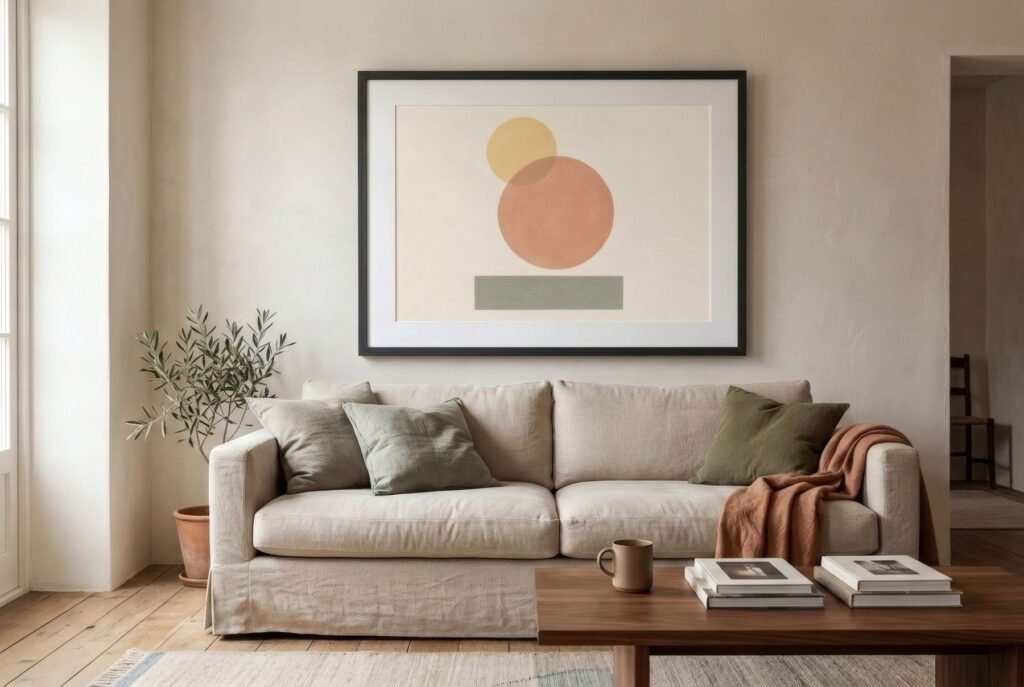
Before thinking about the artwork, look at the furniture it will hang above, usually the sofa. As a rough guide, a work spanning half to two-thirds of the sofa’s width tends to look balanced. Above a 240 cm (94 in) sofa, that means a piece 120–160 cm (47–63 in) wide; above a 200 cm (79 in) one, 100–130 cm (39–51 in).
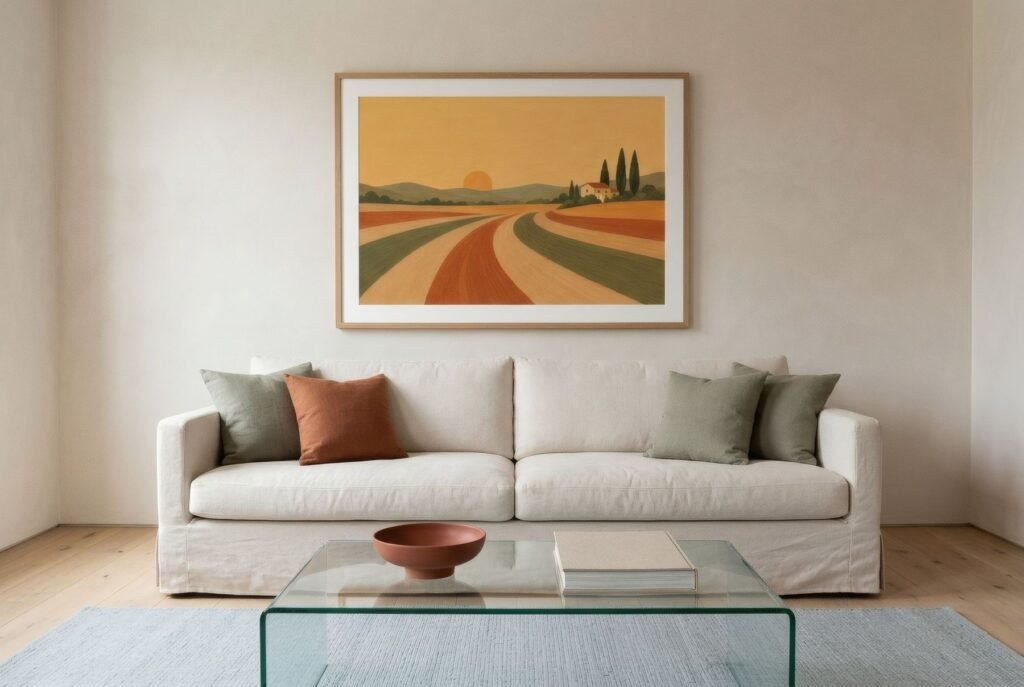
When the artwork is wider than the sofa, the relationship breaks: the work seems to spill over the furniture and the arrangement loses its centre. It can work on very wide walls or with clear intent, but in most living rooms it is best to stay within that band.
Consider the free wall height too. A large artwork in a room with a low ceiling can feel oppressive if it fills almost all the space between sofa and ceiling. As a guide, leave visible air above the work, at least as much as the 15–25 cm (6–10 in) gap between sofa and frame.
Visual weight, beyond size
Two artworks of the same size can «weigh» very differently. A dark, high-contrast or saturated work has far more presence than a pale, soft one. So size is not the only variable when choosing large art.
In a living room with dark furniture, a patterned rug or plenty going on, a large, intense artwork may add too much. A large but calm work, with a pale ground, few forms and a restrained palette, will work better. In a very neutral, uncluttered room, by contrast, a large piece can afford more intensity, because it supplies the character.
A useful rule of thumb: the bigger the work, the softer its palette can be without losing presence. Scale already does part of the work.
Balancing the rest of the room
A large artwork becomes the heaviest visual element on its wall, and that affects the whole room. It should not compete with other strong points. If the opposite wall holds a packed bookcase or a large television, the room can feel pulled between two poles.
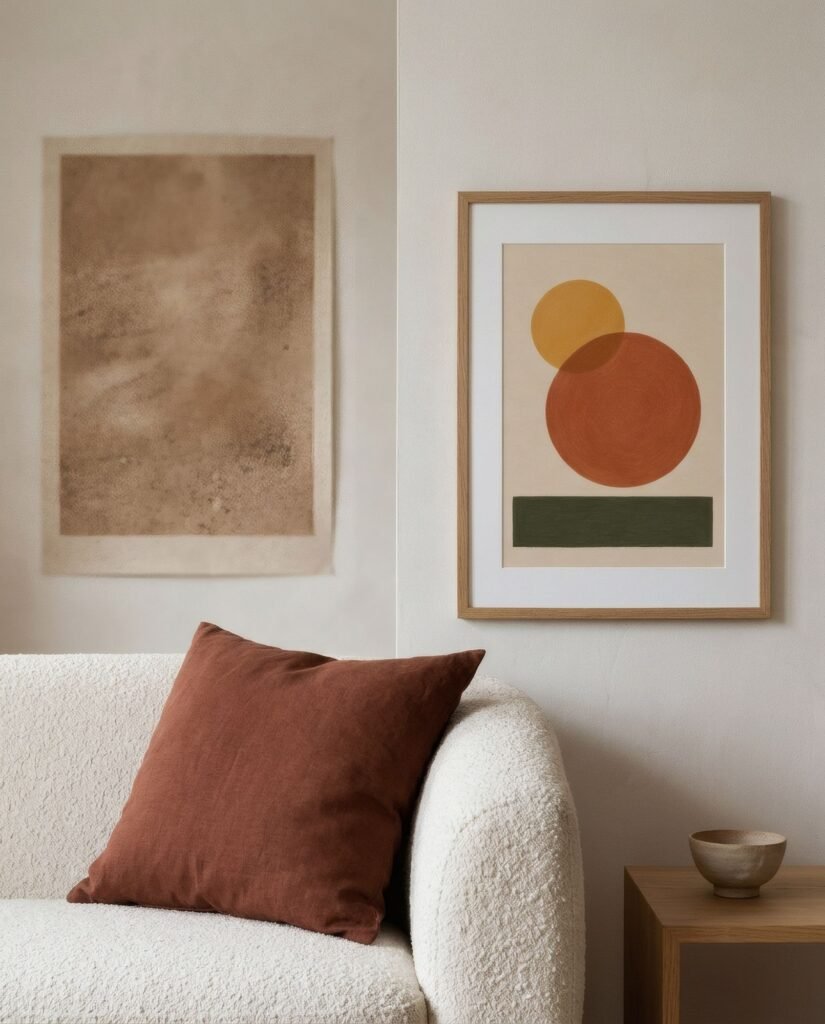
It helps to repeat something of the work elsewhere: one of its colours in a cushion or throw, or the wood of its frame in a side table. Those small echoes spread the weight and make the artwork feel part of the room rather than an isolated element.
And let the work breathe. Large art needs free wall around it; small pieces hung right up against it usually weaken it.
Orientation and shape
In a living room, large landscape formats follow the line of the sofa naturally and widen the wall. Large portrait formats suit narrow walls or tall ceilings, but above a wide sofa they can look too narrow, however tall. Large squares have a very stable, almost architectural presence.
If you cannot find a single piece of the size you need, a diptych or triptych of matching large prints can fill the same space with the same presence. We explain how in triptych wall art: when and how to use it.
Framing at scale
At large sizes, the frame matters more. Too slim a profile can look flimsy against a metre-wide work; too wide a one can make it heavy. For large formats, a medium profile of 2–4 cm (0.75–1.5 in) usually works, in natural wood, black or white depending on the work and room.
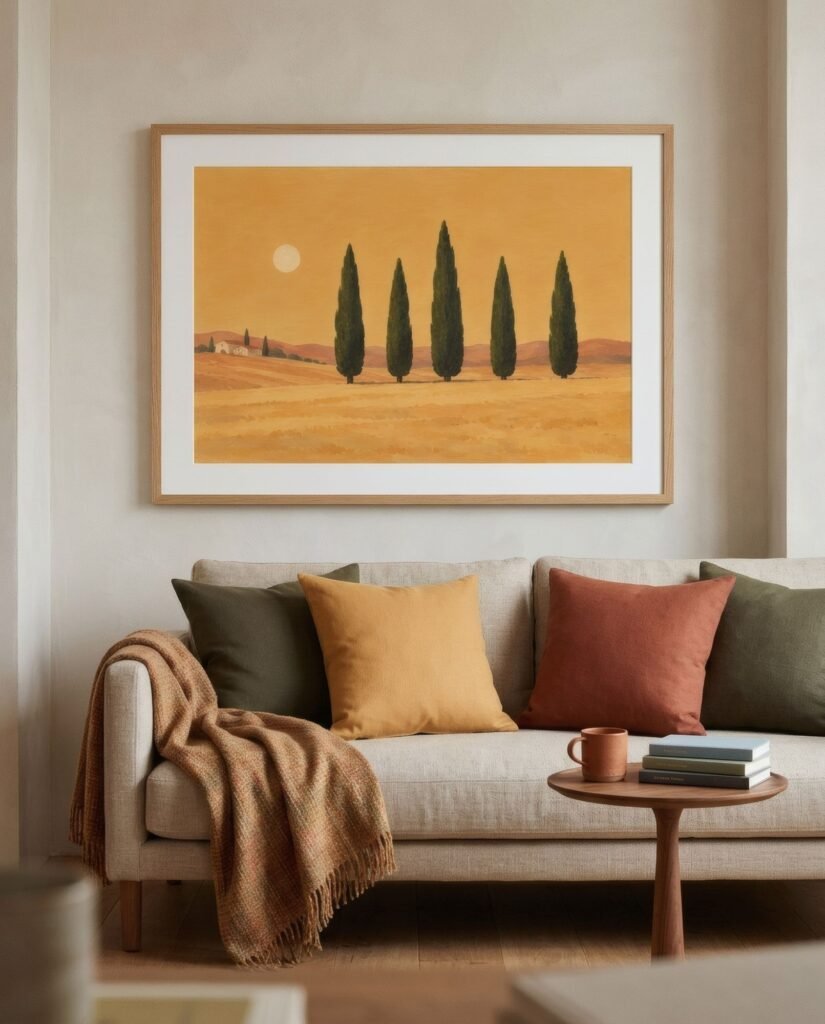
A generous mount can help a medium-large print gain presence without enlarging the image. And if weight is a concern, as above a sofa people lean against, acrylic glazing is lighter and safer than glass. Fixings and safety for large pieces are covered in how to decorate a large wall with art.
Leaning works too
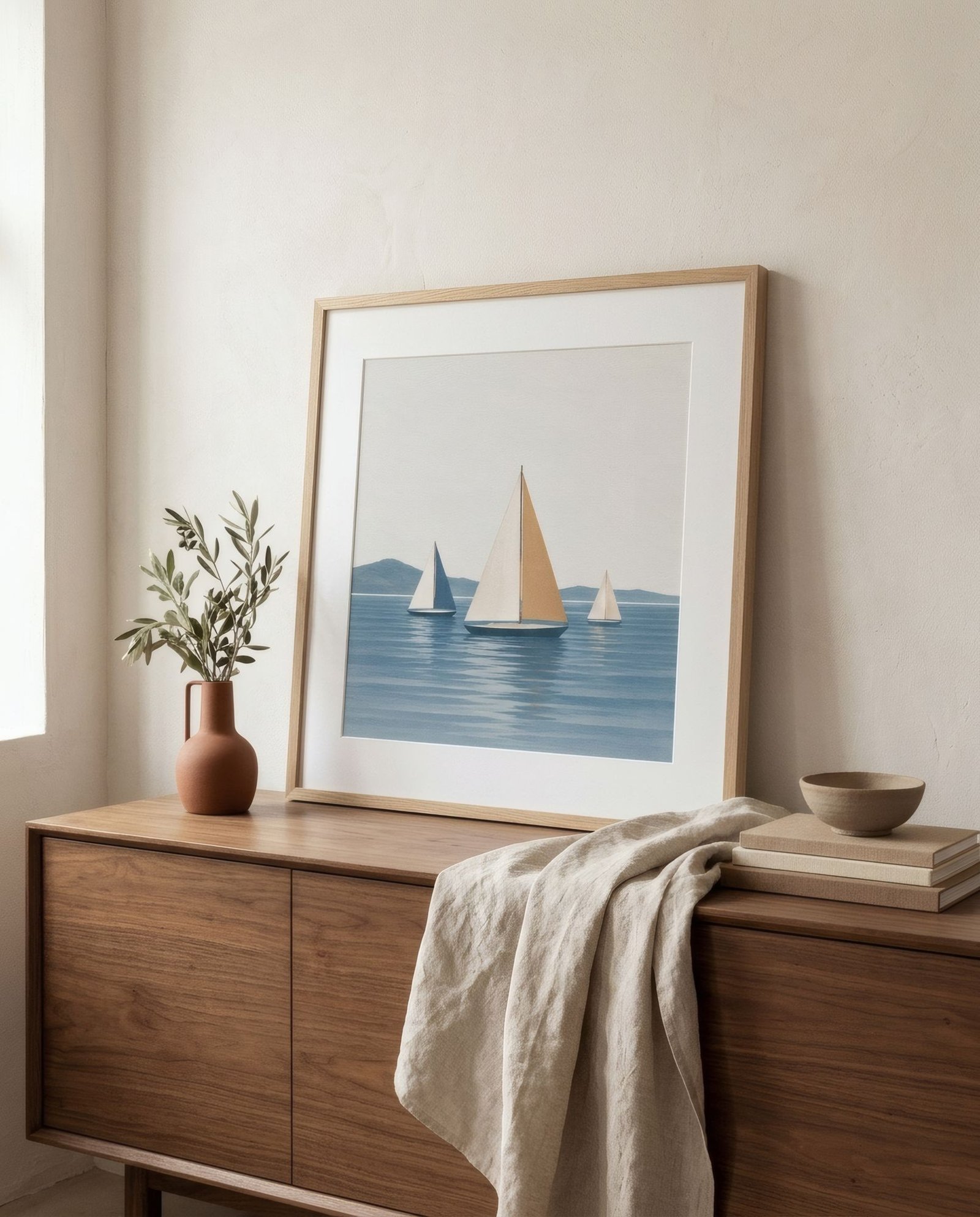
A very current alternative is not to hang the large piece at all, but to lean it on a wide sideboard or even on the floor against the wall. It feels relaxed, lets you move it easily and avoids holes. It works especially well with large formats and frames with some presence. Just make sure it is stable, particularly with children or pets around.
Light
A large artwork deserves good light. If it gets direct sun, protect it; if it will often be seen at night, a nearby floor lamp or a well-angled wall light can transform its presence. Avoid spotlights close enough to warm the surface or cause glare on the glass.
The piece that brings order
Well-chosen large wall art does not dominate a living room; it brings it into order. It gives the room a centre, a palette and a calm that everything else benefits from. To achieve that, always look at it in relation to something: the sofa, the furniture, the light and what is already in the room.
If you are looking for a larger format, 50 × 70 cm is the largest Bendíra size, and it works beautifully on its own in a generous mount, or as a pair or triptych above a wide sofa.
Keep reading: How to Arrange Art Above a Sofa, How to Choose Wall Art for Your Living Room and One Large Print or Several Small Prints?.