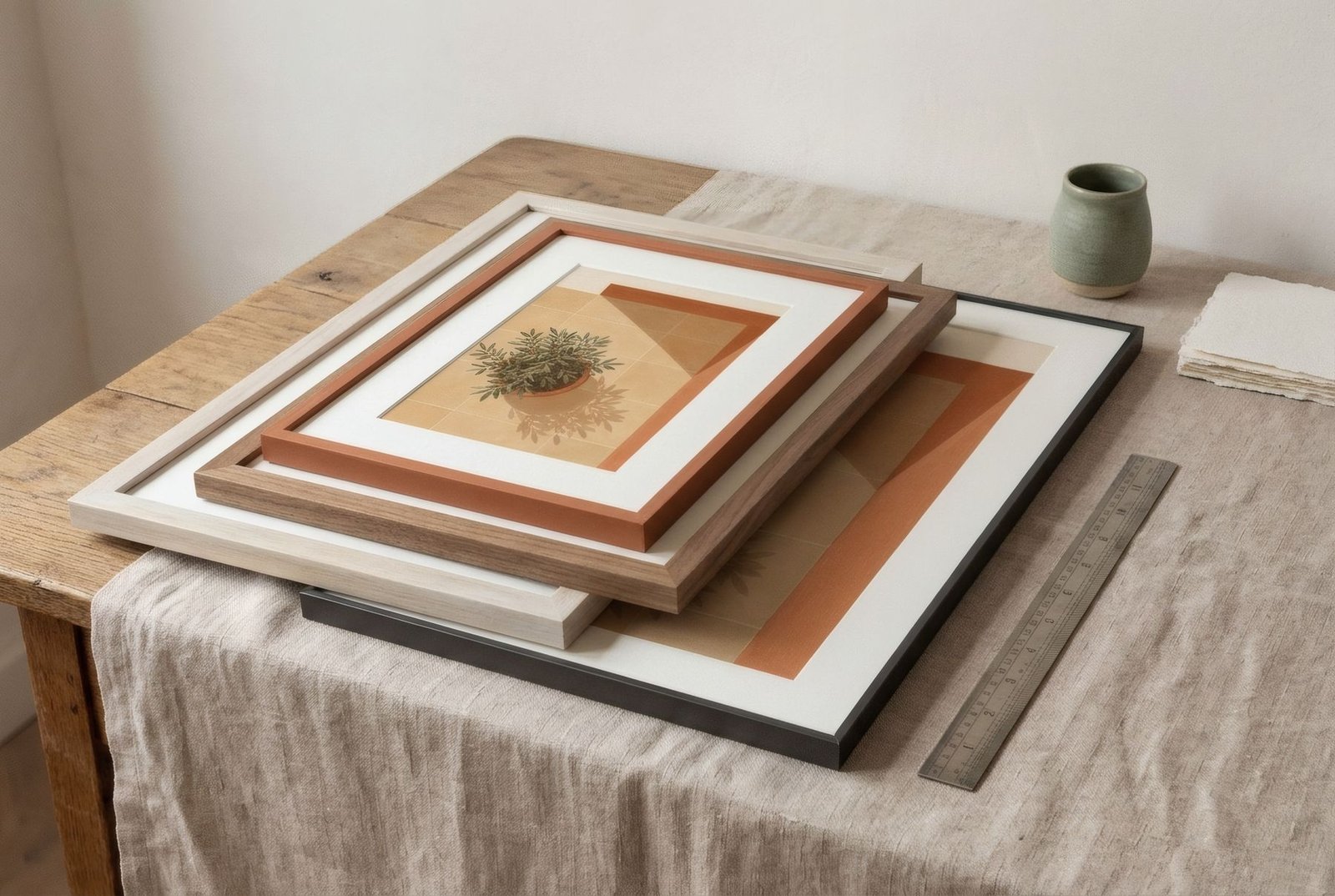
When you buy a print, its size looks like simple information: one number by another. But behind every measurement is a proportion, and that proportion decides important things: whether the image will fit a standard frame, whether it will be cropped, and whether it will sit comfortably beside other prints on a wall. Knowing the common formats, the A sizes we use for everyday paper and the photographic sizes such as 30 × 40 or 50 × 70 cm, saves a lot of frustration when framing, and explains why two prints of similar size can look so different.
Size and proportion are not the same
Size is the actual dimension of the paper or image. Proportion, or aspect ratio, is the relationship between the long and short sides, whatever the size. A 30 × 40 cm print and a 60 × 80 cm print are very different sizes but share the same ratio (3:4), so the image is identical, only larger. A 30 × 40 and a 30 × 42 cm print look almost the same, yet their ratios differ, and an image composed for one will not fit the other exactly without cropping or leaving a border.
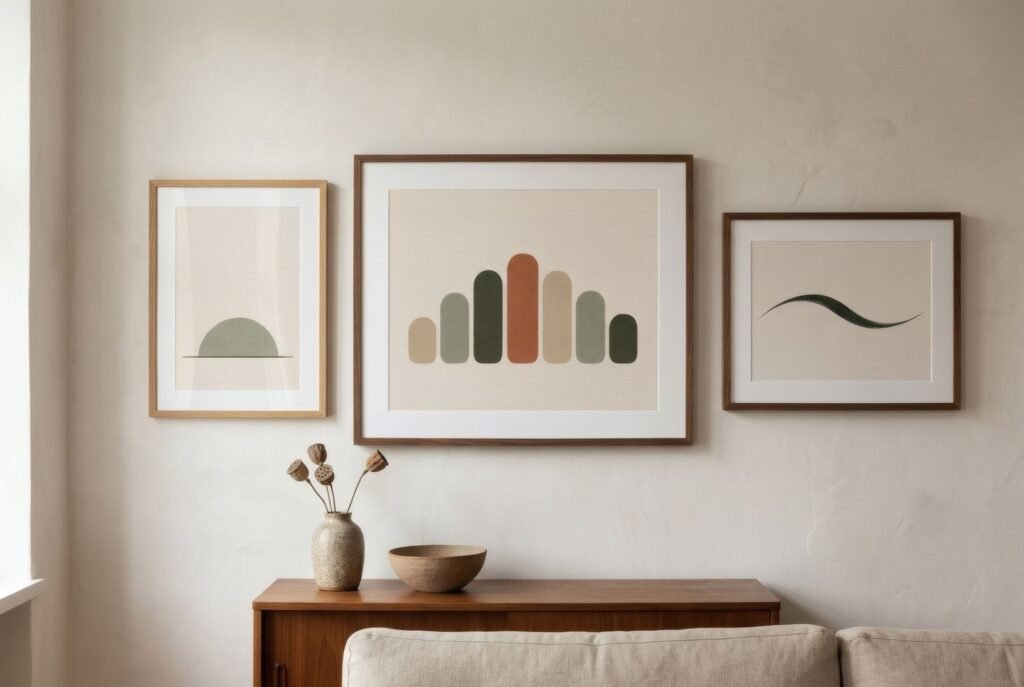
This matters for two reasons. Frames are made for specific sizes. And a work is composed with a particular proportion in mind; changing it can upset its balance.
The A series: Europe’s paper standard
The A series is probably the most widespread system of paper sizes in Europe and much of the world. It is defined by the international standard ISO 216 and has an elegant property: every size shares the same proportion, 1 to the square root of 2 (roughly 1:1.414). Fold an A3 sheet in half and you get two A4 sheets of exactly the same shape, and so on down the series.
| Size | Centimetres | Inches (approx.) |
|---|---|---|
| A5 | 14.8 × 21 | 5.8 × 8.3 |
| A4 | 21 × 29.7 | 8.3 × 11.7 |
| A3 | 29.7 × 42 | 11.7 × 16.5 |
| A2 | 42 × 59.4 | 16.5 × 23.4 |
| A1 | 59.4 × 84.1 | 23.4 × 33.1 |
| A0 | 84.1 × 118.9 | 33.1 × 46.8 |
For prints, A4 and A3 are very common at small and medium sizes, and A2 and A1 at large ones. Ready-made frames for them are easy to find across Europe and the UK, and they combine well because they share a proportion.
Photographic and frame sizes
Alongside the A series sit other common sizes, partly inherited from photography and the framing trade. In Europe and the UK, the most common include 13 × 18, 18 × 24 and 24 × 30 cm for small formats; 30 × 40 and 40 × 50 cm for medium; and 50 × 70, 60 × 80 and 70 × 100 cm for large.
These do not share a single ratio. 30 × 40 and 60 × 80 are 3:4, a little wider than the A series. 40 × 50 is 4:5, closer still to square. 50 × 70 is 5:7, near the A proportion but not identical. And 70 × 100 is very close to it.
In the United States, and sometimes in the UK, sizes in inches are common too, such as 8 × 10, 11 × 14, 16 × 20 and 18 × 24, each with its own ratio. If you buy a print sized in inches, check that matching frames are easy to find where you live.
Why proportion matters when framing
Suppose you have an A3 print (29.7 × 42 cm) and want to put it in a 30 × 40 cm frame. The numbers look almost the same, but the print is 2 cm too long and 3 mm too narrow for the opening. You would have to trim the paper or choose another frame. Small mismatches like this are the most common source of framing frustration.
The answer is simple. Before buying a frame, check the print’s exact size and whether the image fills the sheet or has a white border. A mount also gives you more flexibility, because you can choose a larger frame and a mount whose aperture fits the image. Step by step in how to measure an art print before buying a frame.
Proportion on the wall
When several prints hang together, proportion matters again. A series that shares a ratio, all A sizes or all 3:4, for instance, reads in a far more orderly way, even when the sizes vary. Mixing very different proportions can work too, but it needs more care over spacing and alignment.
Portrait and landscape prints of the same ratio combine well, and squares (30 × 30 or 50 × 50 cm) bring a note of calm to multi-piece arrangements.
From paper size to wall size
Finally, remember that a print’s size is not its final size on the wall. Frame and mount add centimetres, sometimes many. A 30 × 40 cm print with a 6 cm mount and a 2 cm frame ends up around 46 × 56 cm (18 × 22 in). How to choose the right size for a particular wall is covered in how to choose the right art print size.
A table worth keeping
Knowing the formats will not make a print more beautiful, but it does prevent surprises and makes framing and arranging much easier. If in doubt, remember two things: always check the exact size, and pay attention to the proportion.
Bendíra prints come in common sizes (A4, A3, 30 × 40 and 50 × 70 cm), chosen so that you can easily find a standard frame to suit them.
Keep reading: How to Choose a Frame for an Art Print, How to Care for Your Art Prints and What Is a Mount Board? Matting Art Prints Explained.