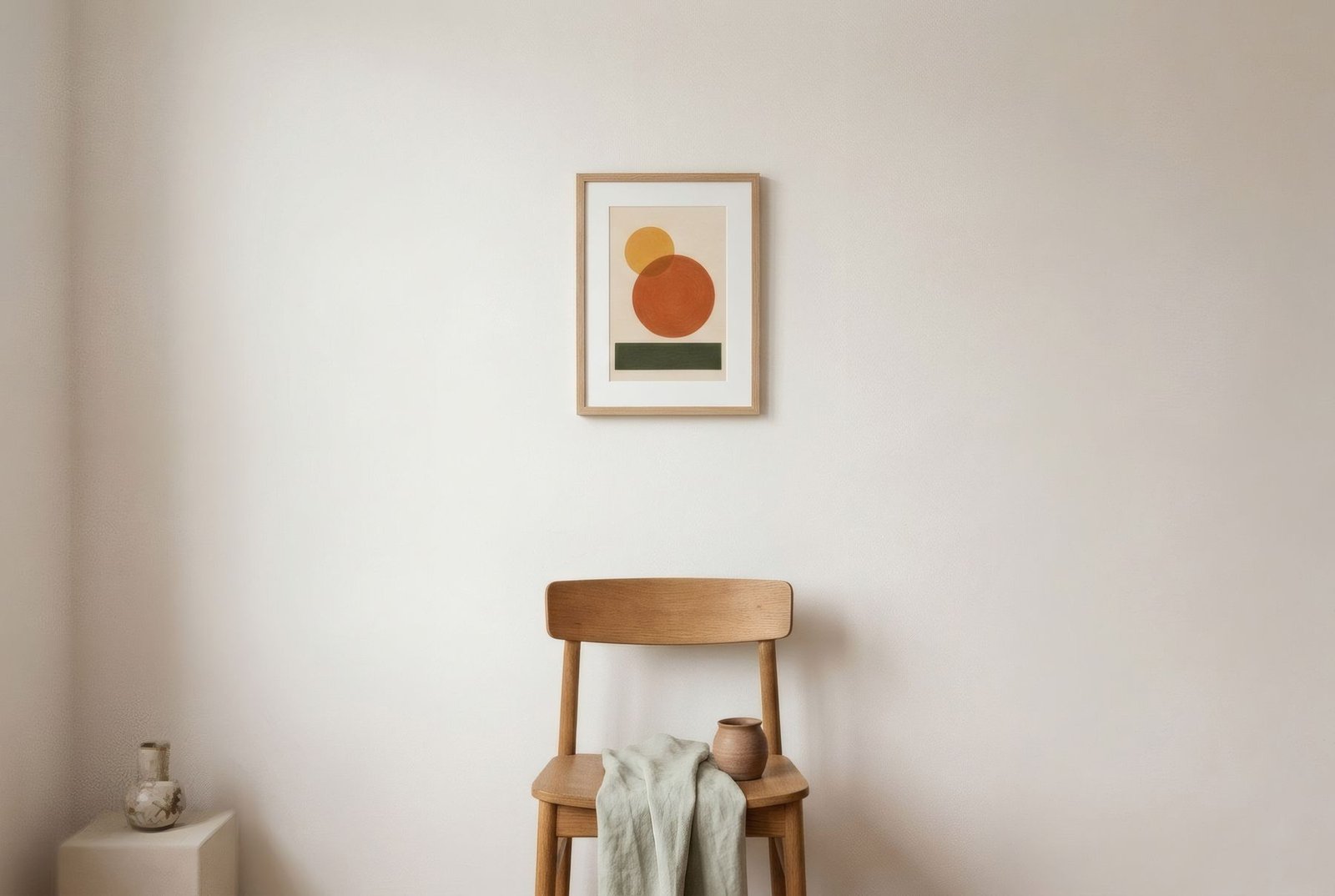
Walk into a good gallery and look not at the works but at what lies between them. Metres of white wall, sometimes a single painting on an entire wall, benches set well back, nothing to distract. That emptiness is not waste: it is what lets each work be seen. At home, by contrast, we tend to fear the void. A bare wall seems to ask to be filled, a gap beside a picture invites another, a clear sideboard looks unfinished. Yet one of the loveliest decisions you can make when decorating with art is the opposite: leave space. Give a work room to breathe, so it can be seen, and so that we can really look at it.
The silence between the notes
It is often said that music lives not only in the notes but in the silences between them. Without rests, notes pile up and melody turns to noise. Something similar happens with art on a wall. A work surrounded by other works, furniture, objects and patterns competes for attention with everything around it. A work surrounded by space receives all the attention.
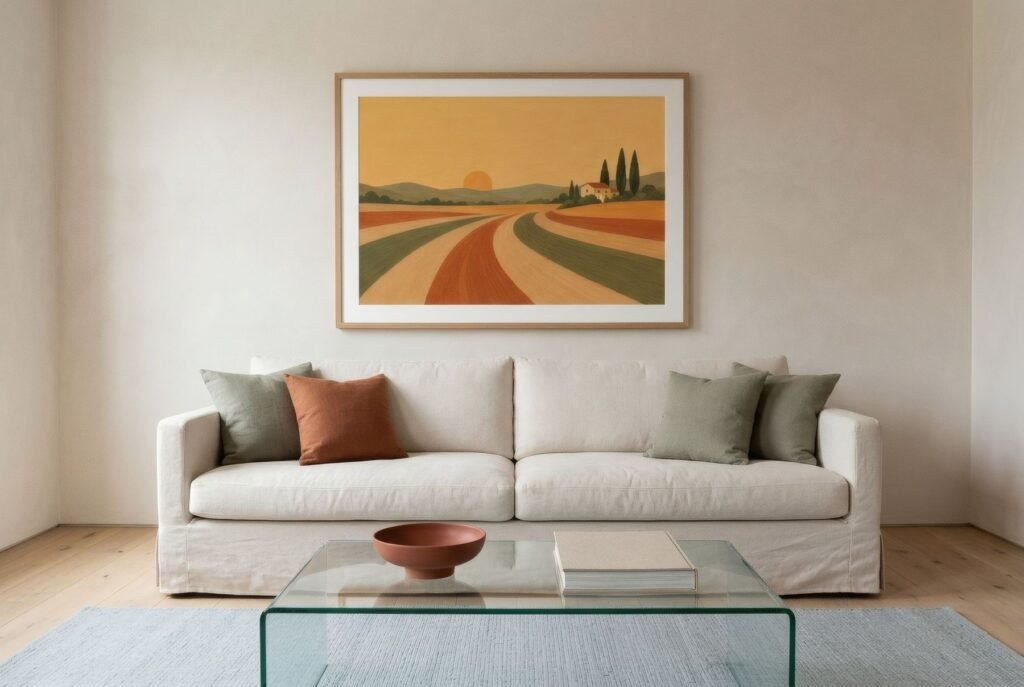
That space acts as an invisible frame. It separates the work from the rest of the room and gives it an importance no physical frame can give on its own.
Fewer, but visible
There are homes full of art where, paradoxically, it is hard to see any of it. Every wall is full, every gap filled, and the eye jumps from image to image without settling. And there are homes with very few works where each one is remembered.
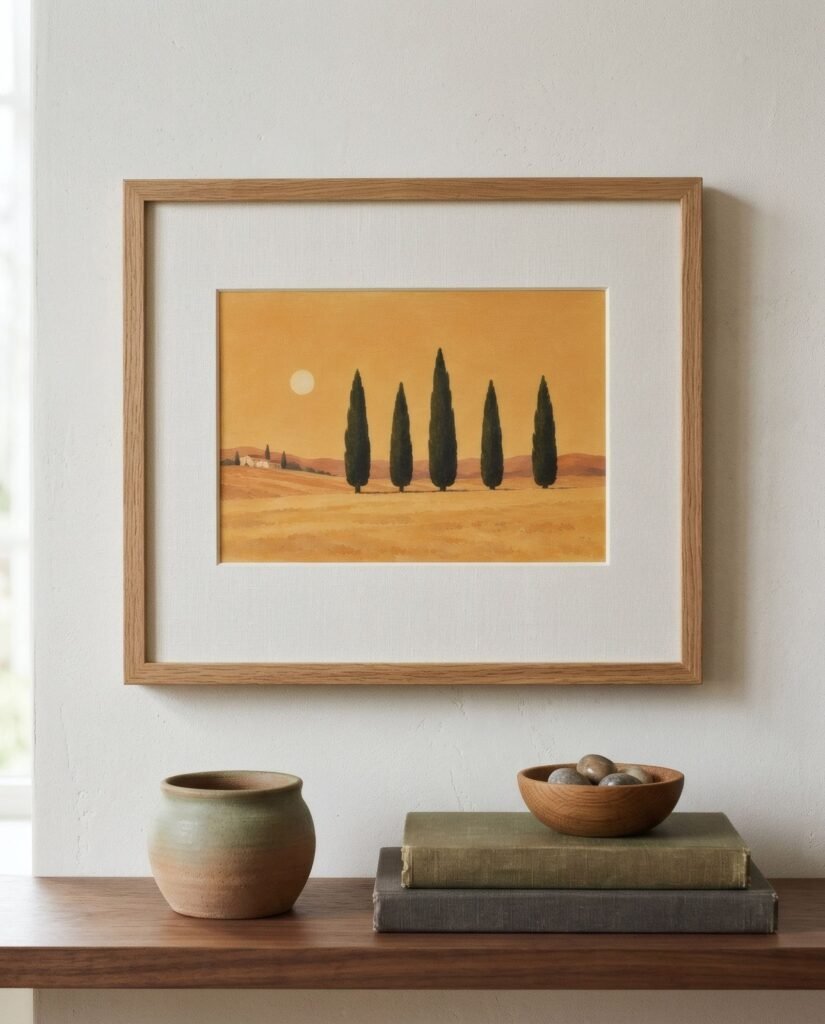
Leaving space around a work does not mean having less art on principle. It means giving each piece the room it needs to be seen. Sometimes that means choosing: keeping one work on a wall instead of three, or moving one to another room where it can have its own space.
Space and hierarchy
Space also creates hierarchy. A work with plenty of air around it reads as important, central, the lead. Several works close together, with little space between, read as a group in which none particularly stands out.
That is useful when decorating. If one work matters to you especially, giving it a wall to itself, or a wide clear space around it, makes it the centre of the room. Others can be grouped elsewhere.
How much space
There is no exact measure, but a few intuitions help. In general, a work needs more space around it the calmer its composition and the more it matters to us. Works with plenty of inner emptiness, which we discuss in the power of negative space in art, also ask for outer emptiness: squeezing them among other images cancels their calm.
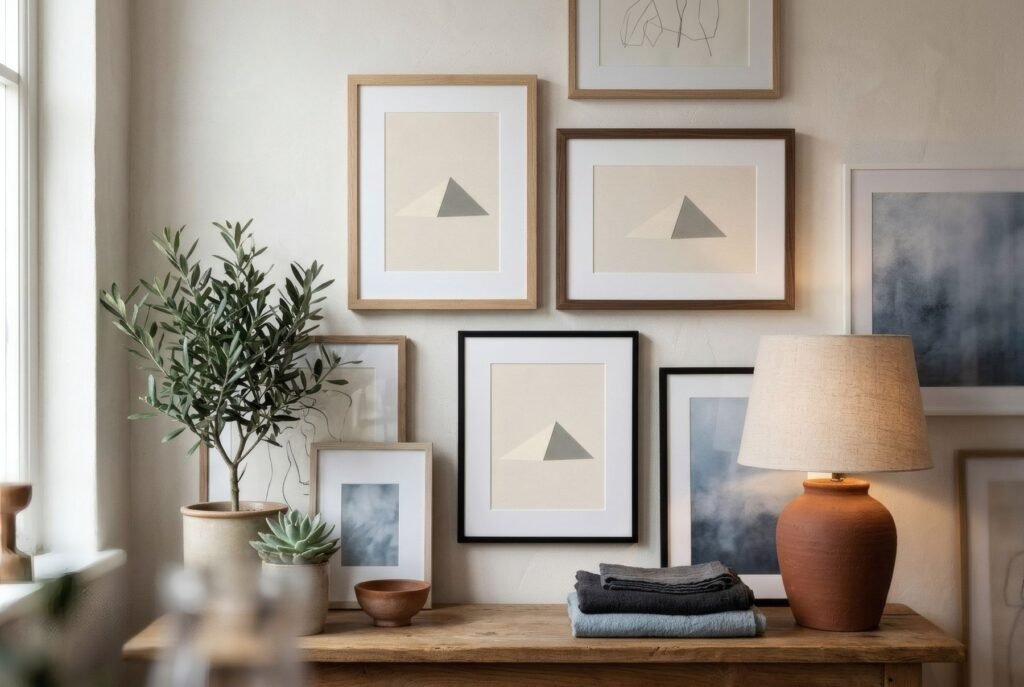
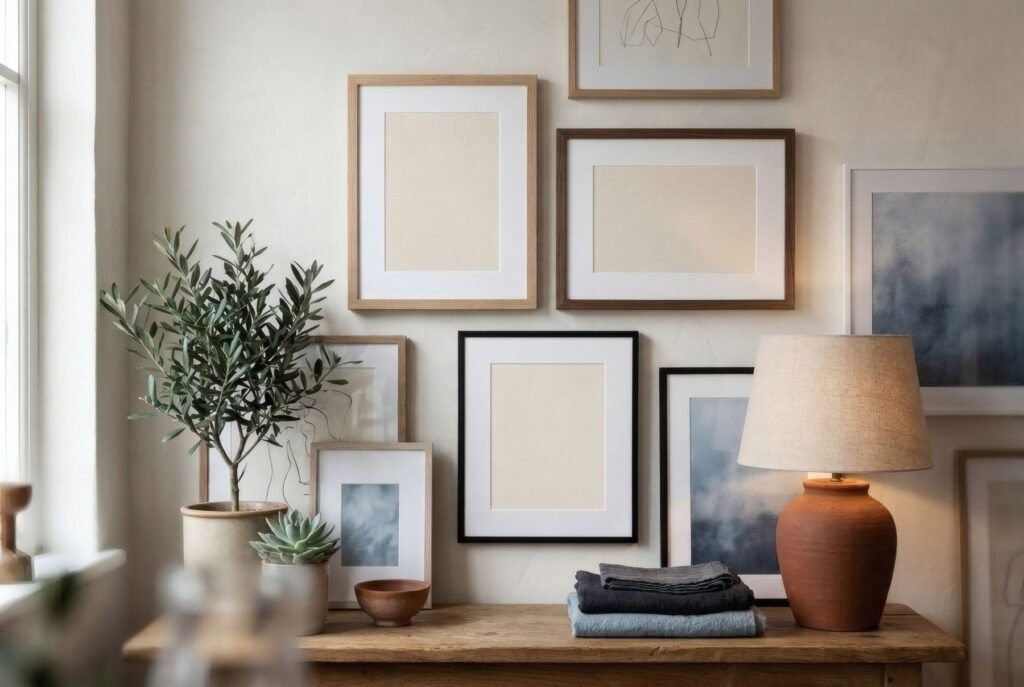
In practice, it helps to move away from the work anything that competes with it, such as a lamp too close, a plant that partly hides it, another picture a few centimetres off. And to resist filling every free stretch of wall.
The value of the empty wall
There is also value in walls that hold nothing at all. Not every wall in a home needs art. Some can stay clear, offering visual rest, letting light move, giving contrast to the walls that do hold works. An empty wall beside one with a lead work makes that work look even stronger.
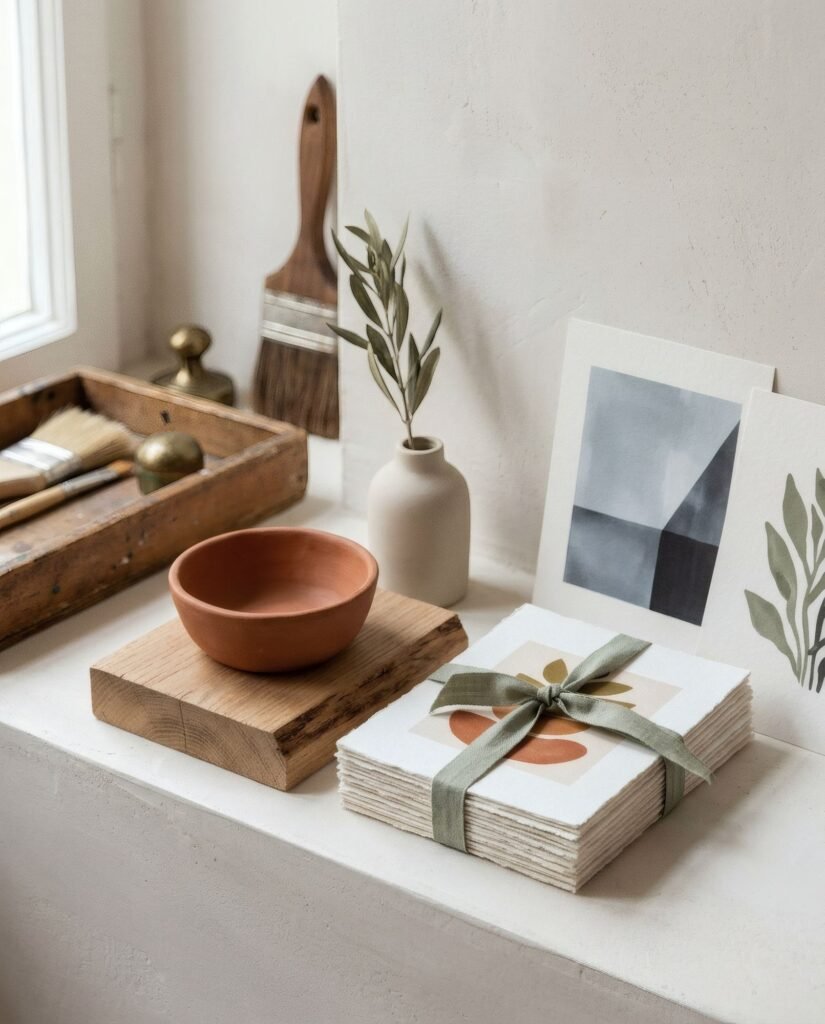
Learning to see those walls not as gaps to fill but as part of the home’s composition is perhaps one of the hardest and most transformative steps in decorating. We touch on it in how to create an elegant minimal living room.
Letting it breathe
Leaving space around a work is a gesture of respect, towards the work and towards whoever looks at it. It gives the work the chance to be seen, to stand out, to convey its calm or energy without interference. And it gives us the chance to pause.
Our prints are made for that kind of wall, the kind that leaves air, because many of them work with space as part of the image, and that space continues naturally into the wall around them.
Keep reading: A Wall as a Place for Personal Stories, Giving Art as a Gift: A Thoughtful Approach and Common Wall Art Mistakes and How to Avoid Them.