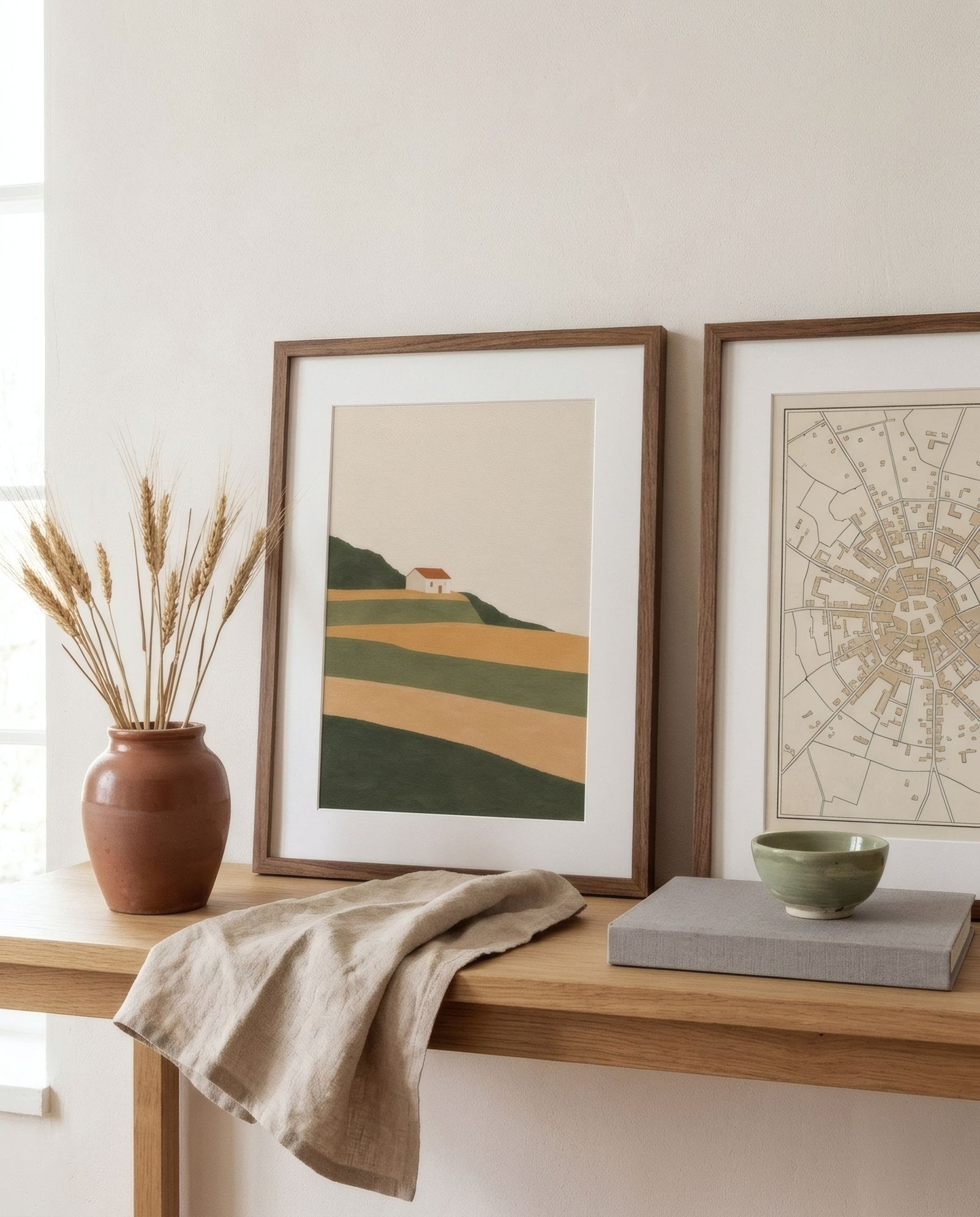
There’s a very particular moment in the life of a first home. Most of the boxes are open, the bed’s up, there are plates in the kitchen. And then one evening you sit on the sofa and look at the walls. White, bare, with the odd hole left by the previous tenant. It’s exciting, because everything is still to be done. And it’s a little overwhelming, for the same reason. Where to start, how much to spend, what to choose so you won’t regret it in a few years. There’s no single answer, but a few ideas help make that first art the start of something rather than a rushed purchase to «fill the space».
There’s no hurry
The first idea is perhaps the most important: you don’t need to fill every wall in the first week. A home is lived into gradually, and the art that works best usually arrives over time, once you know how you move through the rooms, where the evening light falls, which wall you look at from the sofa.
Buying a lot, quickly, tends to mean choosing pieces «so it doesn’t look empty», which end up saying nothing. Better a bare wall for a few weeks than a wall full of things that don’t move you.
Where to start
If you can choose only one wall to begin with, make it the one you see most. Usually that’s the wall above the sofa, or the one you face as you walk in. A piece there changes how the whole home feels, and it’s the one you’ll enjoy most.
The second priority is often the bedroom, above the headboard or opposite the bed: it’s the first thing you see on waking and the last before sleep. We cover both in what art to hang above a sofa and bedroom wall art ideas.
Hallway, landing, bathroom and kitchen can wait. By the time you get to them, you’ll have a clearer idea of your home’s character.
Budget: where to spend
Art for a first home needn’t be expensive. But it’s worth spreading the budget wisely.
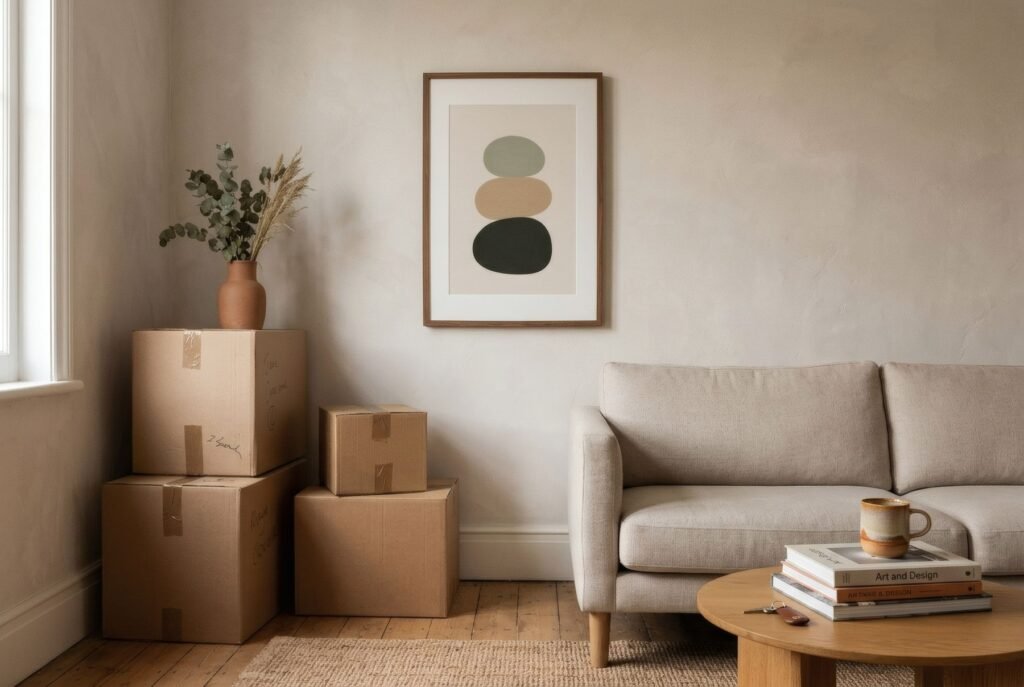
One main piece and a few secondary ones. Better to spend a little more on a piece for the main wall, with presence and quality, and fill in with more modest ones, than to spread the money across lots of small prints that don’t stand out.
The frame counts. A simple print with a good frame and a generous mount can look far more valuable than an expensive piece badly framed. If money’s tight, think of the frame as part of the investment. There’s more in how to choose the right frame for a print.
Paper quality. Between a cheap print on thin paper and a print on quality stock there’s a difference you notice over the years: colour, texture, longevity.
What you already have. Your own photographs, drawings, a map of your city, a gig poster: many first homes already hold meaningful material that, well framed, can sit alongside bought pieces.
Choosing without fear of getting it wrong
One of the most common worries is choosing something you’ll stop liking. A few ways to reduce the risk.
Choose what moves you, not what’s fashionable. Trends change fast; what you genuinely love tends to last. Think about your home’s palette, but don’t obsess: a piece needn’t match the sofa, though it helps if it talks to it. And remember that art can move: what’s in the living room today may end up on the landing tomorrow, as we explain in moving art around.
A collection that grows
Perhaps the loveliest way to think about art in a first home is as a collection that’s beginning, not a decorating job that’s finished. Each piece you add over the coming years will hold something of that moment: a trip, a gift, a find. In ten years the walls will be a small diary of your life in that home. We look at building a wall that evolves in building a gallery wall that evolves over time.
Start with one
If you’re sitting on the sofa in your first home not knowing where to begin, begin with one piece. Just one, for the wall you look at most, chosen slowly. The rest will come.
If you’re looking for that first piece, Bendíra has prints from A4 up to 50 × 70 cm, unframed, so you can choose the size that suits your wall and your budget.
Keep reading: How to Choose Wall Art for Your Living Room.