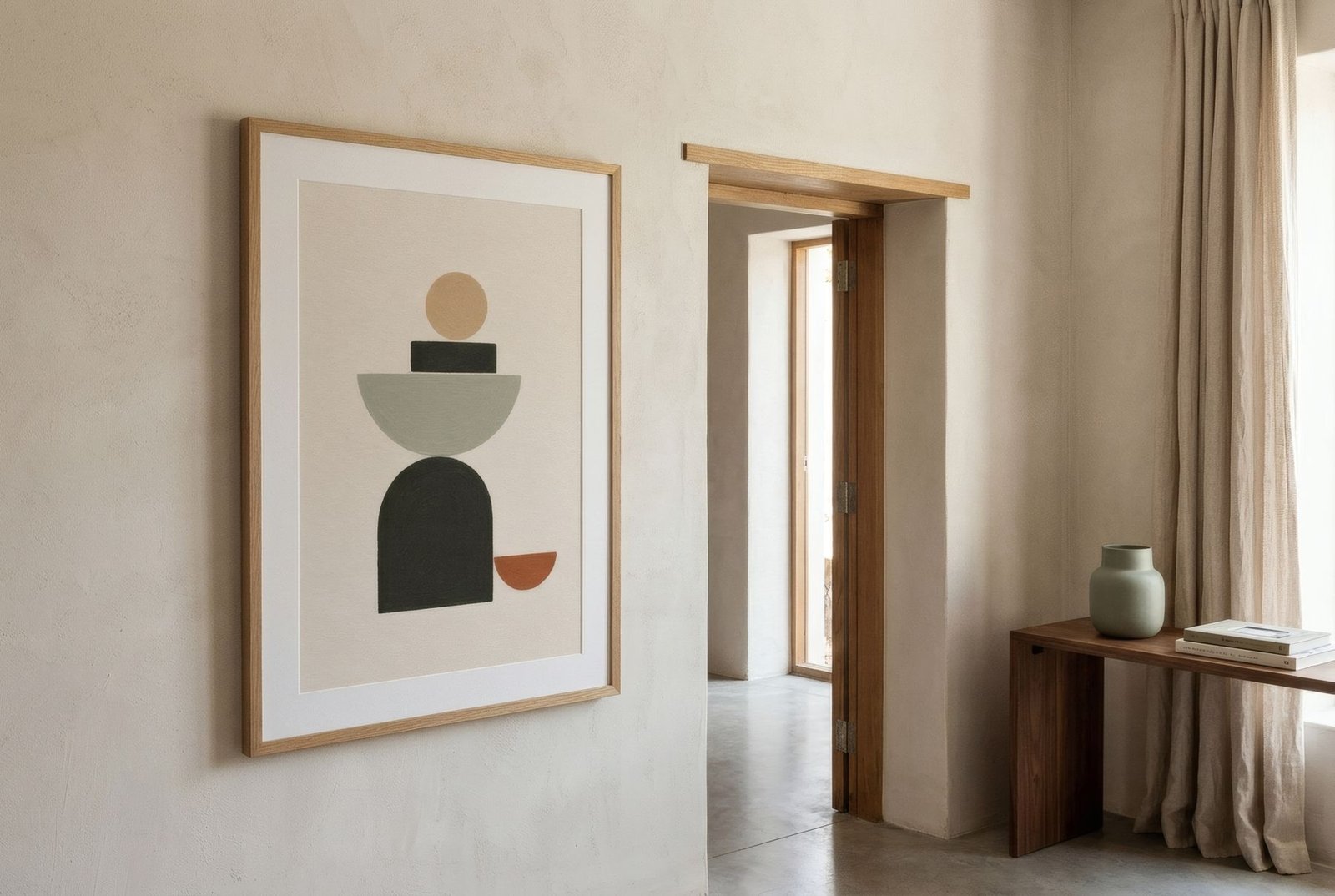
Walking into a space where art and architecture truly understand each other is hard to forget. A Romanesque church whose frescoes seem to grow from the stone, a gallery where daylight falls exactly on the painting that needs it, a house where a single work seems to have been placed before the walls went up. In such places, neither dominates; they complete each other. Throughout history, art and architecture have shared a language of proportion, rhythm, scale, material and context. Understanding that language helps us see great buildings differently, and also helps us choose and place art in our own homes with a more architectural sensibility.
A shared history
For centuries, separating art from architecture would have seemed odd. Mosaics in basilicas, frescoes in churches, tiles in palaces, sculpture on façades: all were part of the building from the outset. Art was not hung; it was built in.
Over time, especially with the rise of the easel painting and of collecting, works became independent of walls. They could be moved, sold and rehoused. That freedom brought a great deal, but it also raised a new question: how to give art back its relationship with space. Many twentieth-century architects and artists tried to answer it. One well-known example is the Rothko Chapel in Houston, conceived around Mark Rothko’s paintings, a building that exists to hold those works and the light they need. In Britain, the tradition of the artist’s house and studio, and later the integration of public art into civic buildings, explored similar ground.
Proportion
Proportion, the relationship between the parts and the whole, is perhaps the oldest language art and architecture share. Since antiquity, builders sought numerical relationships to make buildings harmonious, and painters used them to organise compositions. In the twentieth century, the architect Le Corbusier even proposed a system of measurements based on the human body, the Modulor.
At home, proportion becomes a simple question: how does a work relate to the wall, window, door or furniture nearby? A print whose width speaks to a sideboard’s, or whose top edge lines up with a door lintel, becomes part of the room’s architecture. We explore these relationships in how to choose the right art print size.
Rhythm
Architecture is full of rhythm: columns, windows, beams, repeated tiles. That rhythm is what makes a façade or a gallery feel ordered and pleasant to walk along. Art can follow those rhythms or play against them.
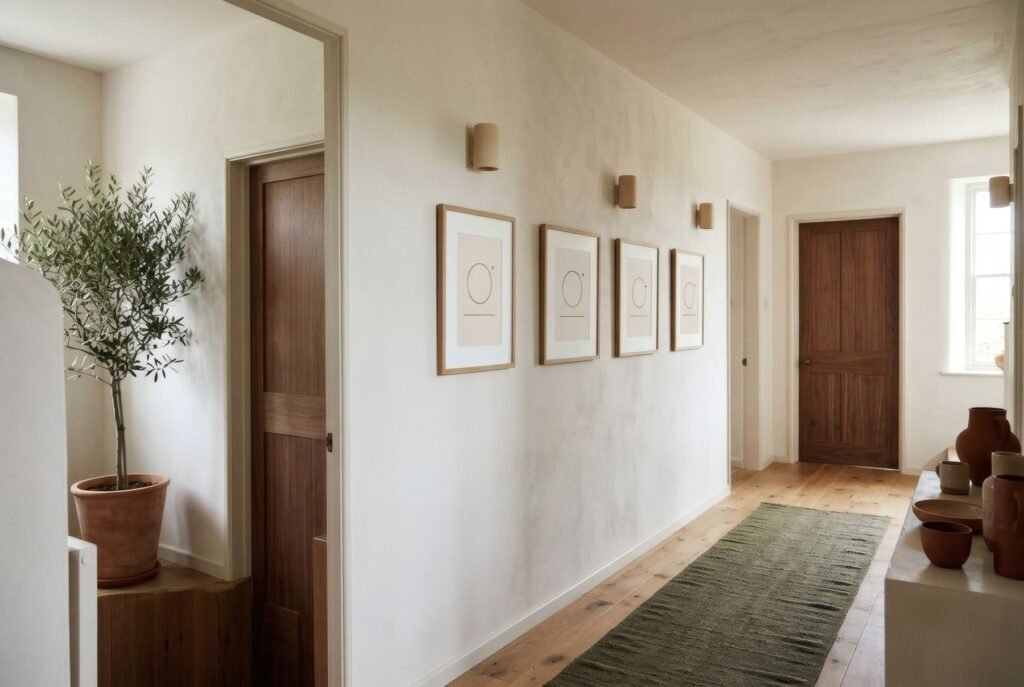
In a home, a series of identical prints down a hallway can echo the rhythm of the doors; a single piece between two windows can mark a pause. Looking at the rhythms already present in a room before hanging anything is one of the most effective ways to make art feel as though it belongs.
Scale
Scale is the relationship between the size of a thing and the size of whoever looks at it, or of the space that holds it. A cathedral is designed to make us feel small; a home, to make us feel held. Art follows the same logic: a monumental work in a vast hall impresses, and a small one in a corner invites intimacy.
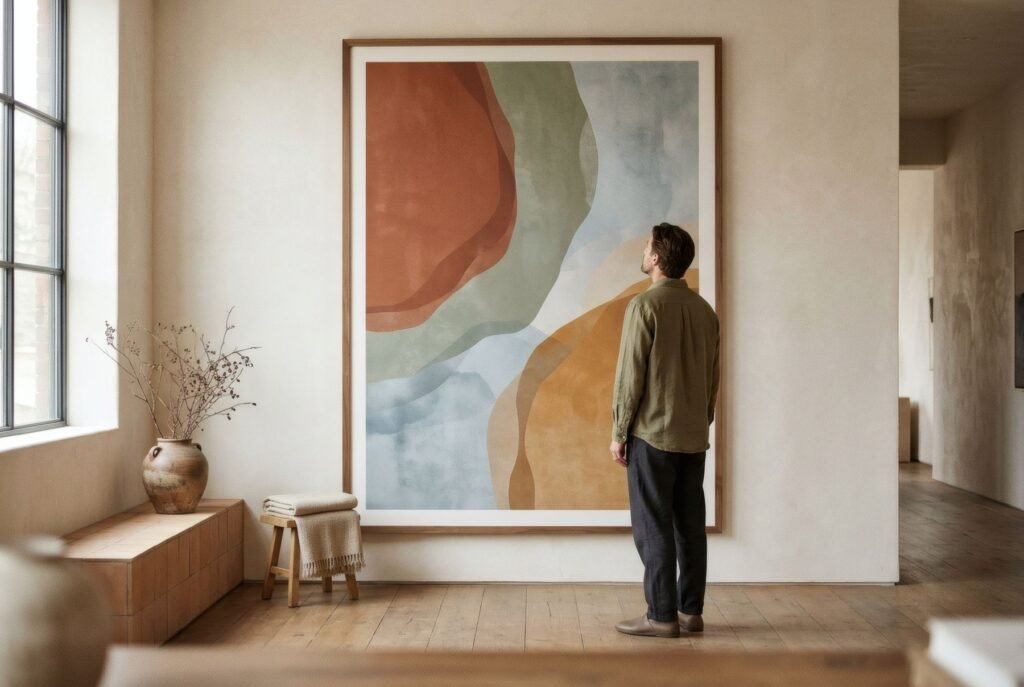
At home, choosing the right scale is above all about the body and viewing distance. A work too small for a large wall gets lost; one too large for a narrow space overwhelms. We develop this in a matter of scale: choosing art for a space.
Material
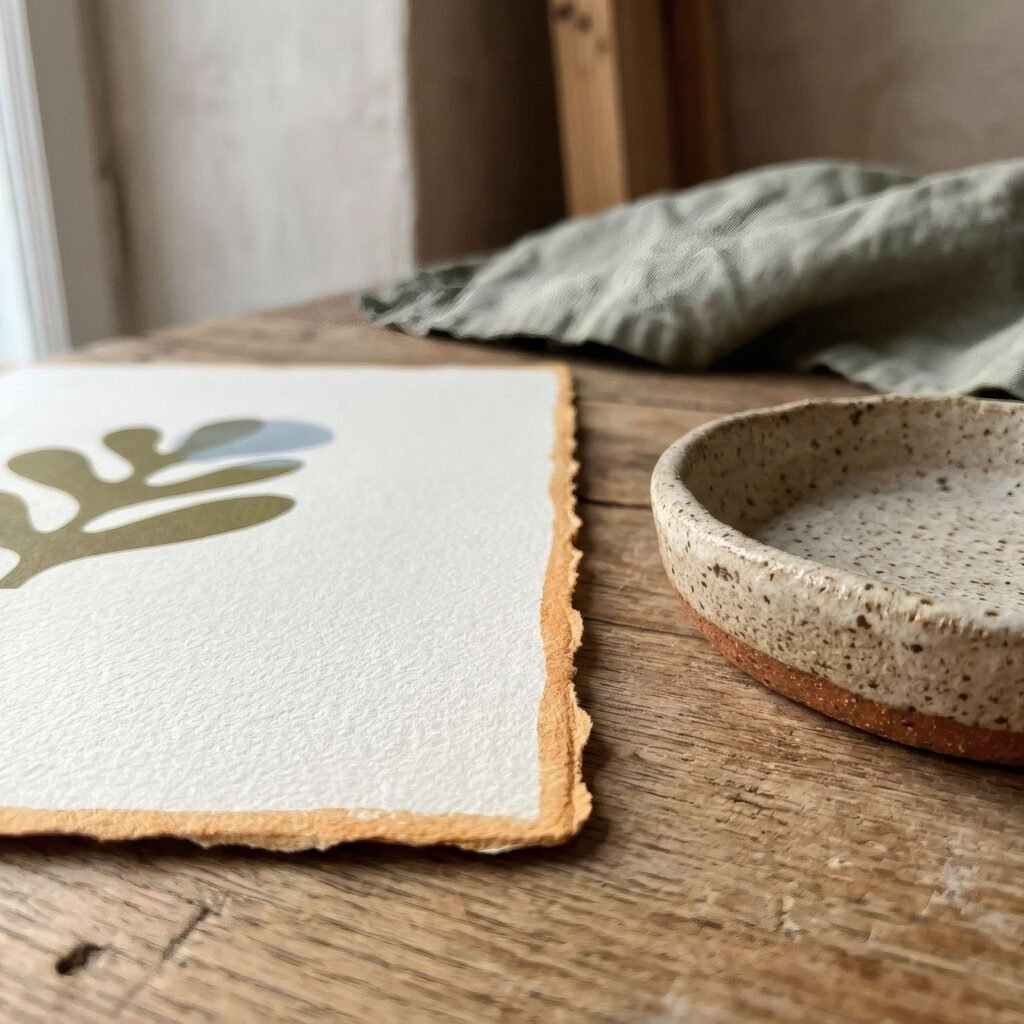
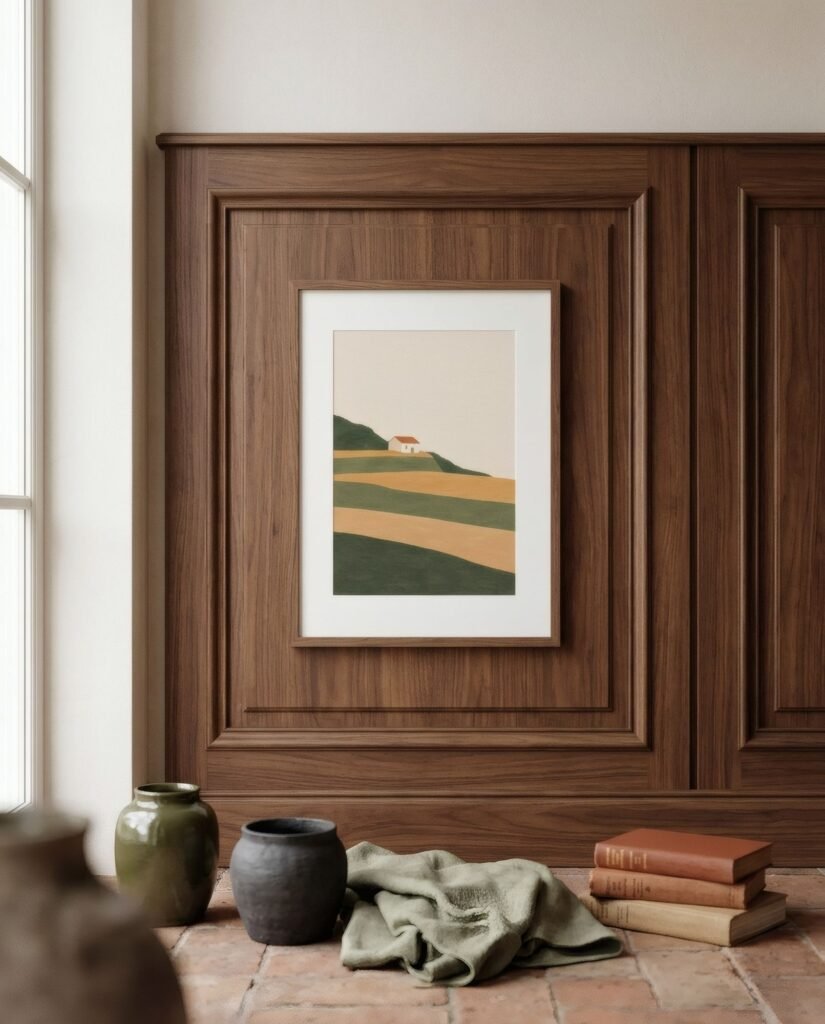
Architecture also speaks through its materials: stone, timber, brick, lime, concrete, glass. Each has a texture, a colour and a way of receiving light. Art that converses with those materials feels more at home. A matt paper print on a limewashed wall shares its tactile warmth; a clean-lined photograph on exposed concrete shares its sobriety.
Context and light
Finally, no space exists in a vacuum. The light that enters, the view from the window, the life lived inside are all part of the context in which art is seen. Many of the most memorable spaces uniting art and architecture are, at heart, spaces of light. At home, noticing how and when light enters a room before hanging a work is one of the most architectural things we can do.
Thinking like an architect at home
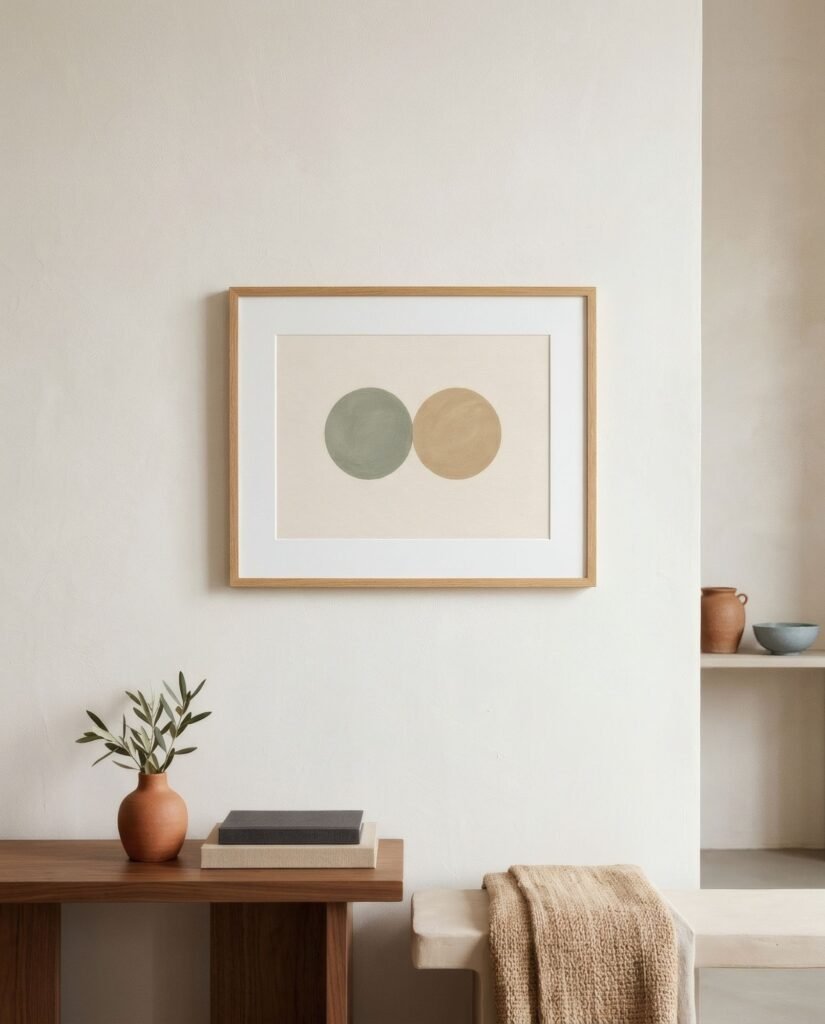
You do not need to build a chapel for art and architecture to converse in your life. It is enough to look at a room as an architect might, at its proportions, rhythms, scale, materials and light, and then choose a work that joins that conversation rather than drowning it out.
Bendíra’s prints, with their arches, horizons and quiet forms, grow in part from that same attention to architecture and to the light of places.
Keep reading: A Brief History of the European Art Poster, How to Look at Abstract Art and Modern Mediterranean Interiors and Wall Art.