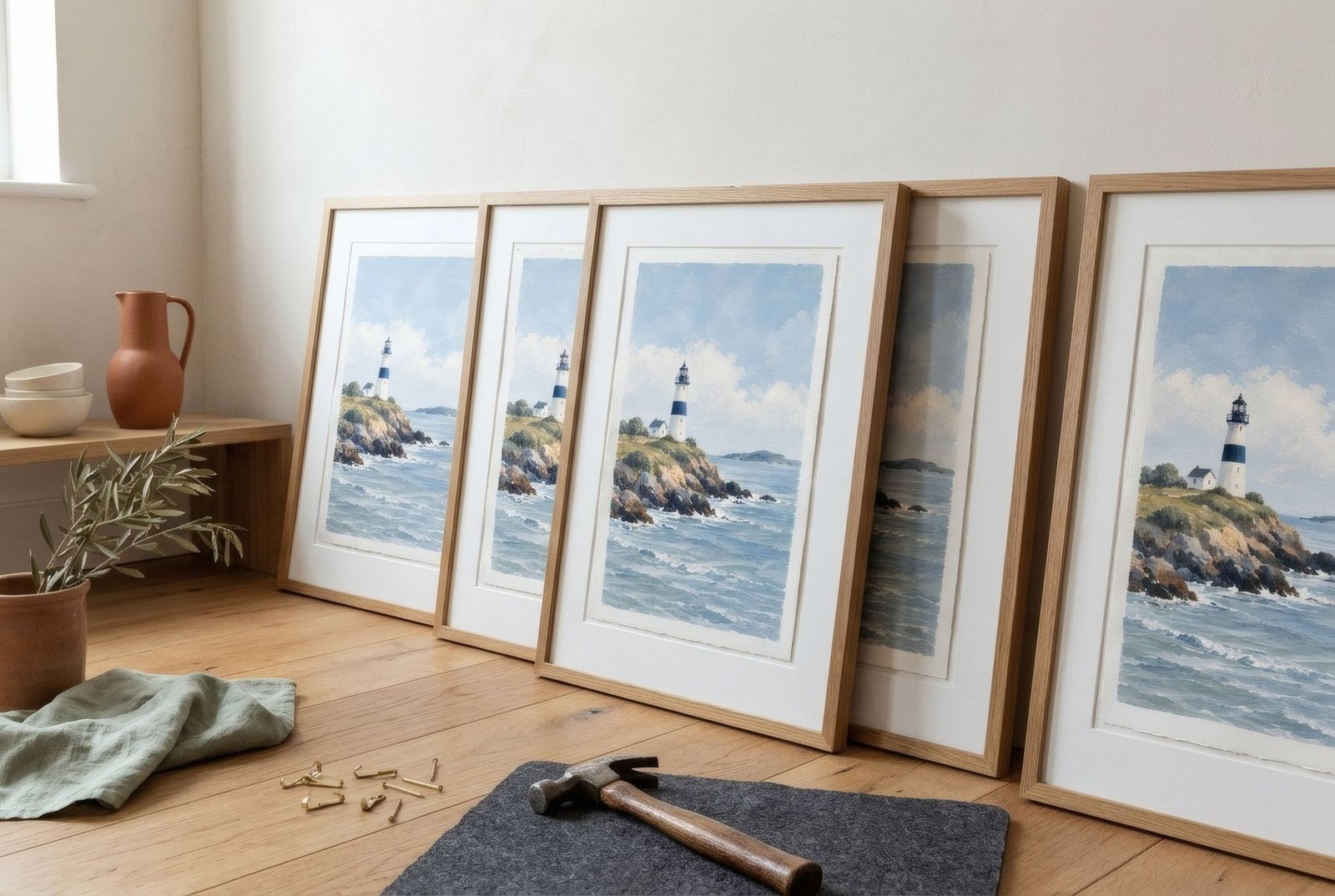
Something curious happens to almost everyone with the art in their home. For the first few weeks after hanging a print, you look at it often. You stop, take it in, enjoy it. But over time, little by little, it stops being seen. It’s still there on the same wall, but your gaze slides over it without pausing, just as it slides over the light switch or the door. The piece hasn’t lost its value; our eyes simply get used to whatever’s always in the same place. The fix is surprisingly simple: move it.
The habit of not seeing
Our attention is built to notice what’s new and what changes. Whatever stays the same day after day slips into the background, and largely that’s a blessing: we couldn’t live if every object in the house demanded attention all the time. But the same habit means we stop enjoying things we chose precisely to enjoy.
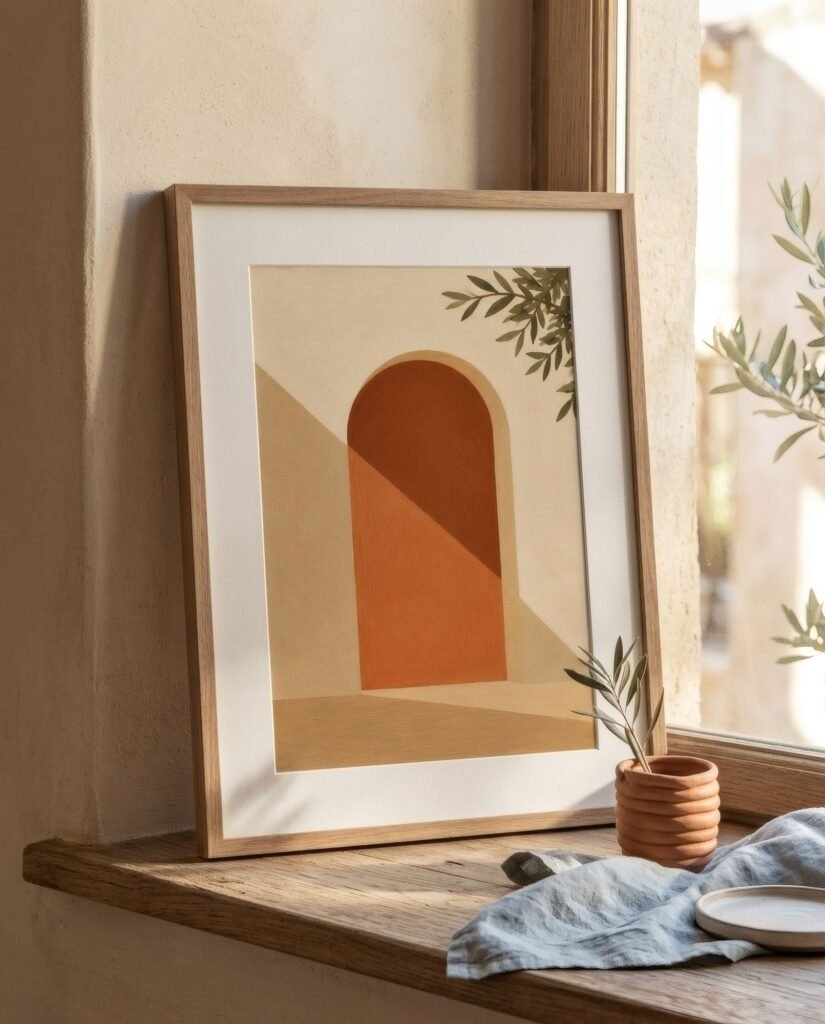
Moving a piece breaks the habit. In a new spot, in different light, beside different objects, the print becomes visible again. And we often discover things in it we’d forgotten or never noticed.
The exercise
Here’s a small exercise for a quiet weekend. It doesn’t involve buying anything or making new holes, at least to begin with.
First, take them down. Choose three or four prints from different rooms and take them down. Gather them on a table or lean them on the floor against a wall. Look at them side by side: you may spot relationships between them you never saw when they were apart.
Then, lean. Without hanging anything yet, try propping each print in different places: on the bedroom chest of drawers, on the living-room floor against the wall, on a hallway ledge, on a windowsill. Leave them there for a day or two.
Watch at different times. Morning and evening light change a piece a great deal. Notice when and where each one shines, as we discuss in one print, three rooms.
Decide. With what you’ve seen, decide where each one goes. Some may go back where they were, and that’s a result too: now you know they were right there. But chances are at least one will find a better home.
What you learn
The exercise teaches you about the art and about the house. About the art, you find out which pieces are versatile and which need a particular setting; which come alive in daylight and which under lamps; which work alone and which in company.
About the house, you discover which walls have more potential than you thought, which corners welcome a piece, and which spaces were better left empty.
Make it a habit
Some people turn this into a habit: they move their prints around once or twice a year, with the change of season or whenever the home feels like it needs something. It’s a way of refreshing without buying, as we suggest in refreshing a wall without replacing furniture.
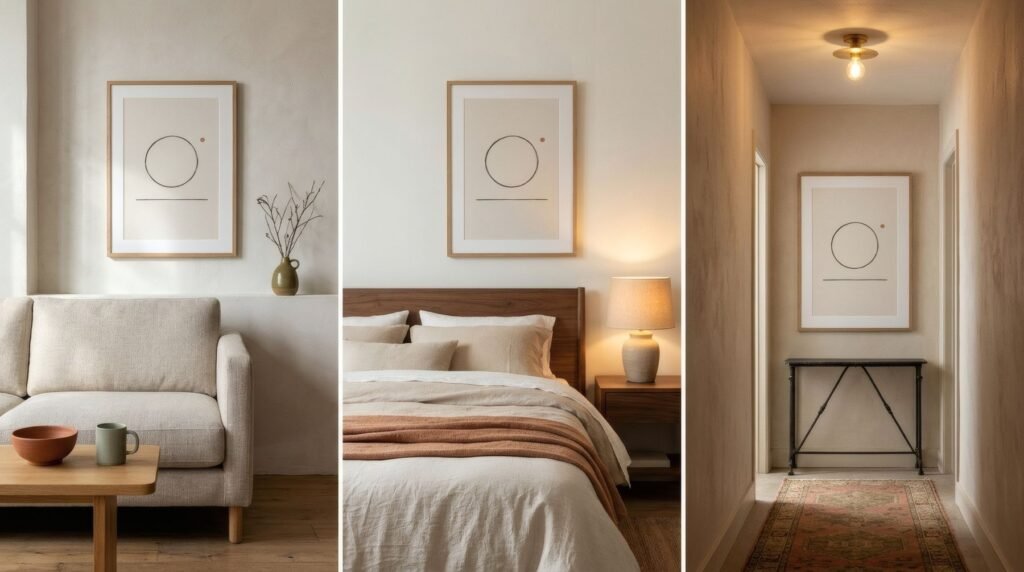
It helps to have your pieces in standard-size frames, so prints can swap between frames, and a ledge or two to lean things on without new holes, as we covered in how to lean art on ledges and furniture.
Looking again
Moving a print is a small act with a surprising effect: it brings the work back into view. What had become invisible is present again. And, along the way, the whole house feels a little new.
If moving your prints reveals a gap that wants something new, Bendíra has sizes from A4 that fit standard frames.
Keep reading: Living with Art: The Beauty of Small Details and Building a Gallery Wall That Evolves Over Time.