
High ceilings are a gift: they bring air, light and a certain grandeur to any room. But they raise a tricky question when it comes to hanging art. With three or four metres of wall above the sofa, the temptation is to hang pictures higher to «fill» the space, and the result is usually the opposite of what you wanted: works far from the eye, a sense of emptiness beneath them, and a room that feels colder. Dressing a tall wall well means keeping the relationship with people, their eye level and the furniture, and gaining presence through proportion rather than height.
The eye does not rise with the ceiling
The first idea is the most important. However high the ceiling, our eyes stay at the same height. A work hung at three metres forces you to tilt your head back and feels distant, almost decorative, more connected to the ceiling than to life in the room.


So even on very tall walls, keep the usual reference: the centre of the work at around 145–155 cm (57–61 in) from the floor on an open wall, or its bottom edge 15–25 cm (6–10 in) above furniture. We explain this in how high should you hang pictures?. If the wall then looks empty above, the answer lies in the format, not in the height.
Gaining presence through format
On tall walls, large portrait formats work especially well. A tall work hung at eye level fills much of the vertical space without leaving the viewer behind, and it echoes the proportion of the wall itself.
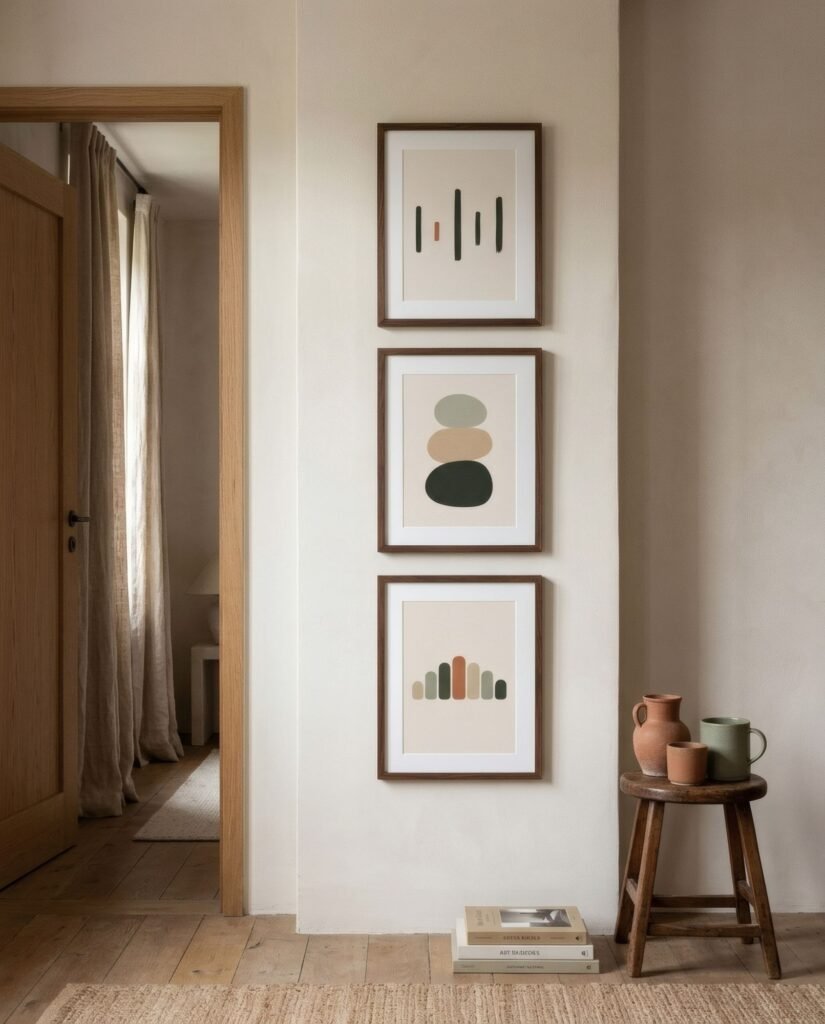
If no single piece is that large, you can stack several. Two or three works in a column, centred on one axis with equal gaps, build a tall, ordered arrangement. The column’s centre should stay near eye level, even if the top piece sits higher.
Two-tier arrangements
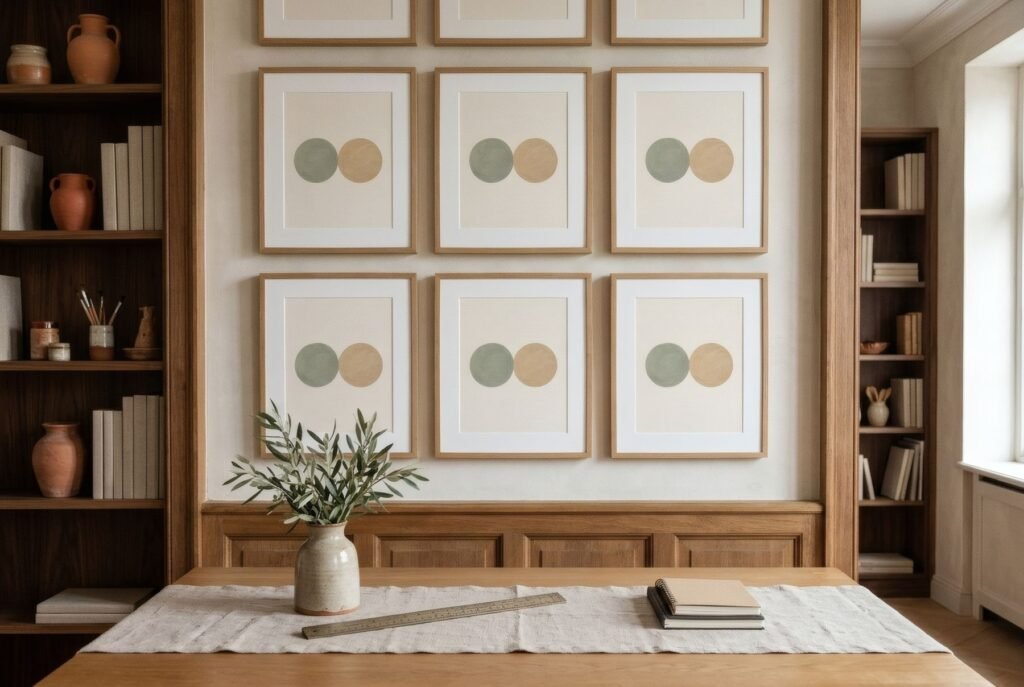
Another elegant answer for very tall walls is a two-row arrangement: a lower row that relates to the furniture and sits at eye level, and an upper row, shorter or with smaller pieces, occupying some of the space above. This structure, descended from the walls of historic exhibition rooms, suits large living rooms and libraries. It does demand consistent gaps and clear order so it does not look crowded. Planning works just as in how to create a gallery wall at home.
Read the architecture
Tall walls often have strong architectural features: cornices, deep skirting, tall windows, double doors. They offer very useful lines of reference. Aligning the top of a work with the top of a nearby window or door creates a continuity that orders the whole wall. In period homes with panelling or cornicing, the work can relate to those divisions. We discuss these spaces in mixing contemporary art with traditional interiors.
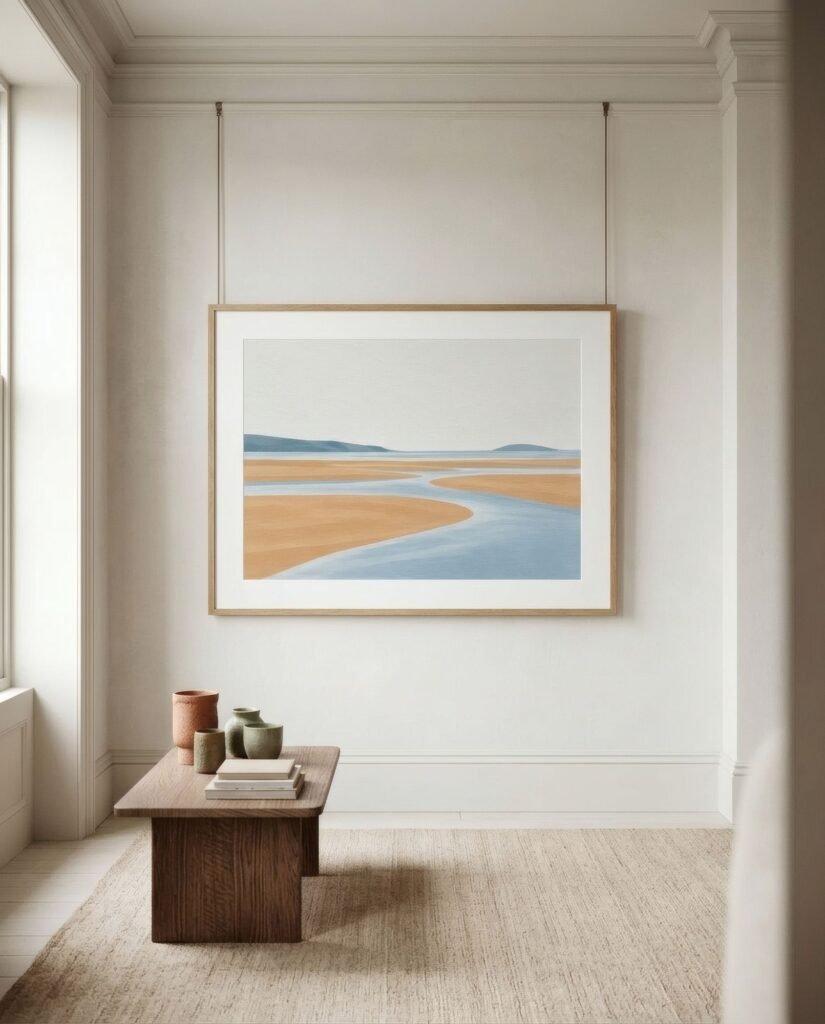
Many older British homes have a picture rail near the ceiling, designed to hang pictures on cords or chains without damaging the plaster. It is a lovely traditional solution, as long as the work itself still sits at a comfortable height.
Viewing distance
High-ceilinged rooms are often large too, which means works are seen from further away. A small piece at the far end of a big room gets lost, even at the right height. In these spaces, think about larger works, or groups that read as one block from a distance. More in how to choose the right art print size.
Light from above
High ceilings make it easy to light works with spotlights from above without glare in your eyes. Well angled, they give a lovely gallery feel. Watch for reflections in glazing, and avoid light striking the work too head-on.
Height, with restraint
Tall walls do not ask us to fill every inch, but to bring order to the space. Keeping works near eye level, gaining presence through portrait formats or two-tier arrangements, and leaning on the lines of the architecture let you enjoy the sense of space without the room feeling empty or cold.
If you are dressing a tall wall, a column of 50 × 70 cm portrait prints from Bendíra’s collections can resolve much of the space with elegance.
Keep reading: How to Decorate a Large Wall with Art.