A gigantic wave curls like a claw over three fragile boats, and in the distance, tiny, Mount Fuji looks like just another wave. It’s probably the most reproduced Japanese image in the world, found on mugs, T-shirts, phone cases and walls everywhere. But Hokusai’s Great Wave off Kanagawa isn’t a painting: it’s a woodblock print, made to be sold at an affordable price in early nineteenth-century Japan. It belongs to a tradition, ukiyo-e, that for more than two centuries turned everyday life, theatre, landscape and fashion into printed images. And when it reached Europe, it changed the way Western artists painted.
Pictures of the floating world
Ukiyo-e means roughly «pictures of the floating world». The term refers to the urban culture of the Edo period, between the seventeenth and nineteenth centuries, in cities such as Edo, today’s Tokyo: the pleasure quarters, kabuki theatres, courtesans, sumo wrestlers, travel, the seasons. A fleeting world devoted to the pleasure of the moment, which found its voice in print.
At first the prints were mostly portraits of actors and fashionable beauties. Over time, and especially in the nineteenth century, landscape came to the fore, with series such as Katsushika Hokusai’s Thirty-six Views of Mount Fuji, which includes the Great Wave, and Utagawa Hiroshige’s views of the stations of the Tōkaidō road.
Four pairs of hands
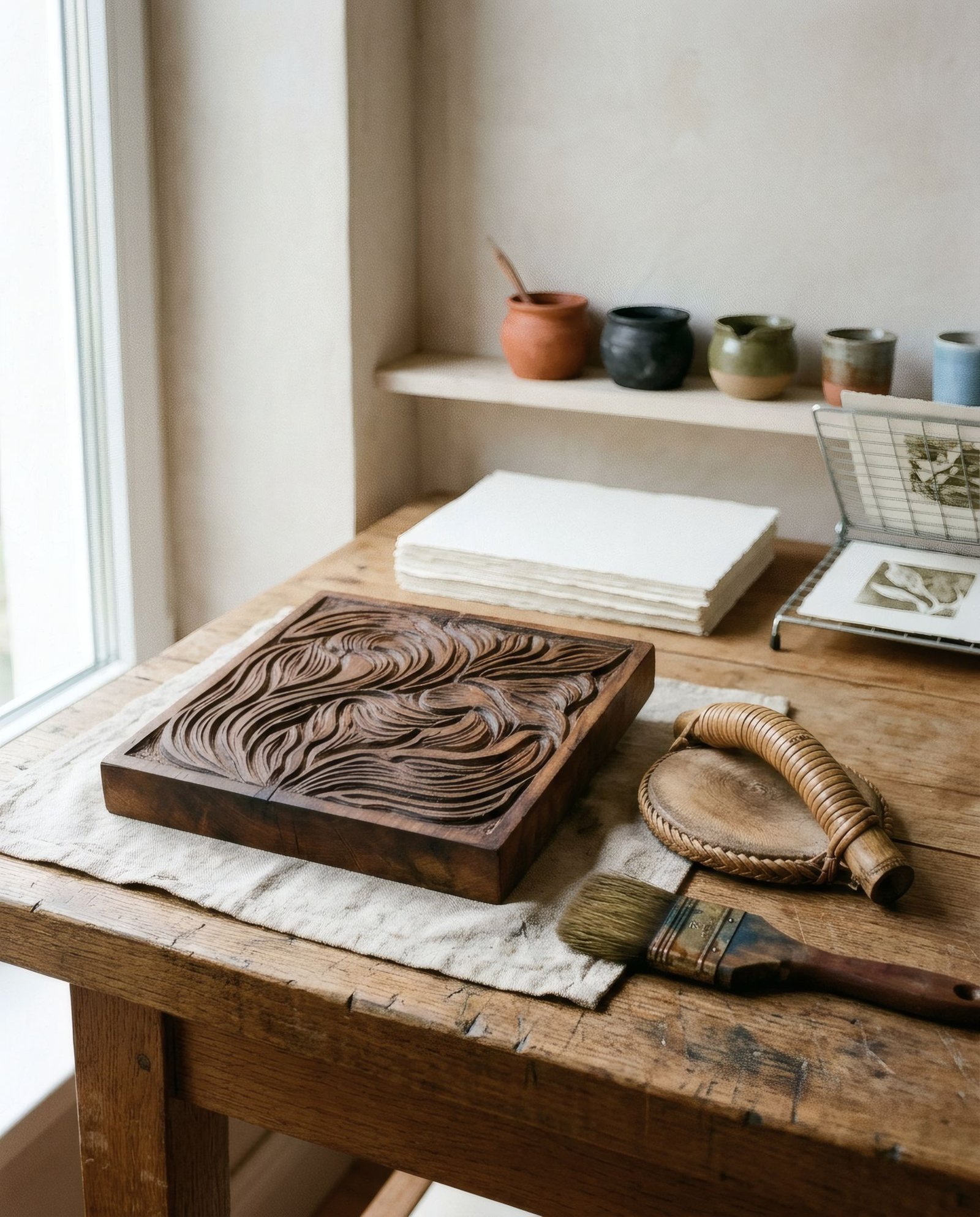
One of the most surprising things about ukiyo-e is that it wasn’t the work of a single artist. It was a collaboration between four people. The publisher conceived, financed and sold the project. The designer, the artist whose name we know, such as Hokusai or Hiroshige, drew the image in ink on thin paper. The carver pasted that drawing onto a block of cherry wood and cut through it, destroying the original in the process, to make the key block; then carved a separate block for each colour. And the printer inked the blocks one by one and rubbed the paper with a flat pad, the baren, to lay each colour exactly in place.
The Great Wave, for instance, used several colour blocks in addition to the key block. First editions ran to a few hundred impressions, and blocks were reused until they wore down, so early and late impressions can differ markedly.
Keys to the composition
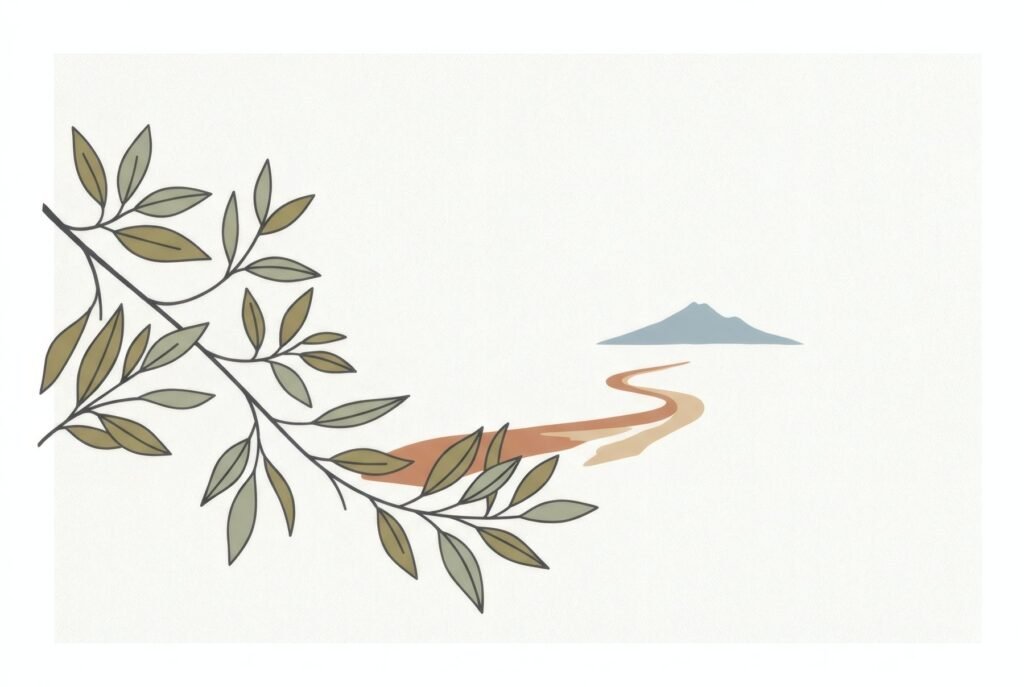
What captivated European artists wasn’t just the technique but a way of composing quite unlike the Western tradition. Perspective less bound to the Renaissance single vanishing point, with stacked planes and views from above. Bold cropping: a foreground cut off by the edge, a huge element up front and the main subject small in the distance, like Fuji behind the wave. Flat colour, without modelling in light and shade. A clear, expressive outline. And asymmetry, with empty space as an active part of the picture.
Japonisme
After Japan opened to Western trade in the mid-nineteenth century, prints began arriving in Europe in large numbers. Painters including Monet, Degas, Manet, Mary Cassatt, Toulouse-Lautrec and Van Gogh collected and studied them, and the influence shows in their cropping, flat colour and perspective. The phenomenon was given a name: Japonisme. You can trace it in the modern poster, Toulouse-Lautrec’s among them, and in Art Nouveau. We look at it alongside the early poster in a history of the art poster.
Reproductions and cultural respect
Today, the great works of classic ukiyo-e are in the public domain because of their age, and many museums, such as the Metropolitan Museum of Art through its Open Access programme, offer high-resolution images free to use. That’s why the Great Wave turns up on so many objects.
Two caveats are worth bearing in mind. First, each image comes with its own terms: not every museum photograph is open access, so check the licence of the image you use. Second, ukiyo-e is a living cultural tradition: in Japan, workshops still carve and print by hand using traditional techniques. A digital reproduction isn’t the same as a hand-carved print, and it’s only fair to tell them apart. We discuss using public-domain art in public domain art: what you can and can’t do.
A lesson in composition
Ukiyo-e remains one of the best schools for learning to read a composition: the value of empty space, the force of a bold crop, the elegance of flat colour. On a wall, a Japanese print, whether an original, a museum reproduction or a contemporary edition from a traditional workshop, brings a calm and order few images can match.
For high-resolution ukiyo-e, the Metropolitan Museum of Art’s open-access collection is a good place to start.
Keep reading: Botanical Art: From Scientific Illustration to Interior Design and Atmospheric Perspective in Printed Images.