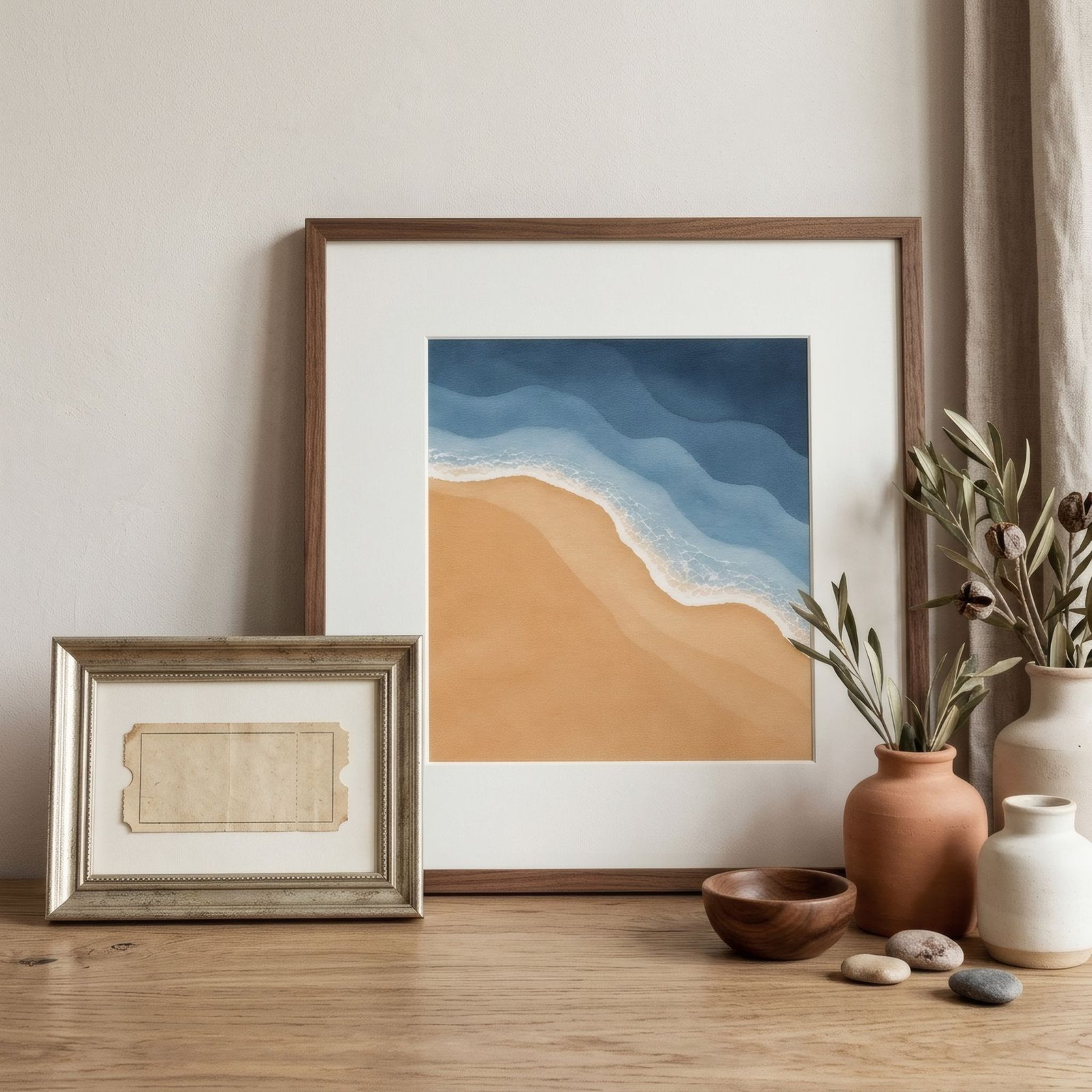
Imagine a wall that began with a single print, bought for a first shared flat. Years later it was joined by a photograph from a journey, a drawing someone gave as a gift, a museum postcard, a small inherited etching. None of it was planned. And yet, looking at it today, the wall tells something: a sequence of places, people and moments, a way of seeing formed over time. Some walls are decorated; others are written. The second kind are often the loveliest in a home, precisely because they could belong to no one else.
The wall as autobiography
The images we choose to keep and display say a great deal about us. Not only through what they show, but through when and why they came into our lives. A print bought at a time of change, a photograph of someone who is gone, a souvenir of a place never revisited. Together on a wall they form a kind of visual autobiography, written without words.
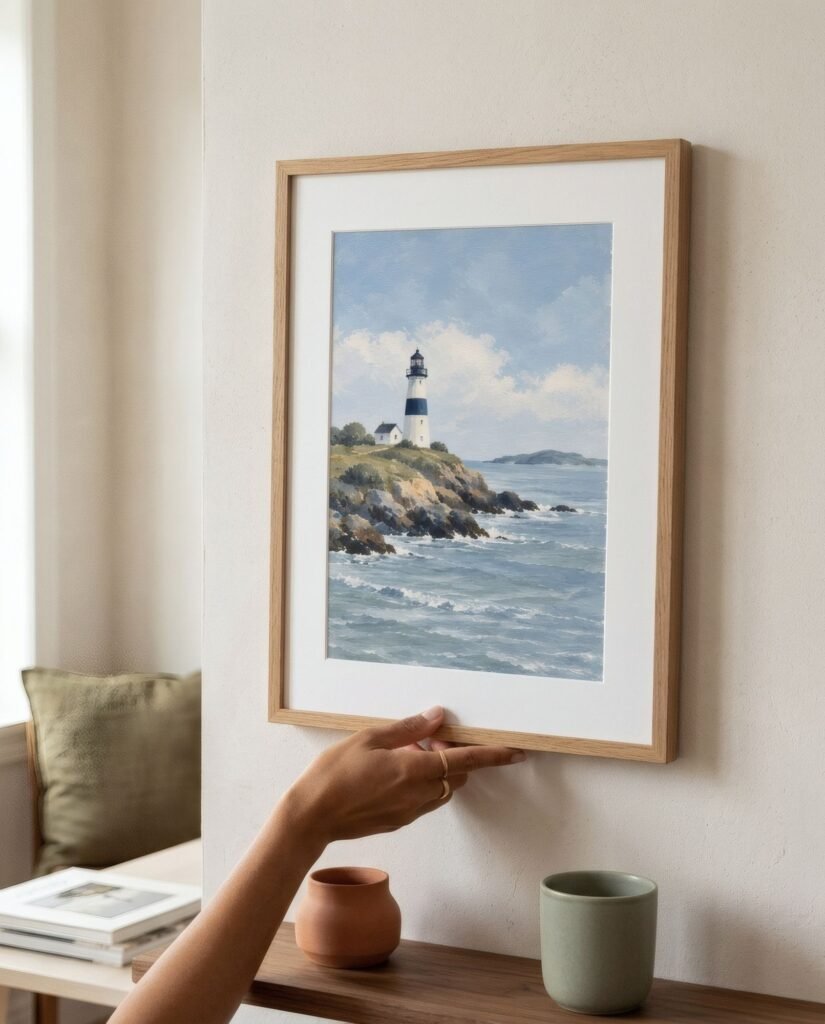
Such a wall need not be coherent in a strict sense. It can mix eras, media and styles. What holds it together is not a palette or a style, but a life.
Building over time
Walls that tell stories are rarely made all at once. They are built gradually, as life brings images along. That has a practical consequence: leave room for what is to come. A wall filled on the first day has nowhere to grow.
A good way to start is with one or two anchor pieces, those that mean most, and let the others gather around them over time. We discuss planning a growing arrangement in how to create a gallery wall at home.
An invisible thread
Even when a personal wall mixes very different things, it helps if something ties them together visually, so the story reads as a narrative rather than a jumble. It might be a common frame style, bringing coherence to images of very varied origin. It might be a palette that recurs unbidden, because whoever chooses tends towards certain colours. Or simply an alignment: every piece resting on one line, or the same gap between them all.
That thread is almost invisible, but it makes the difference between a wall with a story and an untidy one. We explore it in how to mix and match wall art.
The personal and the artistic
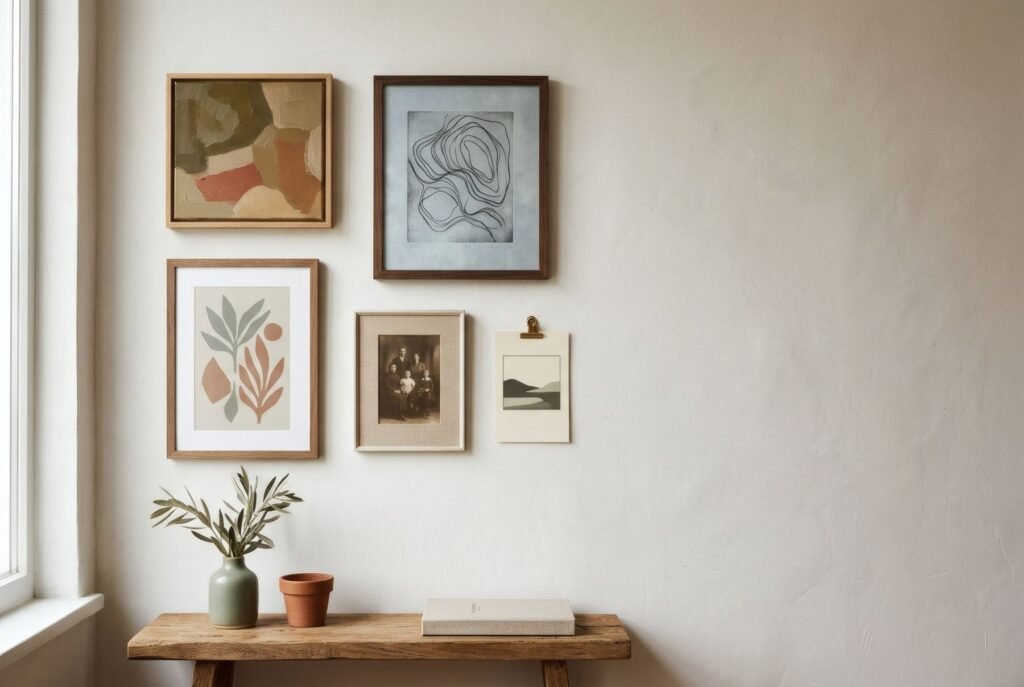
One of the loveliest things about story walls is the mix of personal and artistic. A family photograph beside an artist’s print, a child’s drawing beside an etching, a framed concert ticket beside an abstract. The personal brings meaning; the artistic sometimes brings a certain distance, a beauty that does not depend on memory.
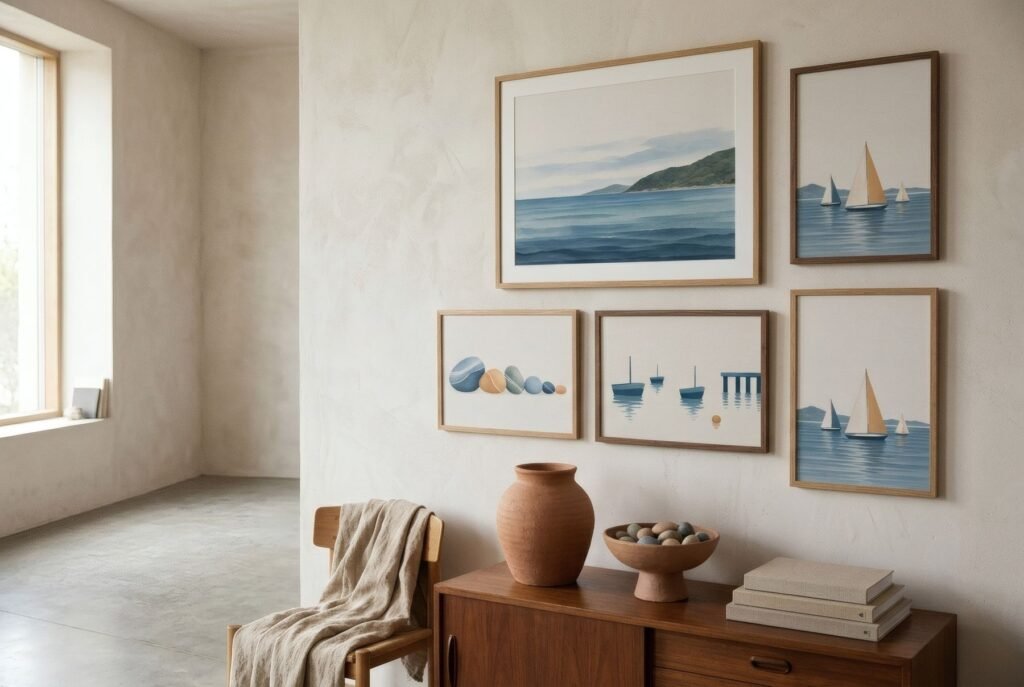
Together they balance each other: the wall is neither just a memory album nor just a gallery, but something in between, richer than either.
Telling without telling everything
A story wall need not be exhaustive. It does not have to show every journey, every person, every chapter. Sometimes what is most eloquent is what is chosen, and what is left out. A crammed wall can become illegible; one with well-chosen pieces and some breathing room lets each tell its part.
And some stories are best told quietly: images whose meaning only the person who lives there knows. They need no explanation. It is enough that they are there.
A story that changes
Finally, a wall that tells a story is not a monument. It changes, as life does. Some images will stop meaning the same thing, others will arrive, some will move to another room. That evolution is part of the story. Allowing the wall to change is allowing yourself to keep writing.
Writing with images
A wall can be far more than a decorated surface. It can be a place where life settles in the form of images, with its layers, changes and invisible thread. Building it slowly, with pieces that mean something, is one of the loveliest ways to make a home truly your own.
We like to think a Bendíra print can be one of those pieces: an image chosen at a particular moment that, over the years, becomes part of a wall’s story.
Keep reading: A Matter of Scale: Choosing Art for a Space, The Beauty of Giving Art Room to Breathe and Creating Personal Spaces Through Art.