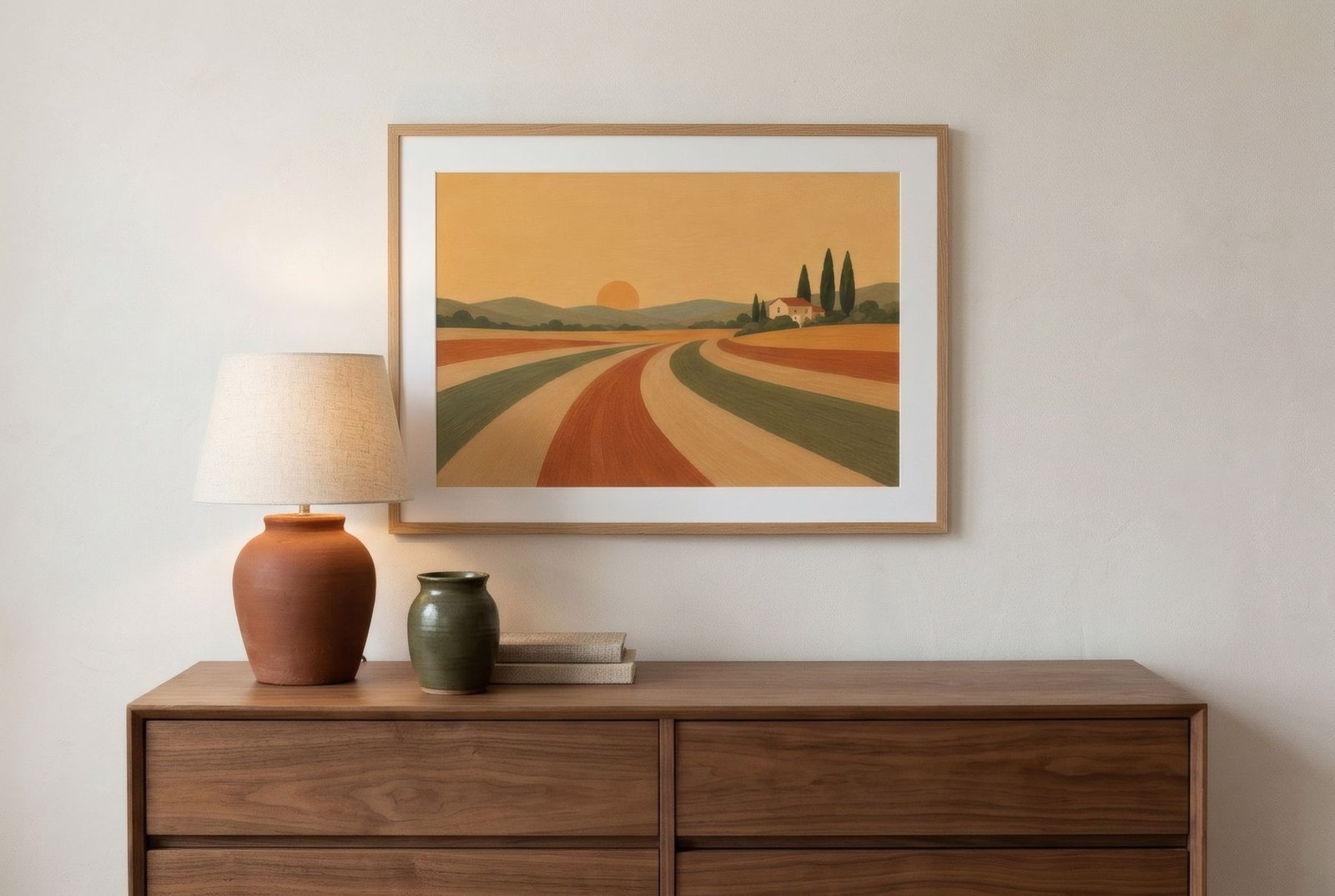
The sideboard in a dining room, the chest of drawers in a bedroom, the console table in a hallway: after the sofa, waist-height furniture is the most natural place in a home to hang art. A landscape print feels made for it. It picks up the long, low line of the furniture, carries it up the wall, and the two together settle into a balanced composition with very little effort. There are a few things to get right, though, and they aren’t quite the same as above a sofa: the height of the piece of furniture, the objects that sit on top, and the fact that you usually stand in front of it rather than sit.
Why landscape works
Sideboards and chests are generally wider than they are tall, with a strong horizontal direction. A landscape print repeats that direction, so furniture and wall read as one calm, stable unit. It’s the most classic arrangement there is, and that’s exactly why it’s so hard to get wrong.
Getting the width right
As a rough guide, a print or a grouping above a sideboard tends to look balanced when it covers between half and two-thirds of the furniture’s width. Above a 100 cm (39 in) chest of drawers, that means something around 50–65 cm (20–26 in) wide: a 50 × 70 cm print hung landscape, say, or a 40 × 50 cm with a generous mount. Above a 160 cm (63 in) sideboard, aim for 80–105 cm (31–41 in), or two landscape prints side by side. There are more worked examples in how to choose the right size of art for any wall.
Go wider than the furniture and the art seems to spill over it; go much narrower than half and it looks a little lost.
Height: think standing, not sitting
This is where a sideboard differs from a sofa. You use it on your feet: opening a drawer, putting down the keys, glancing in passing. So the art is usually seen from above and close up.
The familiar guideline of leaving 15–25 cm (6–10 in) between the top of the furniture and the bottom of the frame works well. On a low chest of around 75 cm, that puts the art near eye level. On a taller piece of 90 cm or more, resist the urge to hang much higher; the art will simply drift away from where you’re looking.
Living with the objects on top
Unlike the back of a sofa, the top of a sideboard is rarely empty. A lamp, a vase, a stack of books, a tray of keys. Those objects are part of the composition, and it pays to plan for them from the start.
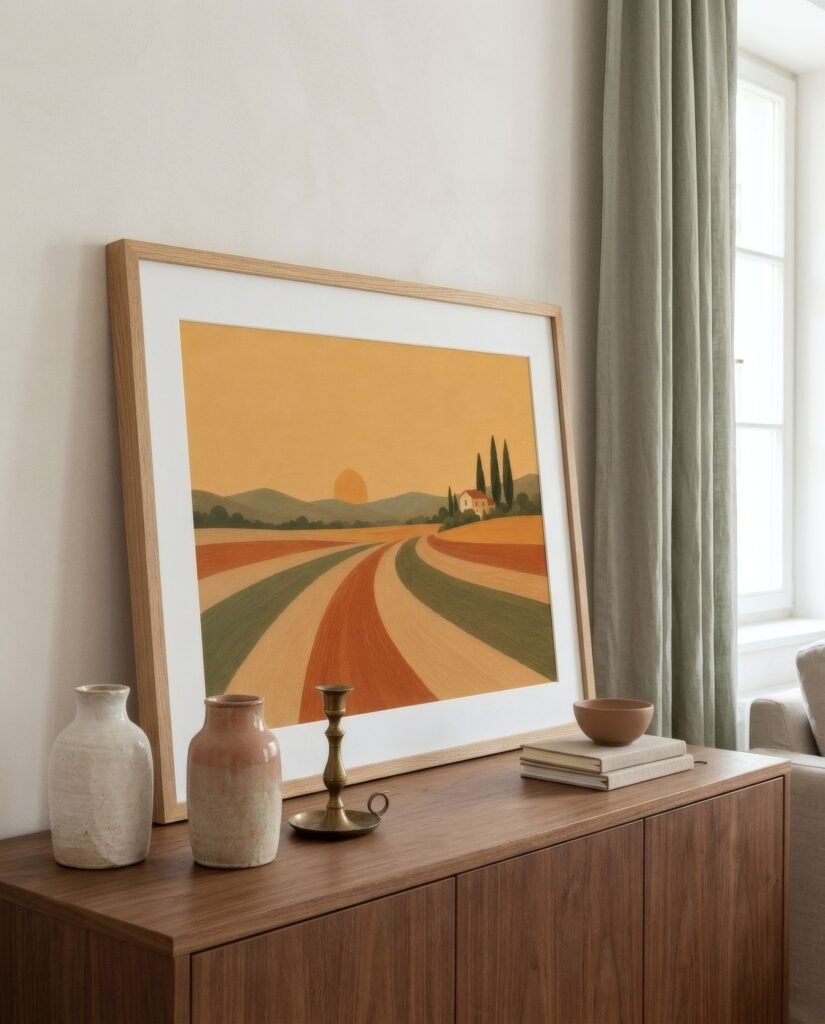
A tall lamp at one end can cover a corner of the print if it sits too close, so move it to the very end and let the art sit centrally or shift slightly the other way. Low objects can overlap the bottom edge of the frame without any harm, and often add a pleasing sense of depth. And a print simply leaned against the wall behind a few objects, rather than hung, creates the kind of layering that looks effortless even when it isn’t.
The test is whether the art and the objects read as one scene: the print shouldn’t be hidden, and the objects shouldn’t look stranded.
Two landscapes
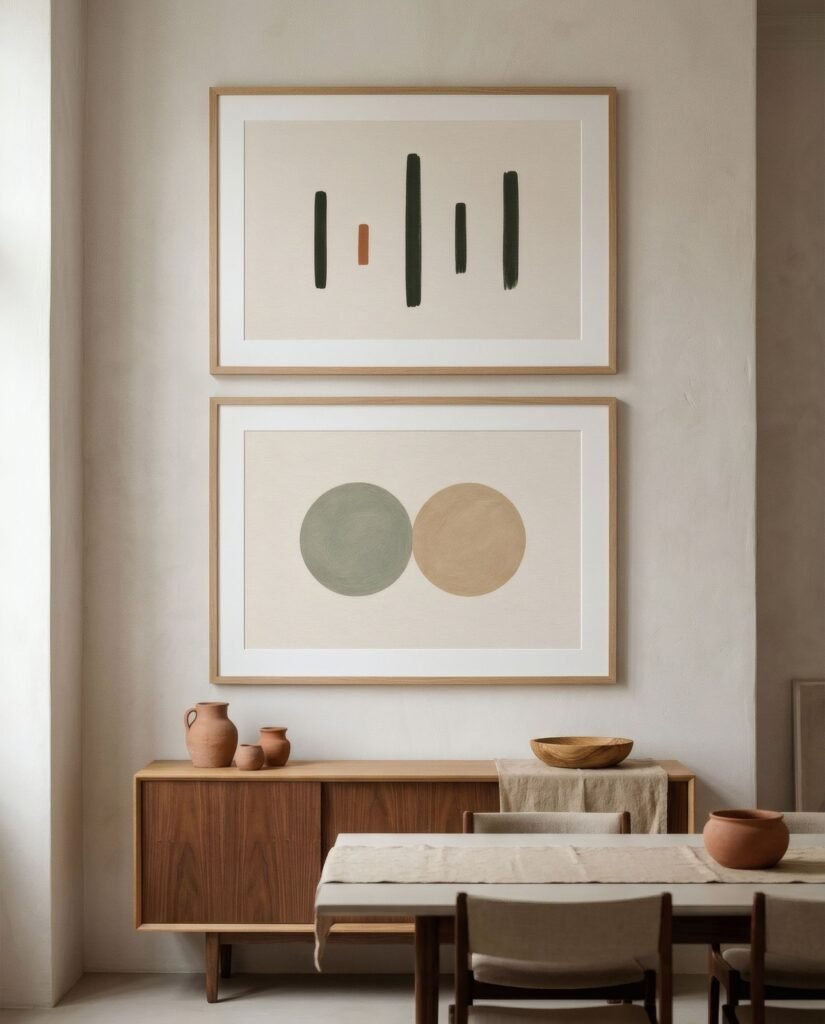
On a long sideboard, two matching landscape prints can sit side by side with a gap of 6–10 cm (2–4 in), or be stacked one above the other if the wall is tall. The first widens the composition; the second draws it upwards, which suits dining rooms with high ceilings.
Room by room
In the bedroom, a soft landscape print above the chest of drawers, in tones that talk to the bedding, makes a quiet corner you see first thing in the morning.
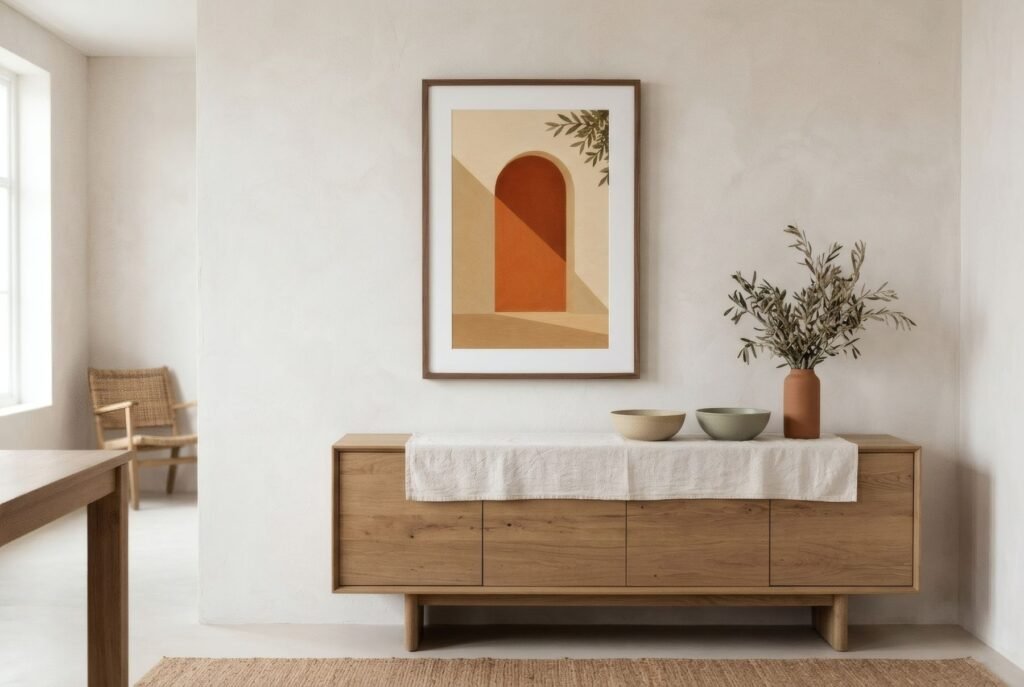
In the dining room, a piece with a little more presence above the sideboard can become the focal point of the room, especially when the table sits in the middle.
In the hallway, a landscape print above a console greets you as you come in; if there’s a mirror, the print can sit beside it or replace it, depending on the space.
A natural pairing
A landscape print above a sideboard or a chest of drawers is one of the simplest and most dependable arrangements in decorating. With the right width, a comfortable gap and the objects thoughtfully placed, furniture and art become a single piece.
If you’re looking for something to sit above a sideboard of around a metre wide, Bendíra’s 50 × 70 cm format works well hung landscape.
Keep reading: Bedroom Wall Art Ideas for a Cosy Space, How to Choose Wall Art for a Dining Room and How to Display Art Prints on Shelves and Ledges.