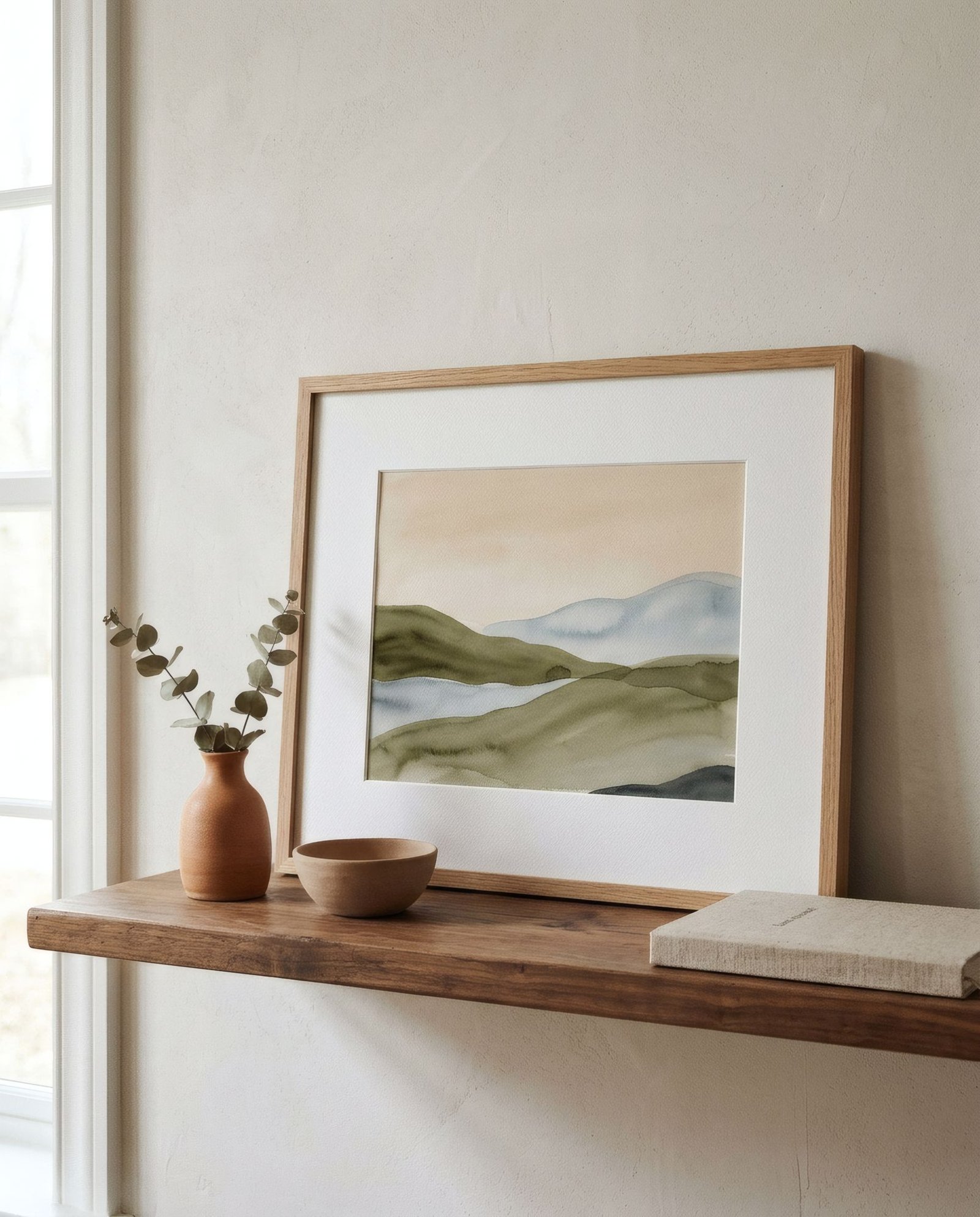
In many homes, personal photographs and artworks live in separate worlds. Photos on the landing, on the fridge, on a bedroom shelf, in frames of different sizes bought at different times. Art in the living room, above the sofa, in pride of place. Yet both do similar jobs: they make a home yours and say something about who lives there. Bringing them together on one wall can create one of the most personal and beautiful arrangements in a house. It just takes a little judgement to help them get along.
Two kinds of image, one conversation
A personal photograph and an art print are different kinds of image. The photo’s value is mostly emotional: who’s in it, where you were, what happened that day. The artwork’s value is mostly visual: how it looks, its colours, what it conveys.
Combined, each brings what the other lacks. The art gives the wall visual quality and breathing space; the photos, the warmth of lived experience. The challenge is making the mix look composed rather than like a messy collage.
A common visual thread
As with any wall of varied pieces, the key is finding something that unifies. With photos and art, a few threads work especially well.
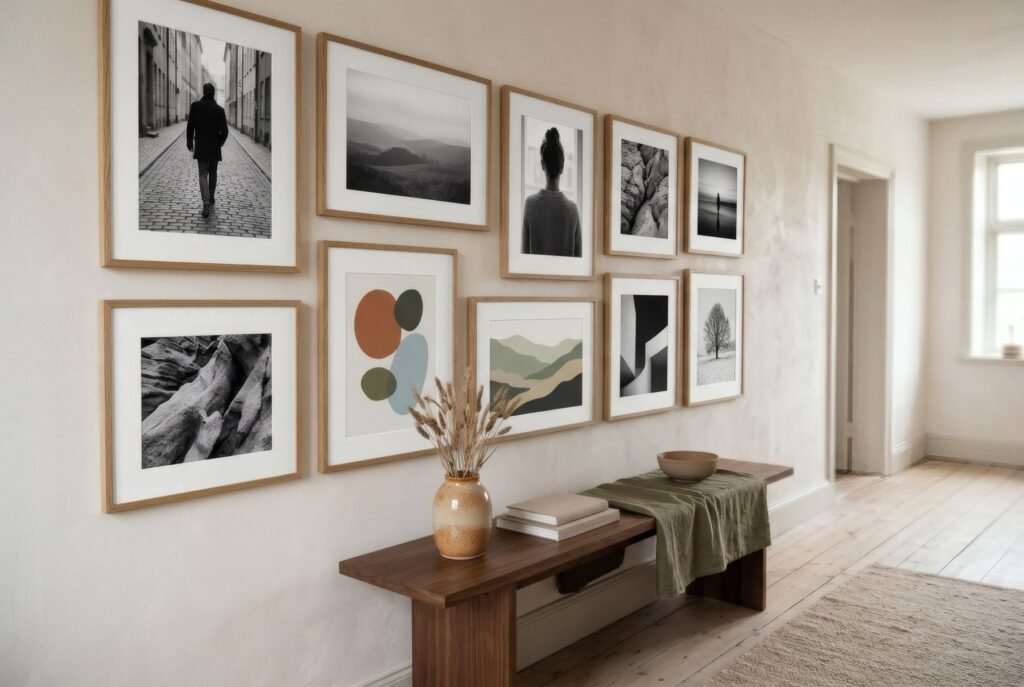
Black and white. Converting your personal photos, or a selection of them, to black and white is probably the single most effective move. Black-and-white photos sit with any palette and take on a more timeless air, closer to the art. Alongside one or two colour prints, the whole thing looks very coherent.
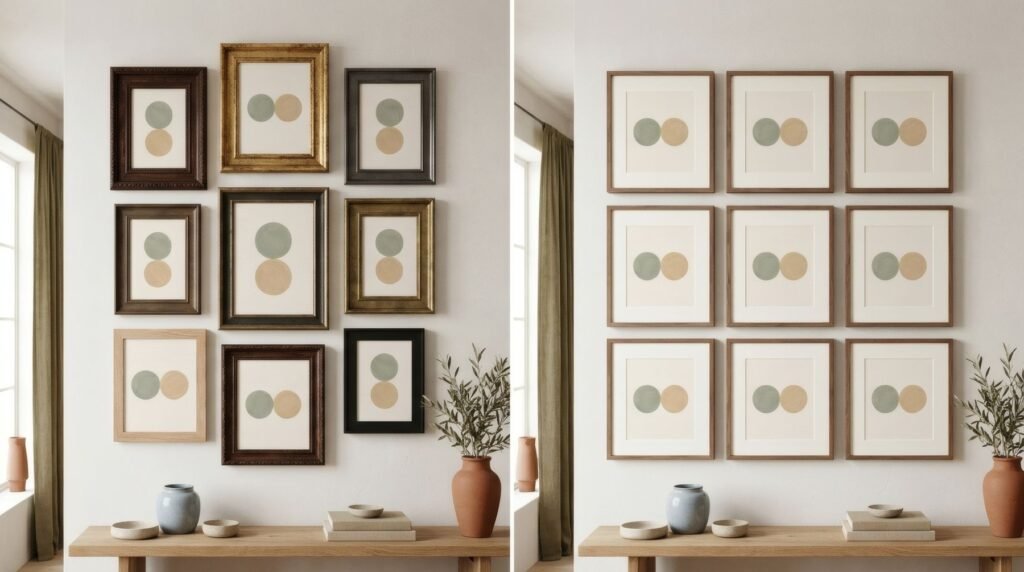
Frame and mount. Using the same kind of frame and a generous white mount for every piece, photos and prints alike, levels them visually. A phone photo printed with a good mount gains a surprising dignity.
Palette. If the photos are in colour, choose ones whose tones talk to the prints: beach photos beside coastal-toned prints, countryside photos beside earthy landscapes.
We go into this more in mixing metal and wooden frames and photography as art at home.
Proportion
A practical rule that helps: let one of the two lead. A wall of many photos with one or two prints as anchors, or several artworks with a few photos interspersed. When they’re evenly split, the group can lose direction.
It also helps if the largest piece is a print, or a single especially meaningful photo enlarged: a clear anchor organises everything else.
Where to put them
Not every personal photo suits every wall. The more private parts of the home, the bedroom, the landing towards the bedrooms, a study, are natural places for family photos. The living room and hallway, where guests are welcomed, can take photos too, but it’s worth choosing which.
A thought about privacy
This is something easily forgotten. Personal photographs show people: family, friends, children, sometimes people no longer in our lives. Before hanging photos in visible parts of the home, especially those visitors see, or that may appear in photos shared on social media, it’s worth considering a few things.
Would the people pictured be comfortable knowing their photo is on view to anyone who comes in? With children, are you happy for their image to appear in the background of pictures that get posted? Are there visible details, the front of your house, a school, you’d rather not show?
A simple answer is to keep the most personal photos for private areas and, in shared spaces, choose images where people are seen from behind, at a distance or in a landscape, or pictures of places and moments without recognisable faces. As we saw in faceless portraits, a figure from behind can be just as evocative as a portrait.
A wall with memory
Combining photographs and art lets your walls tell your story without giving up on beauty. With a visual thread, a clear anchor and a little care about what’s on show, it can become the most loved wall in the house.
Bendíra prints in earth, sage or blue tones sit well alongside black-and-white photographs with white mounts.
Keep reading: How to Create a Gallery Wall at Home and Building a Gallery Wall That Evolves Over Time.