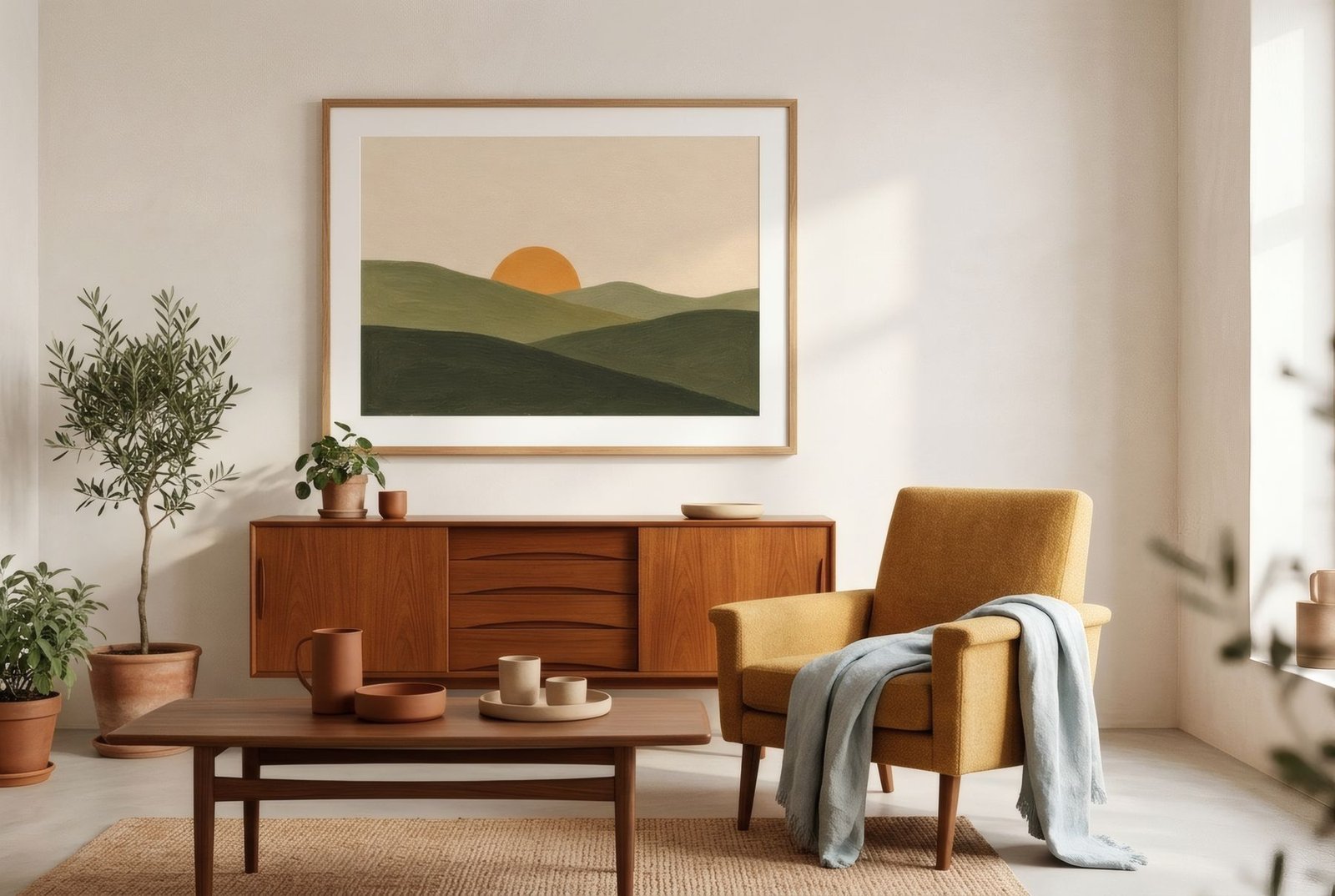
Some homes feel like time travel: the wallpaper, the sofa, the lamps, the pictures, even the ashtrays all belong to the same decade. They can be fun, but they have something of a film set or house museum about them, a stage where it is hard to imagine life as it is lived today. Retro modern decorating aims for something else: bringing pieces and references from other eras into a contemporary home, so they add character and memory without turning it into a reconstruction. Getting it right comes down to three decisions: the balance of old and new, the mixing of eras, and choosing reinterpretations over copies.
Why retro appeals
Retro draws us for several reasons. There is nostalgia, sometimes for eras we never lived through. There is admiration for well-made objects that have stood the test of time. And there is a wish for a home with personality, against the sameness of much contemporary furniture. A 1970s lamp found at a market or an inherited mid-century armchair brings something no shop can sell: history.
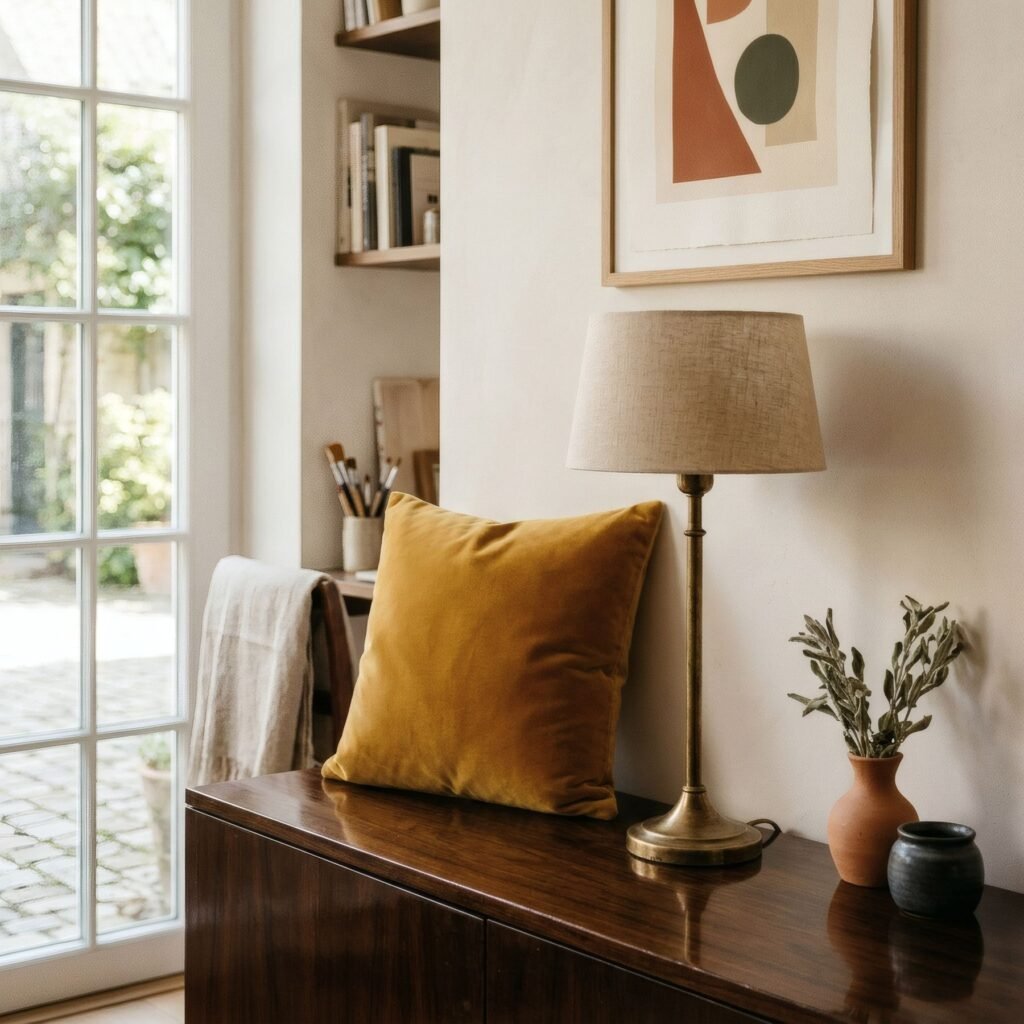
The trouble starts when that wish becomes accumulation and everything begins to speak in the same period voice.
Proportion: more present than past
A useful guide, though not a rigid rule, is to let the contemporary lead and the retro accompany. If the room’s structure, the main sofa, walls, floors and general lighting, is current and simple, retro pieces stand out as what they are: special elements with character. If almost everything is period, each piece loses strength and the whole becomes a set.
In practice, that means choosing a few retro statement pieces, such as an armchair, a lamp, a sideboard or a poster, and surrounding them with a more neutral, contemporary setting.
Mixing eras
Another way to avoid the themed look is not to stick to a single decade. A home where a 1960s sideboard, a 1980s lamp, a contemporary pot and a new artwork live together seems built up over time, across a life. One where everything is 1970s seems decorated all at once.
Mixing works best with a common thread: a palette, a type of material or a sensibility that unites pieces from different eras. We go into this in mixing abstract art with vintage interiors.
Art as a bridge between eras
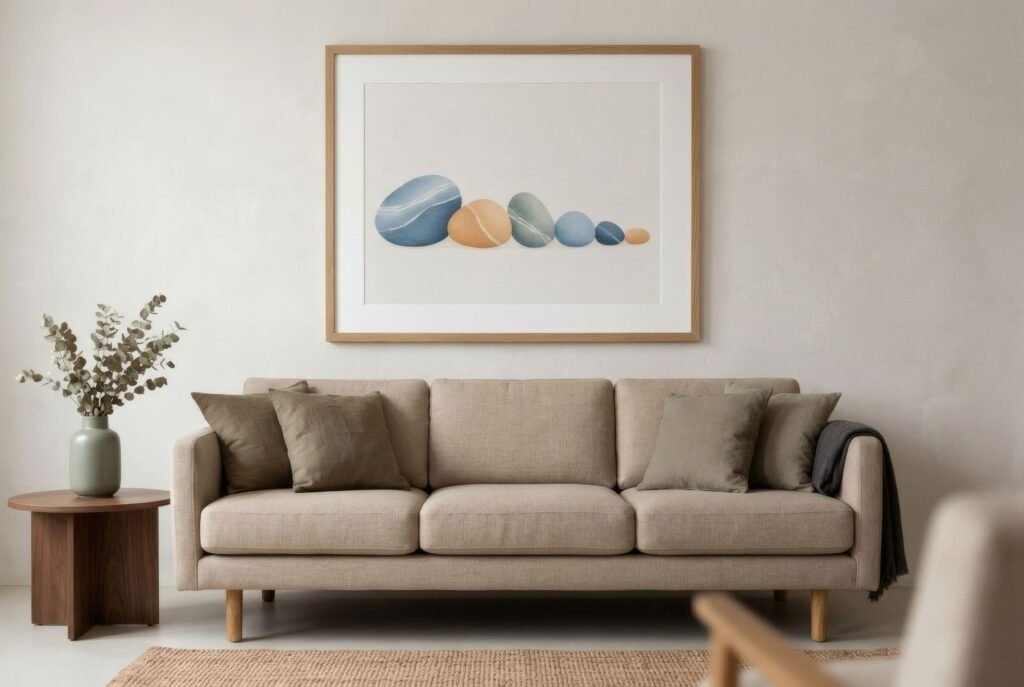
In a retro modern home, art can play a fascinating role as a bridge between old and new. A contemporary print with a retro-inspired palette of mustard, burnt orange, olive or brown above a modern sofa evokes another era without imitating it. An original vintage poster above clean-lined furniture brings authenticity. And a new abstract above a mid-century sideboard creates a contrast that makes both shine.
What tends to work less well is surrounding a retro piece with art from the same era and style, because it reinforces the reconstruction.
Reinterpret rather than copy
There is a big difference between a piece that evokes an era and one that copies it literally. Exact reproductions of period objects, such as lamps, wallpapers or straight reproductions of posters, tend to heighten the themed effect. Contemporary reinterpretations, which take something from that aesthetic, a colour, a shape, a texture, and translate it into today’s language, settle into a modern home far better.
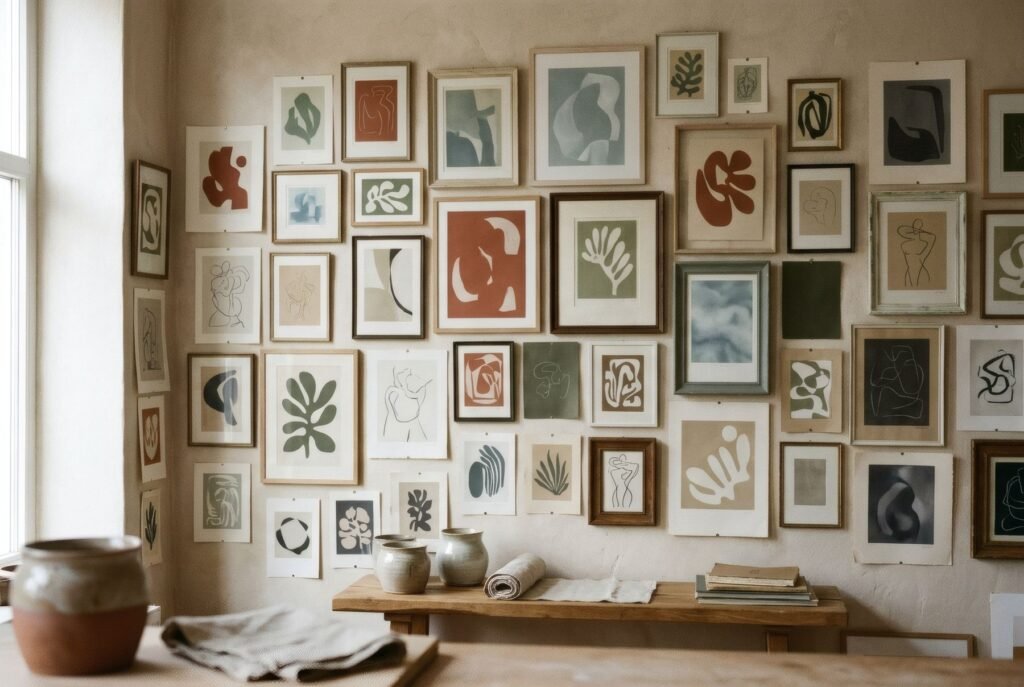
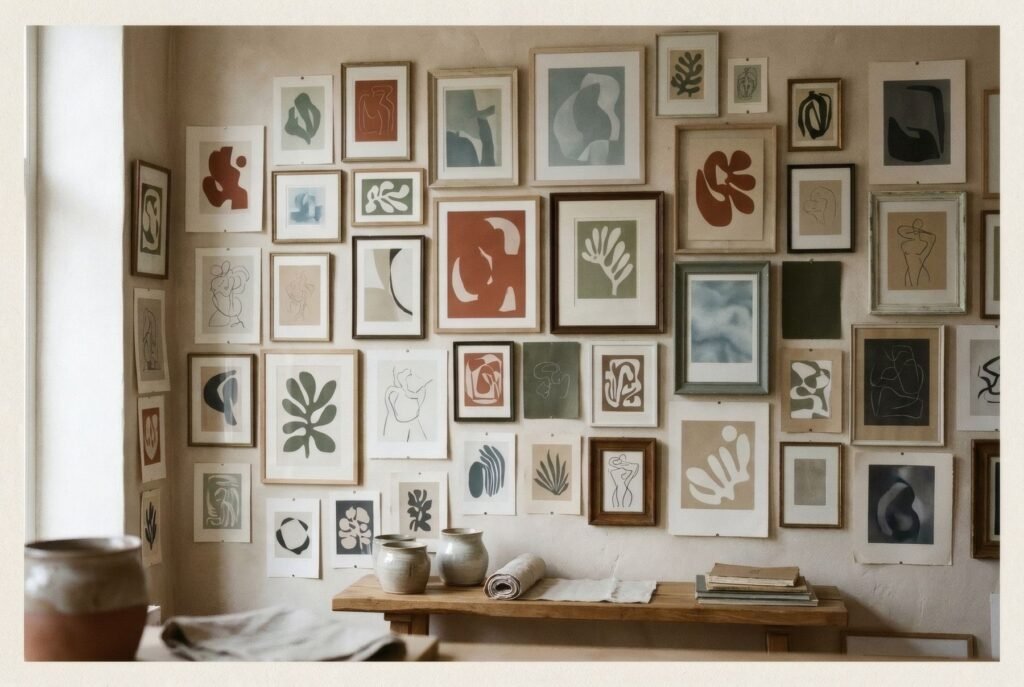
The same is true of art. A contemporary work in conversation with the graphic language of the 1950s or 70s feels fresh; a copy of a period poster can feel overly nostalgic, unless it is an original with value of its own. We discuss the differences in the appeal of vintage posters in modern interiors.
Colours and textures
Retro palettes, the oranges, browns, mustards and greens of the 1970s or the pastels of the 1950s, have strong personality. To integrate them into a contemporary home, use them in small doses, in a textile, an object or a print, over a neutral base. Textures such as velvet, corduroy, lacquered wood or chrome also evoke particular eras, and they work better as accents than as the norm.
A retro modern living room
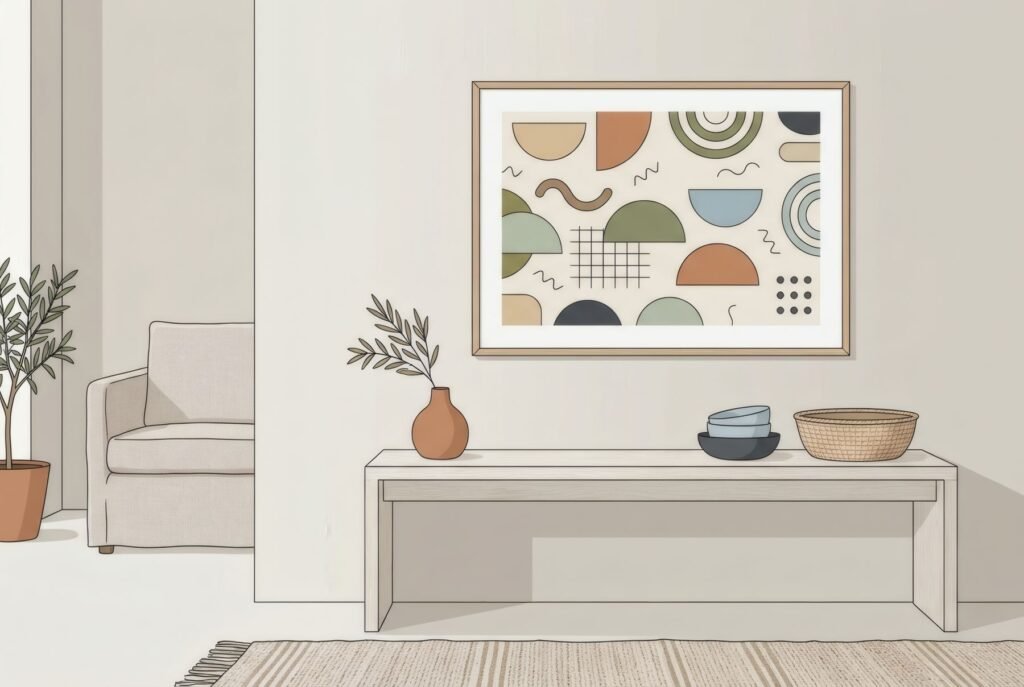
Picture a living room with white walls, pale wooden floors and a simple contemporary sofa. Beside it, a 1960s armchair in mustard wool. On a teak sideboard from the same era, a contemporary print of rounded forms in olive, sand and clay. A modern ceramic lamp. And nothing else from the period. The room has memory, but it is clearly of today.
Memory without nostalgia
Retro modern decorating is really about letting the past into your home without letting it take over. A few pieces with history, surrounded by a calm present, say far more than a complete reconstruction.
If you are looking for art to bridge eras, Bendíra’s collections include contemporary prints that evoke mid-century design, with rounded forms and warm palettes, without imitating it.
Keep reading: Mustard Yellow Interiors: Choosing Complementary Art, Choosing Wall Art for Coloured Walls and Mid-Century Modern Art: Shapes, Colours and Influence.