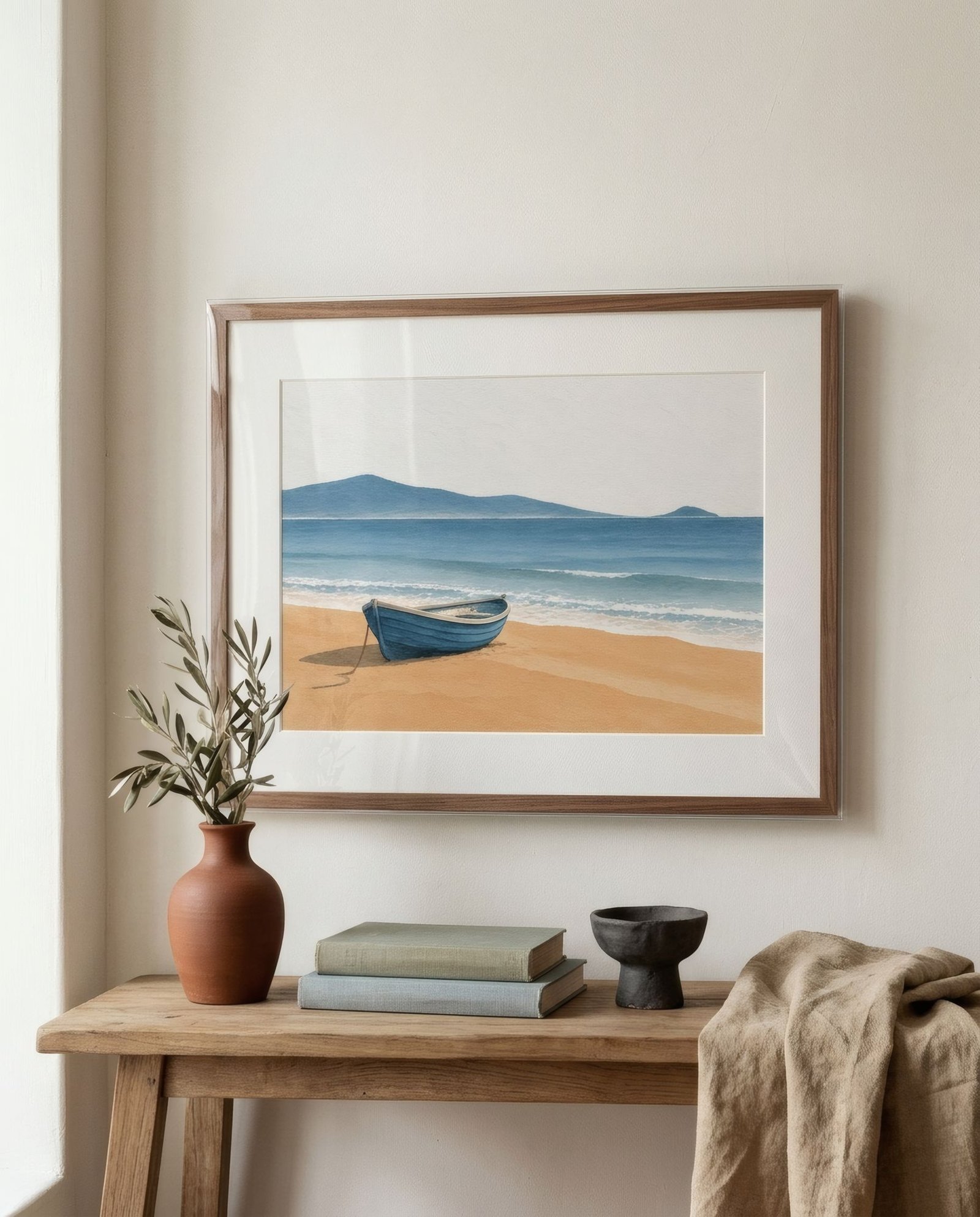
Not every print we buy or receive is framed straight away. Some wait for the right frame, some belong to a collection rotated with the seasons, and some simply have no free wall yet. In the meantime they sit in a drawer, a tube or a folder, and that is where many suffer: a corner gets bent, the paper ripples with humidity, a rubber band leaves a mark, or ordinary cardboard yellows it. Storing an unframed print well is not complicated, but it does take some simple care: keep it flat wherever possible, protect it with suitable materials, choose a stable spot and handle it thoughtfully.
Flat, whenever possible
The best way to store a print is flat. It will not curl, the paper is not stressed and marks are avoided. To do it properly, use a rigid folder or a flat box of the right size, so the print neither slides around inside nor sticks out at the edges.
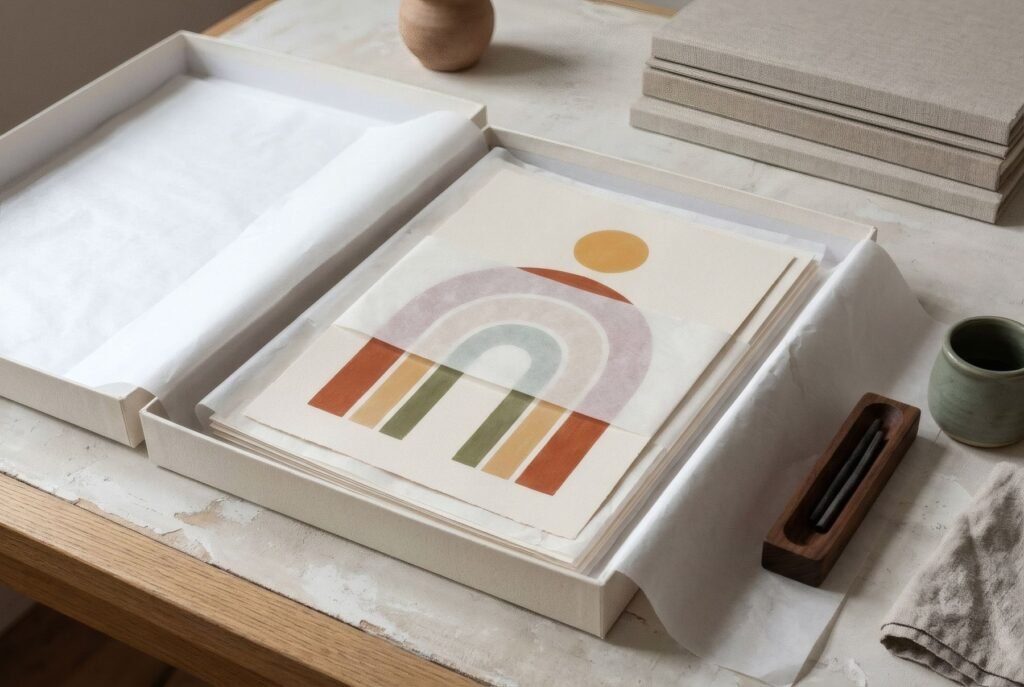
If you store several prints together, separate them with sheets of neutral tissue or acid-free paper. That stops the ink of one rubbing the surface of another and transferring marks. Put larger prints at the bottom and smaller ones on top, and do not stack too many: the weight can end up marking those below.
Materials matter
What surrounds a stored print affects how it ages. Ordinary card, envelopes and folders can contain acids and lignin that, over the years, yellow the paper and make it brittle. Conservation bodies such as the Library of Congress recommend acid-free and lignin-free folders, boxes and interleaving.
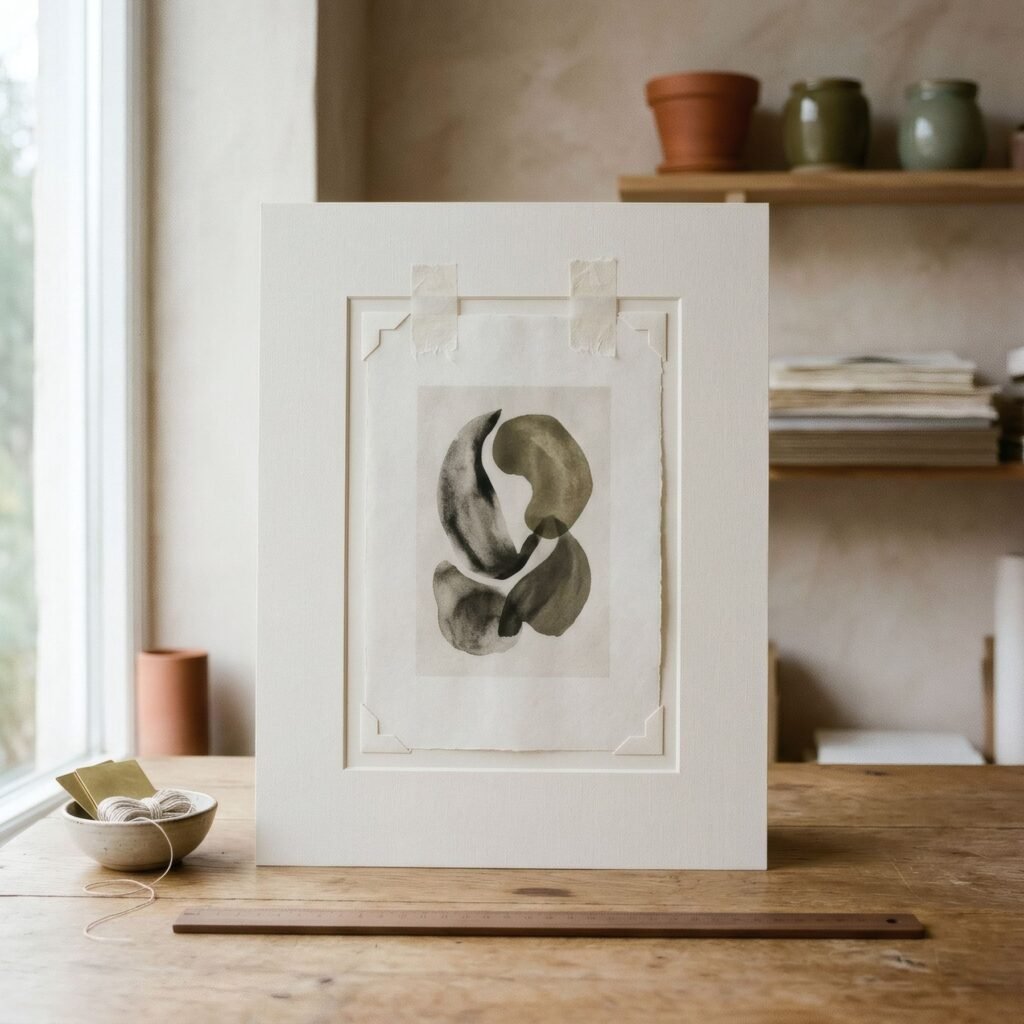
Rigid clear polyester sleeves are another practical option, letting you see the print without taking it out and protecting it from dust and hands. For large or fragile prints, the sleeve should be stiff enough to support the paper.
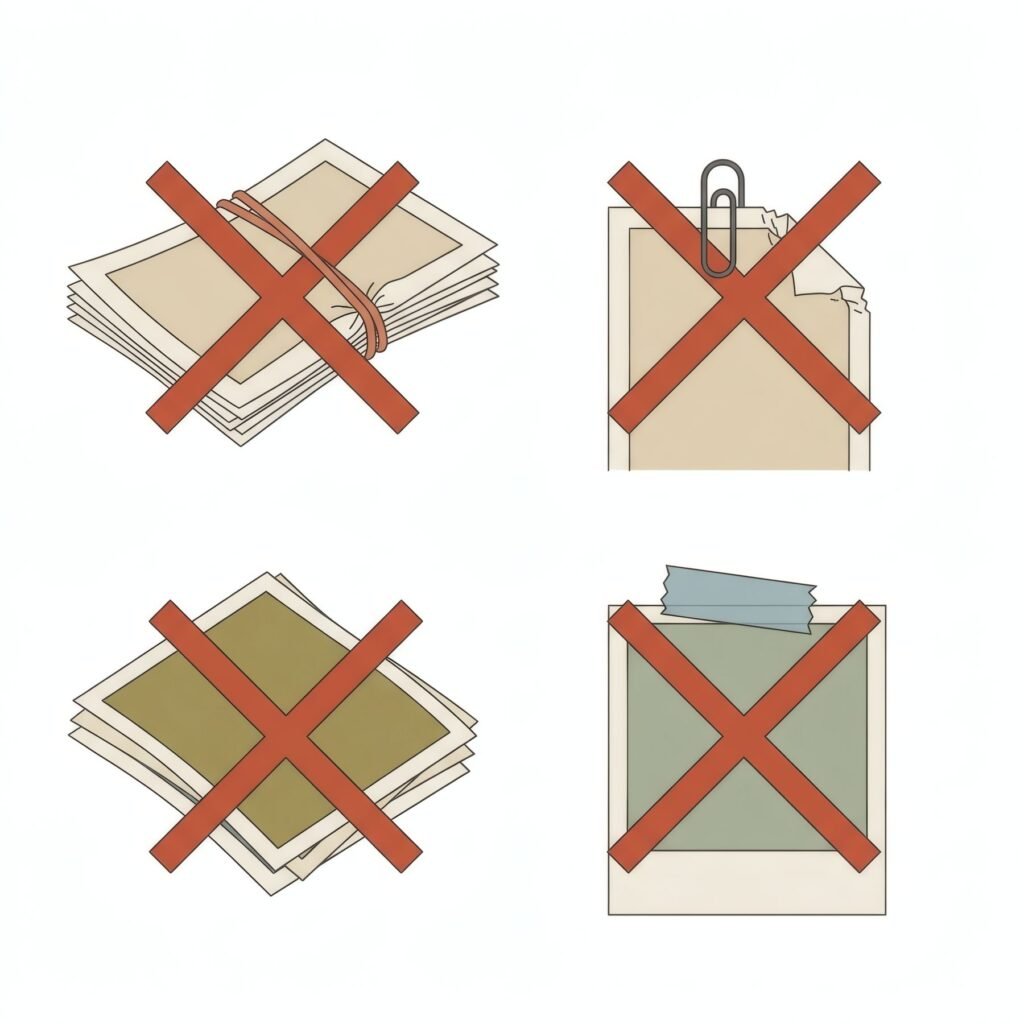
Some things are best avoided entirely: ordinary sticky tape, metal paper clips, rubber bands and random plastic bags, which can trap moisture or release substances that affect paper.
If it has to be rolled
Sometimes a print has to be stored rolled, especially if it is large or arrived that way. Use a tube with a generous diameter: the wider it is, the less the paper curves and the less it is stressed. Wrap the print in neutral tissue before rolling it to protect the surface, and do not roll it too tightly.
A print stored rolled for a long time takes on a memory of the curve and becomes hard to flatten. So, if possible, keep rolling temporary and store the print flat as soon as you can.
Flattening a print that arrived rolled
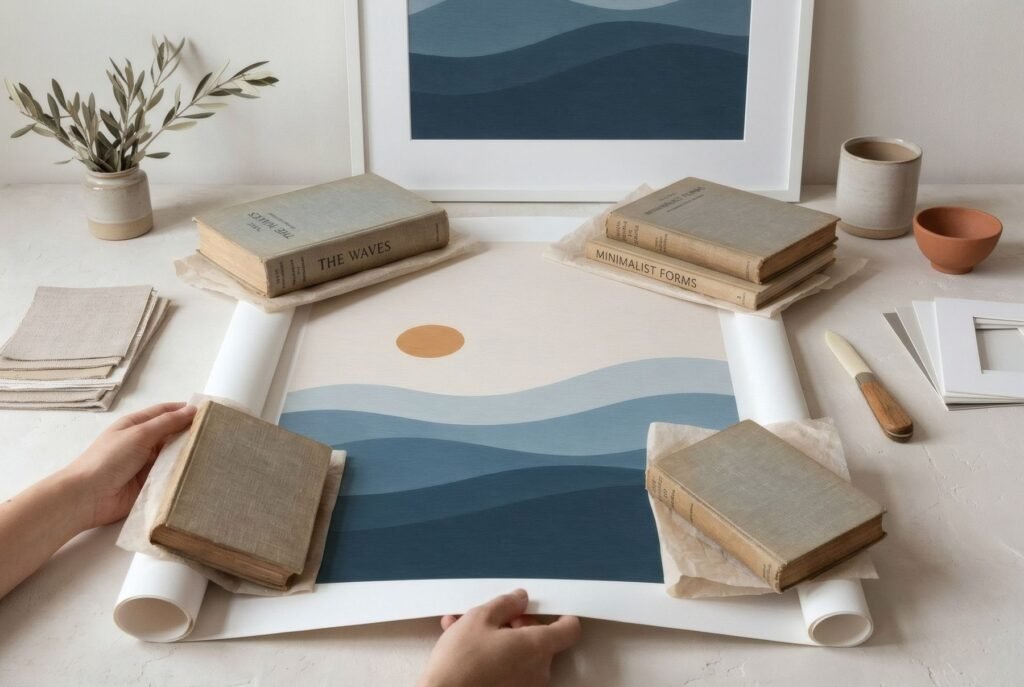
Many prints arrive rolled in tubes. To flatten one without damage, unroll it carefully on a clean, flat surface, image side up. If it keeps curling back, you can gently roll it the other way for a few minutes, without forcing it, to counter the curve. Then lay it flat and place heavy, flat objects such as books on the corners, or on a clean sheet of tissue laid over it. Leave it for a day or two and the paper will gradually relax.
Never iron it or apply heat, and avoid resting objects directly on the image without a protective sheet.
The right place
Choose a spot in your home with stable temperature and humidity, away from direct light. A wardrobe or chest of drawers in an interior room is usually a good choice. Avoid cellars, damp storerooms, poorly insulated lofts, cold external walls and areas near radiators or the kitchen, where humidity and temperature swing widely.
Under the bed can work too, provided the print is in a rigid, closed box that protects it from dust and knocks.
Handle with care
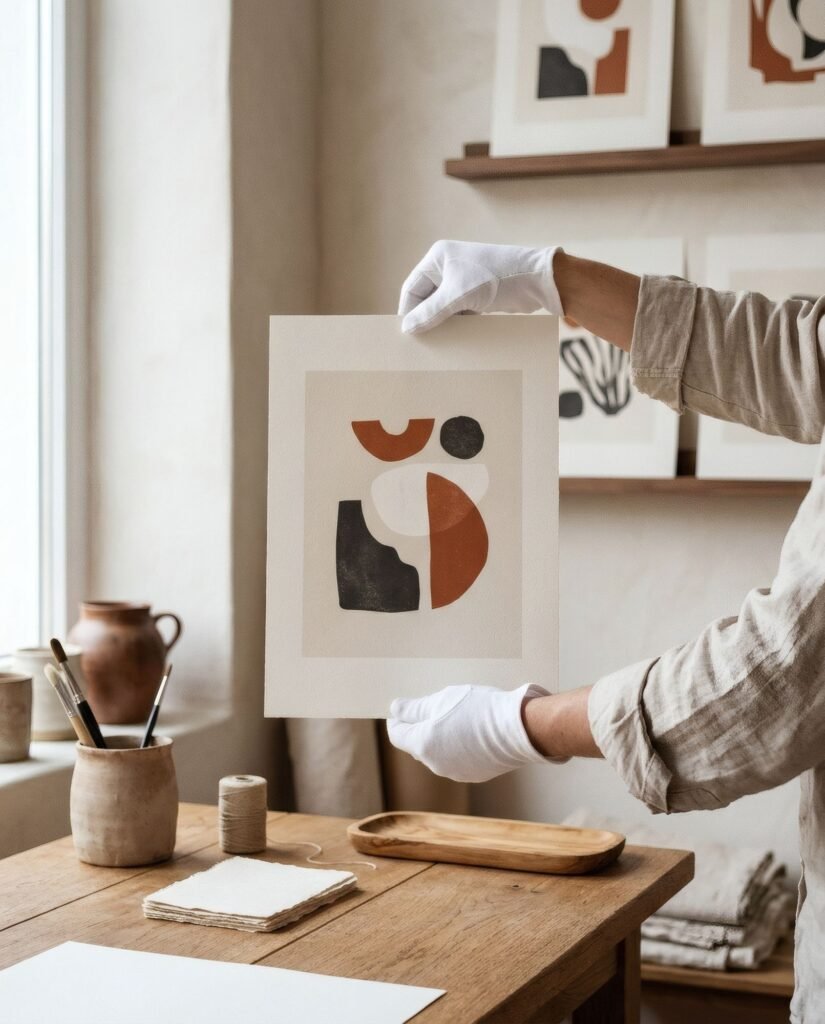
Each time you take a print out to look at or move it, make sure your hands are clean and dry, or wear cotton gloves, and always hold it by the edges. If it is large, support it with both hands or slide it onto a rigid folder to carry it.
Check now and then
Finally, look at your stored prints from time to time. If you notice damp, a musty smell, marks or insects, act early: move them, ventilate the space or replace the materials. Label your folders or boxes so you do not have to open and handle every print each time you look for one.
Stored, but cared for
A stored print is not a forgotten one. With a suitable folder, some tissue, a stable spot and a little attention, it can wait in perfect condition for the day it finds its frame and its wall.
Bendíra prints are packed to travel safely. If you are not framing them straight away, these guidelines will help keep them in good condition until you do.
Keep reading: Glass vs Acrylic for Framing Art Prints, How to Reduce Glare on Framed Art and Framed vs Unframed Art Prints: Which to Choose?.