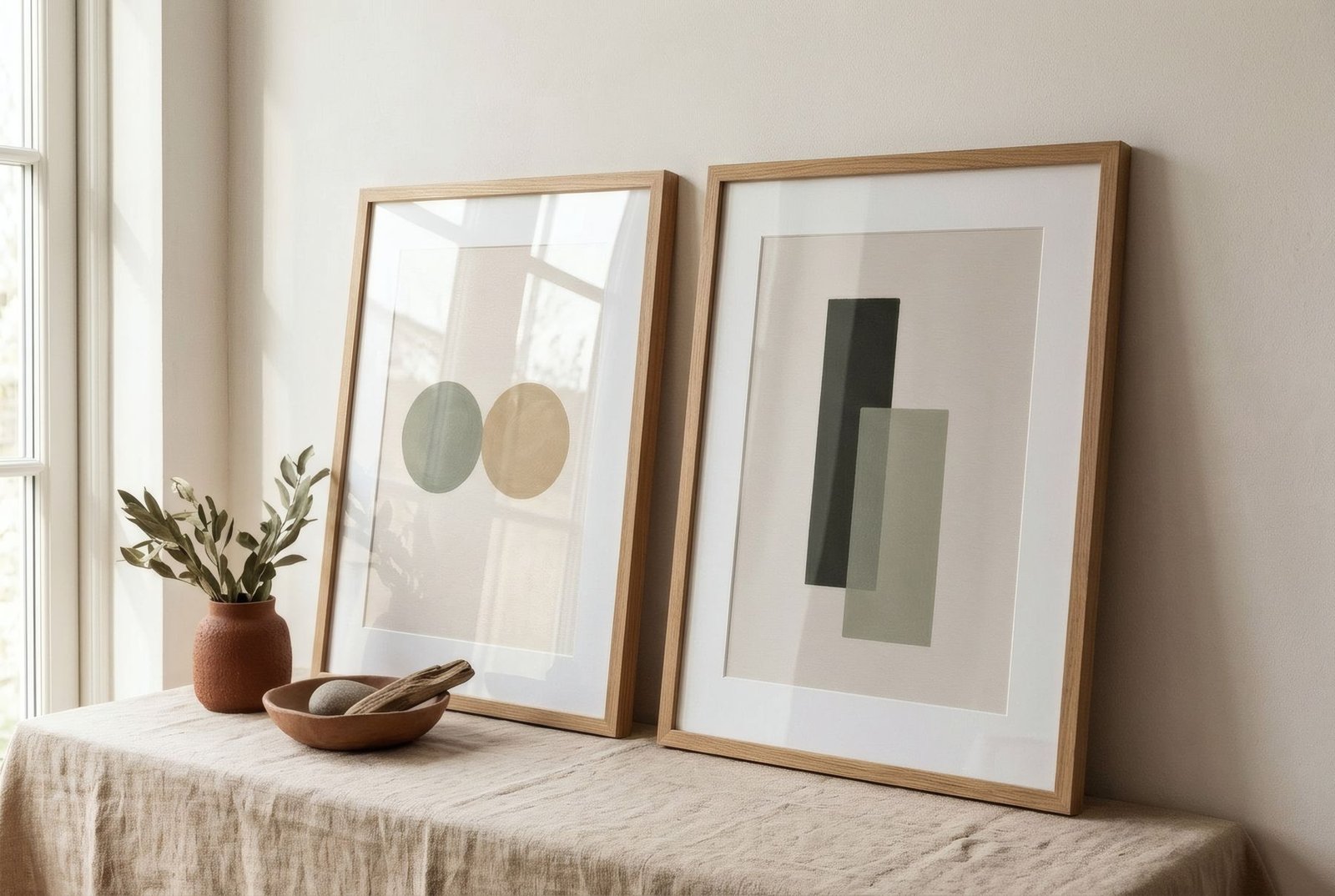
When you order a frame or buy one ready-made, there is a decision that often goes unnoticed yet strongly affects how the work will look and last: the material of the glazing. The two main options are glass, the traditional choice, and acrylic, also known as Perspex or Plexiglas after well-known brands. At a glance they look very similar, but they behave differently in weight, strength, glare, cleaning and protection. Neither is best in every case. The right choice depends on the size of the work, where it will hang and what you want to prioritise.
Weight
The most obvious difference is weight. Acrylic weighs roughly half as much as glass of the same thickness. On a small print you barely notice, but at large sizes the difference is considerable: a big glazed frame can be very heavy to hang and need stronger fixings.

That is why acrylic is the usual choice for large works, for frames that will be posted or couriered, and for walls where heavy-duty fixings are not possible.
Safety
When glass breaks, it shatters into sharp pieces. Acrylic is far more impact-resistant and, if it does break, it does not do so dangerously. That difference is decisive in some places: above a bed or sofa, in children’s rooms, in narrow hallways where frames get knocked, or in homes with pets. In all of these, acrylic offers much more peace of mind.
Scratches
Here glass has the advantage. It is hard and very scratch-resistant. Acrylic is softer and can scratch easily if cleaned with rough cloths or the wrong products. Over time, poorly cared-for acrylic can gather small marks visible against the light.

Cleaning and static
Glass cleans easily with a cloth and glass cleaner sprayed onto the cloth, never directly onto the glass, so no liquid seeps towards the print. Acrylic needs more care: a soft microfibre cloth and cleaners made for acrylic. Products containing ammonia or alcohol can damage or cloud it.
Acrylic also tends to build up static, which attracts dust. For most printed works that is not an issue, but for works with loose surfaces, such as pastel or charcoal drawings, static could pull pigment particles towards the glazing. Framers usually prefer glass for those.
Glare
Both standard glass and standard acrylic reflect light to some degree. A print opposite a window can become a mirror for part of the day with either.
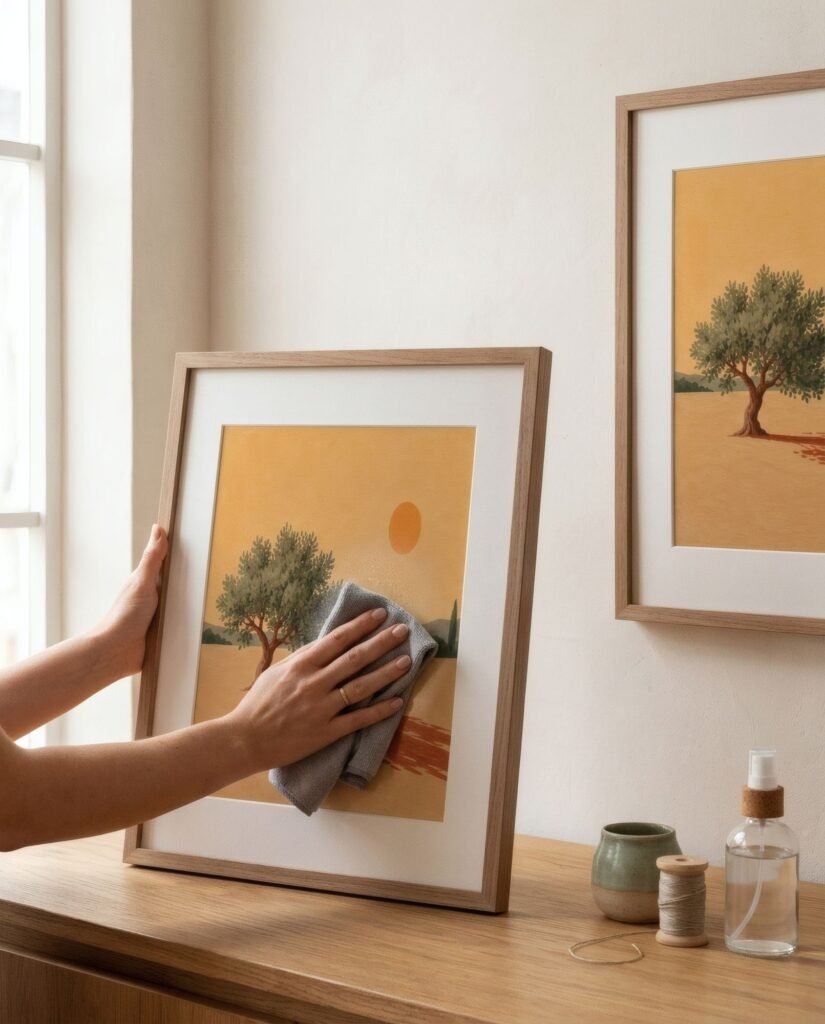
To reduce this, anti-reflective versions of both exist, with treatments that greatly reduce reflections and let the work be seen with remarkable clarity, as if nothing were in front. They cost more, but in bright rooms or opposite windows they can make a big difference. There are also simpler non-glare or matt finishes that diffuse reflections at the cost of some sharpness. We look at reducing glare in how to reduce glare on framed art.
Protection from light
Both materials can be made with filters that block much of the ultraviolet radiation that causes colours to fade over time. Standard glass and acrylic already filter some, but conservation-grade versions do so far more.
Remember, though, that no glazing protects completely: visible light affects works too, and the best protection is still not to hang them in full sun. We explain this in how to protect art prints from sunlight and moisture.
How to choose
In practice, glass is a good choice for small and medium formats in safe locations, when scratch resistance and easy cleaning matter, and for works with loose pigments. Acrylic is preferable for large formats, frames that will be shipped, above beds or sofas, in children’s rooms and in busy walkways.

In either case, if the work will hang somewhere very bright or you particularly care about its preservation, consider anti-reflective and UV-filtering versions.
Invisible glazing
The best glazing is the one you do not notice: protecting the work without coming between it and the viewer. Glass or acrylic, standard or anti-reflective, the choice depends on size, location and what you most want to protect.
Bendíra prints are supplied unframed, so you can choose the glazing that best suits where you plan to hang them.
Keep reading: What Is a Mount Board? Matting Art Prints Explained, How to Store Unframed Art Prints and How to Choose a Frame for an Art Print.