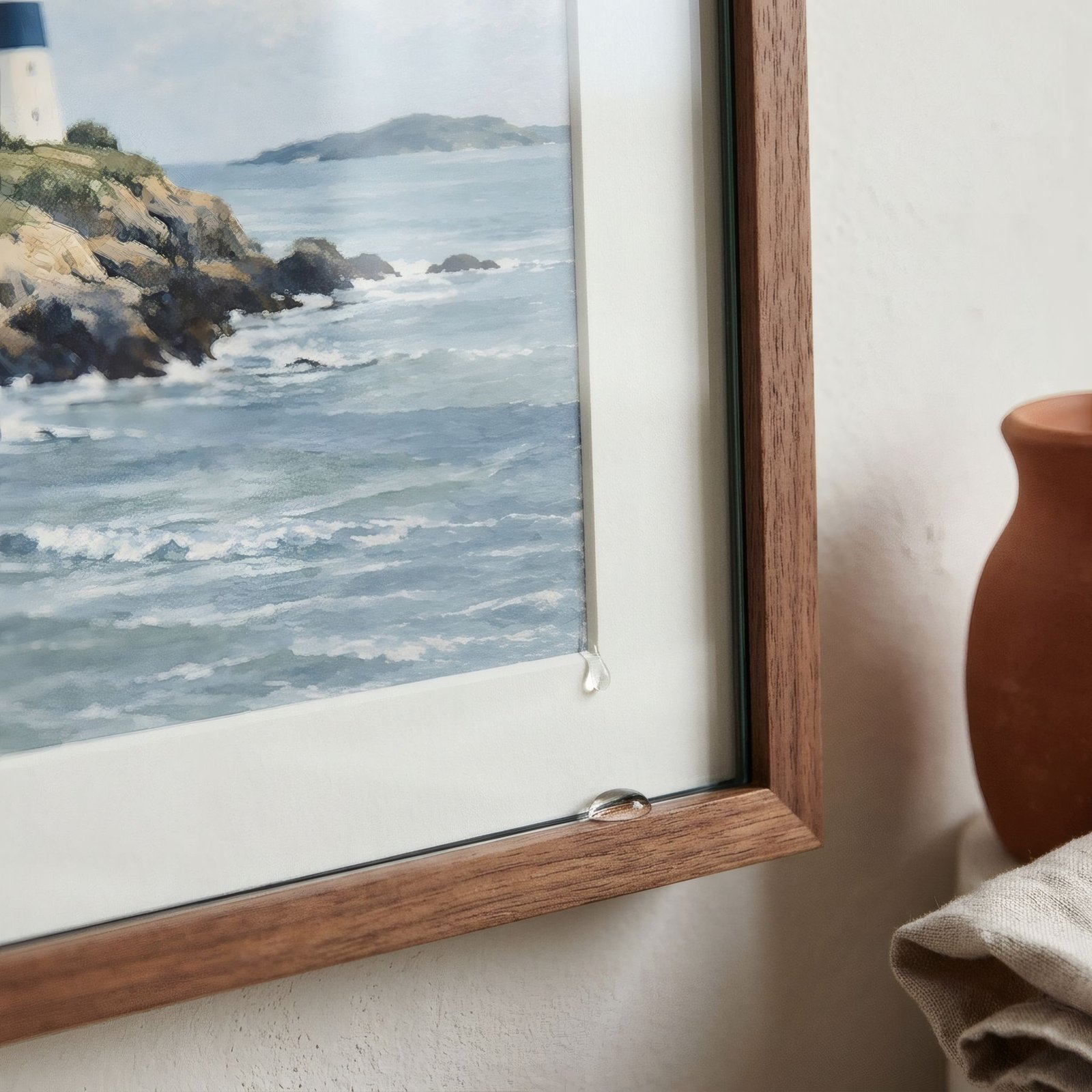
It’s a very ordinary scene. Cleaning day, window spray in hand, and as you pass a picture you notice the glass has some dust and a fingerprint or two. A couple of squirts, a wipe with the cloth, done. What you don’t see is what can happen a few days later: a mark along the edge of the print, a slight ripple in the paper, a tide line that wasn’t there before. Frame glass isn’t a window: there’s paper behind it, and paper and liquids don’t mix. Cleaning it properly is easy, but it means changing one small habit.
The trouble with spray
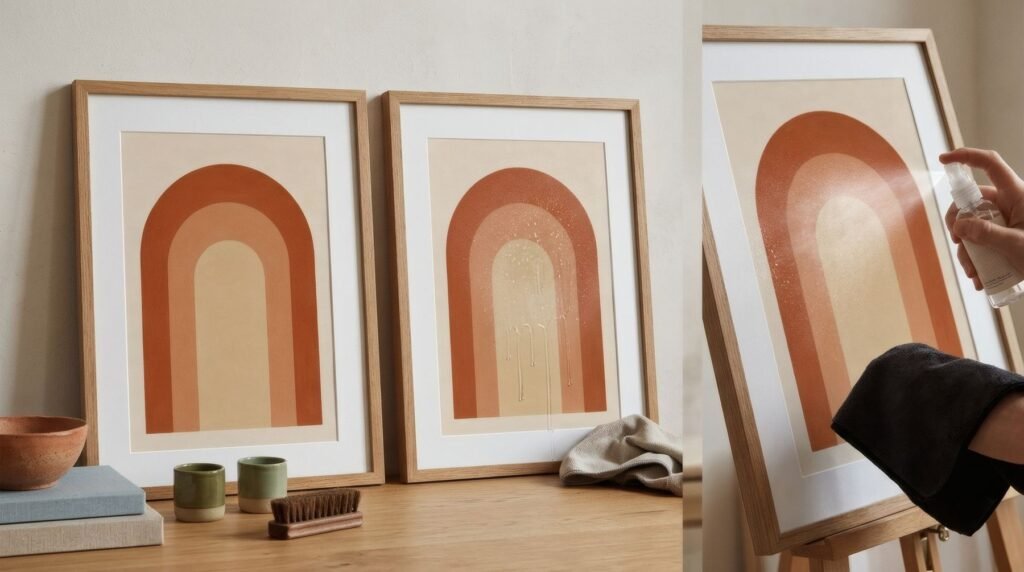
The main risk in cleaning framed art isn’t the product itself but how it’s applied. Spray liquid directly onto the glass and some of it runs down to the bottom edge of the frame. There, by capillary action, it can seep between glass and frame and reach the mount or the print. Paper absorbs moisture and cockles, and if the liquid carries anything in it, it can leave a stain.
So the most important rule is simple: never spray directly onto the glass. Always apply the product to the cloth.
Glass or acrylic
Before cleaning, it helps to know what you’re dealing with, because they need different care.
Glass is hard and scratch-resistant. Clean it with a microfibre cloth lightly dampened with water, or a mild glass cleaner applied to the cloth. You can recognise it because it’s cold to the touch, heavier, and gives a sharp little chink when tapped gently with a fingernail.
Acrylic, sometimes sold as Perspex or Plexiglas, is lighter, warmer to the touch and sounds duller. It scratches far more easily and doesn’t tolerate some products: cleaners containing ammonia or alcohol can cloud or craze it over time. For acrylic, the safest option is water with a drop of mild washing-up liquid, or a dedicated acrylic cleaner, always on a very soft microfibre cloth. Never kitchen roll, which can scratch it.
If you have anti-reflective or specially coated glazing, follow the manufacturer’s or framer’s instructions: some coatings are delicate.
Step by step
First, dust it dry. With a clean, dry microfibre cloth or a soft duster, remove dust from the glass and frame. Often that’s all you need.
If fingerprints or smears remain, dampen the cloth lightly, never soaking, with water or the right product. Wring it out well.
Wipe gently, starting from the centre and not pushing towards the edges, so you don’t drive liquid towards the frame. If the picture is hanging, steady it with your other hand so it doesn’t shift or lift off its hook.
Finally, dry with a second clean microfibre, especially near the edges.
The frame counts too
Natural wood frames or delicate finishes, gilt or lacquer, deserve the same care: dust dry, and at most a barely damp cloth. Multi-surface sprays can damage varnish and gilding. There’s more in how to frame a print to protect it.
When the dirt is inside
Sometimes the dirt isn’t outside but in: a speck of dust, a tiny insect, a fingerprint from the day it was framed. The only answer then is to open the frame. Do it on a clean table, with clean hands, and take the print out before you clean the glass: never clean glass with the print behind it. Clean both sides, let it dry completely, then reassemble. If the piece is valuable or the framing complex, a framer will do it safely. We cover handling in how to handle art prints without creasing them.
How often
In most homes, a dry dust every few weeks and a damp clean only when there are marks is plenty. In kitchens, where grease settles, it may be needed more often, as we explain in kitchen wall art.
A small habit
Cleaning frame glass is a two-minute job. All it asks is that you remember there’s a work on paper behind it: product on the cloth, not the glass; soft microfibre; no rushing near the edges. Then the glass will shine and the print will stay untouched.
Bendíra prints arrive unframed; when you choose your frame, ask whether the glazing is glass or acrylic so you know how to care for it.
Keep reading: How to Protect Art Prints from Sunlight and Moisture and How to Light Wall Art at Home Without Glare.