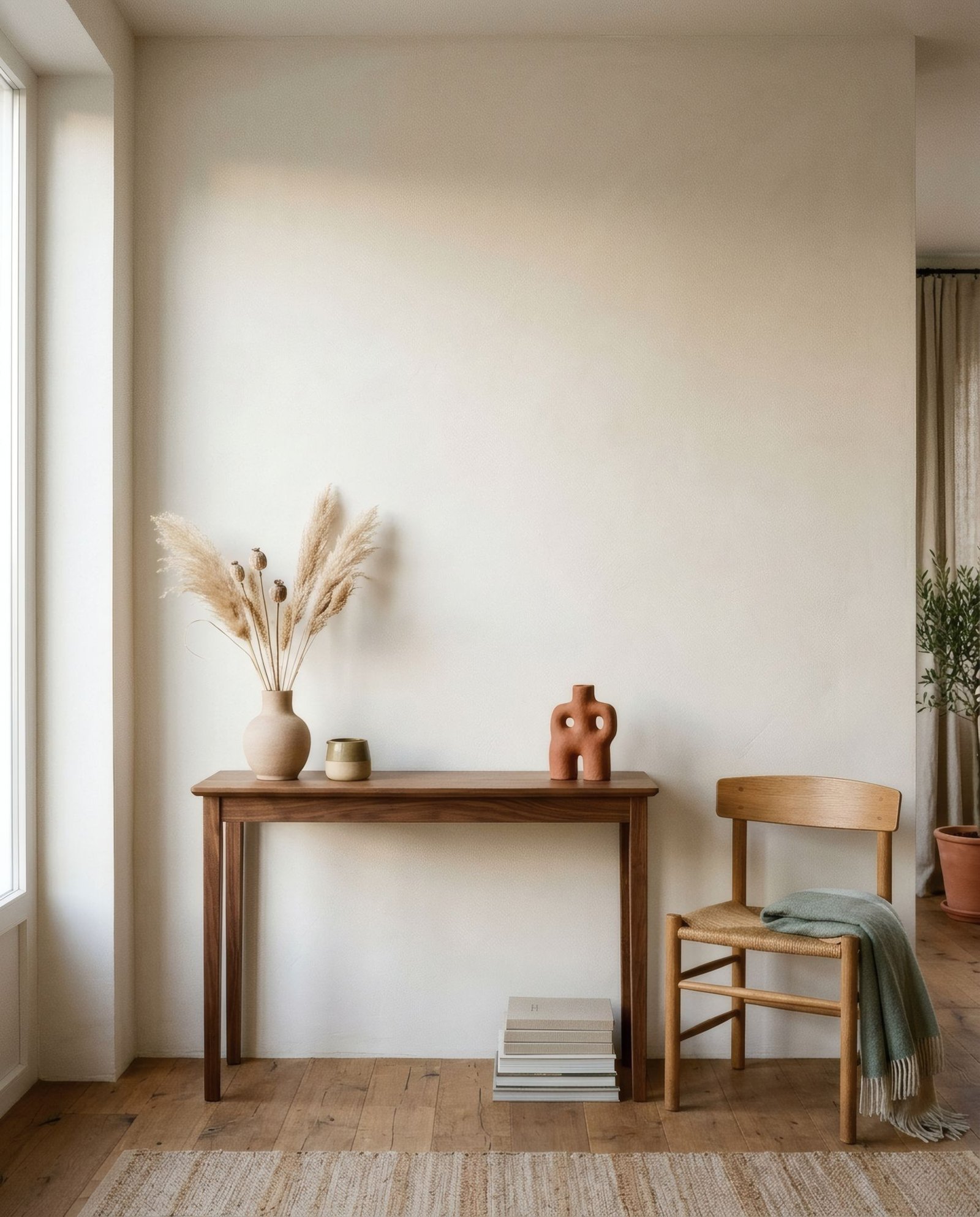
When we move into a new home, empty walls can feel almost uncomfortable. There is an understandable temptation to fill them as soon as possible, buying several prints at once so the place looks finished. But the loveliest art collections, the ones that truly seem to belong to the people who live with them, are rarely made that way. They are built little by little, over years, with works arriving at different moments and for different reasons. Collecting slowly is not only a matter of budget. It is a way of relating to art that makes the search part of the pleasure.
The value of waiting
Living for a while with an empty wall can be a good decision. It lets you get to know the house, its light, its corners, the way you use it. It lets you discover what each space needs before deciding what to hang. And it avoids hasty purchases, made only to fill a gap, that stop saying anything to us after a few months.
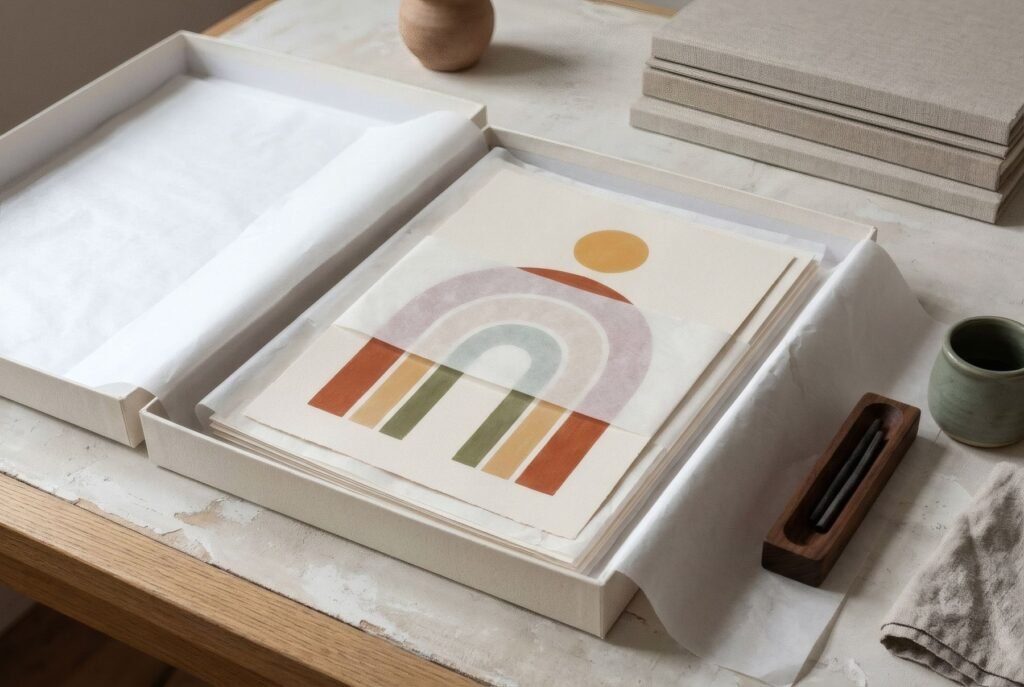
Waiting is not giving up, but leaving room for the right work to appear. And when it does, you recognise it.
Choosing what moves you
A collection built slowly is made of works that move you, not works that merely fit. The difference is subtle but important. A work that fits matches the sofa, is the right size, follows the trend of the moment. A work that moves you stops you, makes you look again, keeps you company. Sometimes the two coincide; when they do not, the second deserves priority.
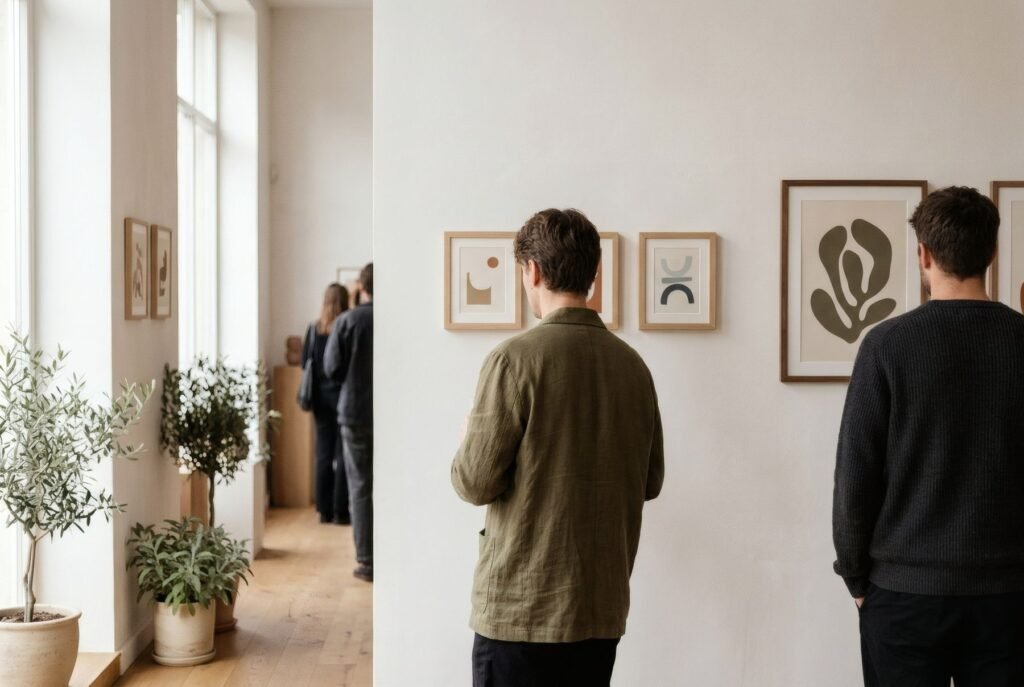
Collecting this way means learning to listen to that response and not being swept along by the urge to complete. We explore it in how to discover your personal taste in art.
Every work, a story
One of the loveliest things about slowly built collections is that every piece has a story. This print we bought on a trip. This drawing was a gift from someone dear. This photograph we chose the year everything changed. Over time the collection becomes a narrative, a kind of visual diary only its maker can fully read.
Those stories are, in large part, what makes a personal collection precious, a value that has nothing to do with price or market.
It is not an investment
It is worth saying plainly: collecting art for pleasure and buying art as an investment are very different things. A work’s market value may rise, fall or stay the same, and no one can guarantee it. This essay is not about investment or resale, but about something simpler and perhaps more lasting: the pleasure of living with images chosen with care.
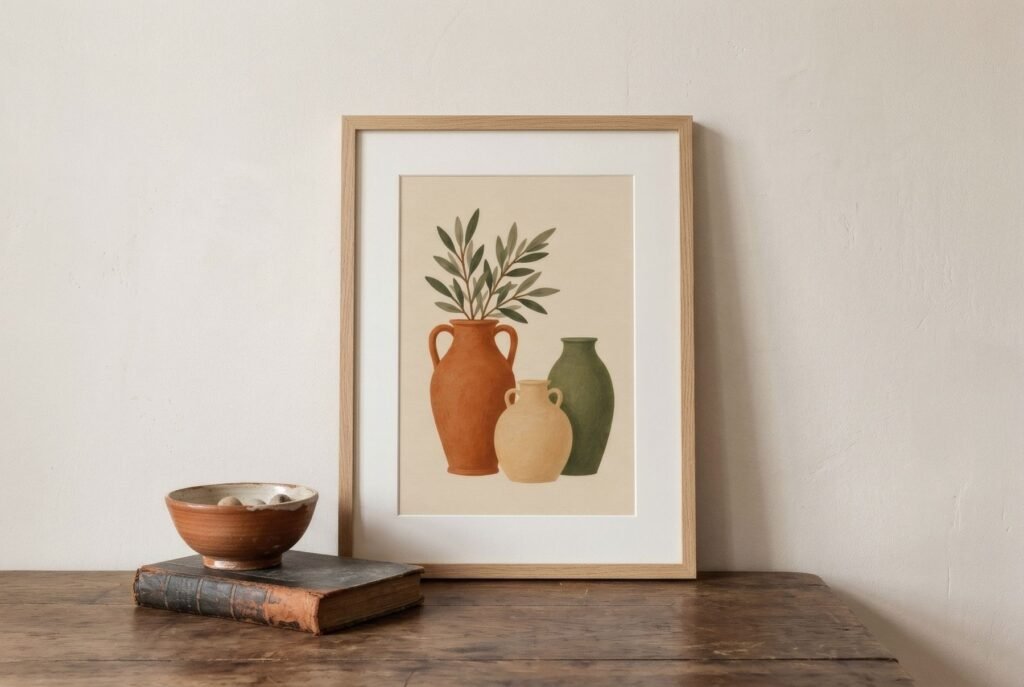
If a work bought for love gains value over the years, that will be a pleasant surprise. It should not be the reason for choosing it.
The collection that reveals itself
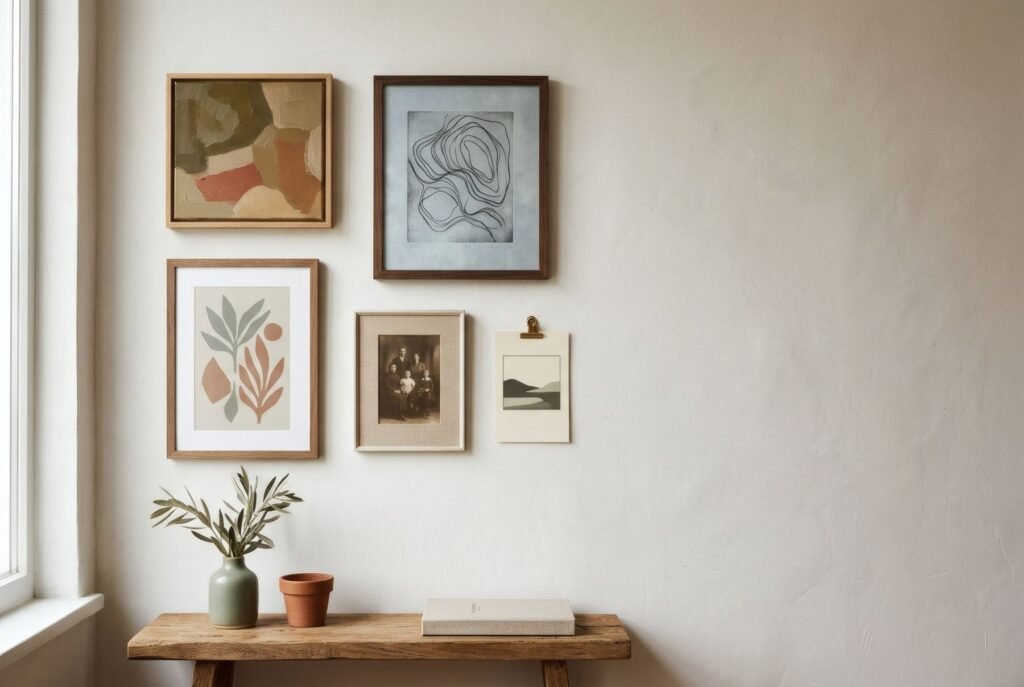
Something curious happens with collections built without a rigid plan: over time, a thread appears. Looking at works gathered across years, we find they share something: a palette, a kind of image, a sensibility. We did not seek it consciously, but it was there in the way we chose.
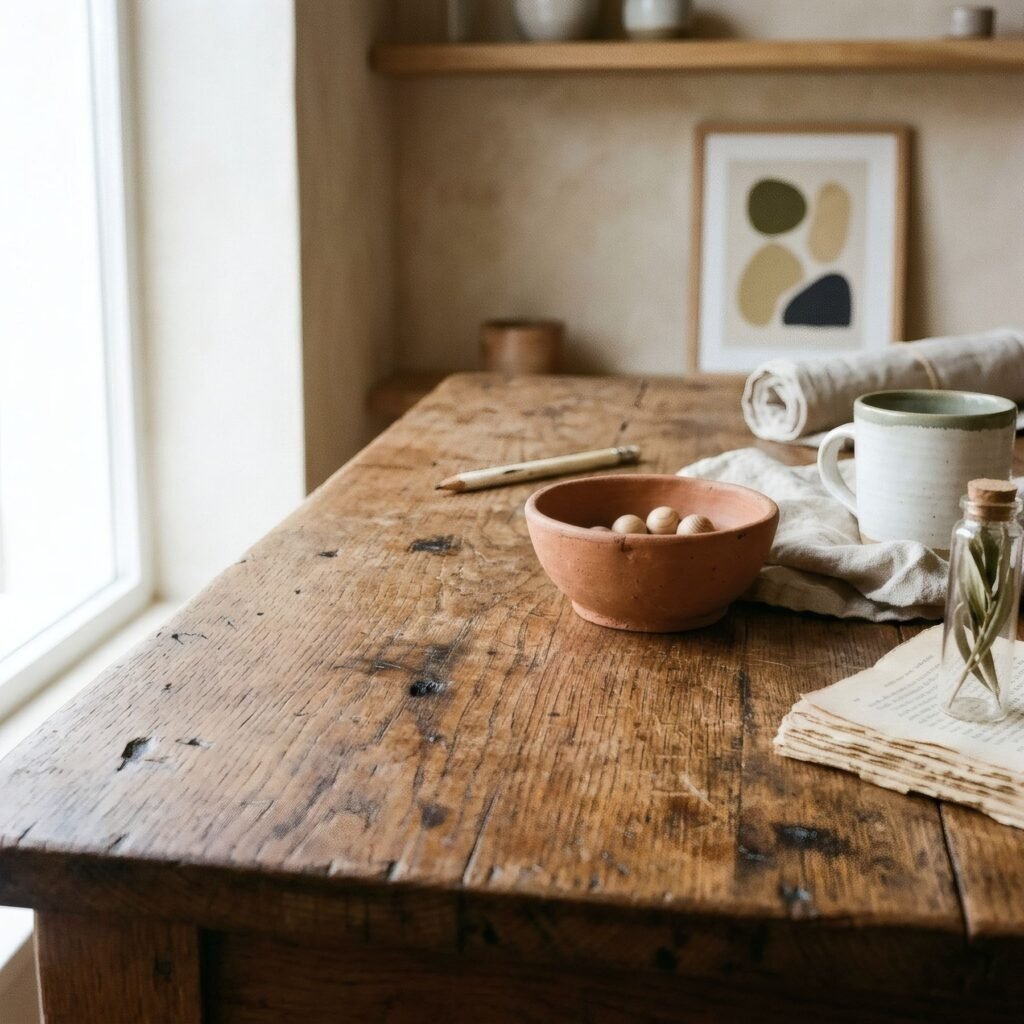
That thread is a personal collection’s signature. Discovering it is one of the loveliest moments of slow collecting.
Editing is collecting too
Collecting slowly is not only about adding. Sometimes it means taking away. Over the years some works stop saying the same thing, or find a better place in another room, or in someone else’s home. Rotating works, storing some for a while and bringing them out again, giving away one that no longer keeps you company: all of it is part of a living relationship with art.
The journey as part of the pleasure
In the end, collecting slowly is enjoying the journey as much as the result: gallery visits, unexpected discoveries, conversations, doubts, the joy of finally finding the work you were looking for without knowing it. A collection like that is never finished, and that is precisely its charm.
We like to think a Bendíra print might be one of those pieces that arrives at just the right moment, without hurry, to stay.
Keep reading: From Screen to Paper: Why Images Feel Different, What Thoughtful Composition Teaches Us About Balance and How to Build an Affordable Personal Art Collection.