Some images feel «right» without our quite knowing why. Everything seems in its place: nothing extra, nothing missing; the eye moves calmly and always returns. Behind that feeling lies something artists have pursued for centuries: balance. But balance in a good composition is not what we tend to imagine. It is not stillness, nor symmetry, nor everything weighing the same. It is something more interesting: a resolved tension, a dialogue between different forces that each find their place. And what good composition teaches us about balance applies far beyond art, to a table, a shelf, a whole room.
Balance is not stillness
The first lesson is perhaps the most surprising. A balanced composition is not a static one. On the contrary, the most interesting images often have movement, tension, crossing directions. What balances them is that those forces offset one another.
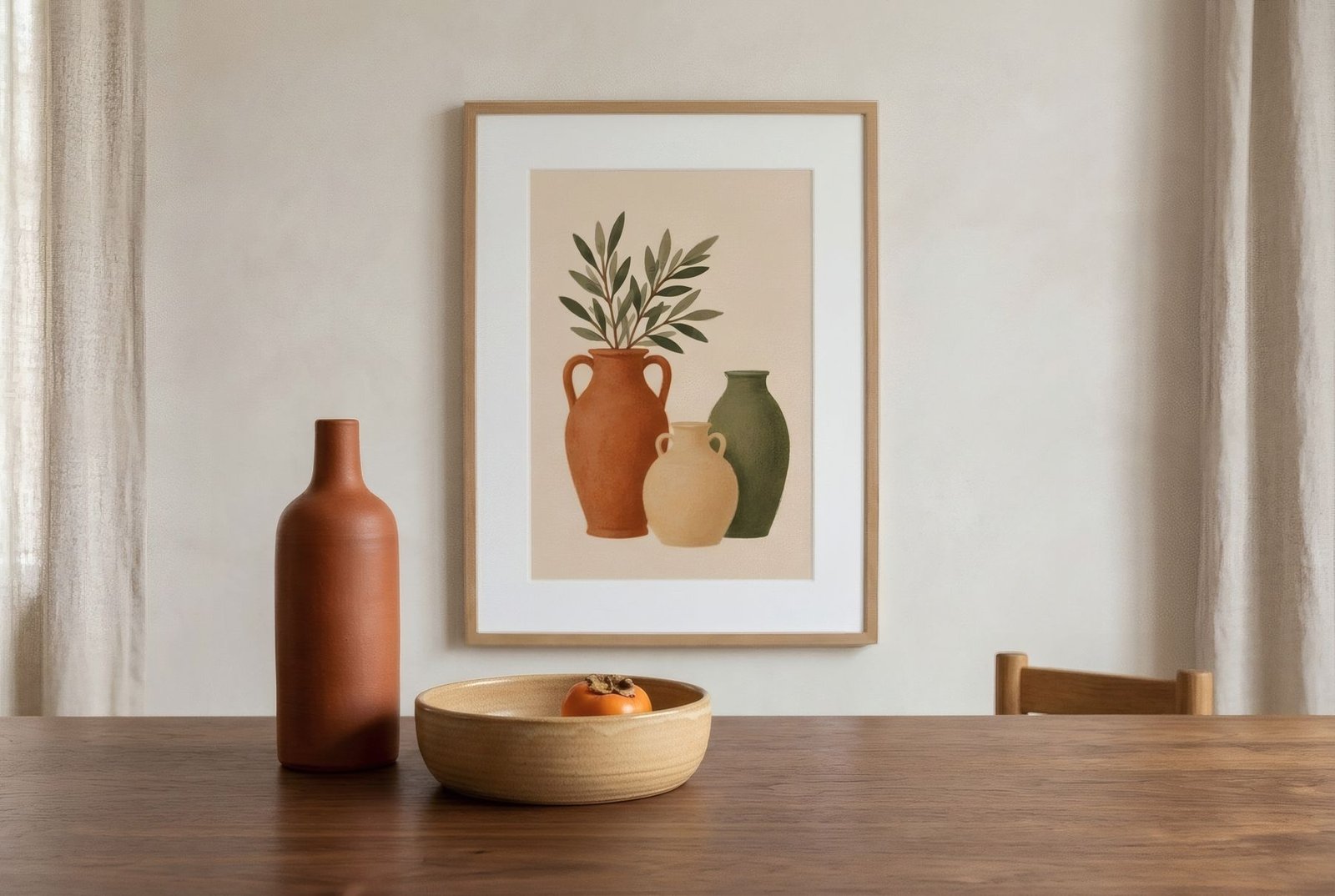
Think of a simple still life: a tall bottle on one side, a low, wide bowl on the other, a small piece of fruit in front. None is alike, none is centred, and yet the whole feels stable. The bottle’s height is offset by the bowl’s width; the small fruit offers a point of attention that ties them together. That is balance: not the absence of difference, but its harmony.
Weight is not size
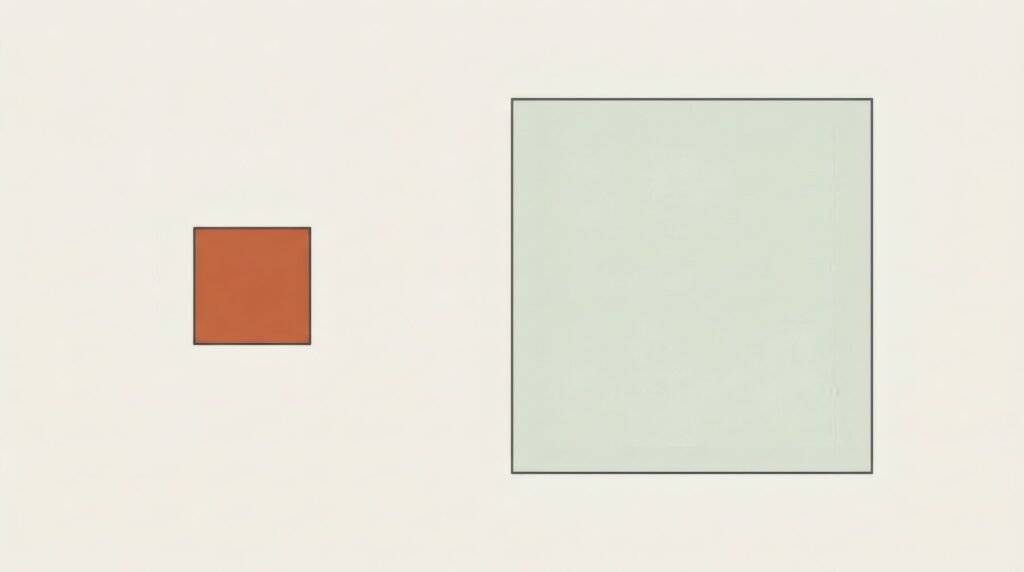
The second lesson is that visual weight does not depend on size alone. A small red dot can weigh as much as a large grey area; a dark form as much as a far larger light one; an isolated element more than one surrounded by others. We explain this in detail in asymmetrical composition in contemporary art.
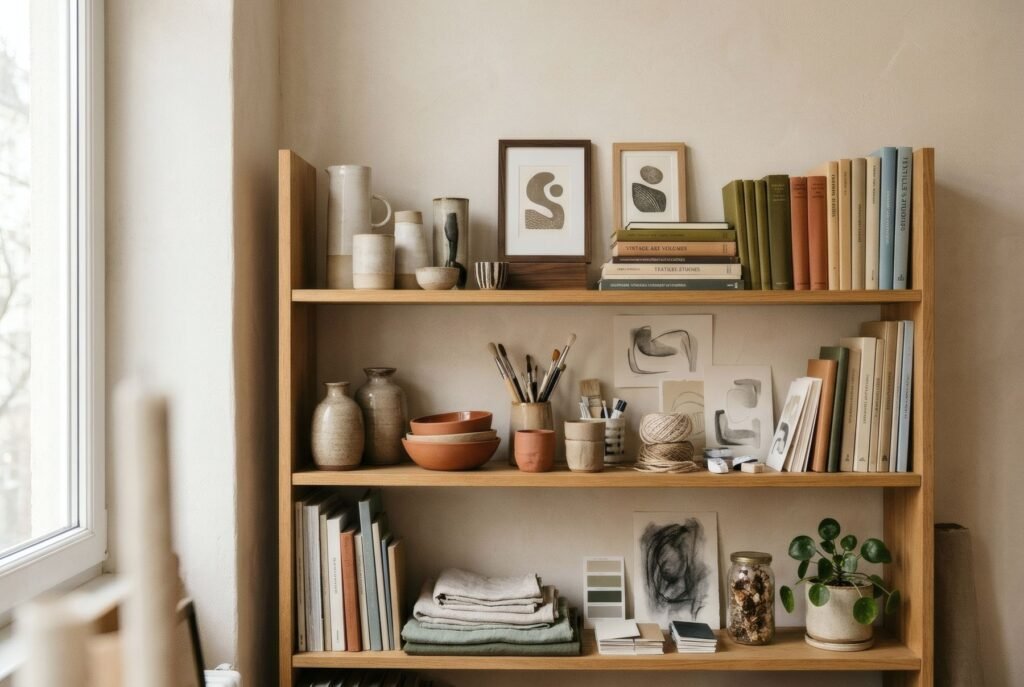
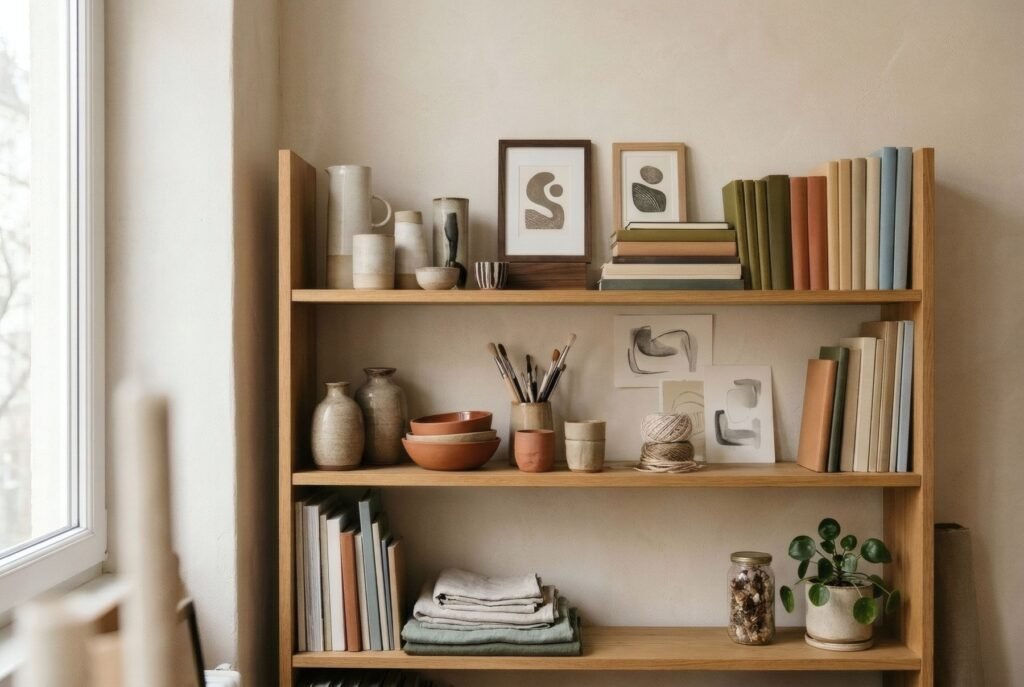
Applied to everyday life, it explains why a small coloured object on a shelf can balance a whole row of books, or why one strong cushion can hold together an entire neutral sofa.
Emptiness has weight too
The third lesson concerns empty space. In a good composition, emptiness is not leftover but an active part of the balance. A small form at one edge can be perfectly offset by a large empty area on the other side. Emptiness gives air, emphasis and calm.
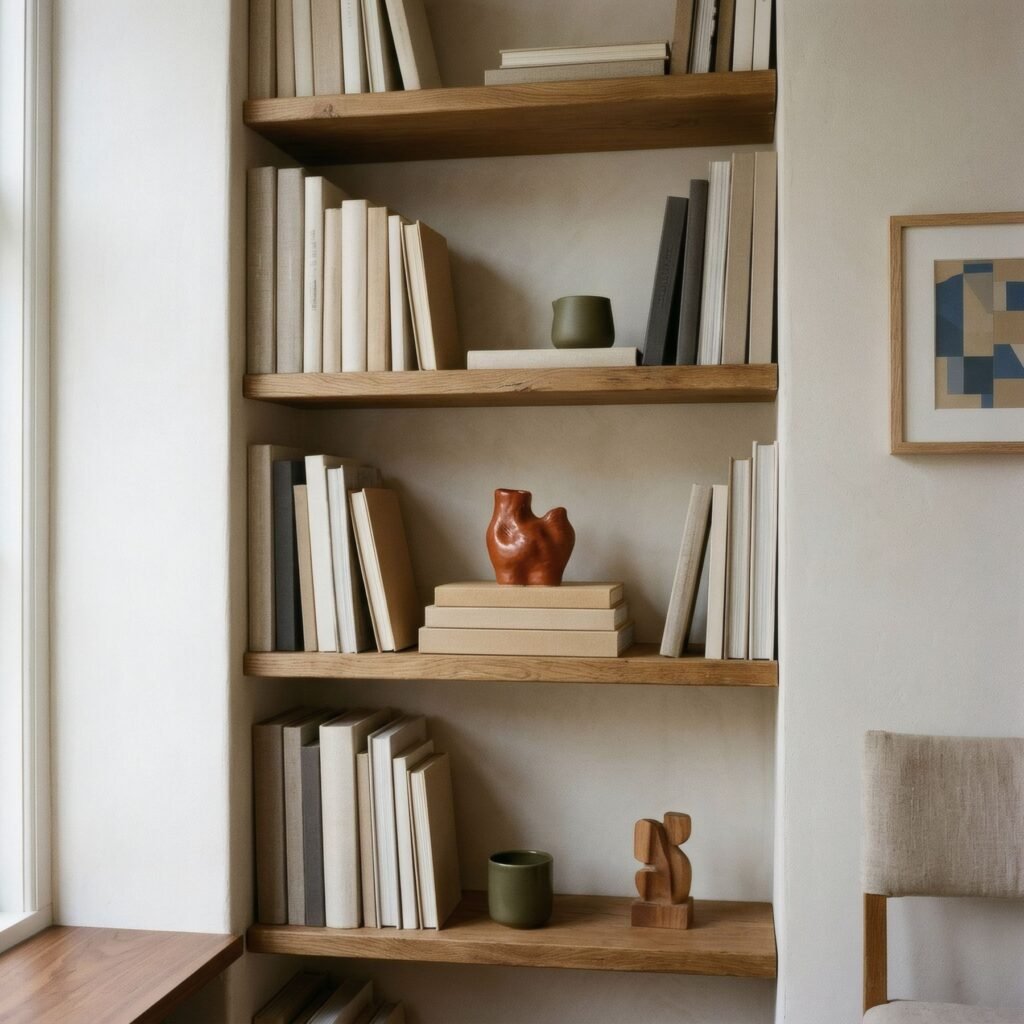
At home, this translates simply: not everything has to be full. A clear surface beside one holding objects, a bare wall beside one with a work, an empty corner in a furnished room. That space balances as much as any object. We explore it in the beauty of giving art room to breathe.
Something has to lead
The fourth lesson is hierarchy. Balanced compositions almost always have a main element, one that draws the eye first, with others keeping it company. When every element competes equally, the image becomes confused; when one clearly leads, everything else finds its place.
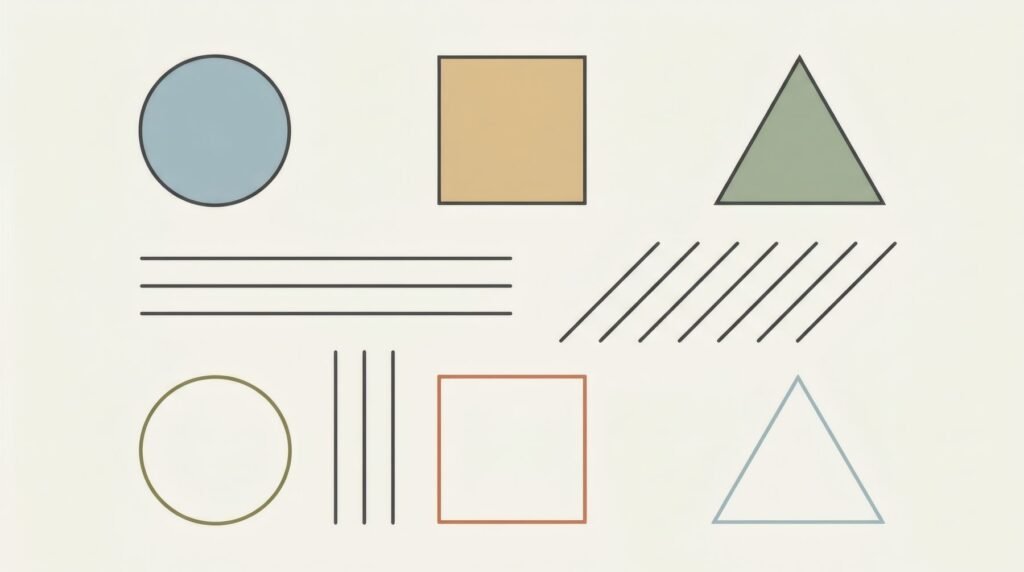
In a room, on a shelf or on a wall, this idea is very useful. Deciding what matters most, such as a work, a piece of furniture or a window, and letting the rest accompany it avoids the noisy feeling of spaces where everything wants to stand out.
Balance is adjusted
The fifth lesson is that balance rarely arrives first time. Artists move, adjust, remove and add until the composition «works». It is a process of trying, looking and correcting.
The same is true at home. Arranging objects on a table, works on a wall or books on a shelf is an exercise in composition, and it is almost never right first time. Moving a vase a few centimetres, removing one object, swapping a print to another spot: small adjustments that suddenly make everything click.
A simple exercise
To practise, choose a surface at home, such as a table, a shelf or a sideboard. Clear it completely. Put the objects back one at a time, starting with the most important. Look after each one. Does the arrangement lean to one side? Does something weigh too much? Is a small counterpoint needed, or a little more space? When it feels right, stop. You will probably have put back fewer things than were there at the start.
A lesson that reaches further
Good compositions teach us that balance is not rigidity or uniformity but a living relationship between different things. That the small can offset the large, that emptiness counts, that something must lead, and that balance is found by trying. These are lessons for looking at a painting and, equally, for living in a home.
Many of Bendíra’s prints are built on exactly that balance between a few forms and plenty of space, small lessons in composition for the wall.
Keep reading: Collecting Art Slowly: A Personal Approach, On Choosing Fewer Images and Looking More Closely and How to Create an Elegant Minimal Living Room.