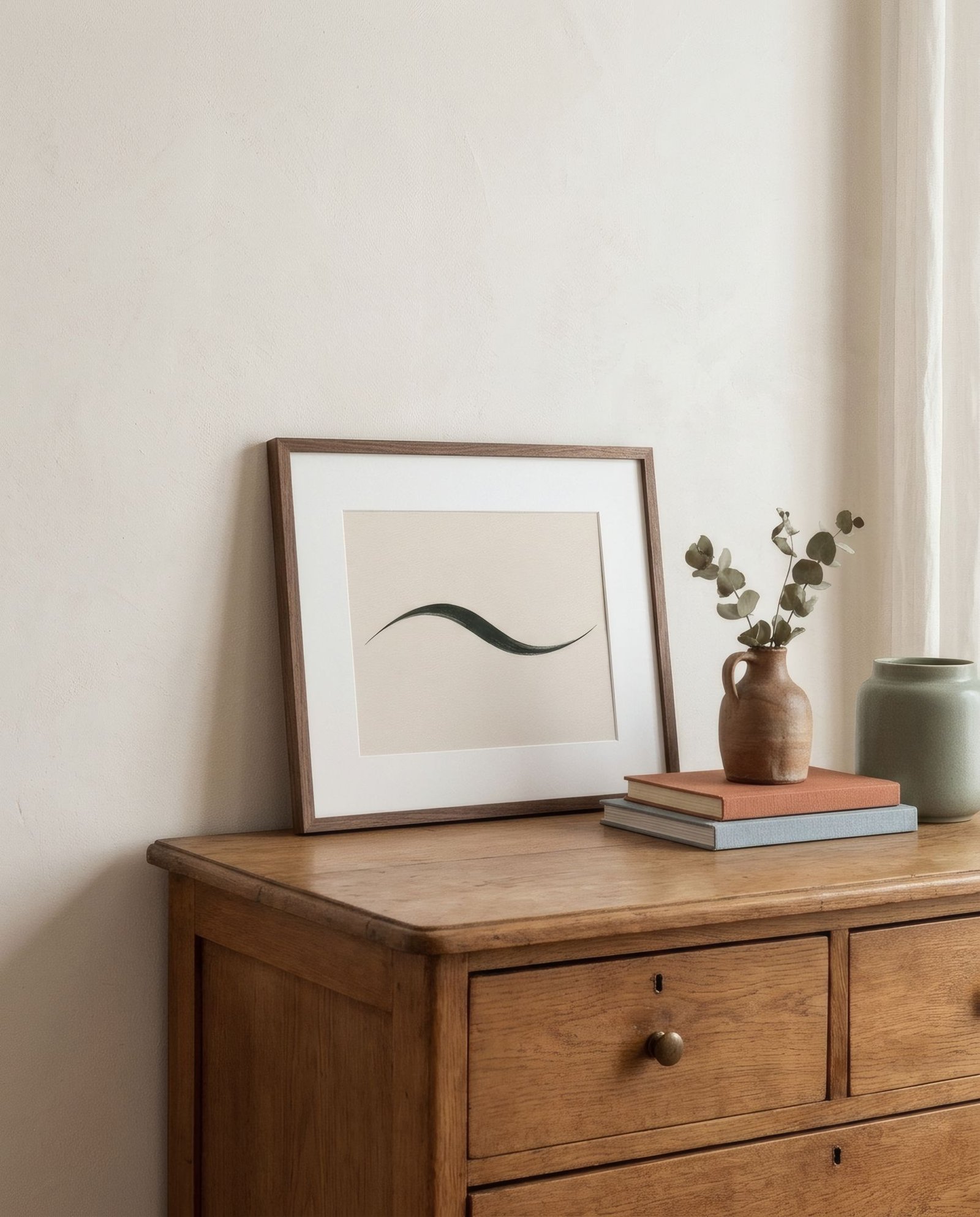
Giving a work of art is one of the loveliest gestures you can make, and one of the most delicate. Unlike a book, which is read and shelved, or clothing, worn now and then, a gifted print hopes to stay on a wall, to be seen every day, to become part of someone else’s home. When it is right, the gift has a very long life; when it is not, it can become a small obligation that ends up in a cupboard. Getting it right depends less on spending more than on paying attention: to the person, to their home and to how they live in it.
Look before you choose
The best starting point for giving art is observation. What is the person’s home like? Which colours, materials and kinds of furniture dominate? Do they already have pictures or prints on the walls? In what style? Do they lean towards the restrained or the colourful, the figurative or the abstract?
If you have been to their home, those clues are invaluable. If not, look at other things: how they dress, the objects they choose, the places they love, the photographs they share. A recurring sensibility almost always appears. We explore this from another angle in how to discover your personal taste in art.
Choose something with a connection
The art gifts that work best usually have a link to the recipient. It might be a place, such as the sea near their town, the hills where their family comes from, a landscape you associate with a shared trip. It might be an interest: plants for a keen gardener, architecture for someone who studies it, music for someone who plays. Or a palette: colours already present in their home or wardrobe.
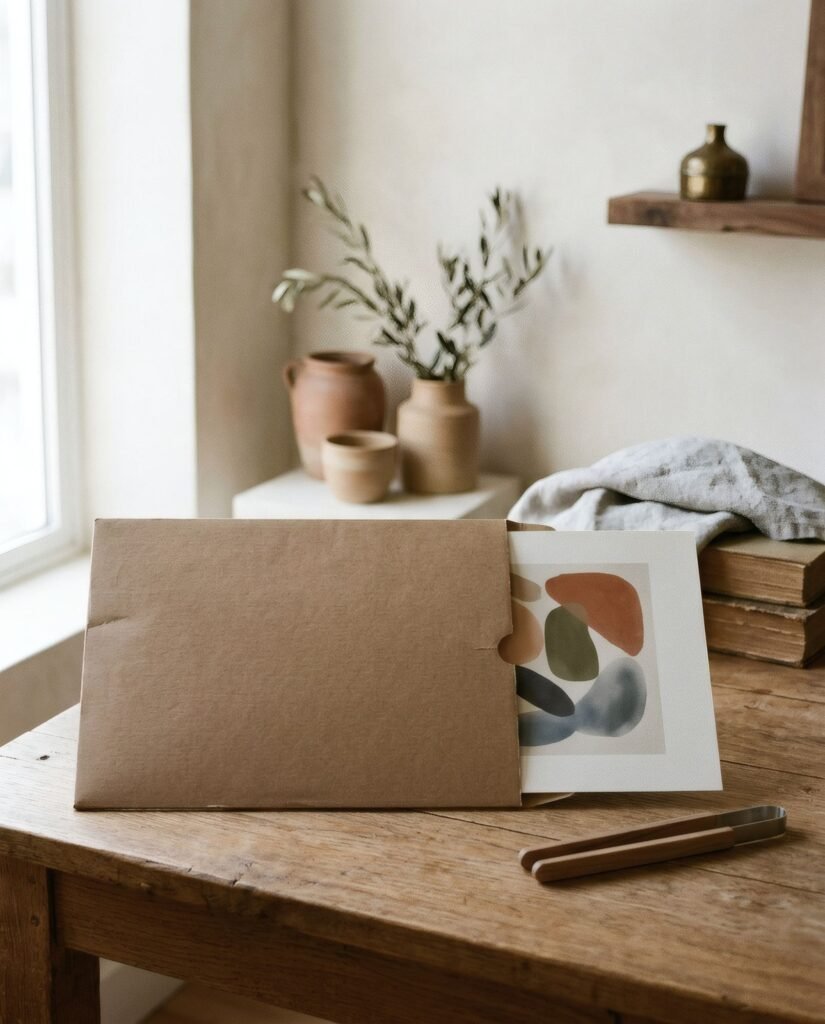
That connection makes the gift say more than «I like this». It says «I thought of you».
What to avoid
Some choices are risky when giving art. Very personal or charged images, with religious, political or intimate themes, may not suit the other person’s sensibility. Very large formats demand an important wall and can feel like an obligation. And very intense or very trendy colours may not suit their home or may tire quickly.
The aim is not to choose the most neutral thing possible, but something the person can easily make their own.
Size and frame
For gifts, small and medium formats such as A4, A3 or 30 × 40 cm are usually safest: they fit almost any wall, a shelf or a chest of drawers, and do not demand a big decision.
The frame deserves separate thought. A framed print is more convenient, as it can go up straight away, but a frame is a very personal choice that may not suit their home. Giving the print unframed, in a standard size, lets them choose the frame they prefer. A good idea is to add a note explaining that it fits ready-made frames of that size. We discuss framing in how to choose a frame for an art print.
Occasions
Some occasions lend themselves especially to giving art. A house move or new home, because there are walls to dress and the gift marks a new beginning. A wedding or partnership, as something a couple can share. A new baby, with a gentle print for the nursery or for the parents. Or a milestone birthday, as a gift that stays.
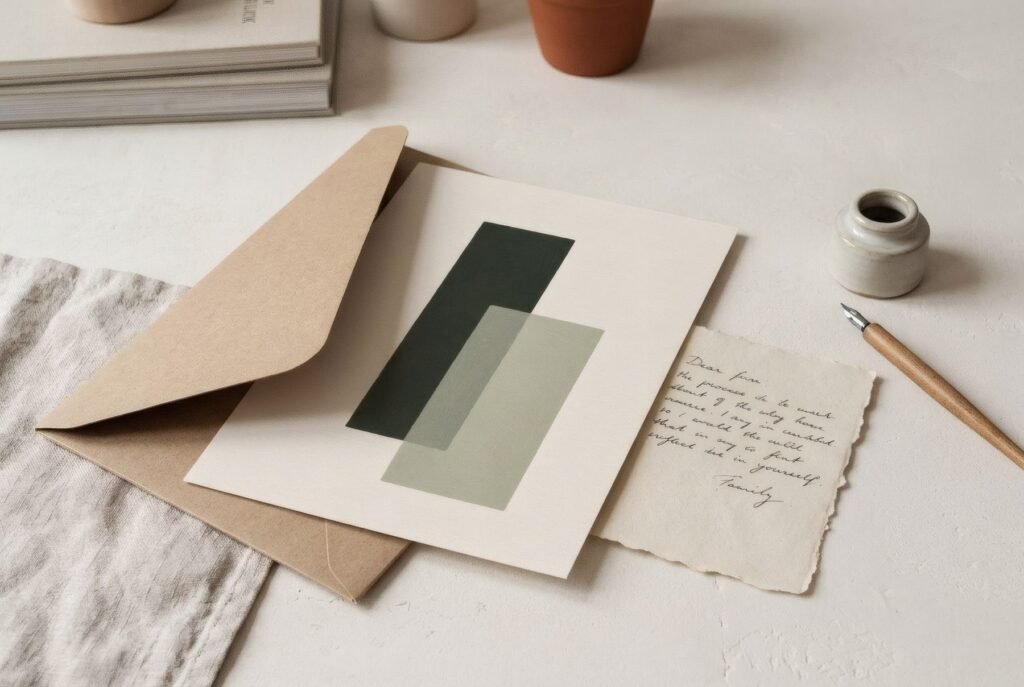
In every case, a short note explaining why you chose that image can turn the gift into something memorable.
A gift with information
One practical touch that is always appreciated: include the basic details with the print, such as its size, the type of paper, whether it comes framed or unframed and how to look after it. Then the recipient knows which frame to look for and how to care for it. And if you are really unsure, there is nothing wrong with discreetly asking someone close to them about their tastes.
The gift of a way of seeing
Giving art is, at heart, giving a way of seeing: yours, of the other person, of what you think they would love to see every day. Chosen with sensitivity, it is a gift that stays on the wall, and in the memory, for a long time.
If you are looking for a print to give, Bendíra’s collections come in standard sizes and palettes designed to live in very different homes, from earth tones to coastal blues.
Keep reading: The Beauty of Giving Art Room to Breathe, Building a Personal Colour Palette Through Art and Choosing Art with Intention.