
A nineteenth-century scientific plate of a sea snail, a photograph of a street in the early 1900s, a postcard of a spa town in faded colours, a page from an old seed catalogue. In recent years, archival images like these have become a familiar presence in contemporary homes. They have something new images cannot: time, patina, the trace of another way of seeing. And thanks to libraries and museums digitising their collections, many are now within anyone’s reach. That is exactly why it pays to approach them thoughtfully: to ask where they come from, what rights apply and how to present them so they converse with a modern space without losing their meaning.
Why they appeal
Archival images appeal for several reasons. They have a particular graphic quality that comes from older techniques such as engraving, lithography and early photography, with sepia tones, fine lines and hand-applied colour. They have historical depth, telling us something about how the world was, or was seen, in another era. And they have a certain strangeness: many were made for very specific purposes, such as identifying a plant, advertising a product or recording a building, and seeing them out of context, on a wall, gives them new life.
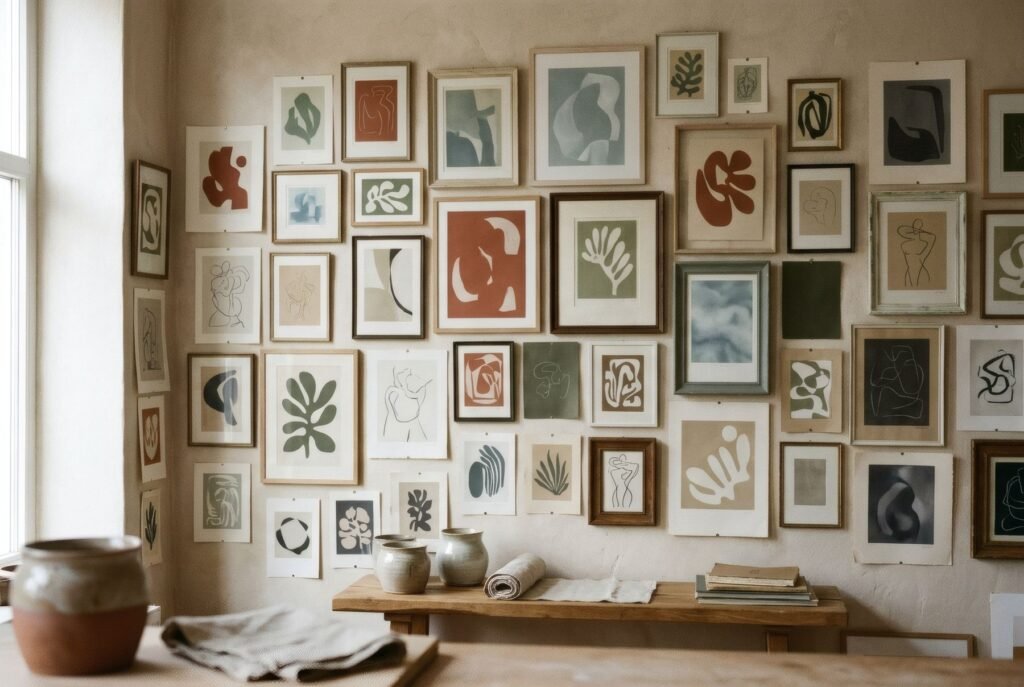
In a contemporary space of clean lines and modern materials, an archival image offers a counterpoint of memory and texture that is very appealing.
The great open sources
One reason archival images are so accessible today is that many institutions have digitised their collections and released them under open licences. The Metropolitan Museum of Art in New York, for example, adopted a policy in 2017 under which images of public-domain works in its collection are released for unrestricted use. The Rijksmuseum in Amsterdam also lets visitors download high-resolution images of its public-domain collection. And many libraries, such as the British Library, have made thousands of digitised items available to the public.
These initiatives have hugely widened access to historical images. But every institution has its own terms, and they are worth checking before using any image.
Provenance: knowing where it comes from
The first question about an archival image is where it comes from. Who made it, when, and why? Where is the original held? An image without known provenance may be beautiful, but it may also carry a history worth knowing.
Some old images come from colonial contexts or from ways of looking at other cultures that we now consider problematic: ethnographic photographs, illustrations presenting people as curiosities, propaganda. That does not mean they cannot be looked at or studied, but it is worth thinking twice before turning them into decoration, without context, on a wall.
Rights
The second question is rights. An old image is not automatically rights-free. In the UK and EU, copyright generally expires seventy years after the author’s death, so many images from the nineteenth and early twentieth centuries are in the public domain, but not all. A photograph from the 1940s, for instance, may still be protected if its author died less than seventy years ago.
In addition, when an institution digitises a public-domain work, it may set conditions on the use of its digitisation. And with photographs of people, image or privacy rights may come into play, especially if people are identifiable.
So the wise course is to use images from sources that state their licence clearly and, if in doubt, to ask. This is not legal advice, only an invitation to care.
Presenting them in a contemporary space
Once an image is chosen, how it is presented makes the difference between a considered wall and a nostalgic set.
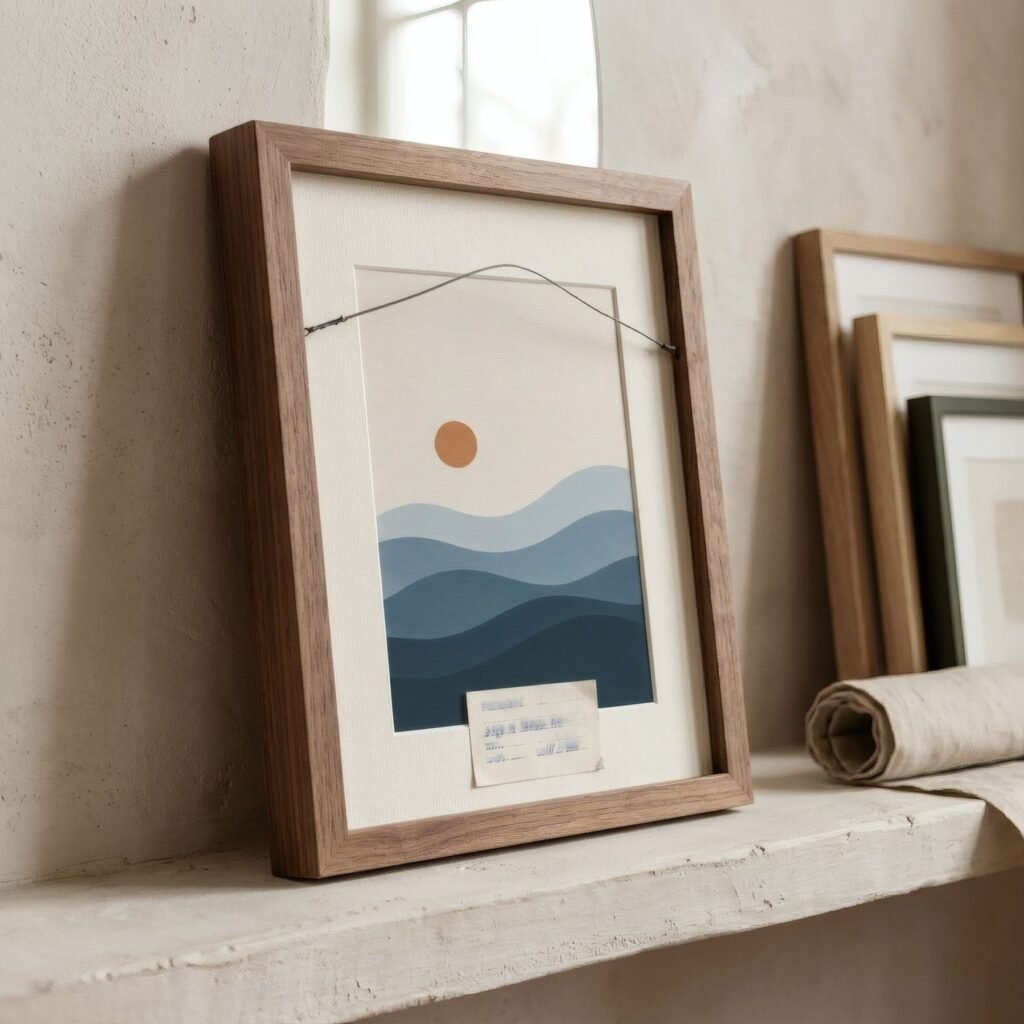
Isolating it works very well: one archival image, well framed with space around it, has far more presence than a wall full of them. Contrasting it works too: an antique scientific plate beside a contemporary abstract, or a period photograph above modern furniture, creates an interesting dialogue between eras. And respecting it matters: avoid crops that change its meaning, keep its margins and, if possible, record its source, even on the back of the frame.
Simple frames in natural wood or slim black, with generous mounts, usually work better than faux-antique frames, which can heighten the period effect.
Memory as material
The aesthetics of the archive remind us that images do not have only one life. A plate made for a science book, a photograph taken to record a street or a postcard sent to a relative can, years later, become something new on a wall. Doing that with knowledge of its origin, respect for its rights and care in its presentation is what makes that new life worthwhile.
Bendíra’s prints are contemporary works, not archival images, but they sit very happily alongside them: a new print beside an old illustration can be one of the loveliest combinations on a wall.
Keep reading: Asymmetrical Composition in Contemporary Art, A Matter of Scale: Choosing Art for a Space and The Appeal of Vintage Posters in Modern Interiors.