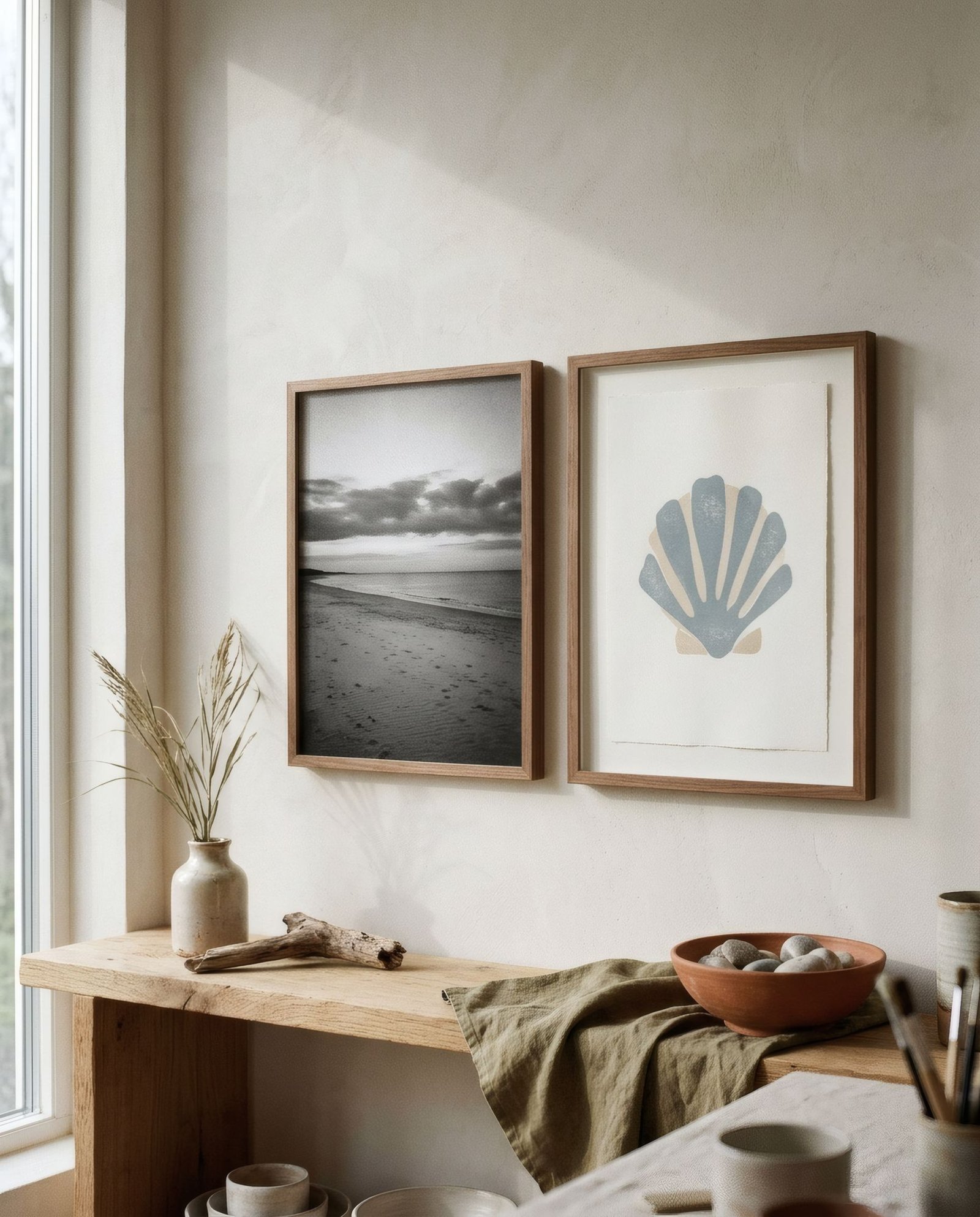
Some images stay with us without our quite knowing why. A painting seen once in a gallery and remembered years later; a photograph of a coastline that brings back, all at once, a childhood summer; a print in a friend’s home that we stopped in front of a little longer than expected. Art has this ability to touch us, to stir something beyond what we see. But what it stirs is not the same for everyone. The same work can calm one person and unsettle another, move someone deeply and leave the person beside them cold. That diversity is not a problem to solve. It may be the most interesting thing about our relationship with images.
What we see and what we bring
When we look at a work, we do not look with empty eyes. We bring everything we are: what we have lived, what we have learned, the mood of the day, the culture we grew up in. A mountain landscape does not mean the same to someone born in a valley as to someone who has never seen snow. A colour may recall a loved one or a difficult time.
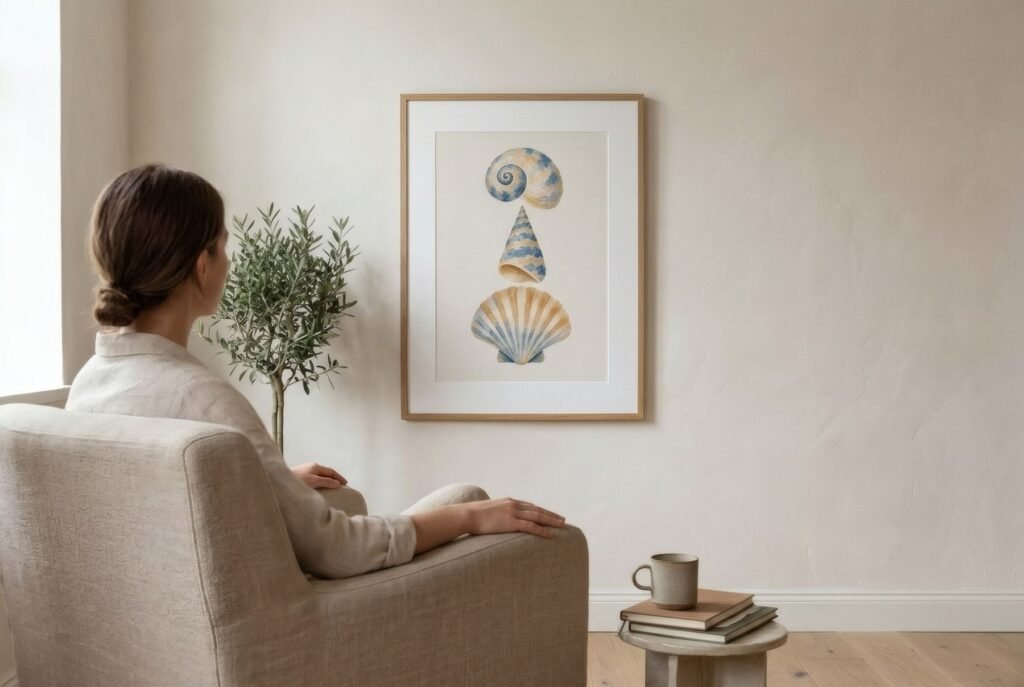
That is why emotion before art is always an encounter between the work and the viewer. The work proposes something: colours, forms, a subject, an atmosphere. We answer with our own story. And from that encounter comes something that lies neither wholly in the work nor wholly in us, but between the two.
What the work proposes
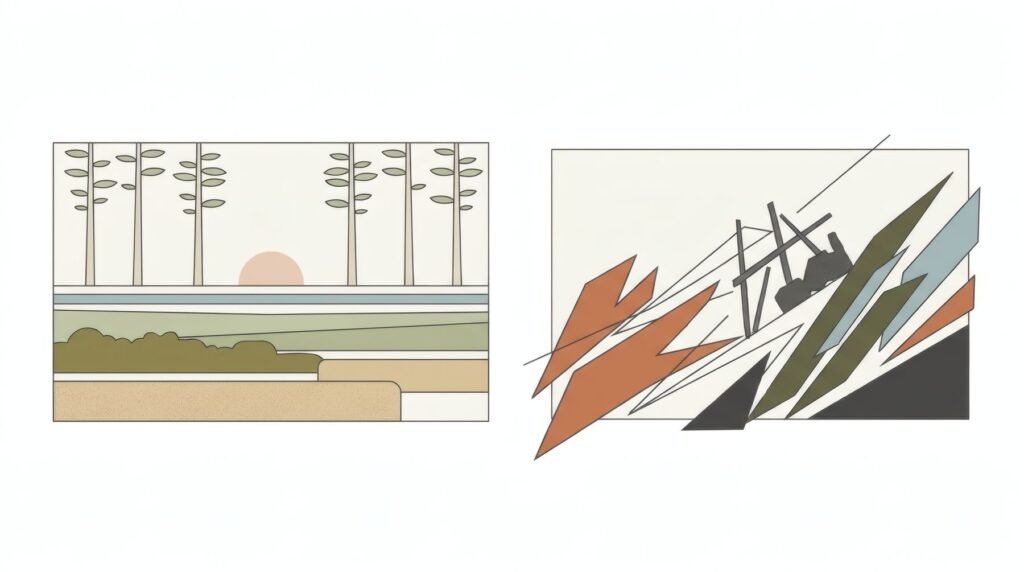
Even so, works are not neutral. Artists use devices, more or less consciously, to steer emotion. A composition of horizontals and soft colours tends to convey calm; one of diagonals and strong contrasts, energy or tension. A wide empty space can suggest solitude or serenity. A well-observed everyday scene can awaken tenderness.
These tendencies are widely shared, but they are not laws. They work more like invitations than instructions: the work suggests a path, and each of us decides whether to follow it. We look at how colour joins that dialogue in the psychology of colour in art and interiors.
Emotions that are not always pleasant
We tend to associate art with pleasant feelings such as beauty, joy and peace. But many of history’s most important works provoke other things: sadness, unease, anger, melancholy. That has value too. Art lets us feel, sometimes at a distance, emotions we struggle to face in everyday life. People have reflected on this since antiquity; Aristotle wrote of the catharsis tragedy brought about in its audience.
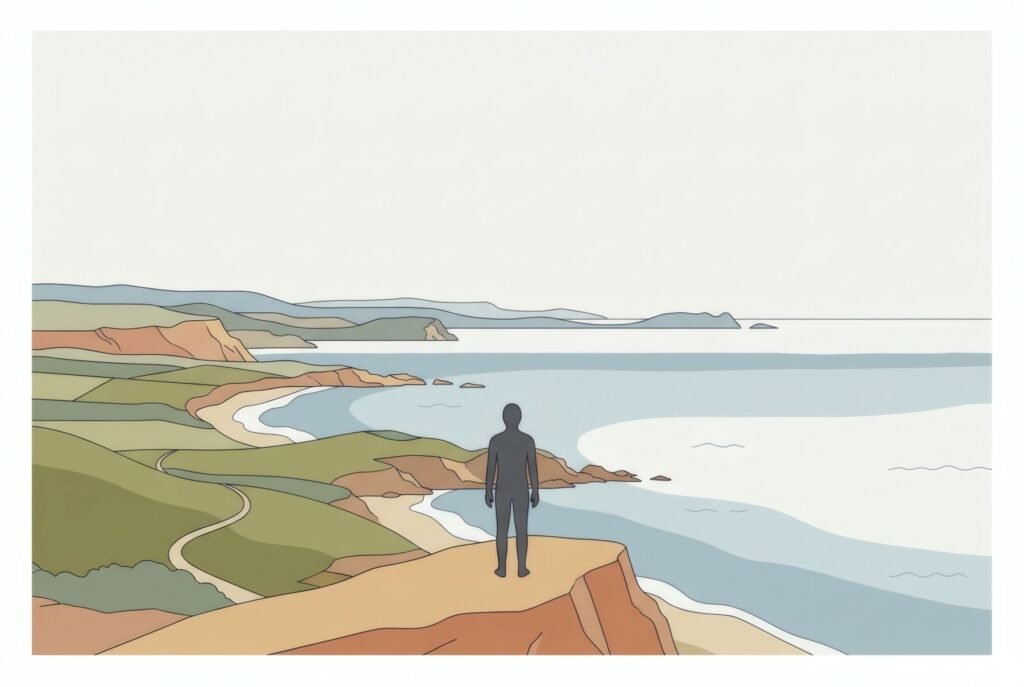
At home, naturally, we tend to seek images that keep us gentle company. But it is worth remembering that art has no obligation always to be pretty or reassuring, and that the works that say most to us are sometimes the ones that unsettle us a little.
No formulas, no single answers
There is no shortage of writing promising that a certain colour or kind of image will have a certain effect on our mood. It is wise to treat such claims with caution. Our emotional relationship with art is too personal and too rich to reduce to recipes. What one person finds serene another finds sad; what delights one strikes another as shrill.
That has a liberating consequence: there is no correct response to a work. If something moves you, it moves you, even if no one else feels it. And if a celebrated work says nothing to you, that is fine too. Your experience is as legitimate as any expert opinion.
Living with an image’s emotion
When we choose a work for our home, we are in a sense also choosing an emotion to live with. Waking every day to a calm horizon is not the same as waking to a vibrant composition. So it is worth asking, before hanging something, what we feel in front of it and whether that is what we want to feel in that place.
It is also worth accepting that the feeling will change. Over time, a work that first moved us may become familiar, almost invisible, and then one day surprise us again. That shifting relationship is part of the beauty of living with art.
What connects us
Perhaps the most remarkable thing is that, for all our differences, we keep looking for images. In every culture and every era, people have painted, carved, drawn and photographed. Something in us needs to see the world represented, transformed, interpreted. And in that shared need, each in our own way, we recognise one another.
If you are looking for an image to live with, Bendíra’s collections hold works of very different atmospheres, from the calm of a horizon to the warmth of a low sun, so you can find the one that speaks to you.
Keep reading: How to Build an Affordable Personal Art Collection, Bendíra: Art for Everyday Living and Why Art Matters in Everyday Spaces.