
Some drawings say everything with almost nothing: a profile traced with one unbroken line, a hand suggested in three curves, a leaf held in the white of the page by a single stroke. Line art works with exactly that, the line as absolute protagonist, without shading, colour fills or distracting texture. It may look like the simplest visual language of all, but behind each apparently spontaneous stroke there is usually a great deal of practice and remarkable powers of distillation. Perhaps that is why line art prints have become so popular in contemporary homes: they bring calm, elegance and a very light presence.
What line art is
Broadly, line art means images built mainly from lines, without shading or flat colour to define volume. The line draws contours, suggests forms and lets the white space do the rest.
It is one of humanity’s oldest visual languages. Many of the earliest images we know, in caves, on pottery and on stone, are essentially line drawings. And line has remained the basis of drawing throughout art history, from the preparatory sketches of the great masters to graphic design today.
The economy of the line
What makes good line art special is economy. With very few marks, the artist must capture the essence of a form: the gesture of a figure, the curve of a leaf, the expression of a face. Every line counts, and there is no hiding a mistake behind shading or colour.
That is why many great twentieth-century artists devoted much of their work to line drawing. Henri Matisse in particular developed a fluid, distilled line capable of suggesting a body or face with extraordinary elegance. Pablo Picasso also explored line drawing at many stages of his career, and some of his animals and figures drawn in a handful of strokes have become famous. In both cases, the apparent simplicity hid absolute mastery.
Variations
Within line drawing there are many ways of working.
Contour drawing follows the edges of a form, often with a careful, precise line, as in botanical or technical illustration.
Continuous line draws the whole image without lifting pen from paper. The result has a particular fluidity, with lines crossing and looping, and conveys movement.
Minimal line reduces the image to essentials: two or three marks suggesting a figure or landscape, leaving the viewer to complete it.
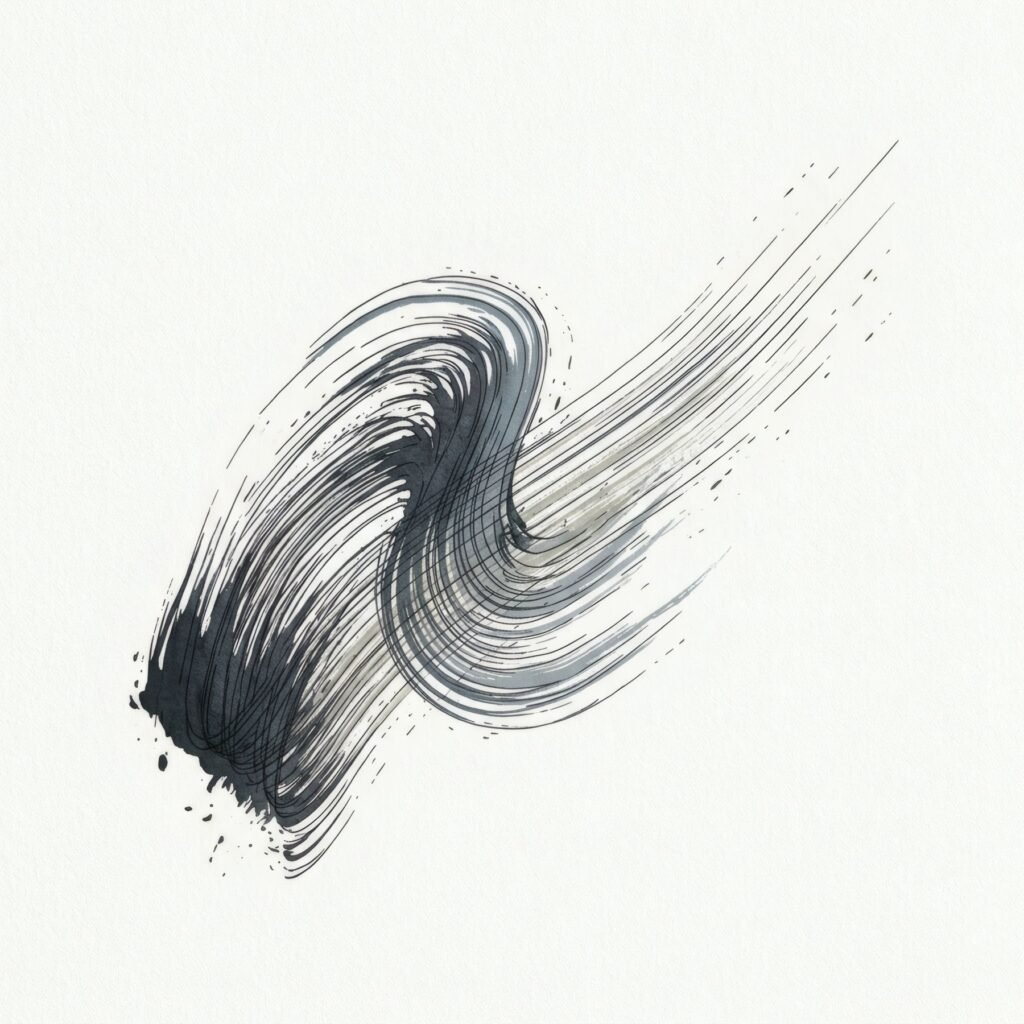
Expressive line, looser and more gestural, shows the speed and pressure of the hand, thickening and thinning as it goes.
Geometric line, closer to design, uses straight lines and regular curves to build abstract compositions.
Why it works so well at home
Line art has several qualities that suit homes particularly well. It is light: with plenty of white space, it barely occupies the wall visually and conveys calm. It is versatile: it suits minimal, Scandinavian, japandi or mid-century interiors and combines easily with other works. It is intimate: best appreciated up close, it is ideal for bedrooms, hallways and reading corners. And it is elegant: a single well-drawn line has a sophistication that is hard to match.
Choosing and hanging line art
When choosing a line art print, look at the quality of the line. A good line is confident and fluid, without needless hesitation, and it has life: it varies slightly in weight and rhythm. Look at the white space too, because in line art emptiness matters as much as the mark. More in the power of negative space in art.
When hanging, remember these works are enjoyed close up. They suit medium formats at eye level, slim frames in natural wood or black, and a mount to give them air. They also look lovely in series or pairs, where several lines converse.
A note on originality
Line art’s popularity has brought a wave of very similar prints: face profiles, female figures, touching hands. Some are lovely; others are barely altered copies of other artists’ work. If the style appeals, look for works with a voice of their own and be wary of those that blatantly imitate well-known artists.
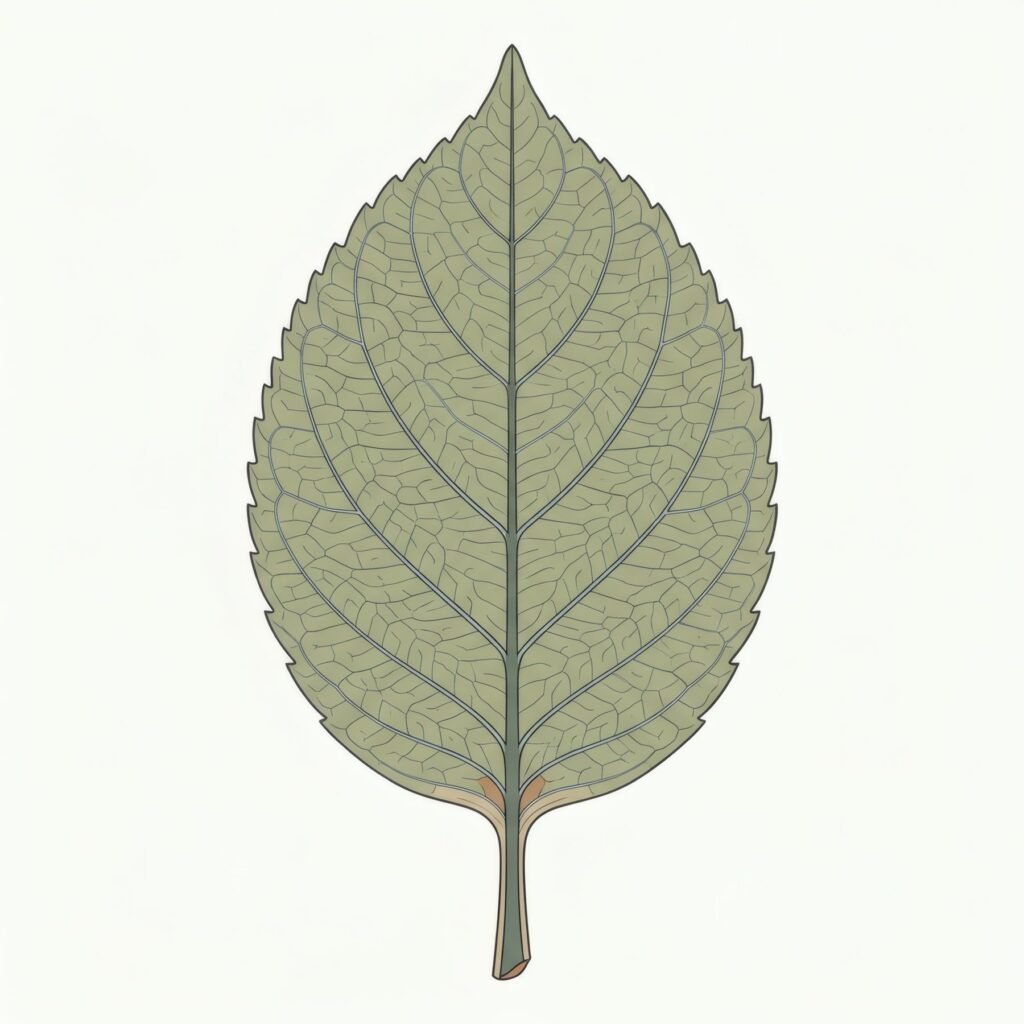
The power of one line
Line art shows that sometimes the hardest thing is to say a great deal with very little. A single well-drawn line can have more presence than an image full of detail, and a wall with a line drawing can convey a very particular calm.
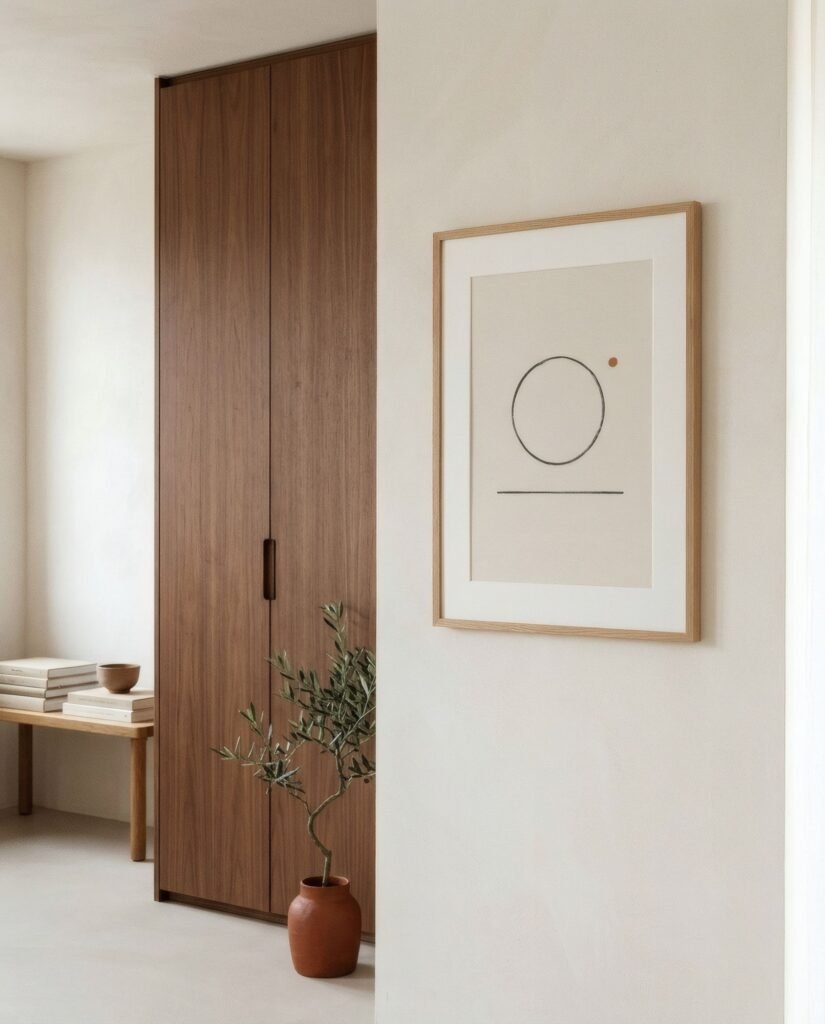
Bendíra’s Quiet forms collection includes prints of fine lines and minimal forms, such as a circle and a line on bone paper, that share that confidence in the power of the essential.
Keep reading: Memphis Design: Colour, Pattern and Play, Collage Art: Layers, Materials and Composition and What Is Abstract Art? A Beginner’s Guide.