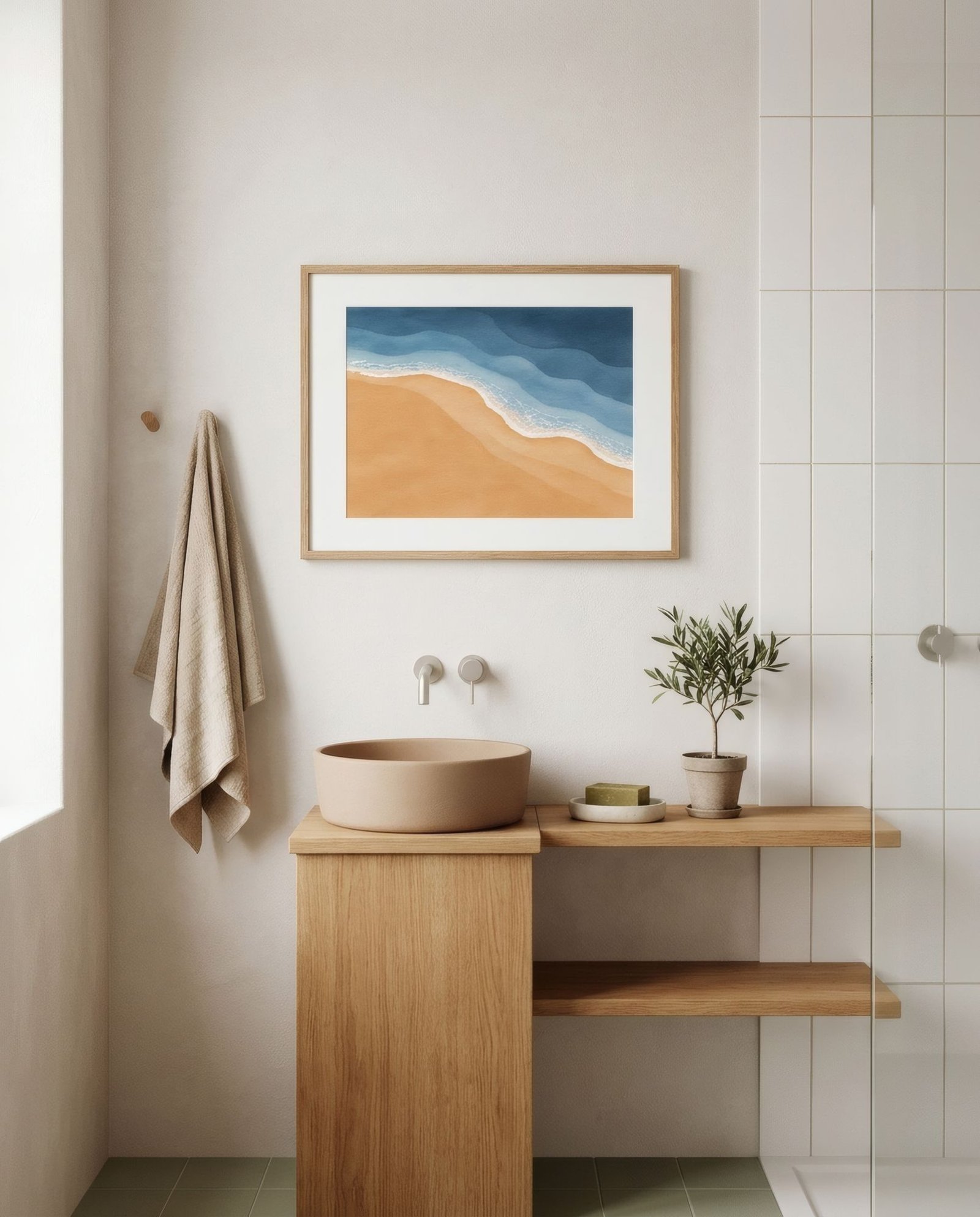
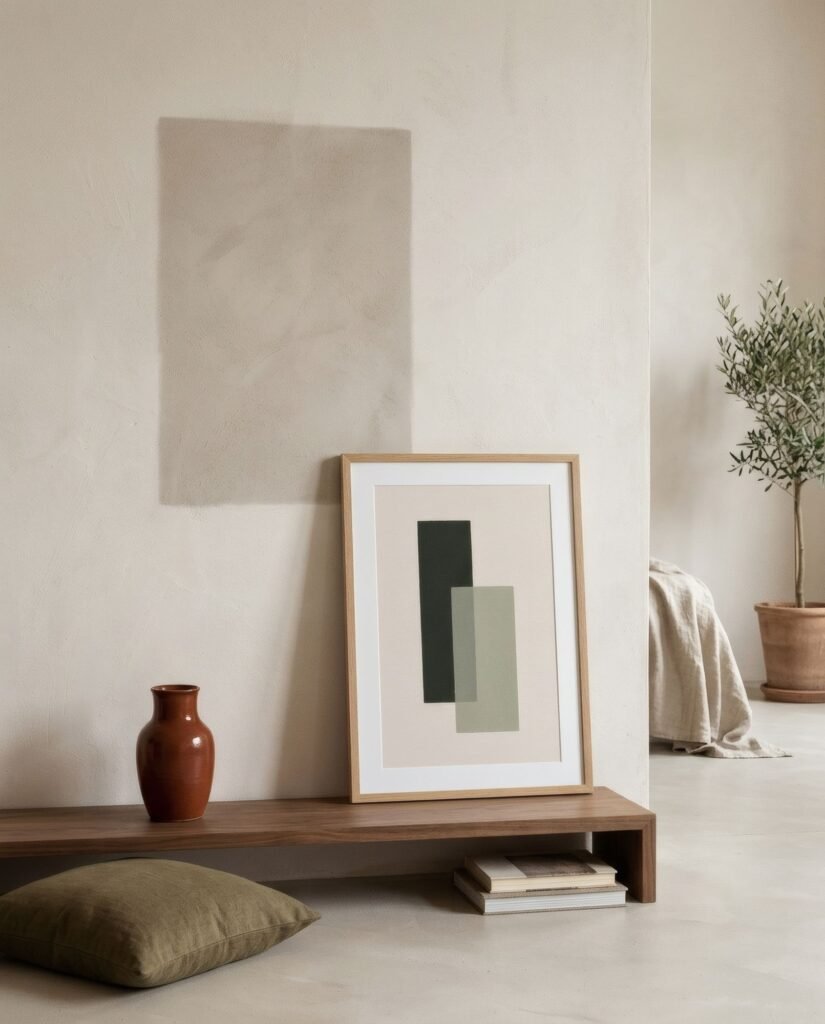
It happens in a lot of homes. You take down a print after a few years and find that the rectangle of wall behind it is brighter than the rest, and that the print itself, hung near the window, has grown a little paler than when it arrived. Nobody did anything wrong. It is just light doing its slow work. Together with humidity, light is what most affects printed art over time. The good news is that you do not need to live in the dark or in laboratory conditions to protect your prints. You only need to understand how light and moisture act, and make a few sensible choices about where and how you hang things.
How light affects prints
Light carries energy, and over time that energy can break down the molecules that give inks their colour and weaken paper fibres. The most damaging part is ultraviolet radiation, invisible to the eye and abundant in sunlight. Visible light contributes too, only more slowly.
The key point is that the damage is cumulative. It depends on both how intense the light is and how long the print is exposed. A print in direct sun for a few hours a day builds up far more exposure over the years than one on a wall with indirect light. That is why conservation bodies such as the Library of Congress recommend minimal light exposure for works on paper and no direct or intense light at all.
Sensitivity also depends on the print. Inks and papers do not react the same way, and some combinations are far more stable than others. But none is completely immune.
Simple choices against light
The most effective measure is also the simplest: choose the right wall. Avoid hanging prints where the sun falls directly on them, especially for many hours a day. A wall at right angles to the window, or one that receives reflected light, is usually far kinder than the wall opposite.
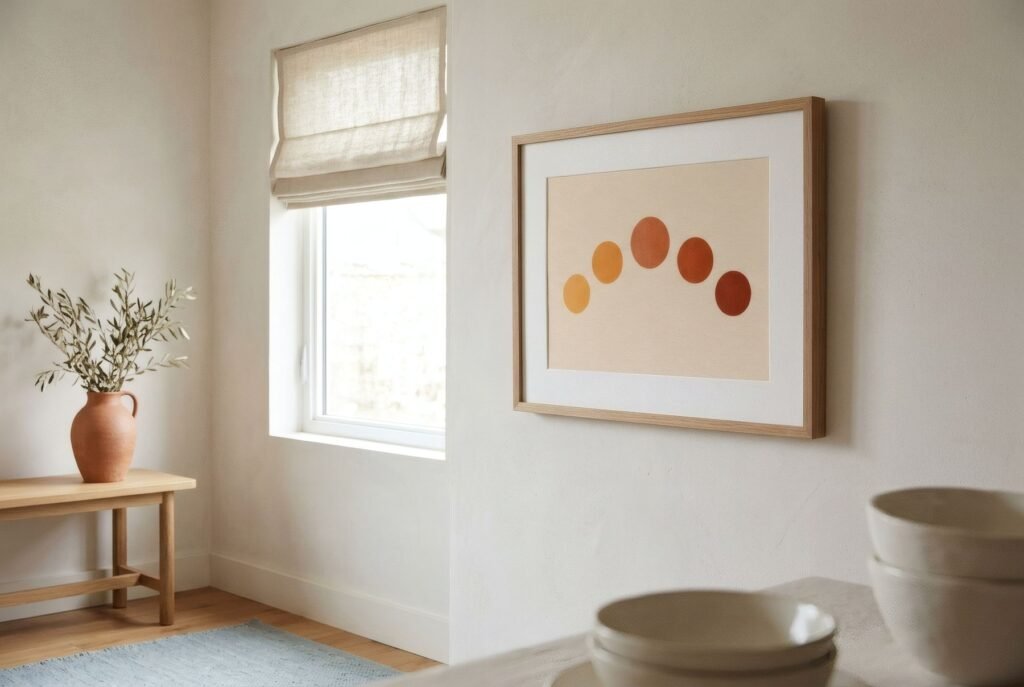
If there is no alternative, a few things help. Sheer curtains, blinds or adjustable shutters soften the light at the sunniest times. Some framing glass filters much of the ultraviolet; it does not stop all damage, because visible light still acts, but it reduces it. And if you have several prints, rotating them now and then, as museums do with works on paper, spreads the exposure.
As for artificial light, modern LED lighting emits very little ultraviolet and little heat, which makes it a good choice for lighting art. If you use a picture light or a directed spotlight, keep it at enough distance that it does not warm the print.
How moisture affects prints
Paper is hygroscopic: it absorbs moisture from humid air and releases it when the air dries. As it does, its fibres expand and contract. When these changes are sudden or frequent, the paper ripples, a problem known as cockling, and over time it can distort permanently.
High humidity brings other risks too. It can encourage small brown spots known in conservation as foxing and, in extreme cases, mould. And if a print touches the glass, condensation can make it stick.
Conservation guidance repeats the same message: a cool, relatively dry and, above all, stable environment. More than an exact figure, what matters is avoiding extremes and sudden swings.
Simple choices against moisture
Again, start with location. Poorly ventilated bathrooms, kitchens without extraction and walls beside the shower or hob are the most delicate places. If you want a print in a bathroom, choose a well-ventilated one, frame it behind glass, and accept that it may be something you refresh over time.
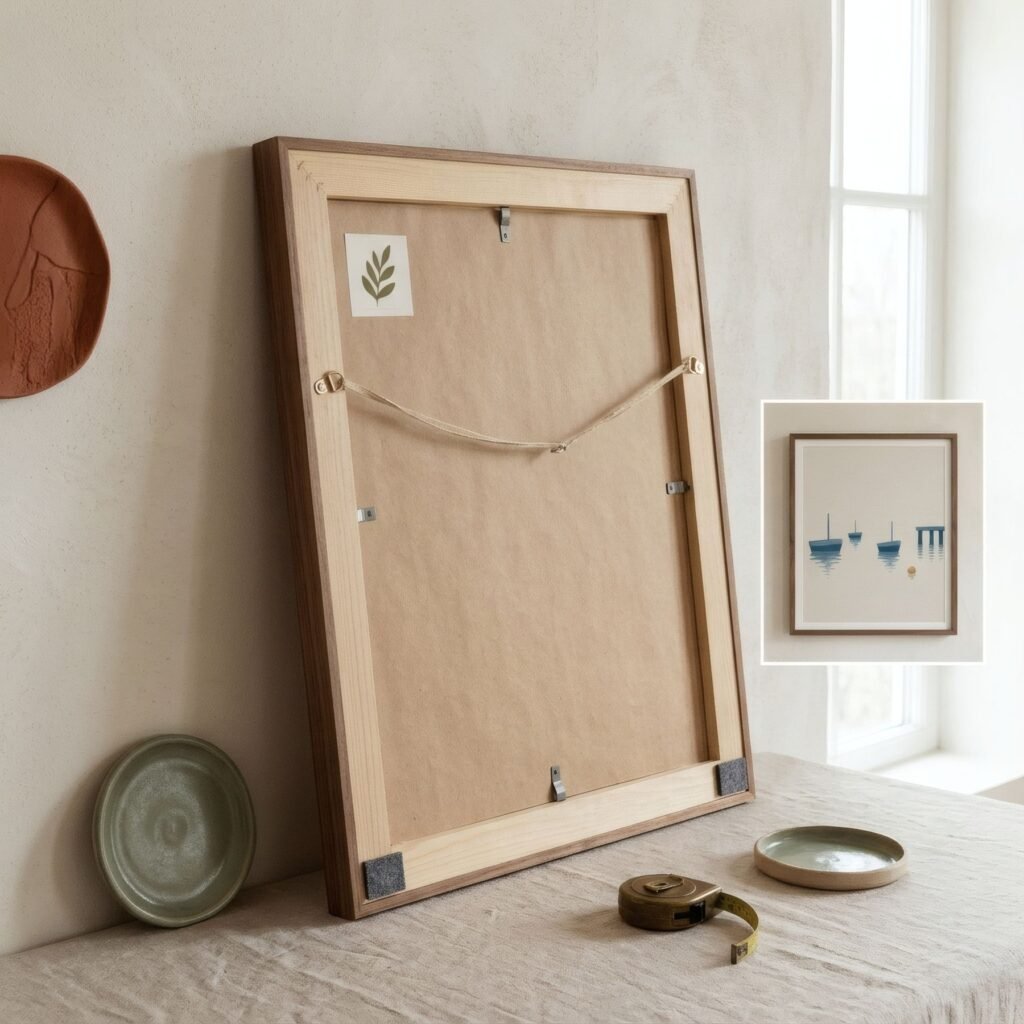
Watch out for cold external walls, where moisture can condense, especially in winter. Small felt or cork bumpers on the back corners of the frame let air circulate between picture and wall and reduce the risk. Avoid hanging prints directly above radiators or beside air vents, where temperature and humidity change constantly.
Framing helps too. A mount or spacers keep the print off the glass. A good acid-free backing board protects it from behind. A well-sealed frame limits dust and moisture getting in.
Finally, check your prints now and then, especially those in more exposed spots. If you notice new rippling, marks or a musty smell, act early: move the print, improve ventilation or ask a framer for advice.
What no one can promise
It is tempting to look for guarantees, a number of years a print will last unchanged. The honest answer is that it depends on many factors: paper, inks, framing and, above all, the conditions it lives in. Some paper and ink manufacturers publish stability estimates under specific test conditions, but in a real home those conditions vary. What is in your hands is reducing the risks.
Care without anxiety
Protecting your prints from light and moisture does not mean hiding them away. It means choosing a wall with gentle light, keeping them away from the dampest places, framing them with some care and looking at them now and then. In return, they will stay with you far longer, looking much as they did on the first day.
If you are deciding where to hang a Bendíra print, its product page lists the paper it is printed on, useful when choosing how to frame it and which wall to give it.
Keep reading: How Digital Fine Art Printing Works, What Makes a High-Quality Art Print? and How to Care for Your Art Prints.