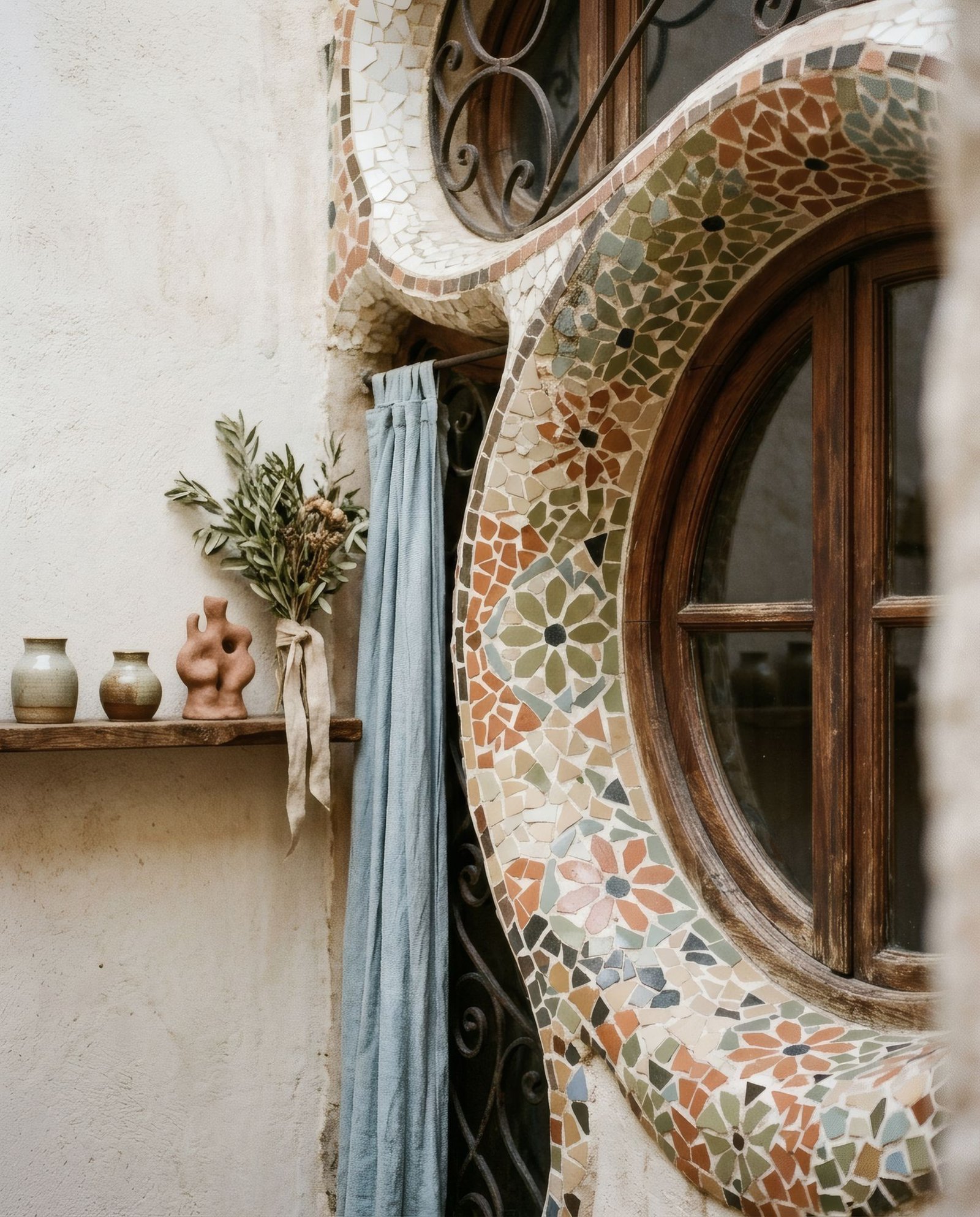
Mention Catalan Modernisme and most people picture architecture: Gaudí’s undulating facades, broken-tile trencadís mosaics, Domènech i Montaner’s Palau de la Música. But Modernisme, the great movement of artistic renewal that transformed Catalonia in the late nineteenth and early twentieth centuries, didn’t stop at buildings. It reached furniture, jewellery, stained glass, books and magazines. And, in a special way, the street, through a medium then enjoying its golden age across Europe: the poster.
A total movement
Catalan Modernisme shared with European Art Nouveau a love of curving lines, plant motifs, the idealised female figure and the integration of all the arts. But it also had a strong identity of its own: the assertion of Catalan culture, at a time of economic and industrial prosperity in Barcelona and a revival of the Catalan language.
In that context, the graphic arts played a central role. The city had a powerful publishing and printing industry, with lithographic workshops able to print large formats in colour. Companies needed to advertise, and artists found in the poster a space to experiment and reach a wide public.
The Anís del Mono contest
One of the most celebrated episodes in Modernista poster history took place in 1898. The maker of Anís del Mono, an anise liqueur from Badalona, held a poster competition with cash prizes for the top three. According to the Enciclopèdia Catalana, more than 160 entries were submitted and exhibited at Barcelona’s Sala Parés.
First prize went to Ramon Casas, for a poster of a young woman in a mantilla holding a monkey by the hand. Casas, one of the most important painters of his generation, showed that a poster could match the quality of fine painting. The Museu Nacional d’Art de Catalunya holds a charcoal study by Casas for the poster, dated 1898, as well as an Anís del Mono lithograph by Alexandre de Riquer from the same year.
Casas and Riquer, the two masters
Catalan sources agree in naming Ramon Casas and Alexandre de Riquer as the great masters of the Modernista poster. They represent two complementary sensibilities.
Ramon Casas had a more direct, modern style, close to the French painting he knew well from time spent in Paris. His figures, often elegant women, have an almost photographic freshness, with crisp silhouettes and flat colour. Besides Anís del Mono, he designed posters for cigarette brands, publications and shows.
Alexandre de Riquer was more lyrical and decorative, closer to the English Pre-Raphaelites and to Mucha’s Art Nouveau. His posters are full of flowers, flowing lines and female figures wrapped in ornament. He was also a book illustrator, a designer of bookplates and a poet.
Other notable artists worked alongside them, bringing the Catalan poster to a level comparable with Paris or Brussels.
Els Quatre Gats
No story of Modernista graphics is complete without Els Quatre Gats. In 1897 Ramon Casas, Santiago Rusiñol, Miquel Utrillo and Pere Romeu opened a beer hall in Barcelona modelled on the artistic cabarets of Paris, such as Le Chat Noir. In its few years of life, until 1903, it was the meeting place of the Barcelona avant-garde: gatherings, exhibitions, shadow-puppet shows and concerts. A young Picasso had his first Barcelona exhibition there and designed the menu.
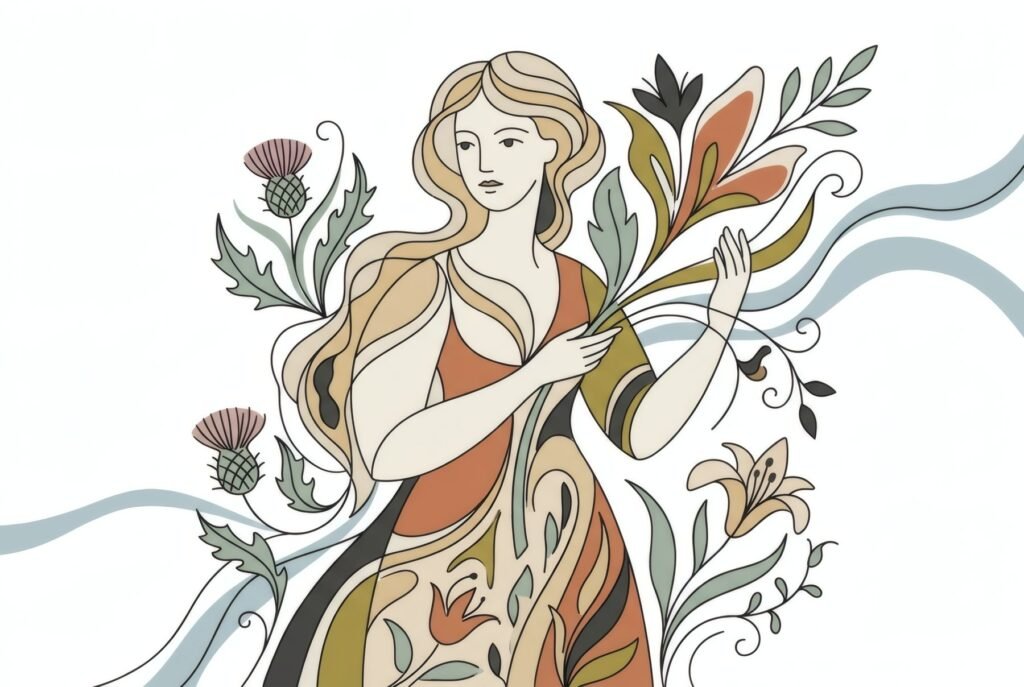
The café had its own magazine too, and its posters and publications are a perfect example of the blend of art, humour and commerce that defined the scene.
Magazines, books and bookplates
Beyond the poster, Modernisme transformed all printed design. Magazines such as Pèl & Ploma, edited by Utrillo and illustrated by Casas, or Joventut, treated every page as an artwork. Books gained illustrated covers, decorative lettering and borders. And the bookplate, the little print that marks a book’s owner, became a collecting craze, with Riquer among its great exponents. We place this within the wider European story in a history of the art poster.
Where to see it
To see Modernista posters up close, the Museu Nacional d’Art de Catalunya in Barcelona holds an important collection of posters, drawings and graphic arts from the period, some of it available in its online collection. Barcelona itself, with its facades, pharmacies and Modernista shopfronts, is an open-air museum of the same sensibility.
A legacy on the street
Catalan Modernisme showed that art could live on the street, on a bottle of anise, in a magazine or on a café menu, without losing an ounce of quality. That conviction, shared with European Art Nouveau, still runs through contemporary graphic design, and through the idea that a print on your wall at home can be as valuable as a painting.
If this period appeals, the MNAC’s online collections are the best place to start exploring.
Keep reading: The Art of the Travel Poster: A Brief Visual History, Botanical Art: From Scientific Illustration to Interior Design and Minimalist Art: Less Is More.