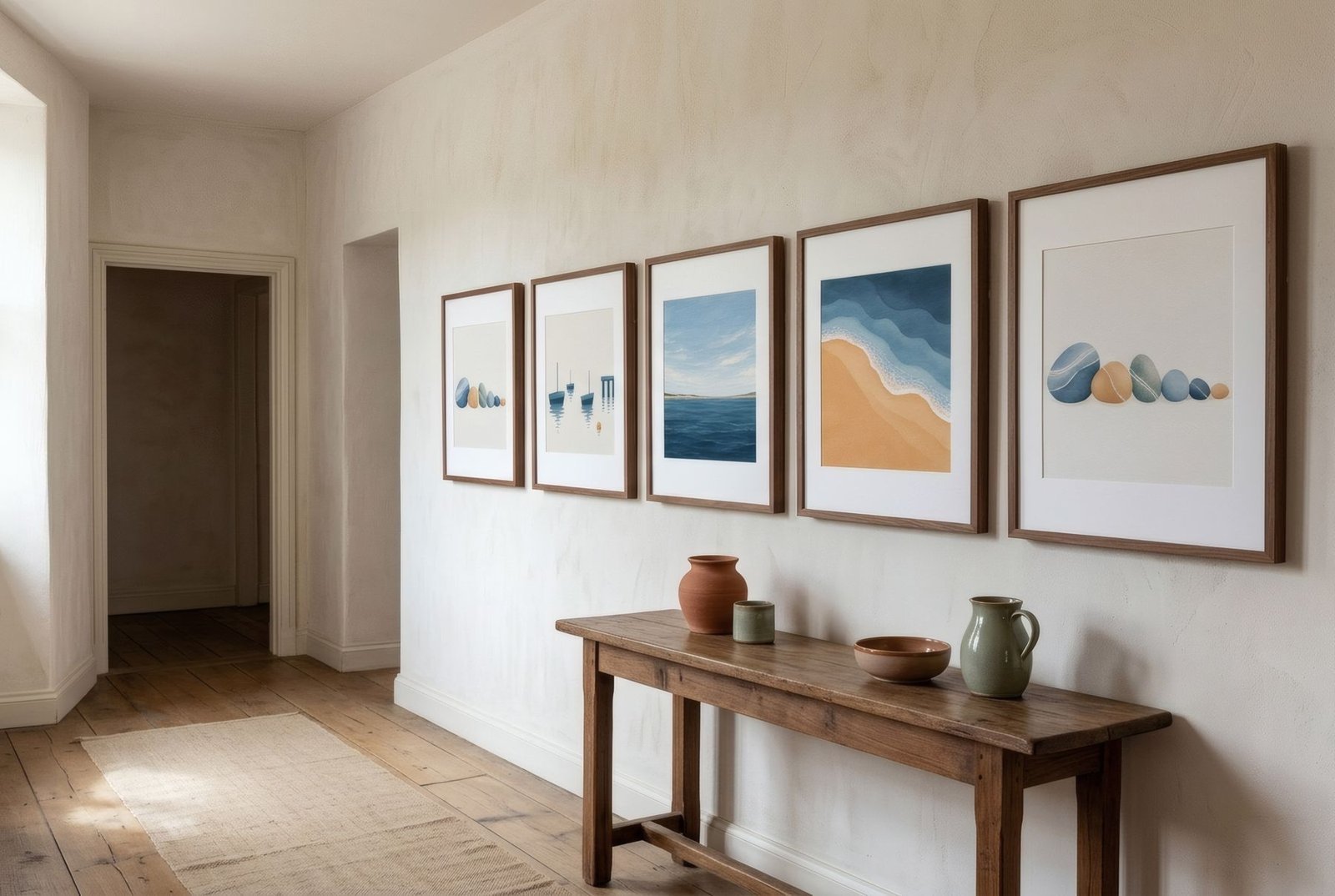
In music, rhythm is what turns sound into something you can tap your foot to. In an image, something similar happens. When a shape repeats, a column, a wave, a window, a line, the eye starts to move along with it, as if walking. That’s visual rhythm: the organisation of repeated elements that guides the eye through a composition. Used well, it brings life and movement to an image. Used badly, it turns it into uninteresting wallpaper. The difference nearly always lies in how repetition and variation are combined.
Repeat so the eye moves
Rhythm begins with repetition. One element is a point; two, a relationship; three or more, a pattern the eye recognises and follows. The repetition can be of shape, colour, size, direction or interval, the space between elements.
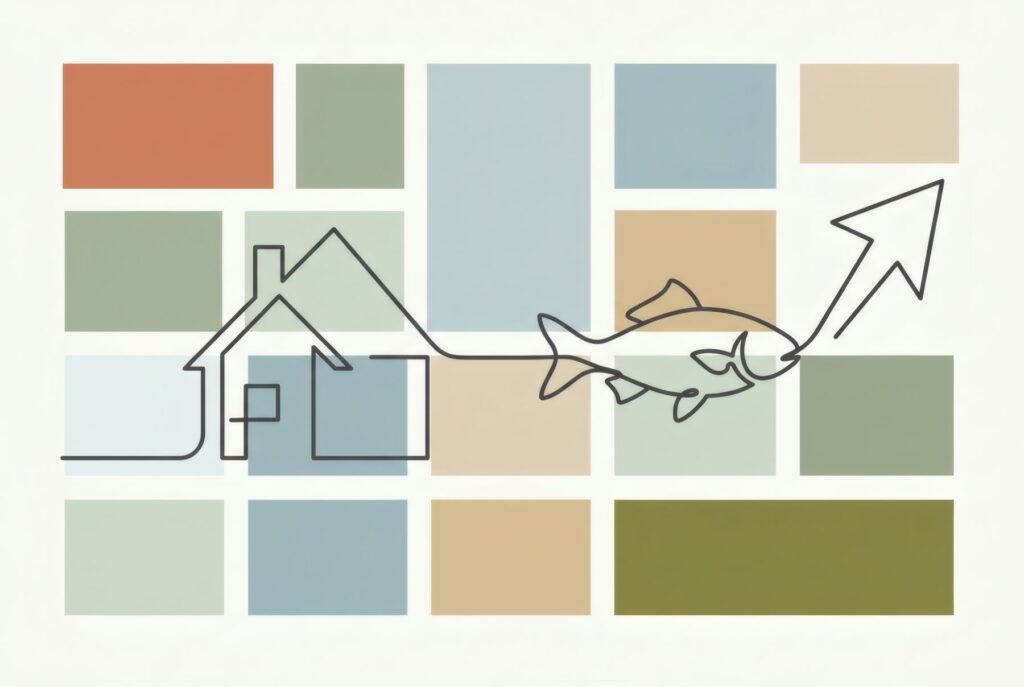
But pure, identical repetition has a limit. A row of twenty identical, evenly spaced circles is understood instantly and exhausted just as fast. The eye grasps the rule and stops looking. So the rhythm that holds interest almost always brings variation into the repetition.
Five kinds of rhythm
Design and composition handbooks usually distinguish several kinds of rhythm. Knowing them helps you look.
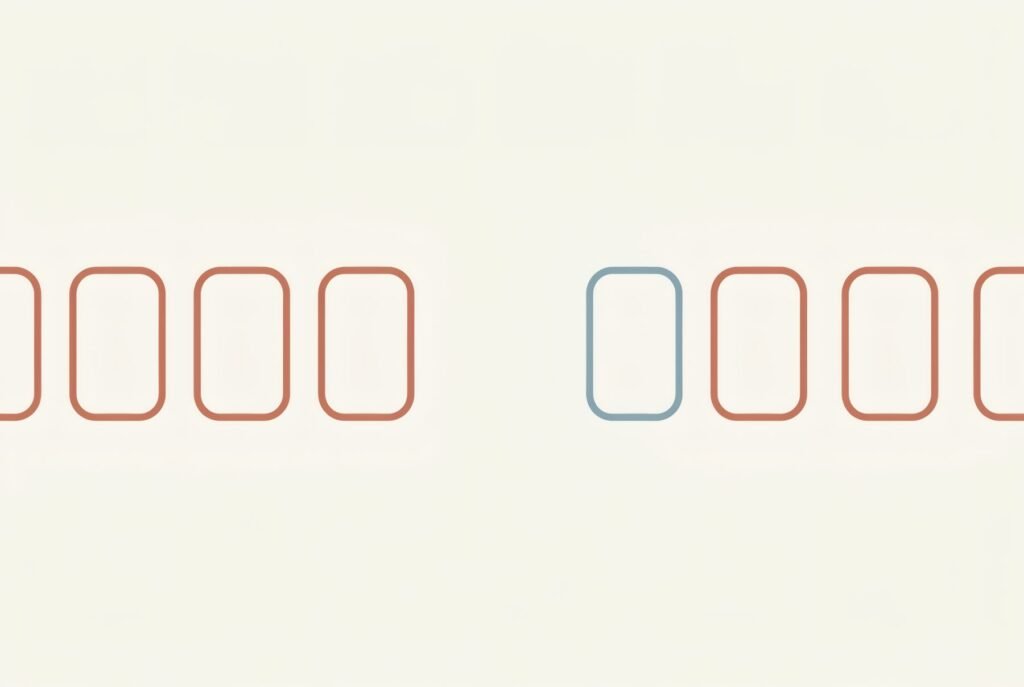
Regular rhythm repeats the same element at the same interval: the columns of a portico, the windows of a facade, the posts of a fence. It conveys order, stability and calm, and underpins classical architecture and much modern composition.
Alternating rhythm combines two or more elements in turn: large, small, large, small; light, dark, light, dark. A chessboard, stripes, a frieze. It adds variety without losing order.
Progressive rhythm changes an element gradually through the sequence: shapes that grow or shrink, colours that lighten, intervals that shorten. It creates a sense of movement and depth, like a staircase receding or waves rolling in.
Flowing, or organic, rhythm is based on curves and irregular repetition, like ripples on water, wood grain or dunes. It’s more natural, less predictable.
And random rhythm scatters elements with no obvious rule but a shared density or character, like stars in the sky or leaves on the ground. It works when something unifies them: colour, shape, scale.
The variation that brings life
What turns repetition into rhythm is, paradoxically, difference. Common ways of introducing variation: change one element in a series, a shape of another colour in a row; break the interval at one point, creating a pause or an acceleration; vary size progressively; or add an accent, a larger or more intense element that becomes the eye’s destination.
It’s just like music: a beat that never changes is a metronome; one with syncopation, rests and accents is a tune. In Paul Klee’s work, which we discuss in Paul Klee: symbols, lines and visual rhythm, the comparison with music is explicit.
Rhythm on a wall
The same ideas apply when hanging art. A series of identical prints, same size and frame, hung at equal spacing along a hallway, makes a very calm regular rhythm. Alternating formats, portrait and landscape, or light and dark prints, creates an alternating rhythm. An arrangement where pieces grow towards the centre and shrink towards the edges produces a progressive rhythm, with a clear focal point.
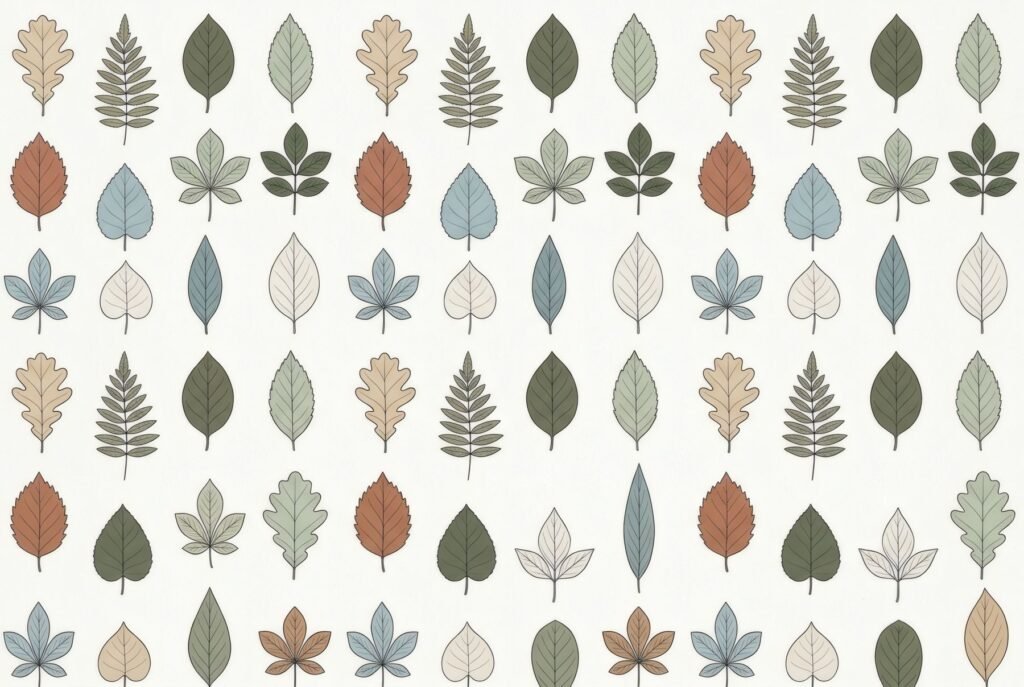
And a freeform gallery wall is close to random rhythm: it works when something ties it together, palette, frames or spacing, as we explain in symmetrical vs asymmetrical gallery walls.
A good test: step back and let your eyes travel across the wall. If your gaze moves naturally and finds somewhere to stop, there’s rhythm. If it jumps aimlessly, or gets bored by the second piece, something’s off.
The pulse of an image
Visual rhythm gives a composition its pulse. Repeat so the eye moves, vary so it doesn’t tire, and leave a little silence so it can breathe: with those three moves, an image, or a wall, stops being a sum of parts and becomes a journey.
Several Bendíra prints, such as Seven rhythms and Pattern study, explore exactly this: repetition with variation.
Keep reading: Symmetry in Art: Balance and Visual Interest and Why Repeating Patterns Catch Our Eye.