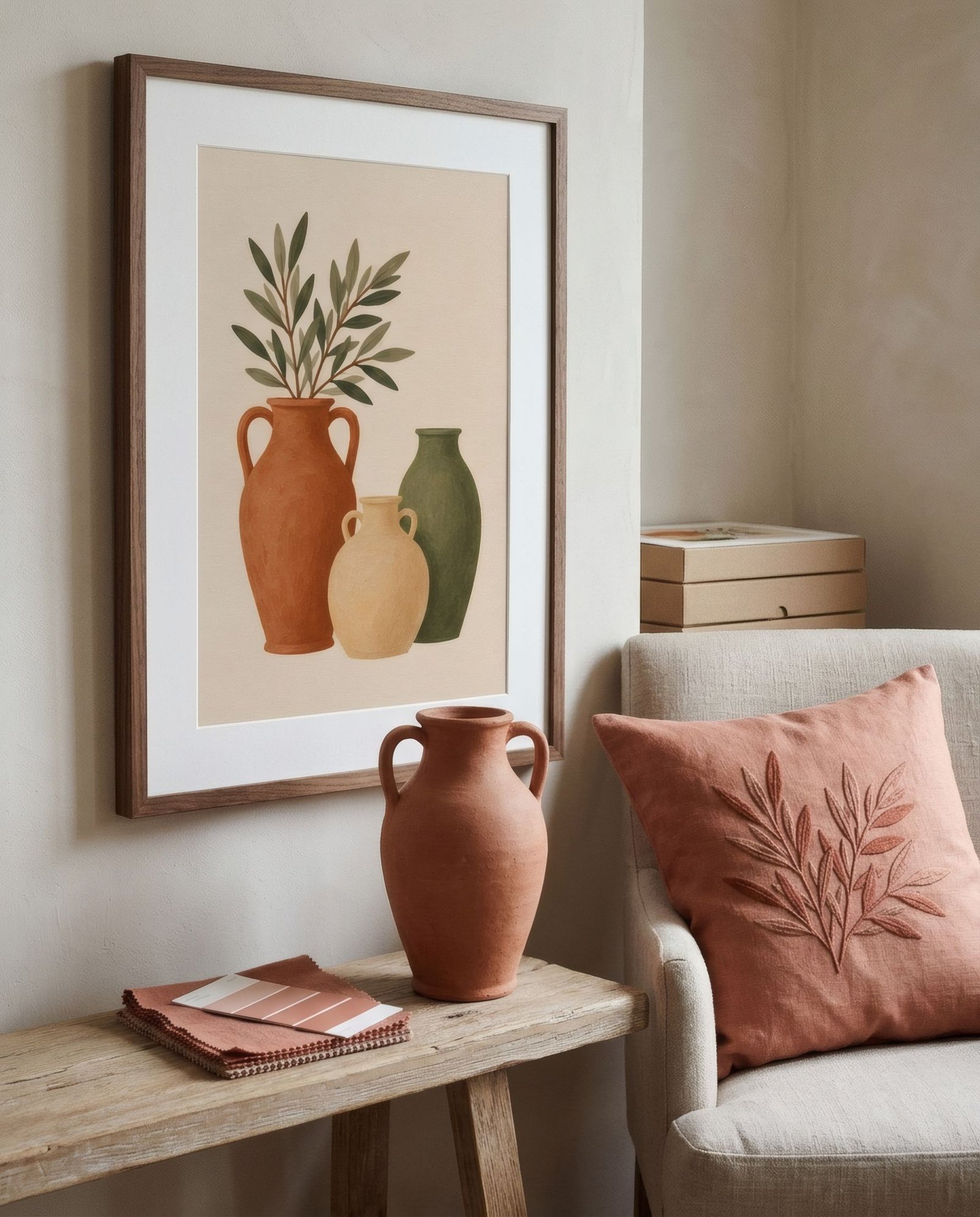
For years the mantra was «less is more». Bare walls, a handful of objects, neutral palettes. Then, as tends to happen, the pendulum swung back. Maximalism celebrates exactly the opposite: unapologetic colour, wallpaper, layered rugs, books in piles, collections on show, walls covered in pictures. It’s generous, vital and deeply personal. But it has its craft, because the line between a maximalist home and a messy one is finer than it looks. What separates them, nearly always, is rhythm.
Abundance with intent
A good maximalist interior isn’t an accumulation; it’s a composition with a lot of elements. Each object seems to be where it is for a reason, and however full the room, it reads as a whole. That sense of unity comes from invisible threads: colours that repeat, shapes in conversation, a logic in how things are grouped.
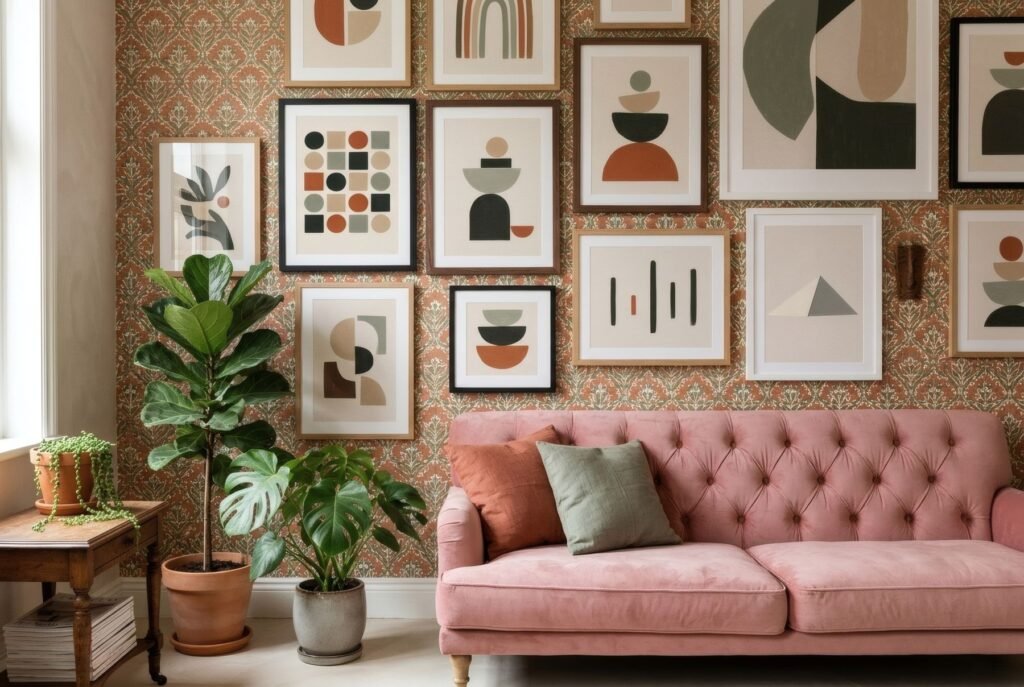
In a maximalist home, art is probably the element that does most to create that logic, or most to break it. So it’s worth thinking through.
Threads of colour
Maximalism’s most powerful tool is repeated colour. When the same shade turns up in the rug, a cushion, a lamp and a picture on the wall, the eye traces an invisible web that ties everything together. A room might hold twenty colours, but if three or four recur often, the whole thing feels orchestrated.
When choosing art for a maximalist room, ask which colours already repeat, and look for pieces that pick them up. A print in the same pink as the sofa and the same green as the plants slots in instantly, however bold it is.
Gallery walls: the natural form
The gallery wall, with pieces of different sizes, styles and eras covering the wall, is maximalism’s natural form for art. Even here, a few techniques separate a great gallery from chaos.
First, consistent density: similar, if not identical, gaps between pieces. When some frames touch and others are half a metre apart, the wall looks neglected. Second, an anchor: a larger or more intense piece that gives a centre of gravity. Third, a shared edge: the whole gallery aligned to a line, the sofa or an axis, which gives it shape. And fourth, the most maximalist of all, going to the ceiling: a gallery that covers the whole wall, floor to ceiling or corner to corner, reads as one thing rather than a scatter of pictures.
We develop these techniques in gallery walls with personality.
Scale and pauses
Amid so much, a variety of scale is what keeps things interesting. If every piece is the same size, the wall becomes a uniform mosaic; with large, medium and small pieces, the eye has a route to follow.
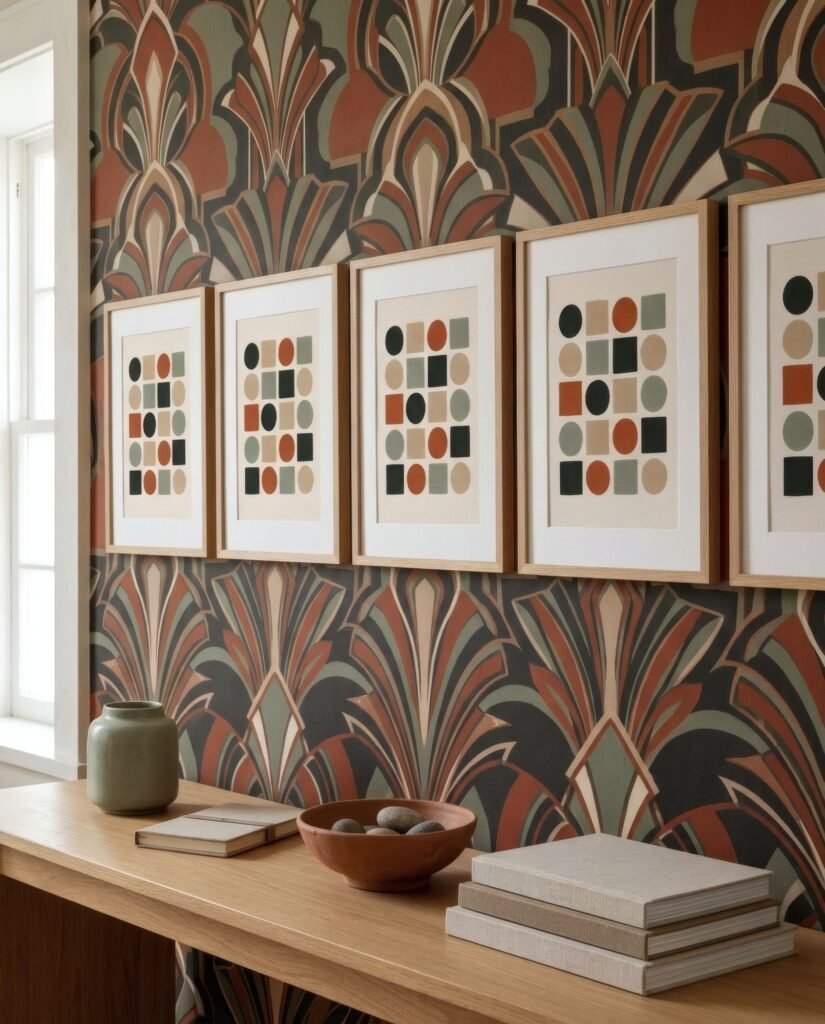
And, contradictory as it sounds, maximalism needs pauses too. A calm piece between two intense ones. A wide mount on a key work. A plain frame among gilt ones. Those moments of quiet don’t take away from the abundance; they let you appreciate it.
Mixing frames
In maximalism, mixed frames are part of the charm: gilt, black, wood, painted colours. A thread helps here too: let two or three types dominate rather than ten, or keep all the gilt in similar tones. There’s more in mixing metal and wooden frames.
Wallpaper and art
Many maximalist homes have wallpaper. Hanging art on patterned paper is entirely possible and very much part of the look. Two tips: a wide mount separates the art from the pattern behind it, and pieces with plain grounds or solid colour read better than very detailed ones, which can merge with the wallpaper.

Generosity with shape
A well-composed maximalist home is one of the richest experiences an interior can offer. Every corner tells you something. Art, with threads of colour, a gallery with rhythm and a few moments of breath, is what turns abundance into a kind of beauty.
In a maximalist gallery, Bendíra prints work well as moments of calm among more intense pieces, particularly those from Quiet forms.
Keep reading: How to Mix and Match Wall Art and How to Pair Wall Art with Patterned Textiles.