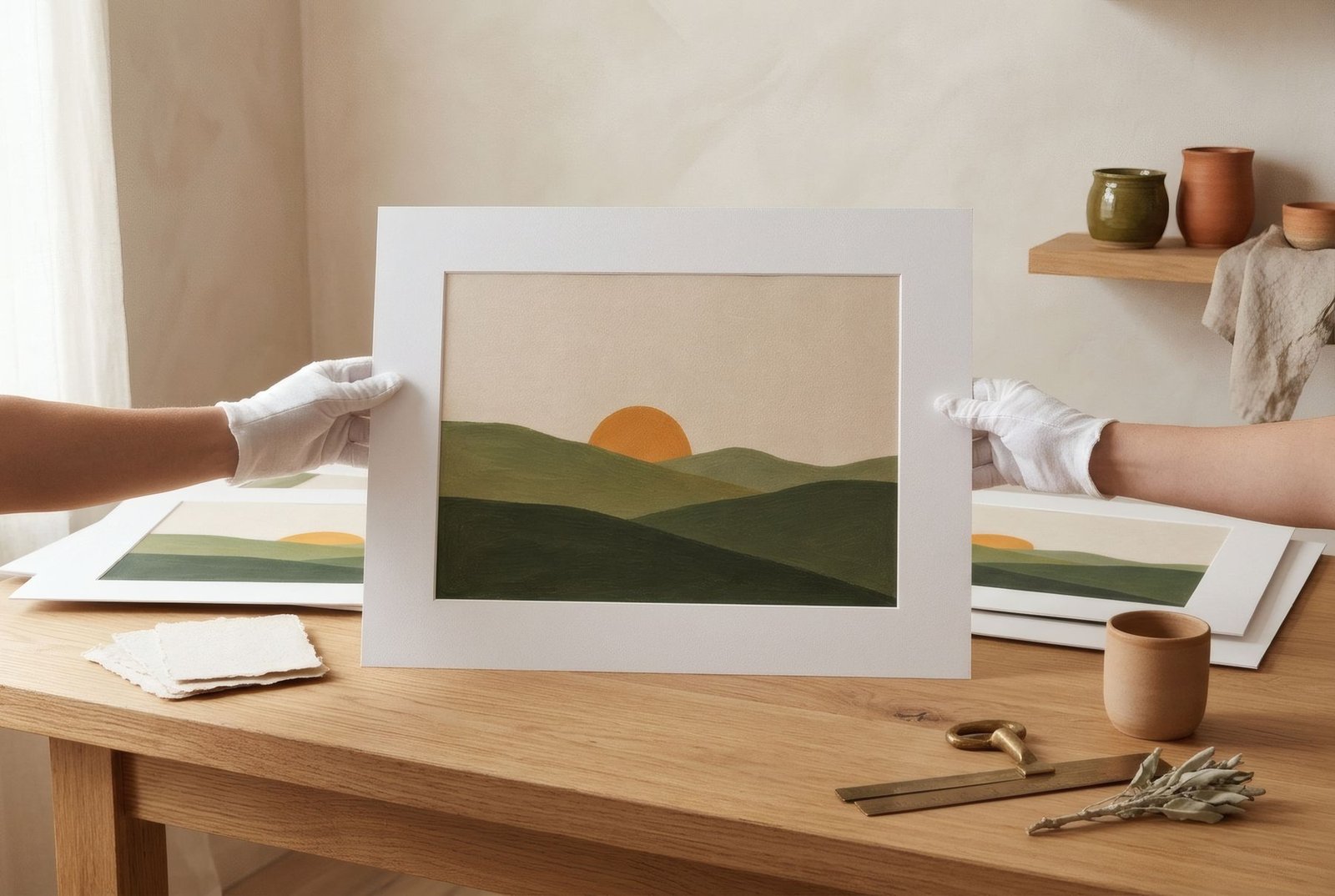
When you first slide a print out of its envelope, the image often stops short of the edge of the paper. Around it runs a white margin, sometimes narrow, sometimes generous. Some people eye it suspiciously, as if it were leftover paper, and immediately think about trimming it. Best not to. That white border has a long history in printmaking and fine art printing, and it does some very practical jobs. Used well, it can also transform how the work looks on the wall.
A printmaking tradition
In traditional printmaking, etchings, lithographs, artists’ screen prints, the paper has always been larger than the image. Partly for technical reasons, because the sheet needs a margin to be handled during printing, and partly out of respect for the work: the margin is where the signature, the edition number and sometimes the title are written in pencil. In that world, a print without margins is considered trimmed, and loses value.
Contemporary art prints inherit the habit. The white border isn’t decoration; it’s part of the object.
What it’s for, in practice
The margin does at least three practical jobs.
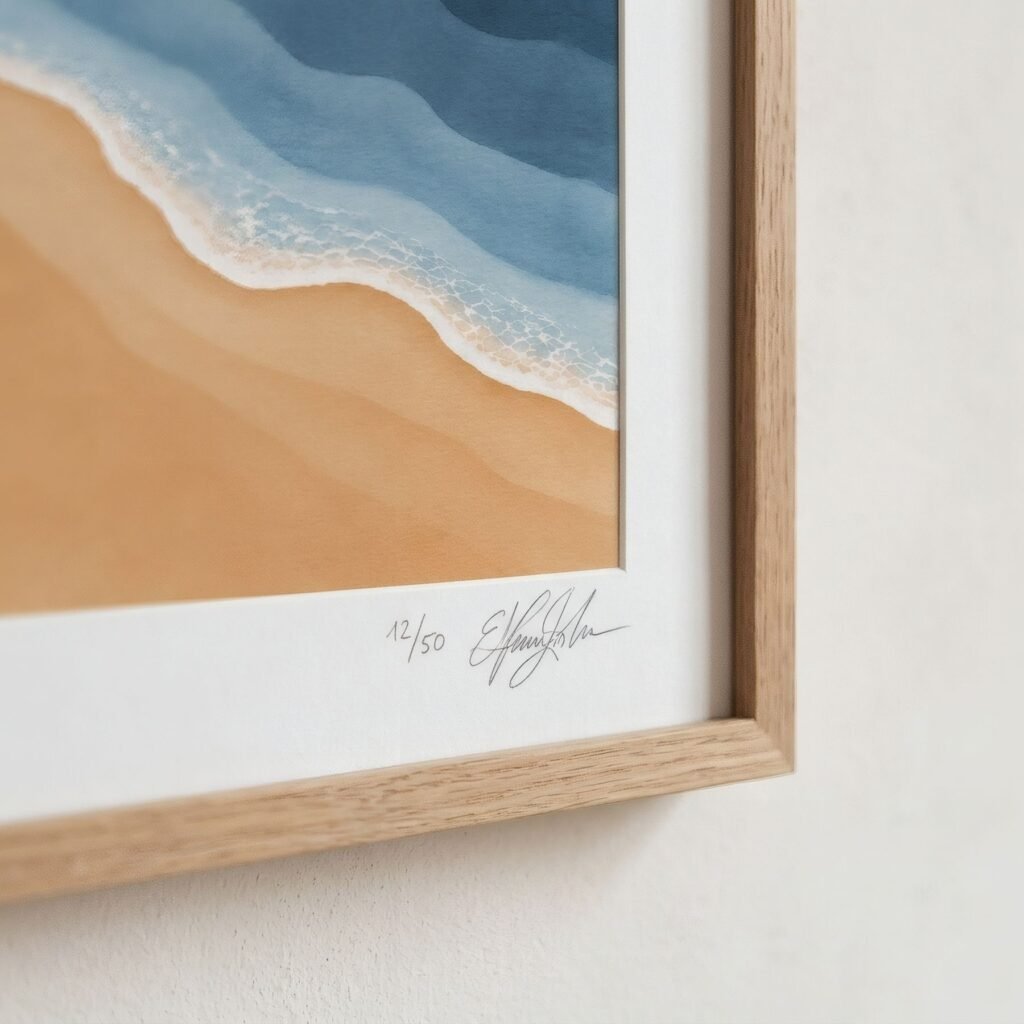
It protects the image. When a print is handled, fingers touch the edges. If the image runs to the edge, any mark, crease or knock on a corner hits it directly. With a margin, those accidents land on blank paper and the image stays intact. There’s more in how to handle art prints without creasing them.
It makes framing easier. The margin gives room to attach the print to the backing board, with paper tape or hinges, without touching the image. And it lets a mount, if you use one, overlap the paper edge without covering anything important.
It gives tolerance. No cut is perfect to the millimetre. A margin absorbs small variations in trimming and positioning, so the image looks centred and complete.
How it changes perception
Beyond the practical, a white border has a striking aesthetic effect. It acts as a small built-in mount: it separates the image from the wall and the frame, gives it air and makes it look more considered. An image with a margin reads as an artwork; one printed full-bleed, to the edge, reads more like a poster.
Neither is better in itself. Full-bleed images feel more contemporary and graphic, and fill the frame with more intensity. Bordered ones feel more classic, more gallery. It depends on the work and the effect you want.
Three ways to frame a bordered print
With a mount covering the border. The mount hides the white margin and shows only the image, with its own bevelled edge. The most classic option. Make the mount window slightly smaller than the image, by a few millimetres each side, so no paper peeks through.
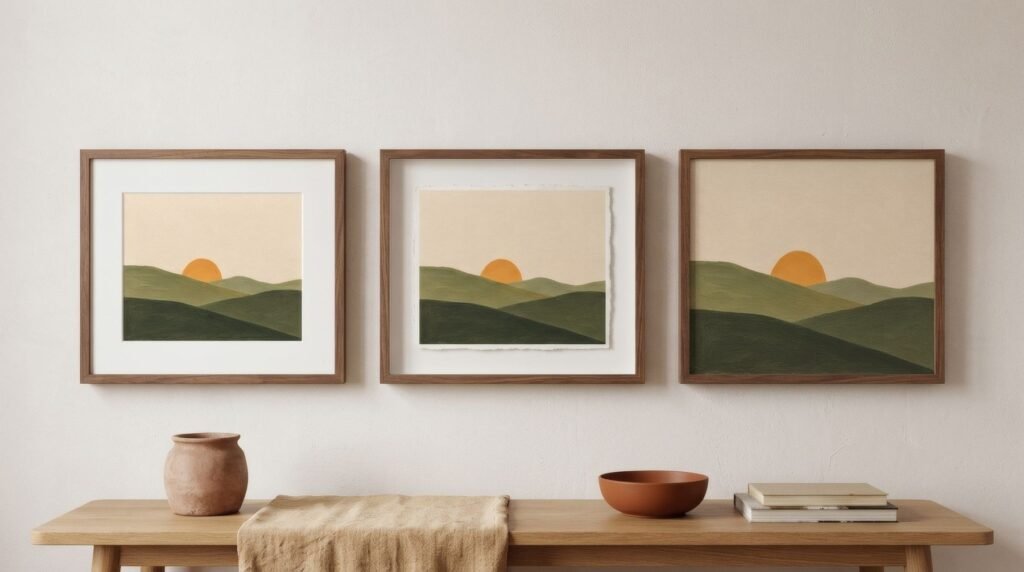
With a mount that shows the border. The window is larger than the image and reveals some of the white margin, sometimes the paper edge too. This effect, often called a float mount, presents the print as an object and is much loved by galleries, especially for deckle-edged papers or prints signed in the margin.
Without a mount, using the border as one. The print goes straight into a frame the size of the paper, and the white margin itself acts as the mount. It’s the simplest, most affordable option and looks very clean in slim frames. It works best when the margin is generous and even.
When to trim, if ever
Sometimes margins get trimmed, for example to fit an existing frame. But think twice: trimming is irreversible, the image loses its protection, and if there’s a signature or edition number in the margin, that goes too. If the frame doesn’t fit, a mount with the right window is usually the better answer. We explain more in how to choose a mount for a print.
Space to breathe
The white border is one of those details that goes unnoticed until you understand it. It protects, eases framing and gives the work a presence that sets it apart. Next time you slide a print out of its envelope, that margin deserves a second look.
Bendíra prints fit standard frame sizes; if your print has a margin, you can cover it with a mount or leave it on show, depending on the effect you’re after.
Keep reading: What Is Print Bleed and Why Does It Matter? and How to Choose a Frame for an Art Print.