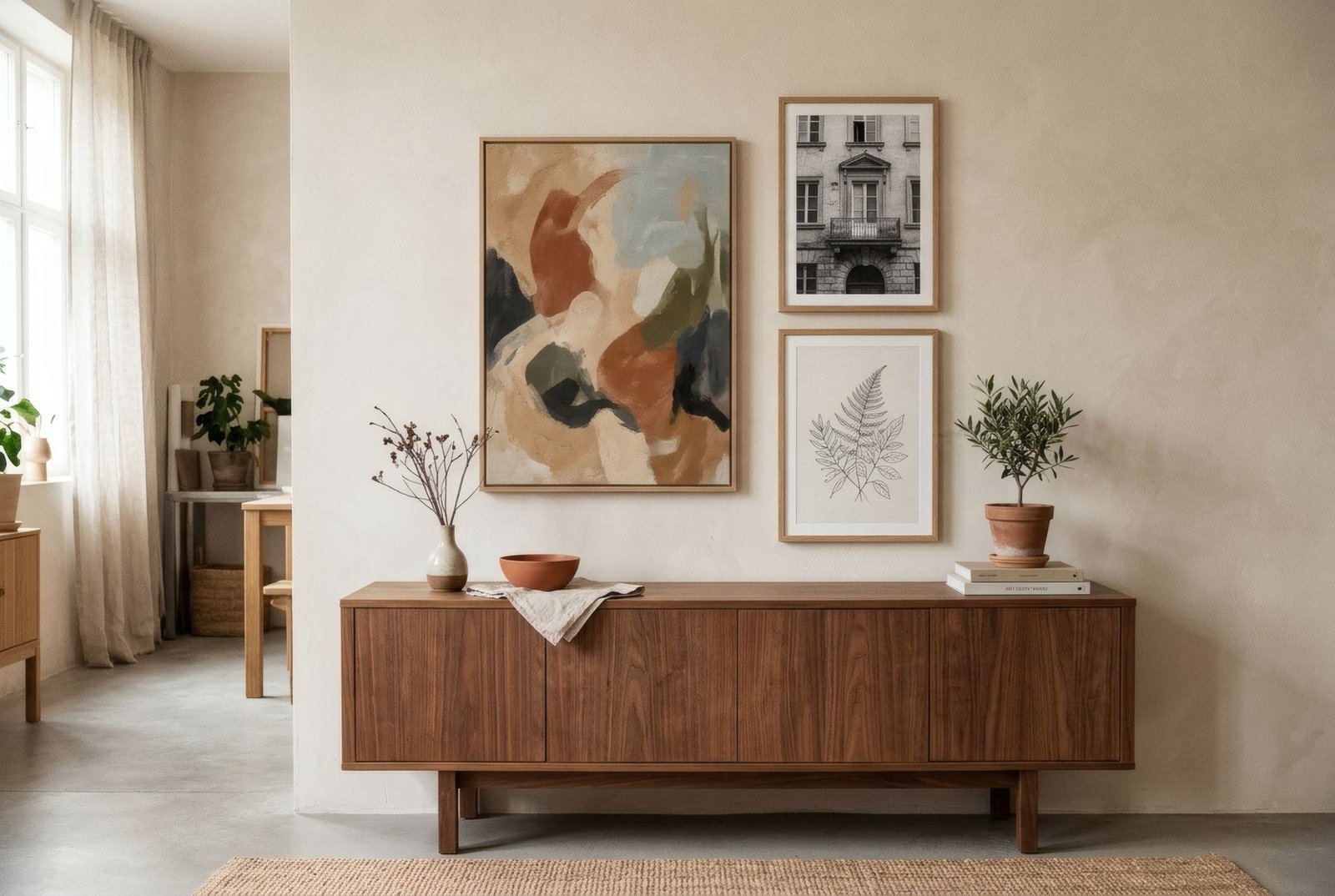
A new print arrives at home, and with it a question: where does it go? On an empty wall, the answer is fairly simple. But we almost never start from scratch. There are already pictures on the walls, photographs, keepsakes, a gallery wall that has grown over the years. The new work has to find its place among them without jarring, and without making what was there suddenly look dated. The good news is that nothing needs to be redone. With a little observation, a new piece can be woven in so that it enriches what already exists. Read what you have, look for a bridge, then decide calmly whether the new print joins a group, replaces something, rotates or opens up a space of its own.
Read what you already have
Before deciding where the new print goes, look closely at the works already on your walls, as if seeing them for the first time. A few things are worth noticing.
The palette: which colours dominate in your current works. Often, without trying, our walls share a colour family.
The frames: whether they share a material or colour, or vary widely.
The arrangement: whether your works hang in groups, gallery walls, pairs or alone, and at what height.
The character: whether calm or energetic works dominate, figurative or abstract, large or small.
That reading will tell you a lot about where the new piece will sit best.
Look for a bridge
A new work settles in naturally when it shares something with those you already have. That bridge can take several forms. A shared colour: if your works are earth-toned, a new print with some terracotta or ochre will feel part of the family even if its style differs. A shared frame: framing the new print in the same profile as the others is the simplest way to integrate it. Or a shared subject or language: a new botanical beside other botanicals, a new abstract beside other abstracts.
One bridge is enough. The new work need not resemble the others in every way; a little difference brings freshness. We explain this in how to mix and match wall art.
Four ways to make room
Once you know what it shares, decide where it goes. There are four main options.
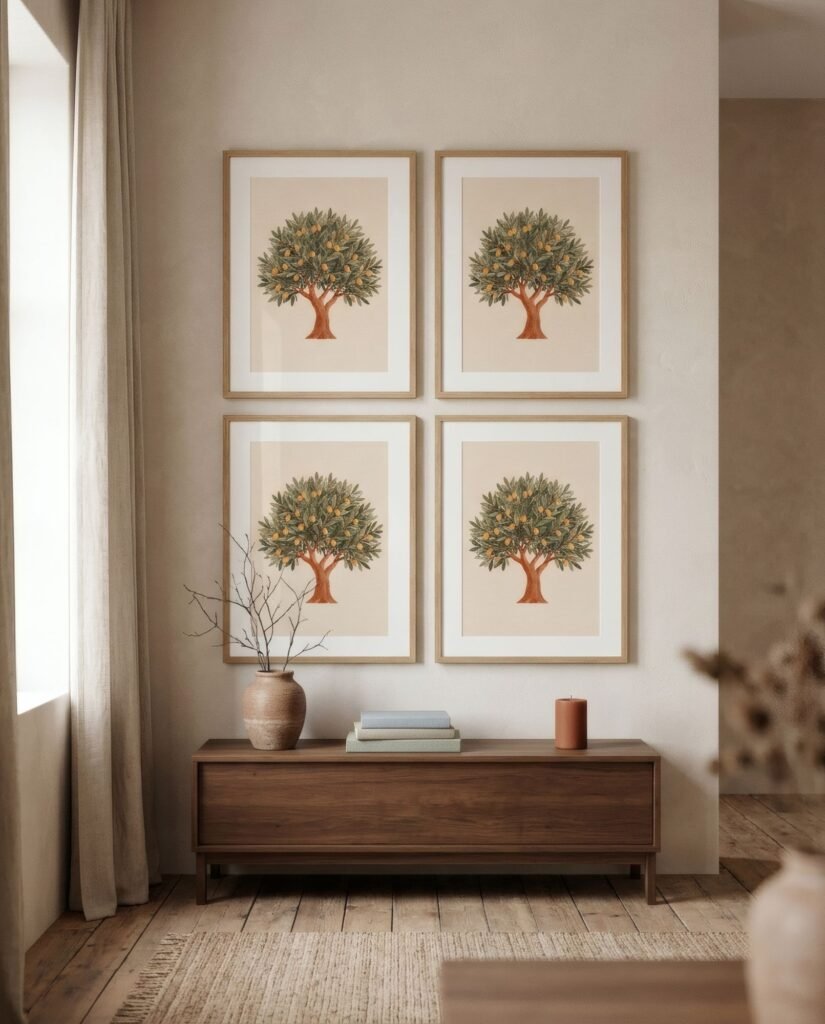
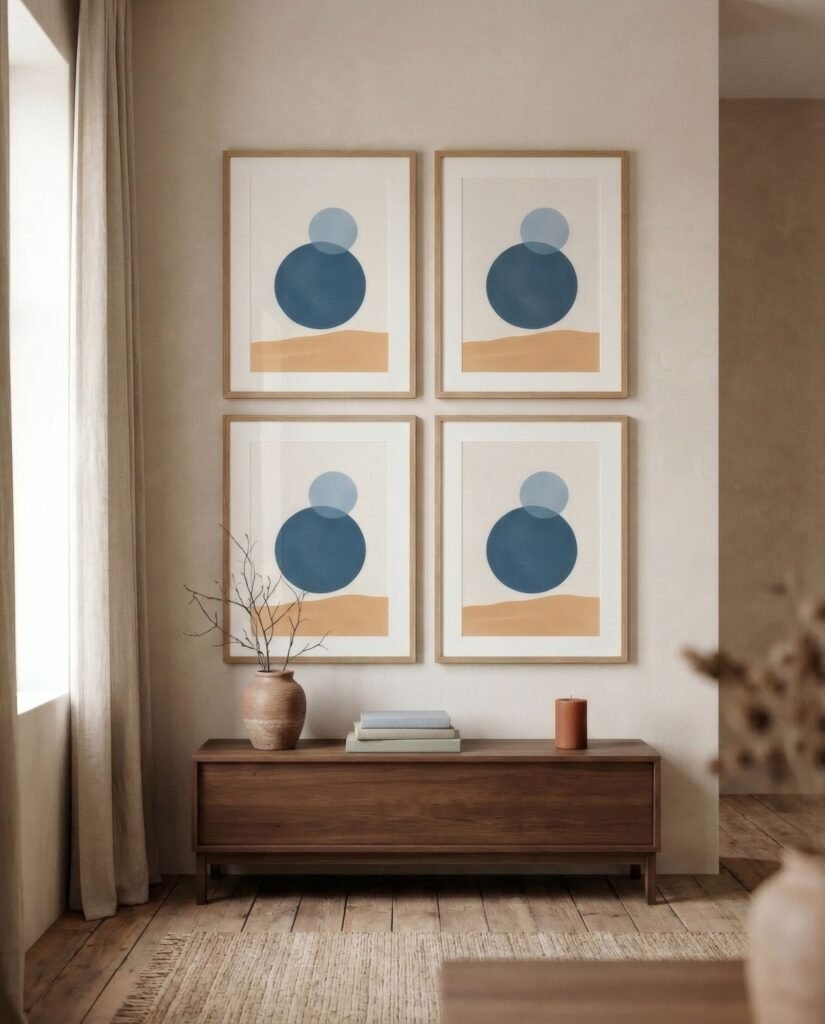
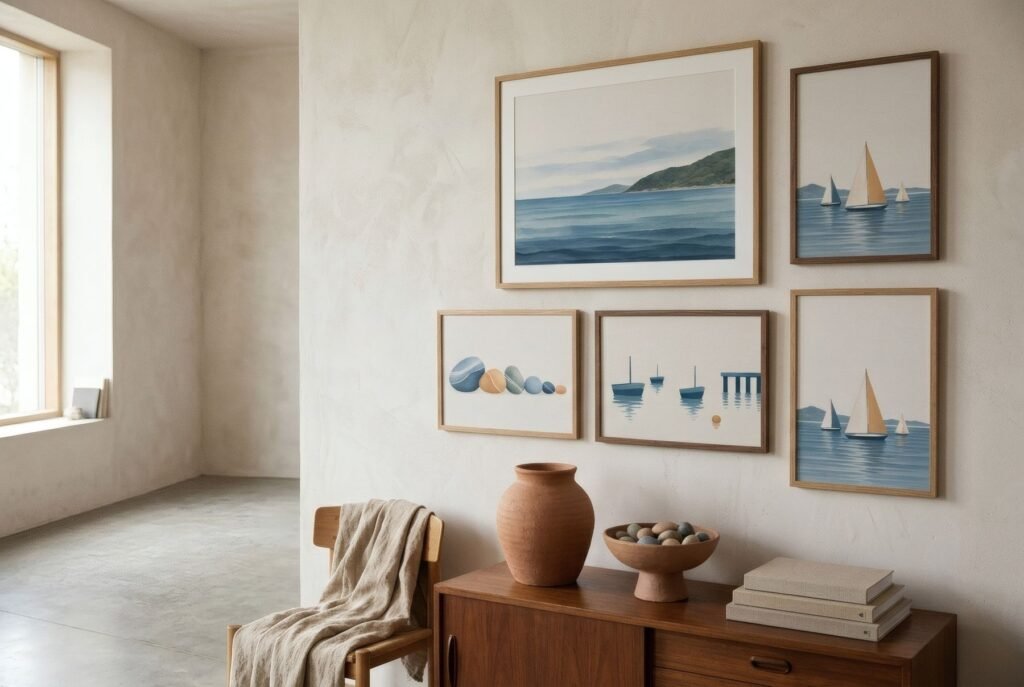
Add it to an existing group. If you have a gallery wall or a multi-piece arrangement, the new print can join it. Keep the same gap between frames and look for a spot that balances the whole. Sometimes a piece needs moving to make room. If the gallery was planned with space to grow, as we suggest in how to create a gallery wall at home, it will be easier.
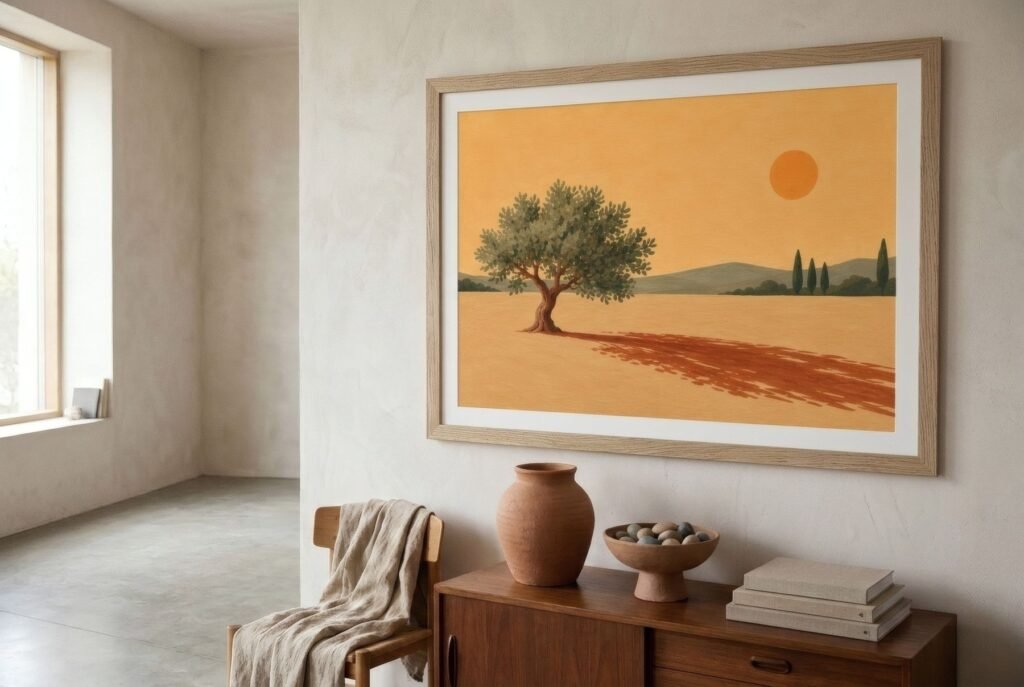
Replace. Sometimes the new print takes the place of one that no longer says as much. The old one can move to another room, be stored for a while or be given away. Replacing is not discarding, but giving each work the place it deserves at each moment.
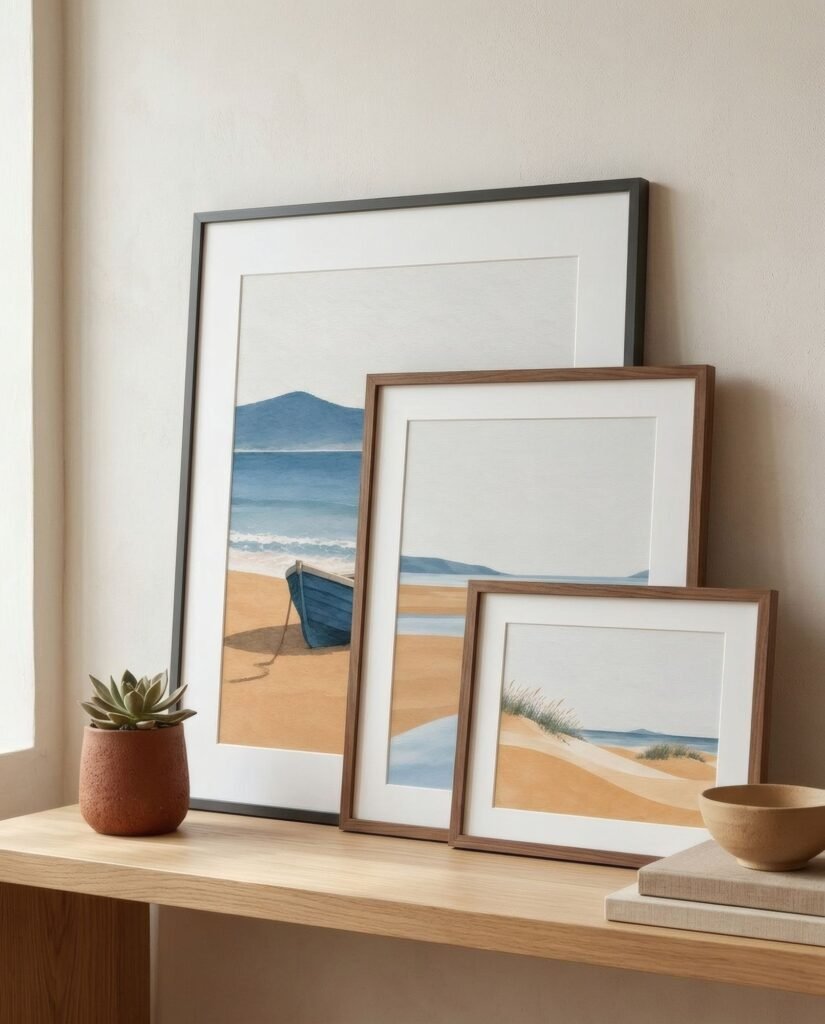
Rotate. If you have more works than walls, alternate them: the new print takes a place for a few months, then another returns. Picture ledges make this especially easy, as we explain in how to display art prints on shelves and ledges.
Open a new wall. And sometimes the new print deserves a space of its own: a wall that was empty, a forgotten corner, a hallway that was asking for something. There it can become the starting point for a new arrangement.
Refresh without discarding
Adding a new work is also a good moment to look again at what you have. Perhaps a new frame will make an old print look new. Perhaps moving a work to another room will bring it back to life. Perhaps rearranging a gallery around the new piece will let the whole thing breathe.
You do not need to buy more for your walls to change. Sometimes a single addition is the perfect excuse to rearrange, with care, what you already had.
No hurry to complete
Finally, there is no obligation to fill every gap or complete any collection. A new print can lean on a piece of furniture for a few days while you decide where it belongs. It can move around until it finds its spot. That calm is part of the pleasure of living with art, as we explore in collecting art slowly: a personal approach.
A conversation that continues
Every new work that comes home joins a conversation already under way. Listening to what your existing works are saying, finding a bridge and giving the newcomer its place lets that conversation keep growing naturally.
If a Bendíra print ever joins your walls, we would like it to happen that way: displacing no one, simply joining, calmly, what your home already says.
Keep reading: On Choosing Fewer Images and Looking More Closely and A Wall as a Place for Personal Stories.