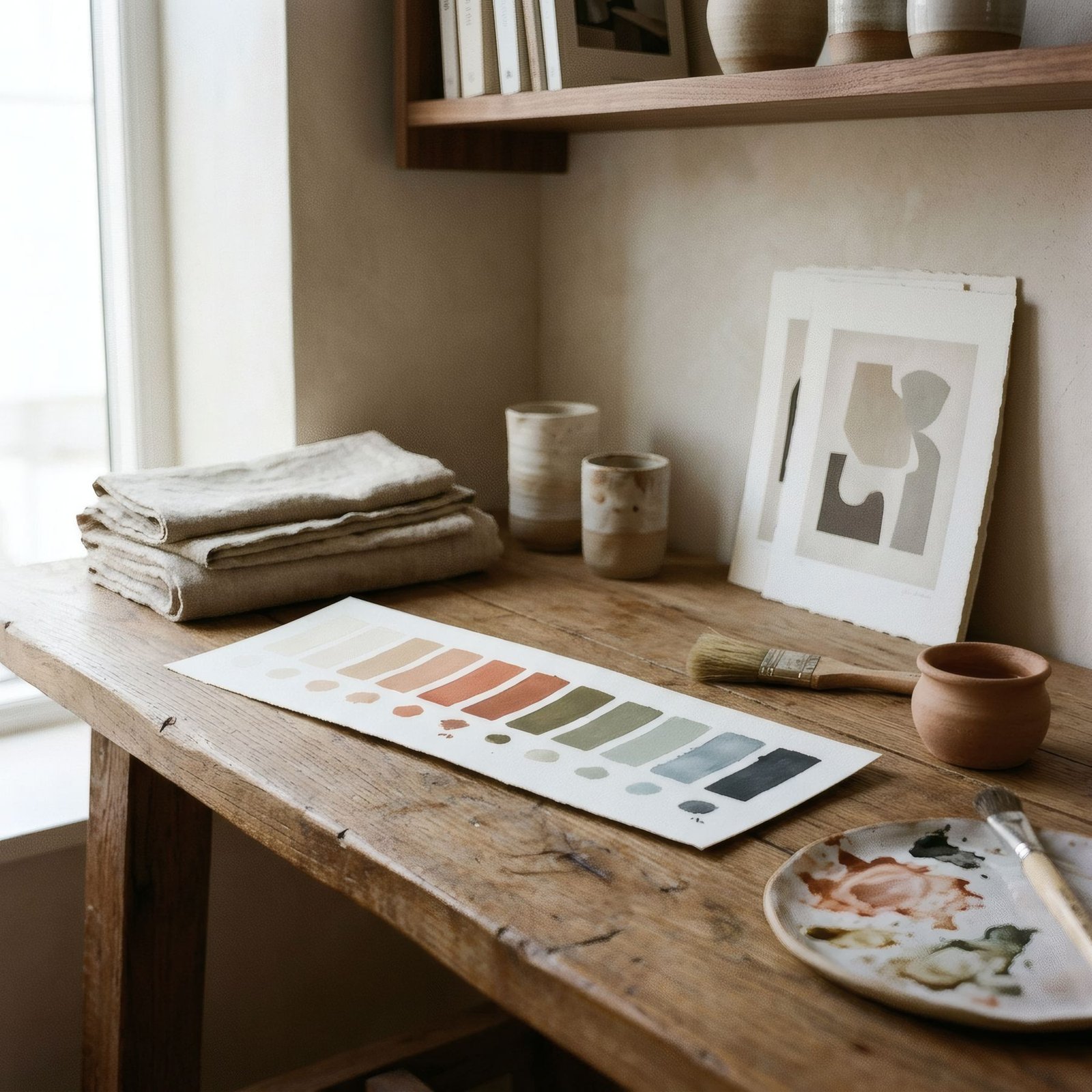
Between an image file and the print on your wall, there’s a step buyers rarely see but which is fundamental in professional printing: the proof. A sheet printed ahead of the final version, to check that colour, contrast, sharpness and framing are as intended. Sometimes it’s approved first time; sometimes it takes several rounds of adjustment. And in printmaking and fine art editions, the word «proof» carries other meanings too, with their own history and value.
Why a proof is needed
An image on screen and an image on paper are different things. A screen emits light; paper reflects it. A screen can show some colours paper can’t, and vice versa. Each paper takes ink differently, so the same file printed on gloss and on matt paper gives different results. We explain more in screen colours versus printed colours.
So in professional printing, before a full run, a proof is printed under the same conditions, same printer, paper and inks, and assessed under controlled light. If something’s off, the file or colour profile is adjusted and it’s proofed again.
Types of proof
In the workflow of printers and print studios, there are several kinds of proof.
A soft proof is an on-screen simulation, on a calibrated monitor, of how the image will look on a particular paper. Quick and cheap, but only as good as the monitor’s calibration, and no substitute for a physical proof.
A hard proof is a physical print of the image, showing the real result on paper. In digital fine art printing it’s usually made on the same printer and paper as the final print.
A contract proof is a commercial printing term: a proof signed by client and printer as the agreed colour reference the run must match.
And test strips are often printed: small sections of the image with variations in colour or exposure, to compare adjustments without using a whole sheet.
What’s being checked
Reviewing a proof means looking at several things. Colour: whether tones are as expected, especially skin tones, neutrals and brand colours. Contrast and shadows: whether dark areas keep their detail or block up. Sharpness: whether fine lines and detail are crisp. And framing: whether the image is centred and the margins correct.
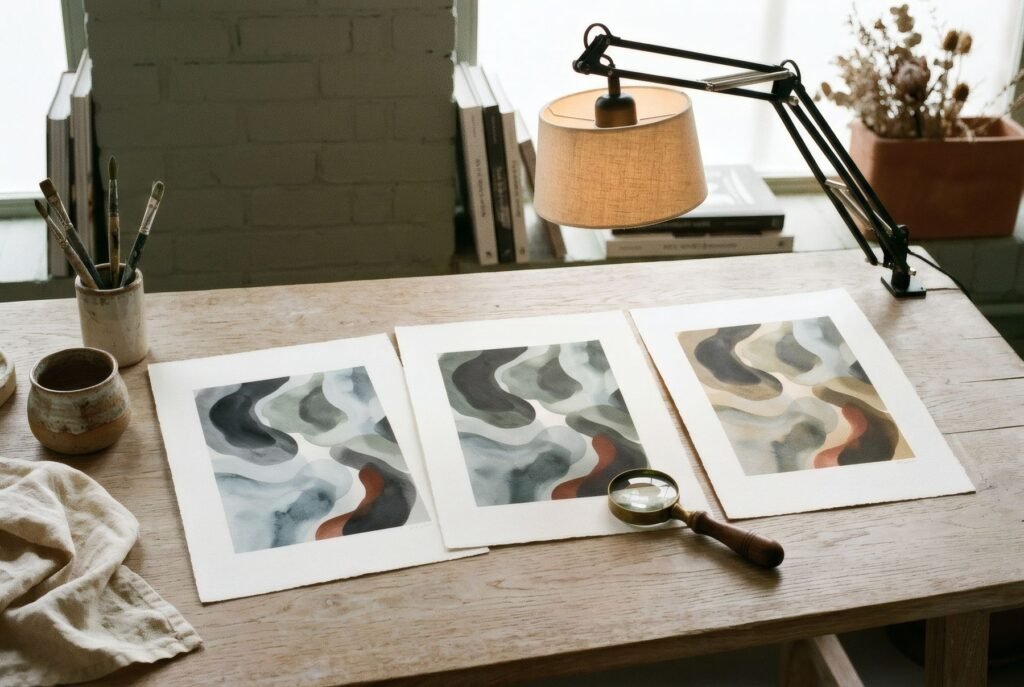
Ideally this is done under standardised light, because, as we saw in why printed colours look different under different light, colour depends on the light you see it in.
Proofs in printmaking: A.P. and friends
In printmaking and limited-edition work, «proof» has a tradition of its own. When an artist makes a numbered edition of, say, fifty, there are usually a few impressions outside the numbering, marked in pencil with abbreviations.
A state proof is printed at an intermediate stage, before the plate is finished, to see how it’s developing. An artist’s proof, marked A.P. (or P.A. in Spanish, E.A. in French), is a small number of impressions the artist keeps, outside the numbered edition. A bon à tirer, or B.A.T., «good to print», is the proof the artist approves as the reference for the printer to match across the edition. And a printer’s proof is the one kept by the workshop.
These proofs are often prized by collectors, because they’re few and tied to the process. We touched on them when discussing numbering in what a limited edition means.
Why it matters to buyers
For anyone buying printed art, knowing proofs exist helps with two things. First, a print’s colour is the result of a process of adjustment, not something automatic. Second, terms like «A.P.» or «B.A.T.» have precise meanings in editioned work, and it’s worth knowing how to read them.
The invisible step
The print proof is one of those steps that, when it works, nobody sees. But it’s where the colour that will live on your wall for years gets decided. Knowing it exists is one more way to understand the value of a good print.
Keep reading: How Digital Fine Art Printing Works and White Borders on Art Prints: A Practical Guide.